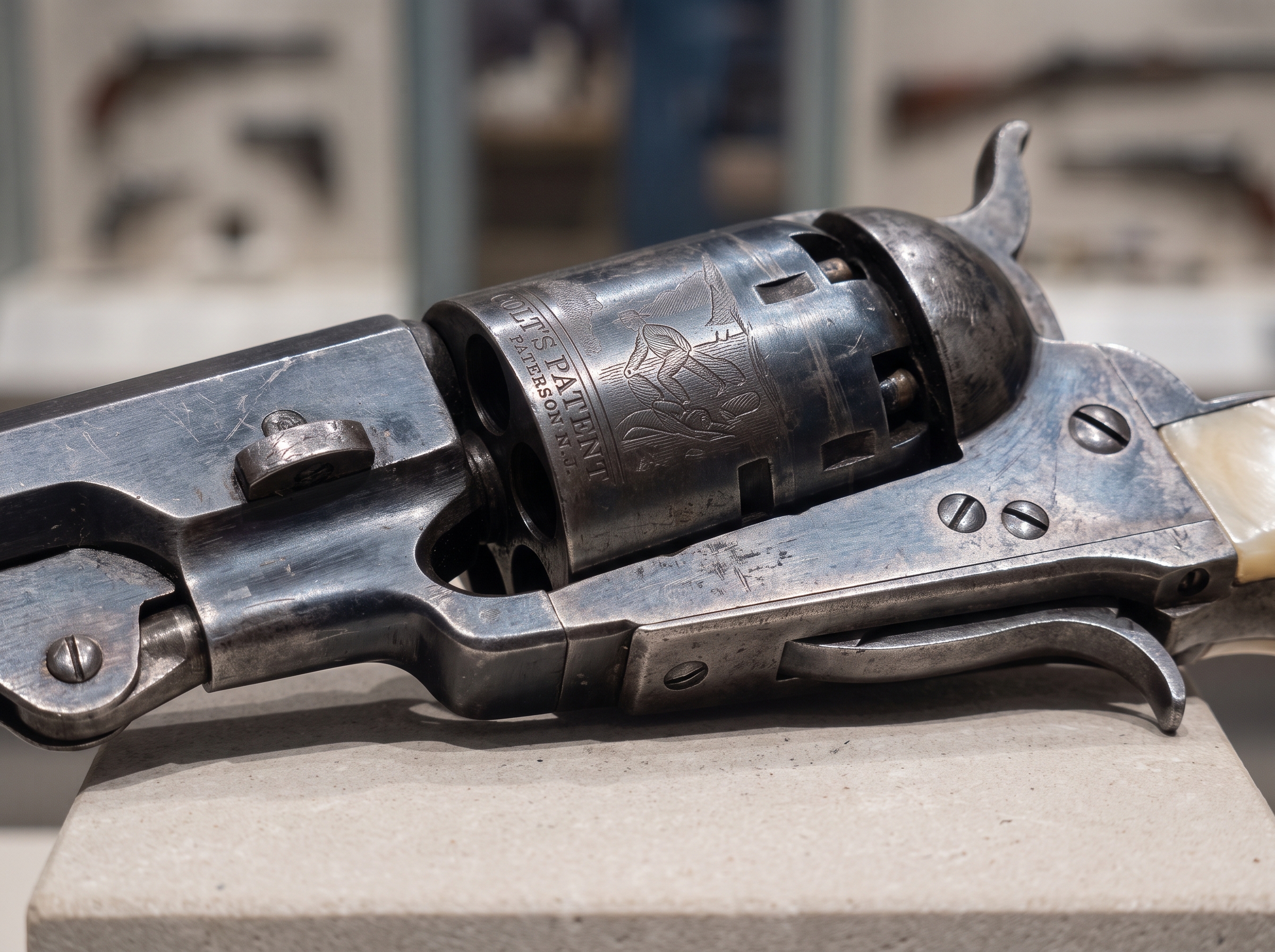
Colt Paterson Revolver
Curated by Valerius • The Comanche Empire After the Bison Slaughter
Artifact Details
A highly detailed macro photograph focusing closely on the central mechanism of an 1836 Colt Paterson percussion revolver. The frame tightly crops the blued steel roll-engraved cylinder, the percussion nipples, and the unique folding trigger tucked flush into the frame. The metal surfaces exhibit minor handling marks, fine scratches, and authentic traces of black powder residue around the cylinder, emphasizing the raw material reality of the weapon.
Primary Source
The Comanche Empire After the Bison Slaughter
Rain stripped the advantage from colonial troops on the Southern Plains. Wet powder rendered European muskets useless. In the minutes required to clear a fouled barrel, a Comanche warrior could loose a dozen arrows from an Osage orange bow. This demonstrated absolute kinetic superiority. For over a century, the Comanche controlled a vast inland empire through mastery of mounted warfare and continuous motion. They dictated trade, shattered static defenses, and monopolized the regional horse economy. Their collapse required more than opposing cavalry. The American state dismantled the Comancheria through the brutal efficiency of repeating firearms, steel railroads, and the deliberate eradication of the bison. Industrial mass destruction nullified superior battlefield tactics.
Read Study (17 min) →Artifacts
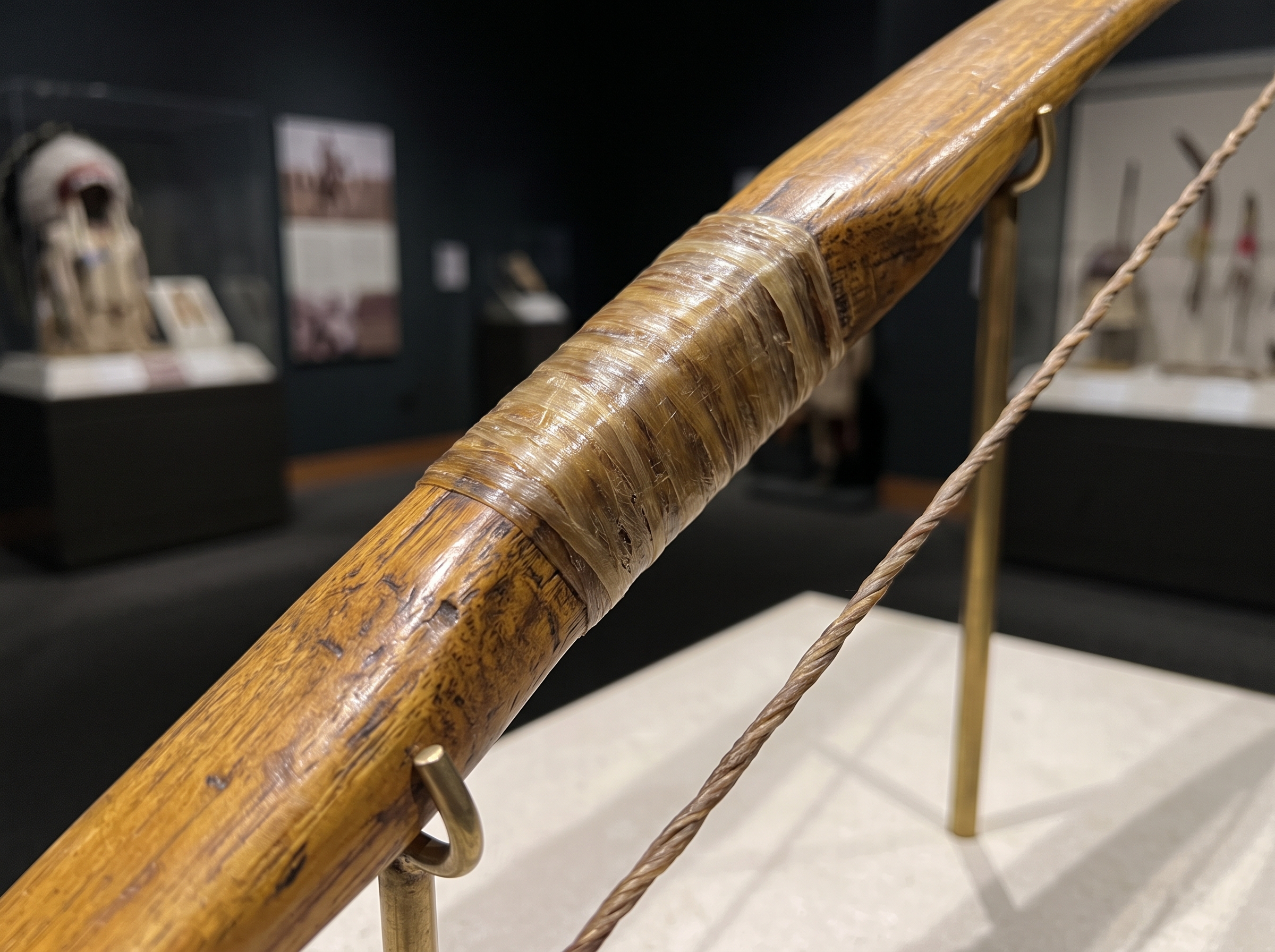
Osage Orange Short Bow
A three-foot bow backed with animal sinew, designed specifically for rapid fire from horseback.
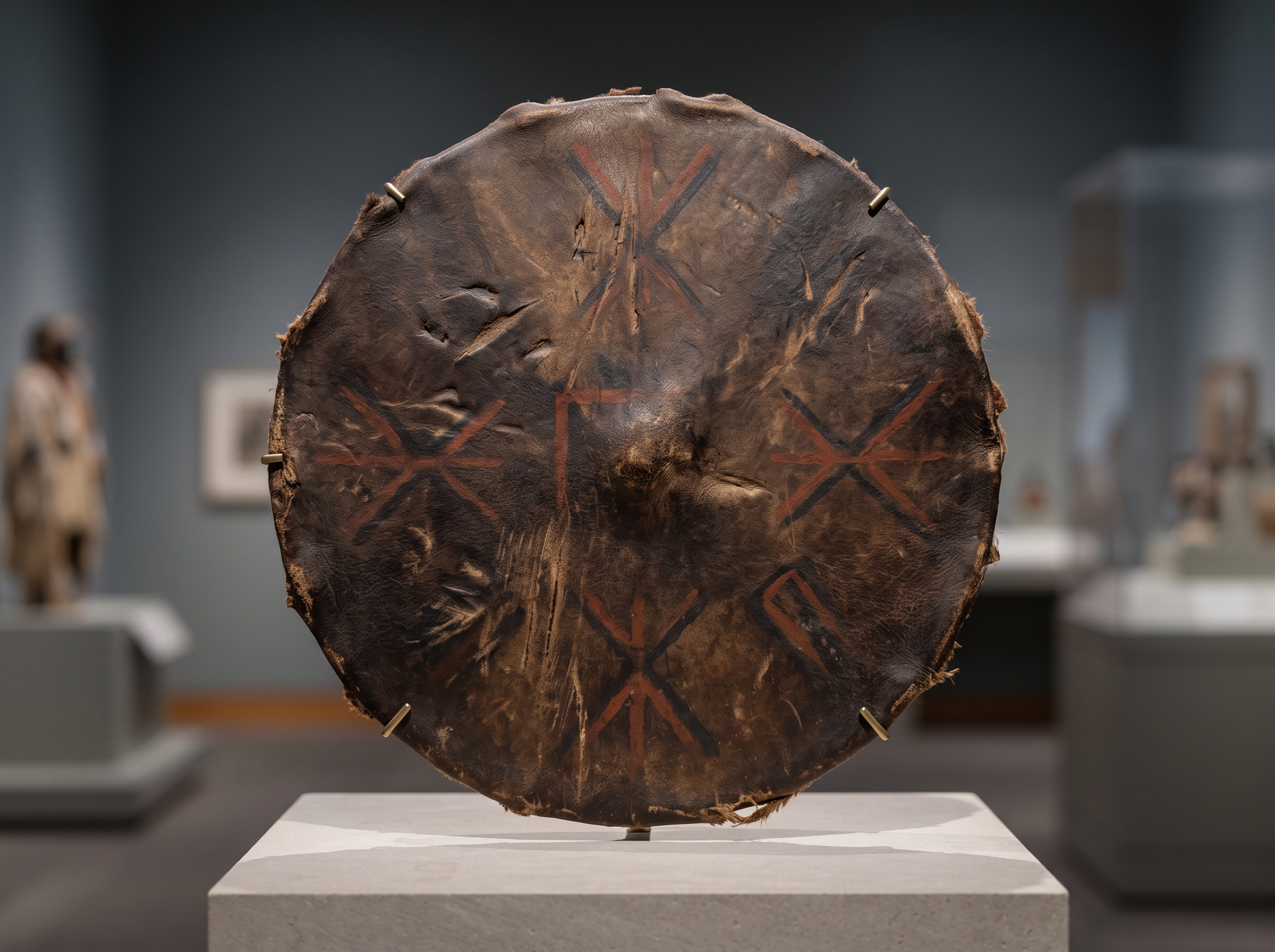
Bison Hide War Shield
A circular shield crafted from the thickest hide of a bull bison's neck, capable of deflecting glancing musket balls.
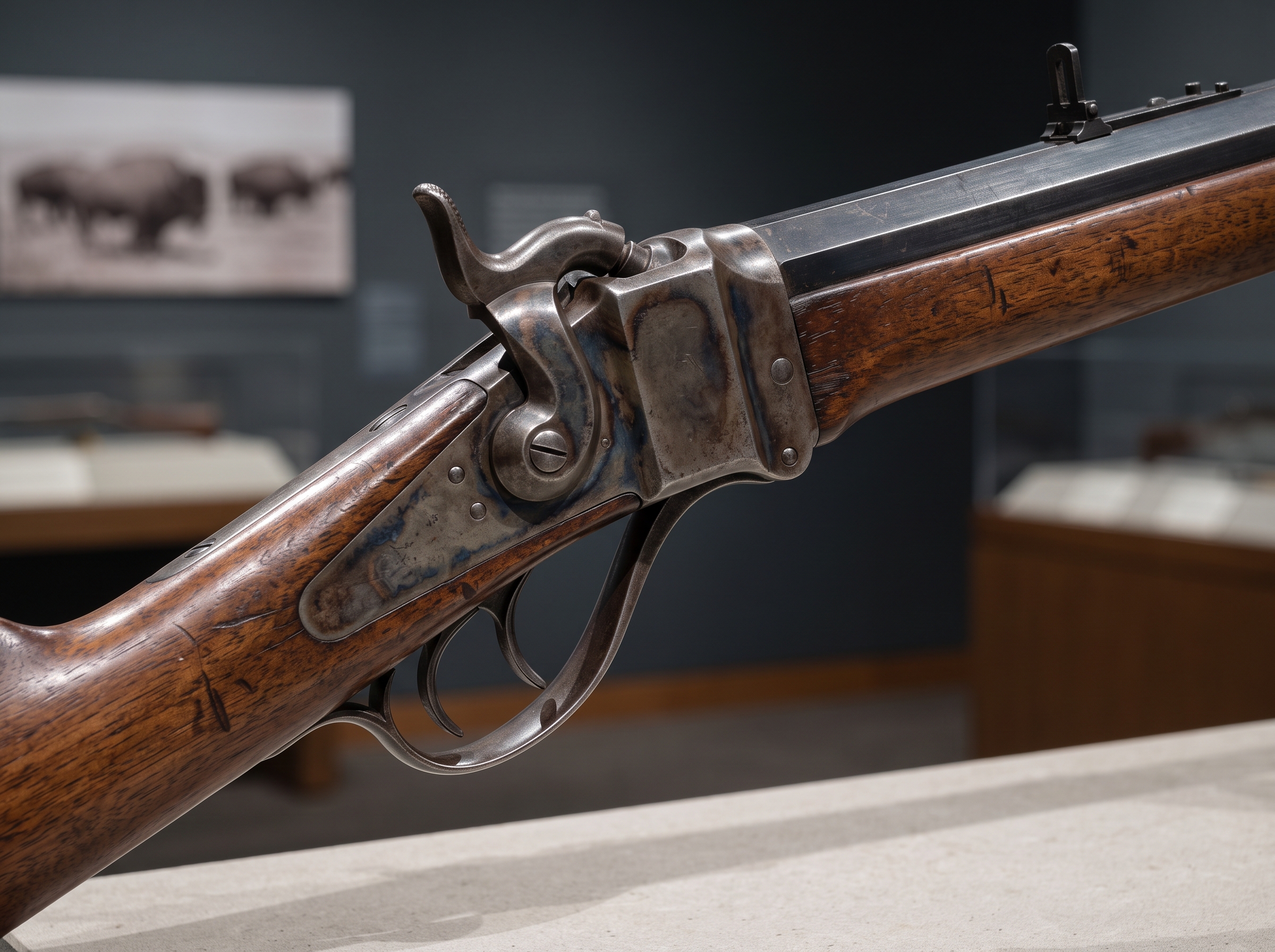
Sharps .50-90 Rifle
A heavy-barreled breech-loading rifle used by commercial hunters to systematically eradicate the bison herds.
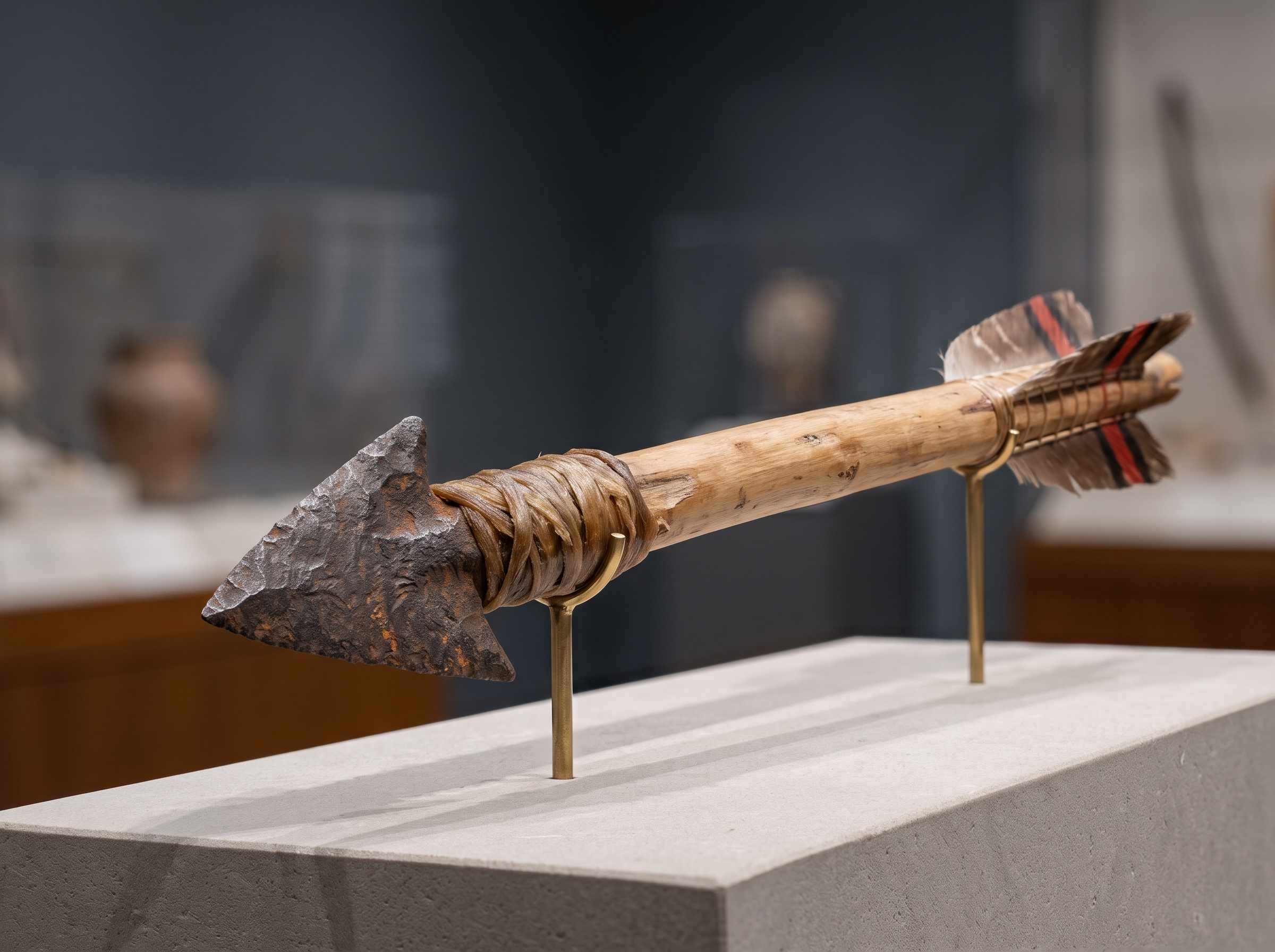
Trade-Iron Tipped Arrow
A dogwood arrow shaft fletched with turkey feathers and tipped with cold-forged iron obtained through trade.
Glossary
- san sabá: A Spanish mission established in Texas in 1757, destroyed by a massive Comanche-led force in 1758, illustrating the vulnerability of static colonial outposts.
- osage orange: A dense, highly flexible hardwood native to the Southern Plains, prized by Comanche artisans for crafting short, high-tension horse bows.
- comancheria: The vast, fluid geographic territory controlled by the Comanche on the Southern Plains, functioning as an empire built on horses and bison.
- pemmican: A highly concentrated, long-lasting field ration made from dried bison meat pounded with fat and berries, enabling war parties to travel vast distances.