2004 Feasibility Study
Curated by Orea • Svalbard Global Seed Vault in a Frozen Mountain
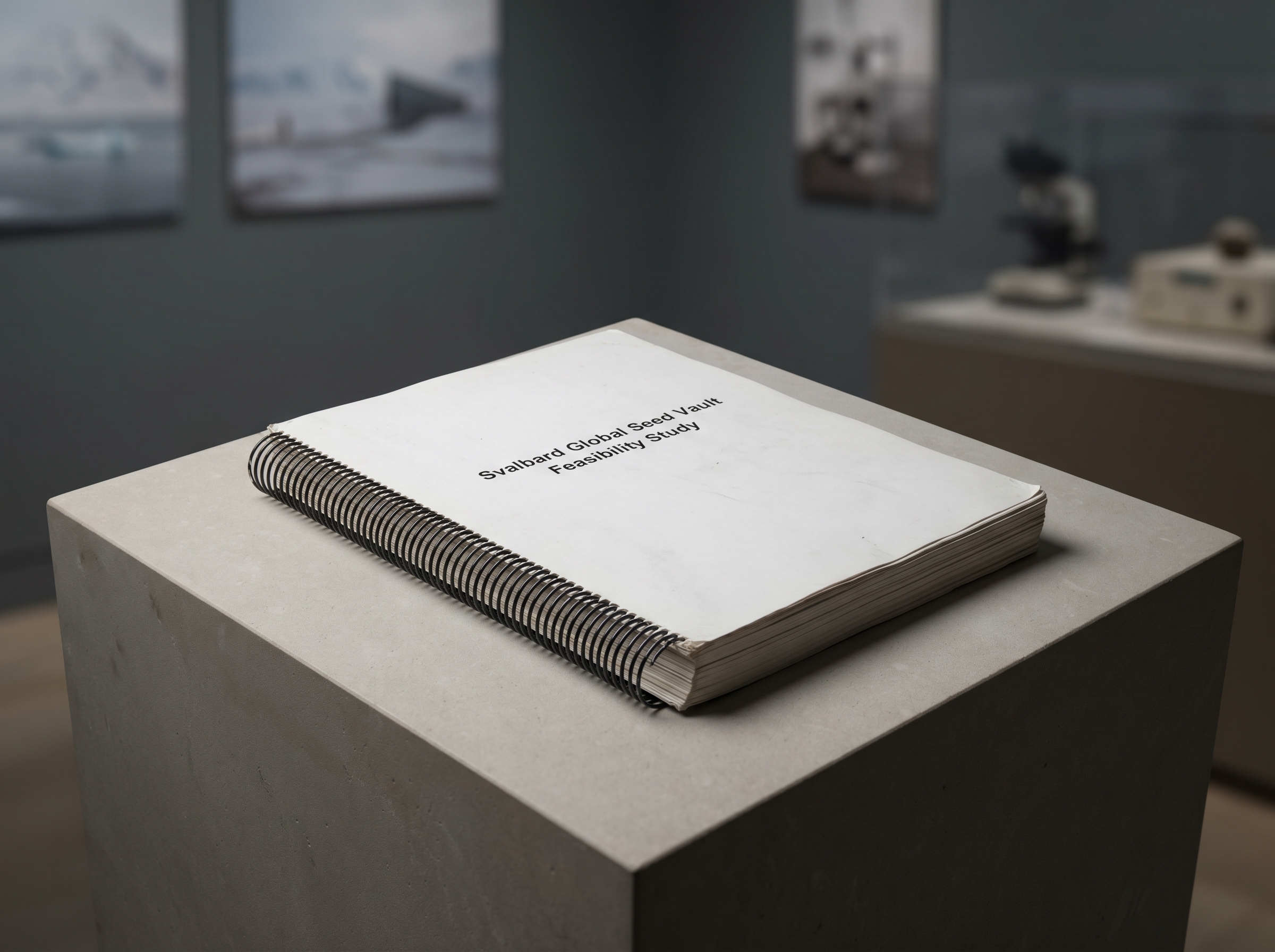
Artifact Details
A thick, spiral-bound technical report document with a plain white cover reading 'Svalbard Global Seed Vault Feasibility Study' in black text.
Primary Source
Svalbard Global Seed Vault in a Frozen Mountain
In the deep winter of 2015, a freight aircraft landed on a dark runway in Svalbard holding an emergency request. The International Center for Agricultural Research in the Dry Areas had abandoned its headquarters in Aleppo as the Syrian Civil War destroyed its local facilities. Scientists urgently needed their seeds back. Within days, technicians unsealed the Svalbard Global Seed Vault, bored 120 meters into the Arctic permafrost, and retrieved 38,000 sealed foil packets. This withdrawal proved the facility functioned exactly as designed. By anchoring the global agricultural baseline in a frozen mountain, the vault rests on a quiet geographic admission: individual nations can no longer guarantee the survival of their own food.
Read Study (18 min) →Artifacts
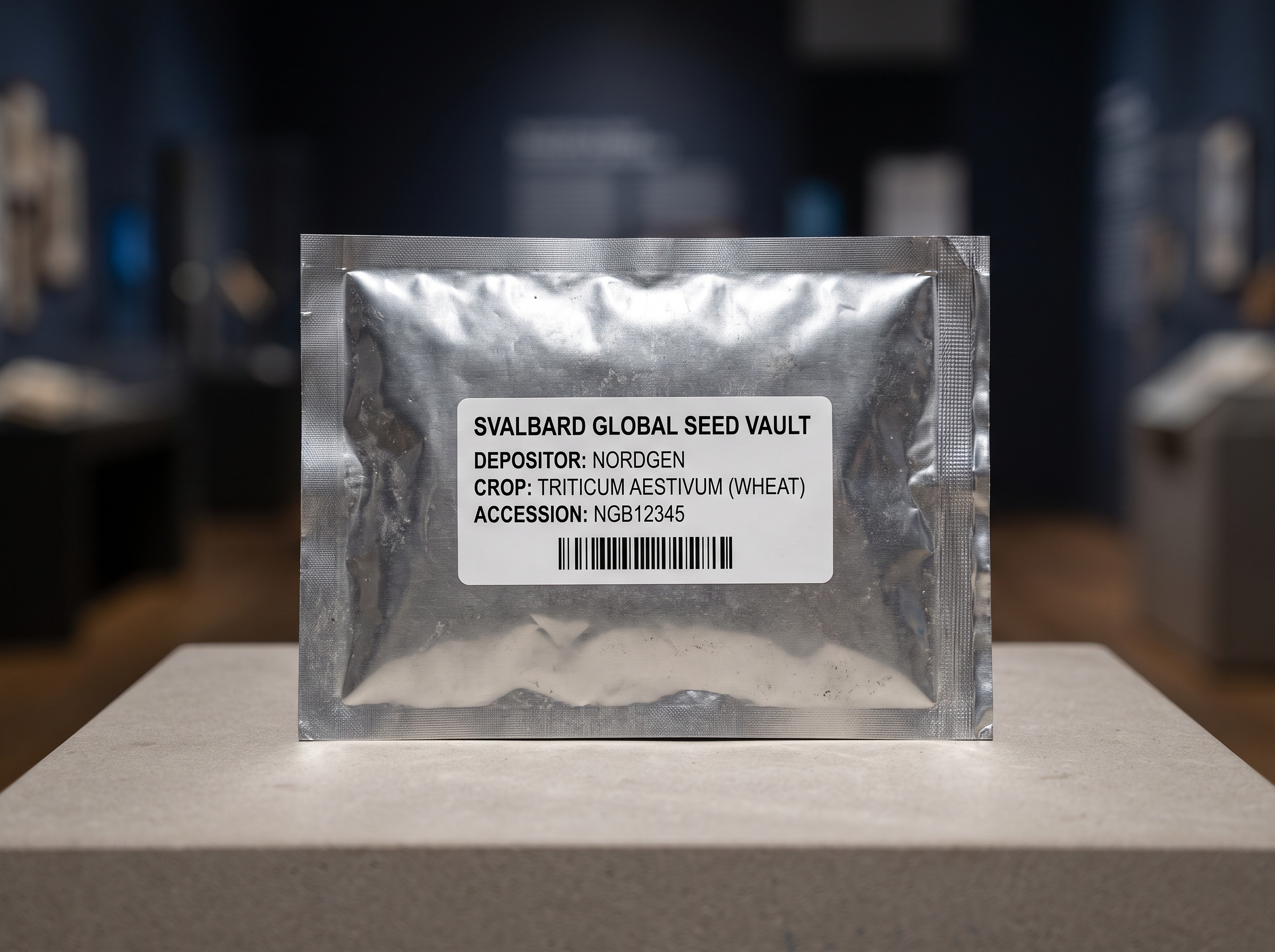
Three-Ply Foil Packet
Seeds of almost every known crop are sealed inside custom three-ply aluminum foil packets. This prevents moisture transmission and ensures profound longevity at -18°C.
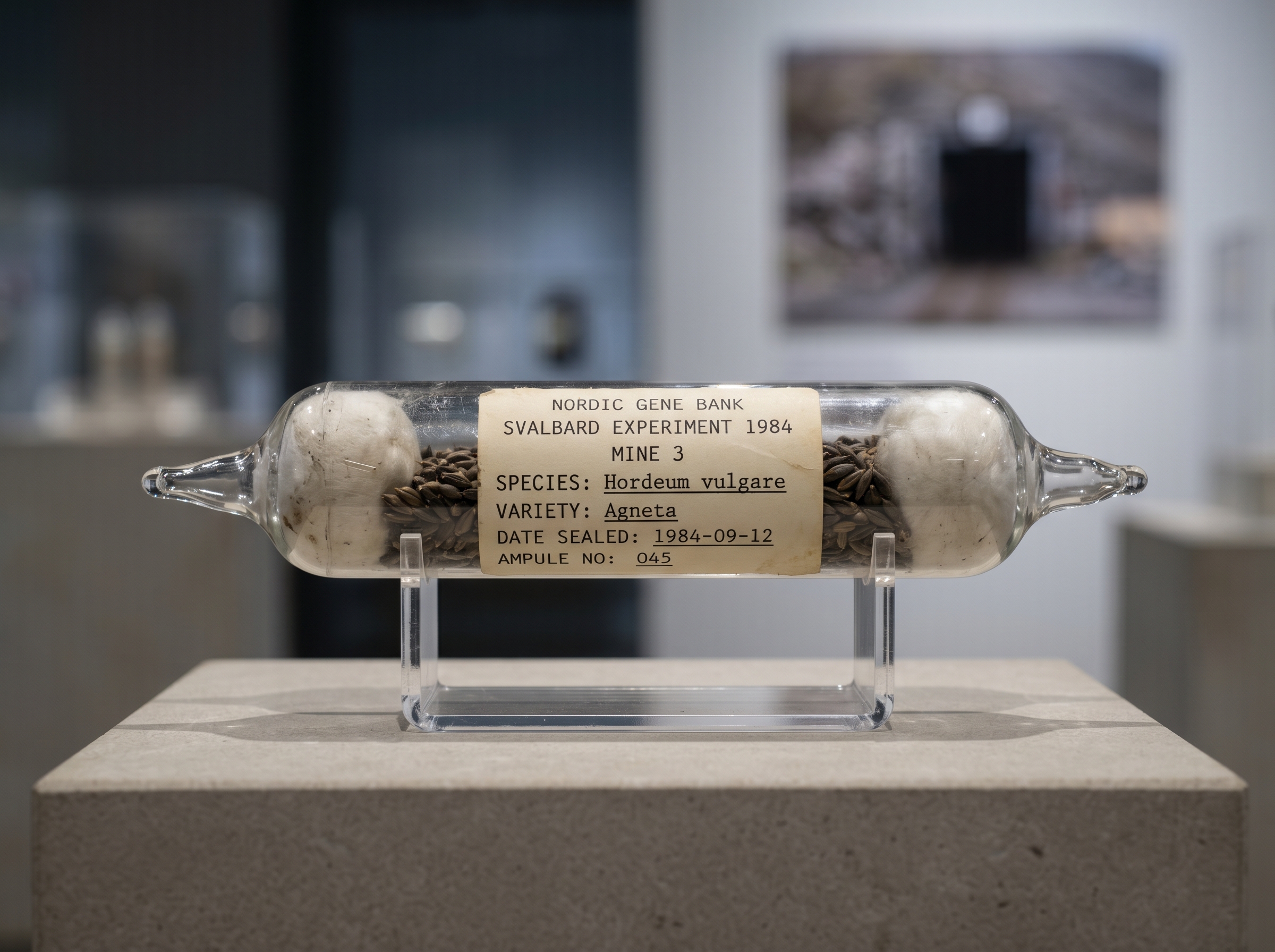
Mine 3 Glass Ampule
A sealed glass tube from the 1984 Nordic Gene Bank experiment. These ampules were left in a decommissioned coal mine to prove permafrost could halt seed degradation without mechanical power.
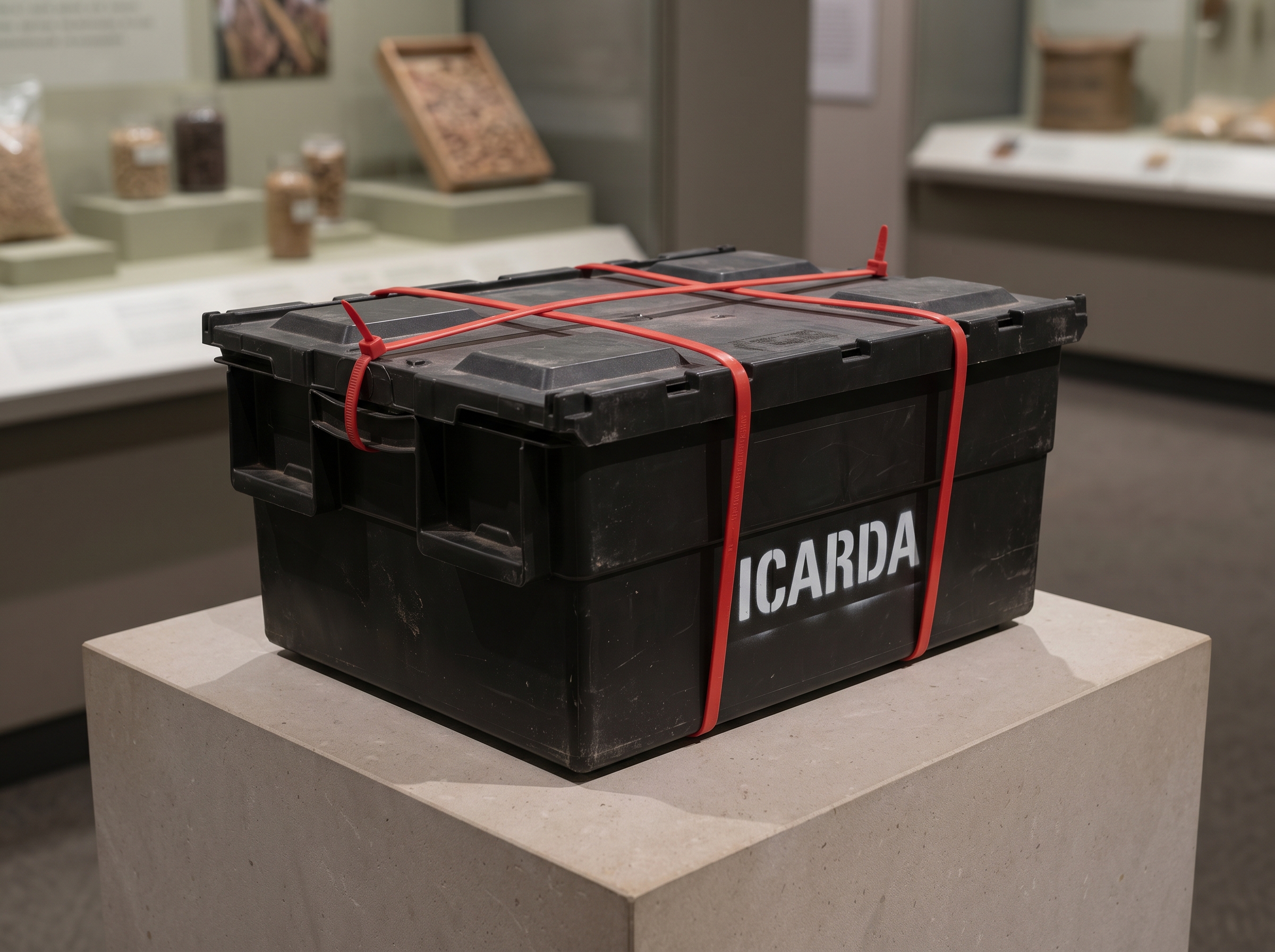
ICARDA Black Box
The reinforced black storage crates containing the Syrian agricultural heritage. These boxes proved that the vault worked when ICARDA retrieved them in 2015 to restart their gene bank in Morocco and Lebanon.
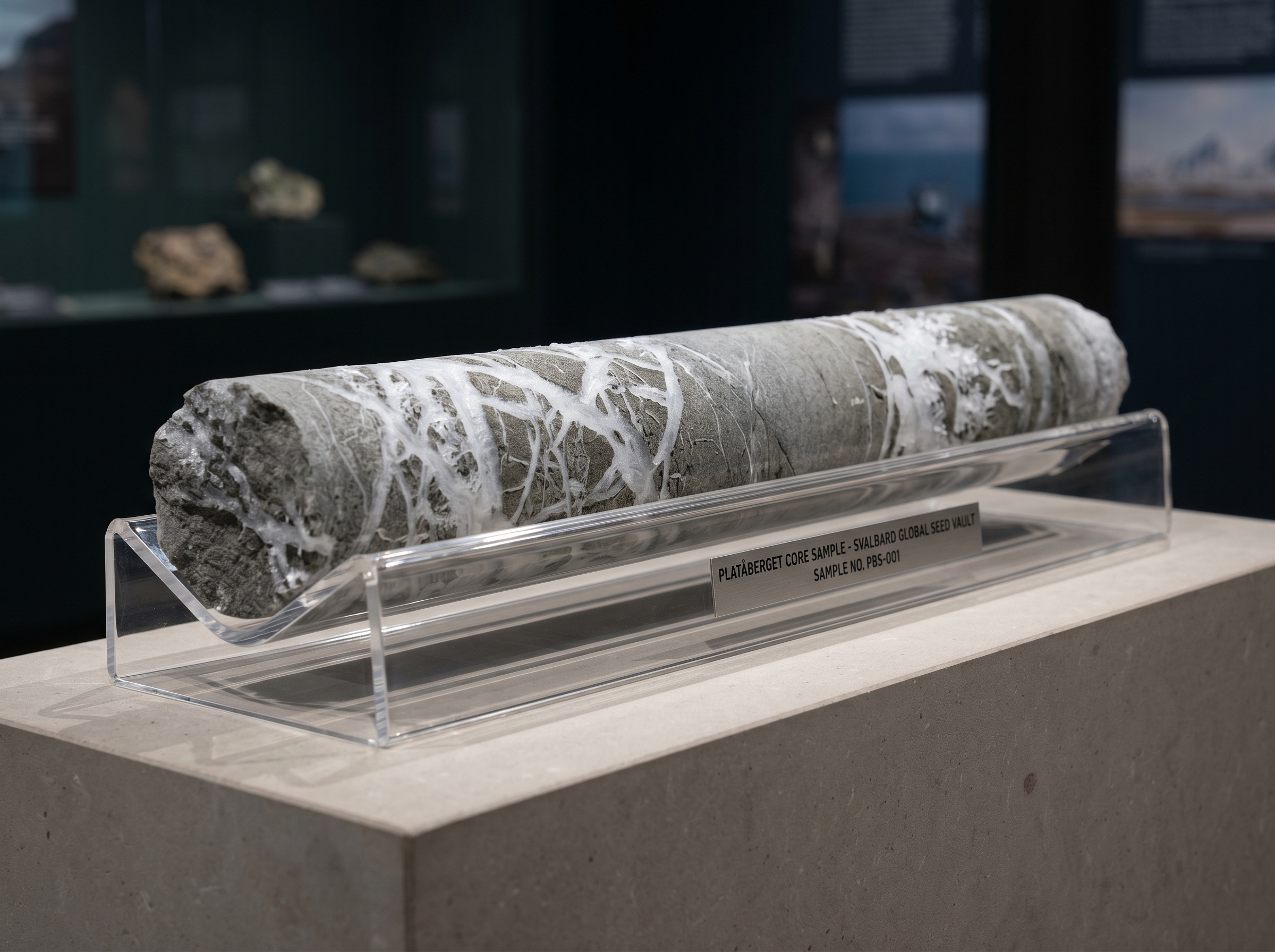
Platåberget Core Sample
A geological core sample of the sandstone and permafrost from the Platåberget mountain. This specific geology provides the vault's passive cooling capacity.
Glossary
- permafrost: Soil, rock, or sediment that has remained frozen continuously for two or more years, providing a natural, zero-energy deep-freeze baseline for the seed vault.
- mine 3: A decommissioned coal mine near Longyearbyen that served as a critical early testing site in 1984 to prove the viability of natural Arctic permafrost seed storage.
- gene banks: Biorepositories scattered globally that preserve plant genetic resources, which are highly vulnerable to localized power failures, natural disasters, and armed conflicts.
- black box: The legal operating agreement of the seed vault, guaranteeing that depositing nations retain sole, undisputed ownership and control of their stored genetic materials.