Fluid Goggles
Curated by Kairo • Freediving and the Mammalian Dive Reflex
Artifact Details
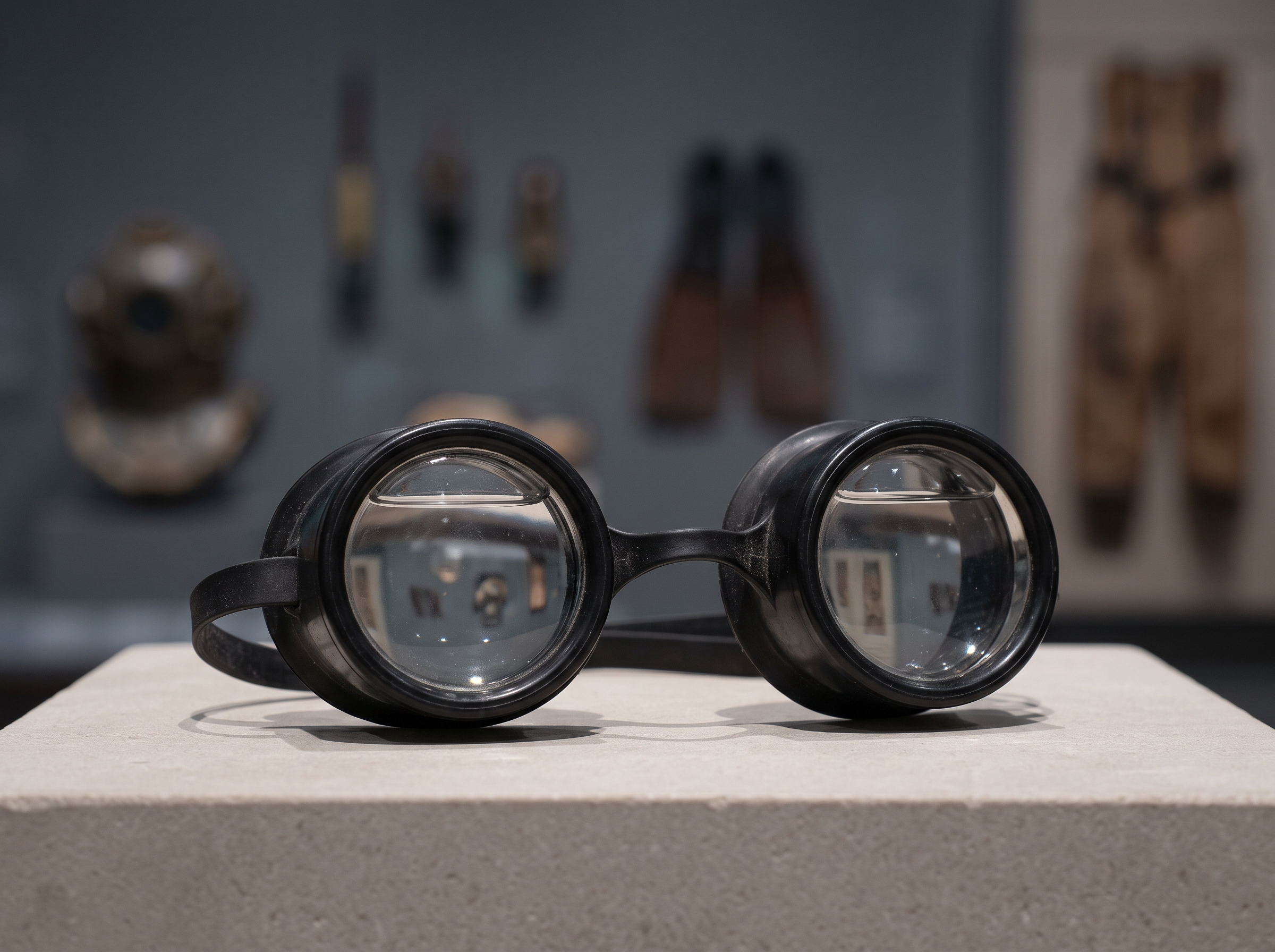
A pair of highly compact, minimalist swimming goggles consisting of two rigid, cylindrical plastic eyecups housing thick, extreme plano-convex optical lenses. A thin silicone strap connects the cups. The internal chambers are entirely sealed and flooded with a clear, viscous saline fluid with zero air bubbles visible.
Primary Source
Freediving and the Mammalian Dive Reflex
One hundred meters below the surface, the ocean exerts ten atmospheres of pressure. A human lung, containing roughly six liters of air at the surface, compresses to the size of a fist. Contemporary medical consensus in the mid-twentieth century predicted that descending past fifty meters would cause the rib cage to collapse inward, snapping bones and rupturing pulmonary tissue. Yet, divers routinely exceed this depth without broken bones. Survival is possible because cold water and breath-holding trigger a primitive autonomic defense. The mammalian dive reflex alters the circulatory system in real-time. This autonomic response shifts oxygen away from the arms and legs, protecting the heart and brain against the crushing weight of the water.
Read Study (17 min) →Artifacts
Skandalopetra Marble Stone
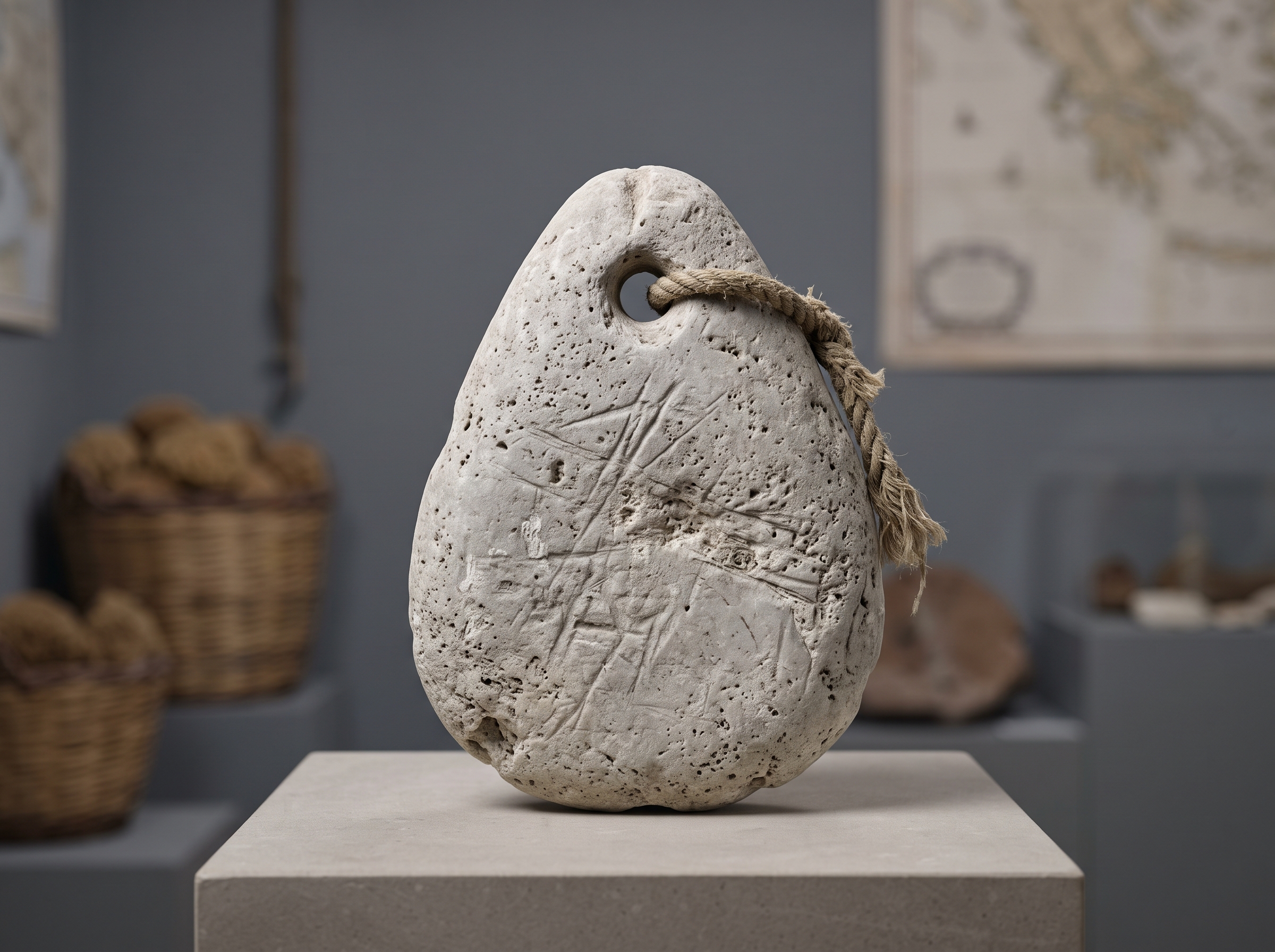
A solid, unpolished marble mass deployed by Kalymnian sponge divers to achieve rapid negative buoyancy. By clutching the stone, historical divers bypassed the need for weighted belts, utilizing a hydrodynamic freefall to reach extreme depths efficiently before the era of modern fins.
Low-Volume Apnea Mask
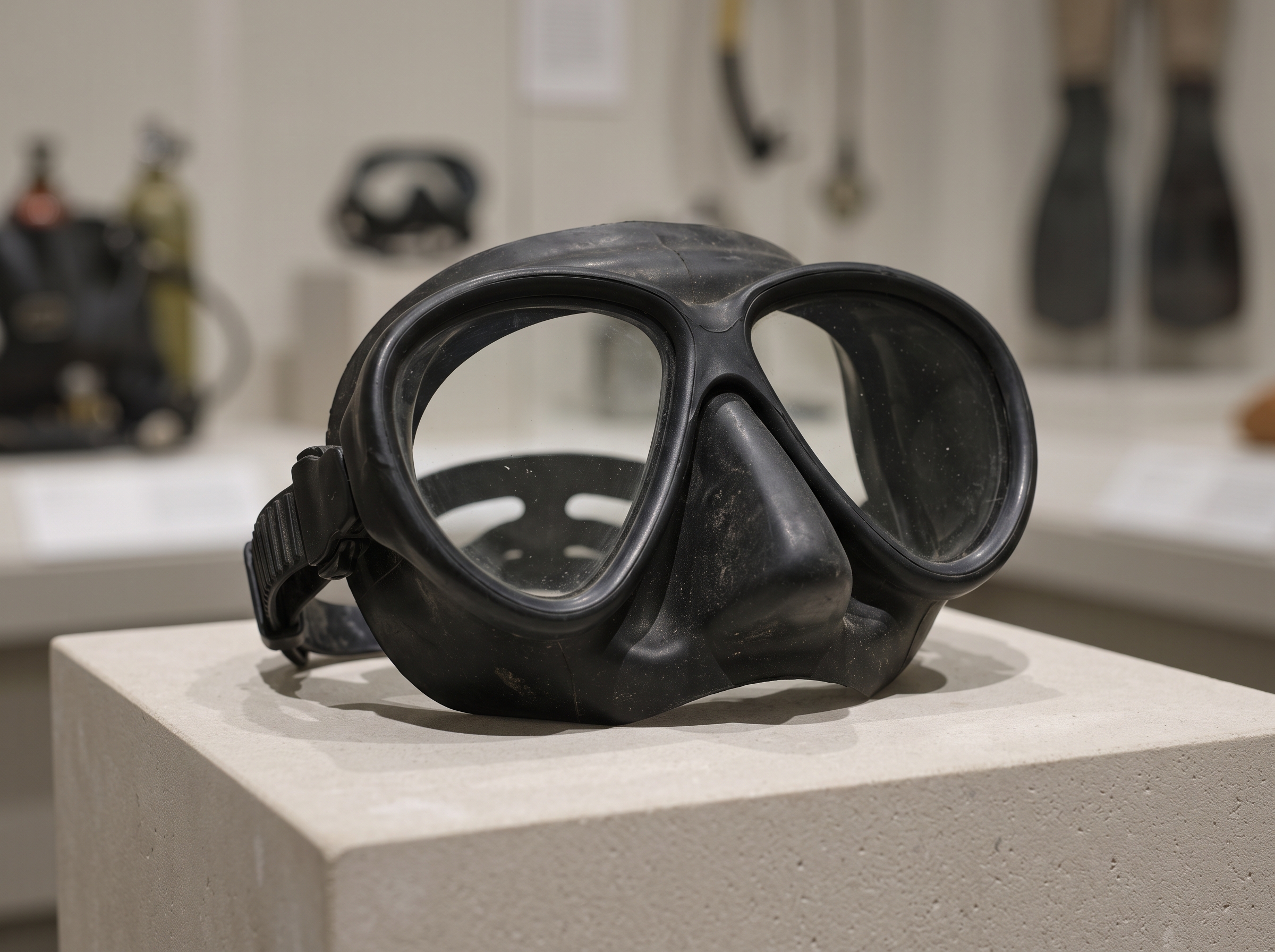
An advanced competitive diving mask designed with minimal internal air capacity. This design drastically reduces the volume of precious lung oxygen a diver must expend to equalize the facial airspace against crushing hydrostatic pressure during deep descents.
Safety Tether Lanyard
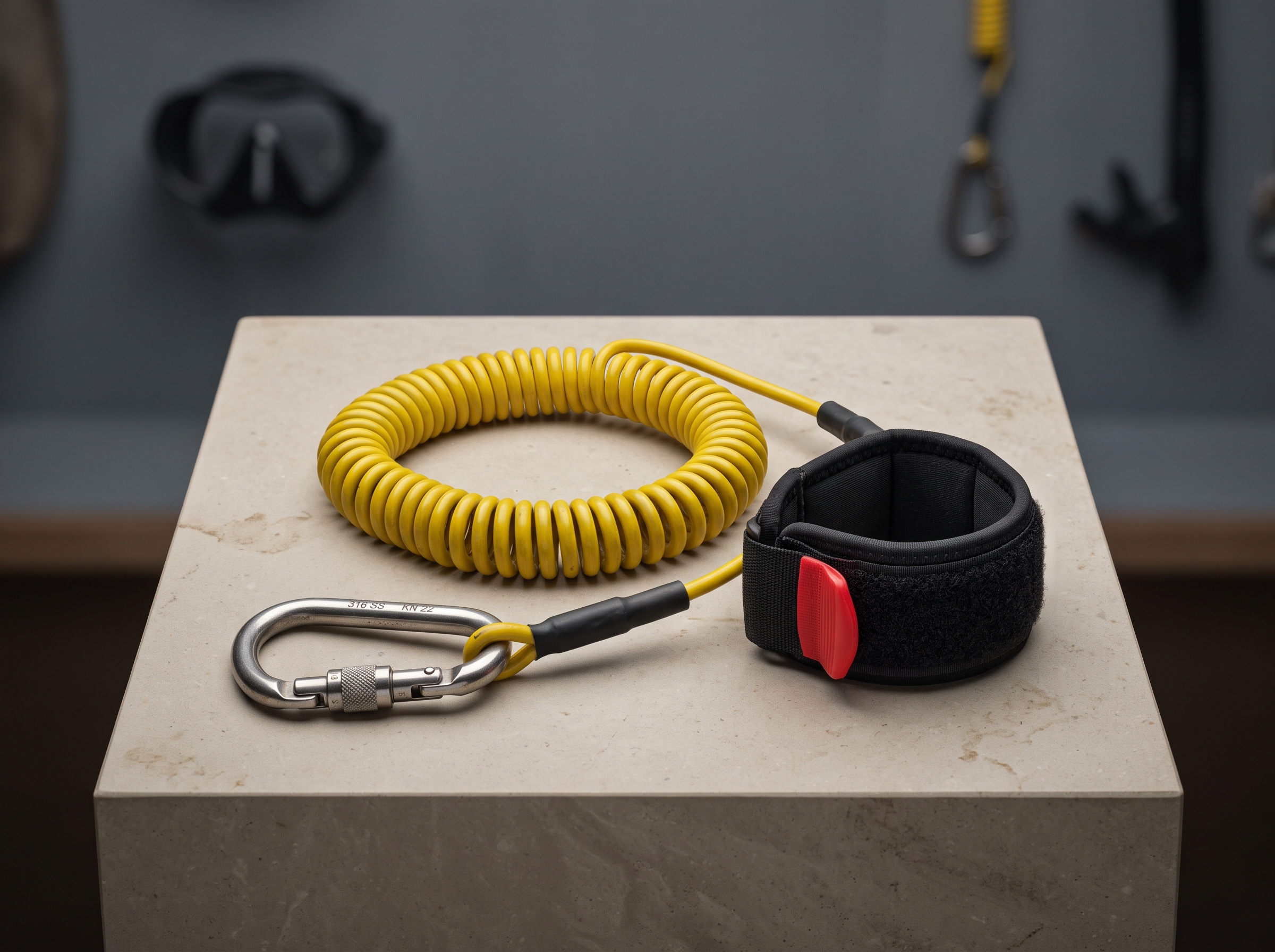
A mandatory competitive safety restraint anchoring the diver to the primary descent line. This mechanical tether ensures that in the event of a deep-water hypoxic blackout, surface safety crews can retrieve the unconscious athlete from the abyss.
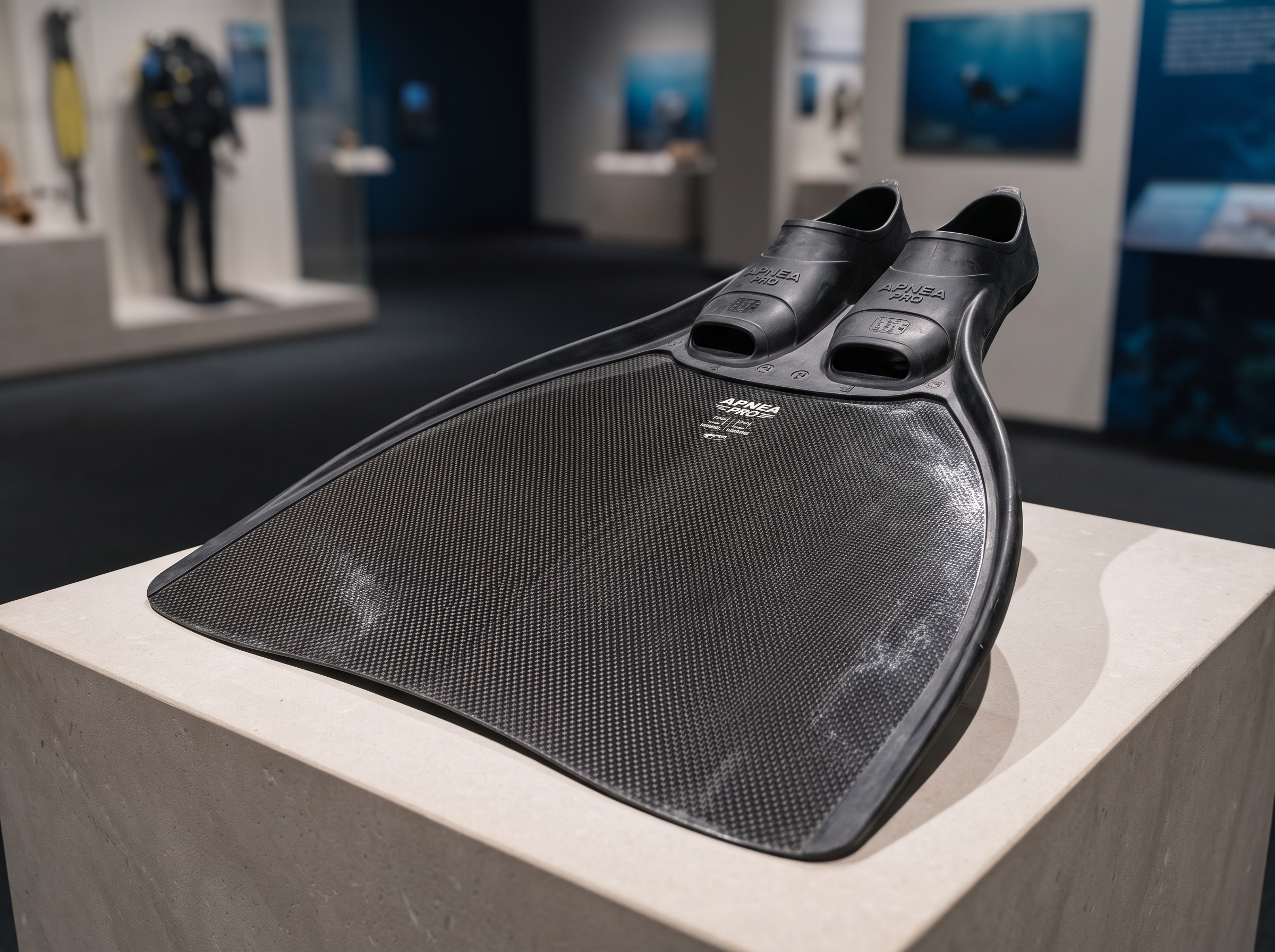
Carbon Fiber Monofin
A singular, rigid propulsion blade utilized in the constant weight apnea discipline. By locking both feet into a unified pocket, the diver maximizes the power of the core and glutes, generating a highly efficient, dolphin-like hydrodynamic thrust.
Glossary
- apnea: The temporary cessation of breathing; in freediving, the intentional holding of breath.
- bradycardia: A slower than normal heart rate, triggered automatically when the face is submerged in cold water.
- vasoconstriction: The narrowing of blood vessels, which restricts blood flow to the extremities to preserve oxygen for the core.
- blood shift: The pooling of blood in the thoracic cavity to counteract extreme external water pressure and prevent lung collapse.