Pasteboard Punch Card
Curated by Elian • Punched Cards Wove Silk on the Jacquard Loom
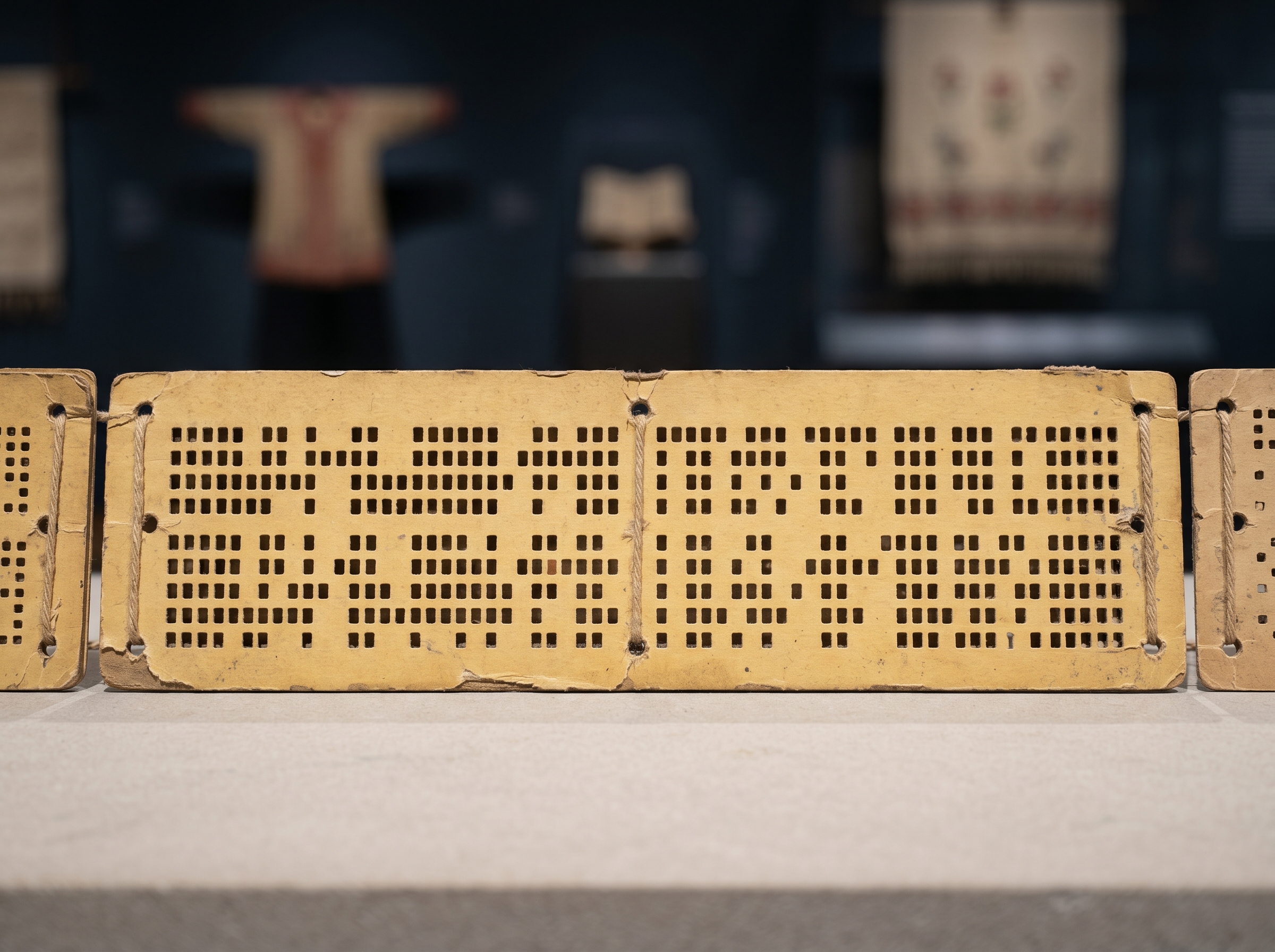
Artifact Details
Stiff, aged 19th-century pasteboard card punched with a grid of rectangular holes. Worn edges, tied with string to adjacent cards.
Primary Source
Punched Cards Wove Silk on the Jacquard Loom
In 1804, the silk workshops of Lyon operated at the grueling limits of child labor. Young drawboys perched atop heavy wooden hand-looms, hauling up bundles of warp threads to weave complex patterns. A single mistake ruined yards of expensive silk. Joseph Marie Jacquard eliminated this labor by severing the mechanical action of the loom from the pattern data. He replaced human memory with stiff pasteboard cards punched with exact grids of holes. A hole allowed a wire hook to drop; solid paper blocked it. Thread up, or thread down. One, or zero. By translating abstract design into punched binary code, Jacquard established the foundational logic of computing, proving that abstract code could control hardware a century before the application of electricity.
Read Study (18 min) →Artifacts
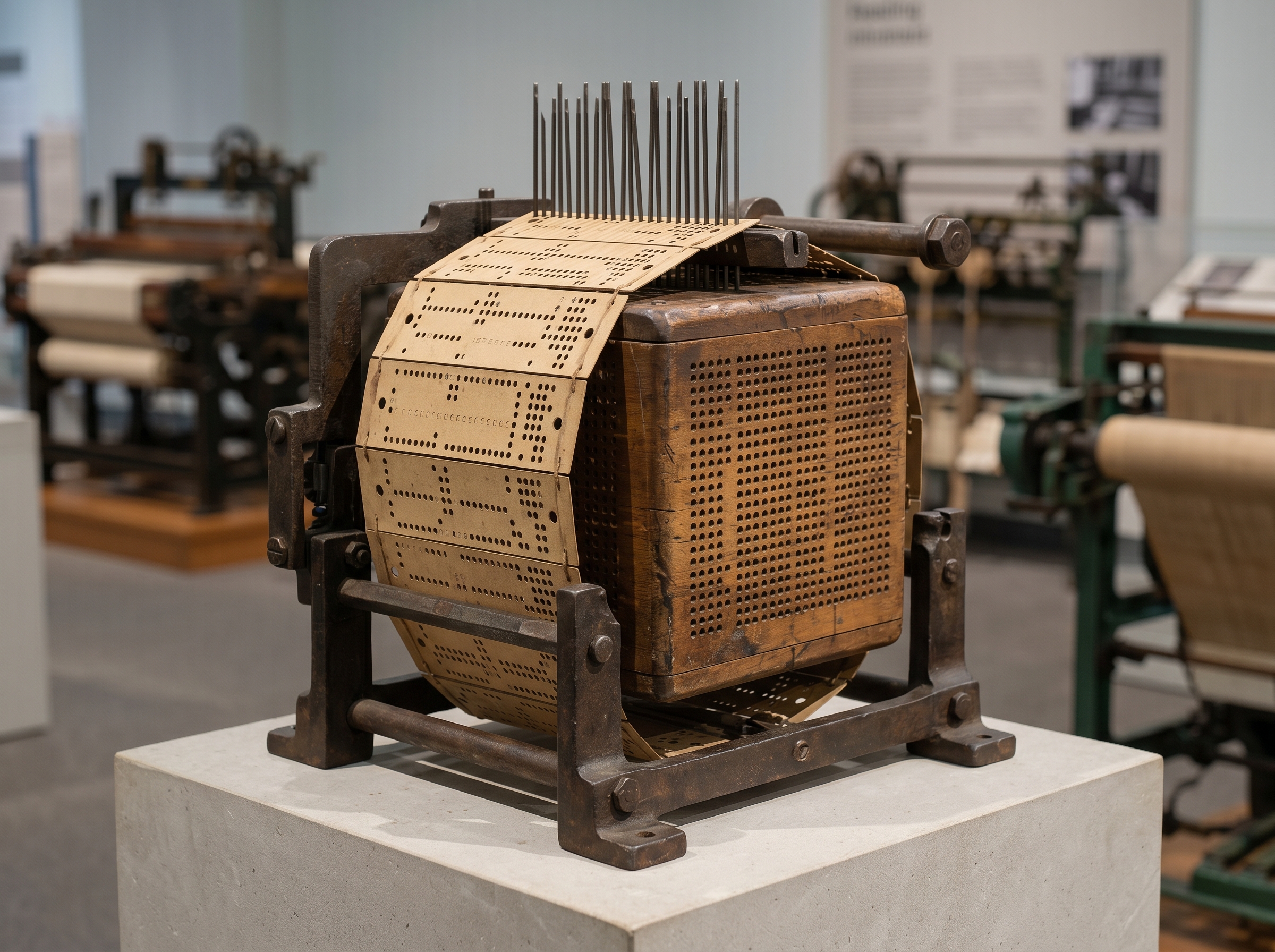
Perforated Reading Cylinder
The rotating square prism mechanism that pressed against the punch cards to read the pattern.
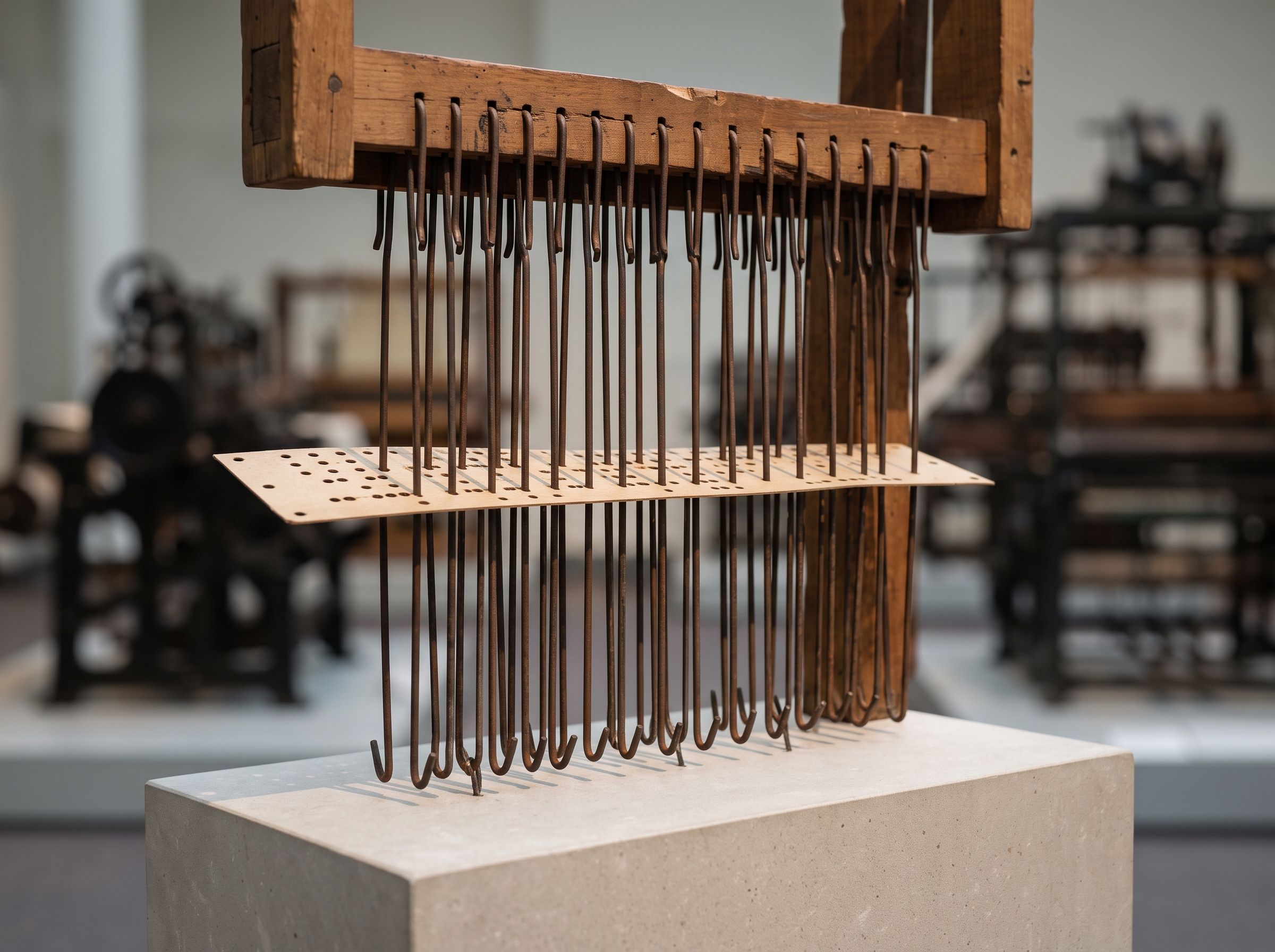
Wire Lifting Hooks
The iron hooks that either fell through holes in the punch card or were blocked by solid pasteboard.
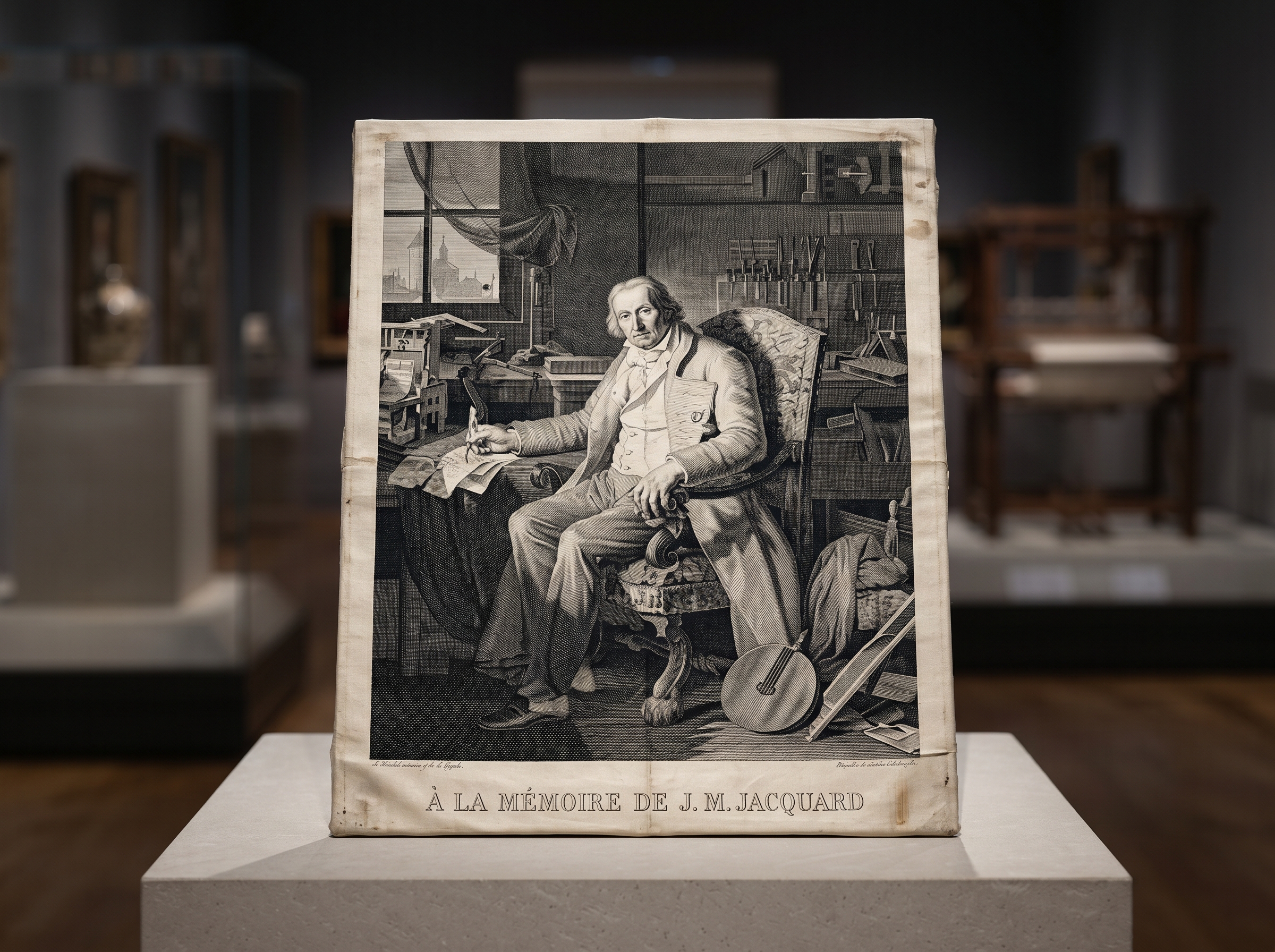
Woven Silk Portrait
A highly detailed silk portrait of Jacquard himself, famously woven using 24,000 punch cards.
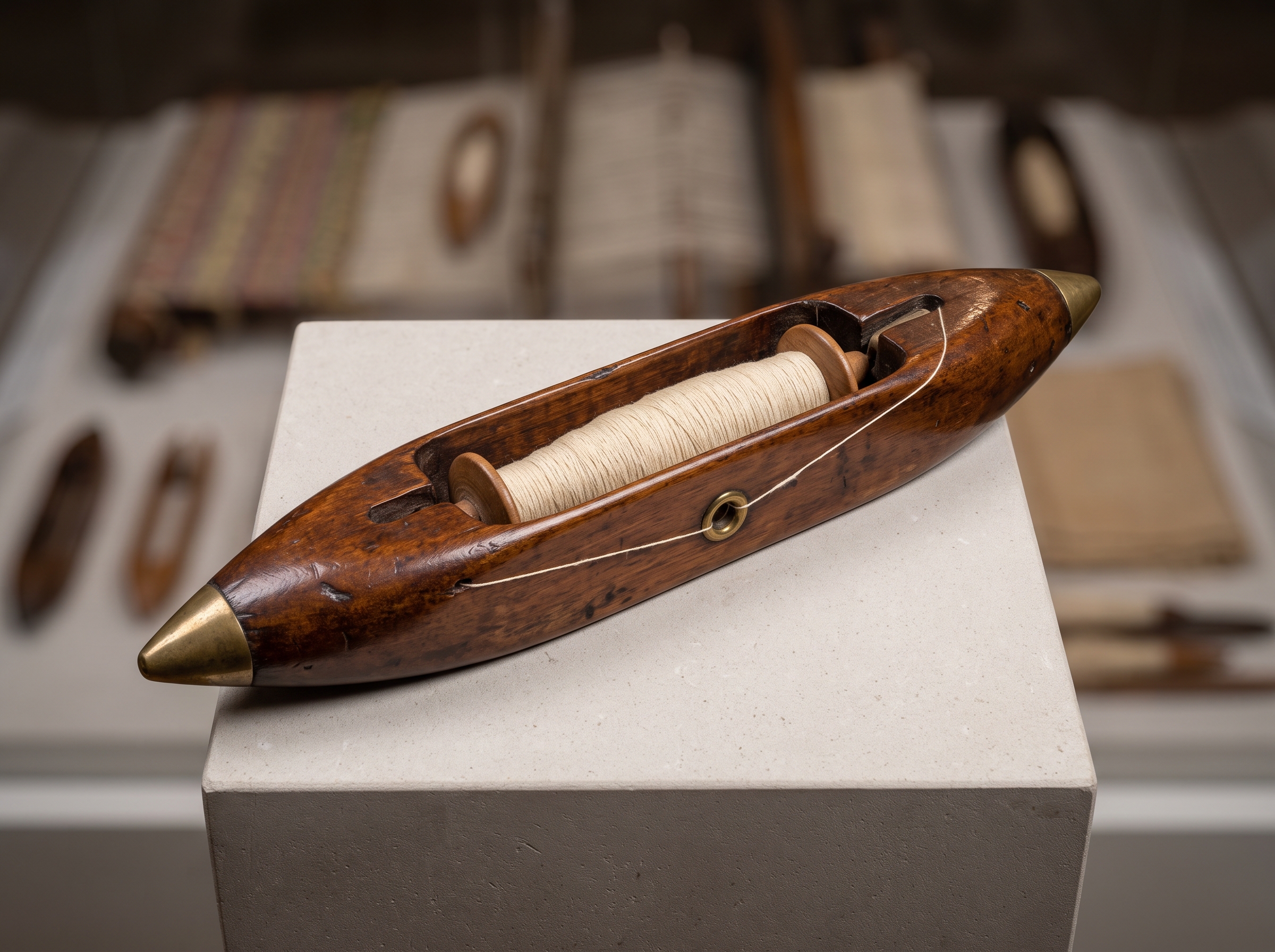
Canut Weaver's Shuttle
A polished wooden shuttle used by the 'canuts' (silk weavers) of Lyon to pass the weft thread.
Glossary
- punch cards: Stiff pasteboard cards punched with predefined grids of holes to store and execute digital data and mechanical instructions.
- warp: The set of lengthwise threads held in high tension on a loom, through which the transverse weft yarn is woven.
- weft: The horizontal yarn woven back and forth through the vertical warp threads using a shuttle to form woven fabric.
- drawboy: A young child laborer perched atop a drawloom to manually hoist heavy warp threads in complex sequences.