Linda Problem Card
Curated by Seren • System 1 and System 2 in Human Judgment
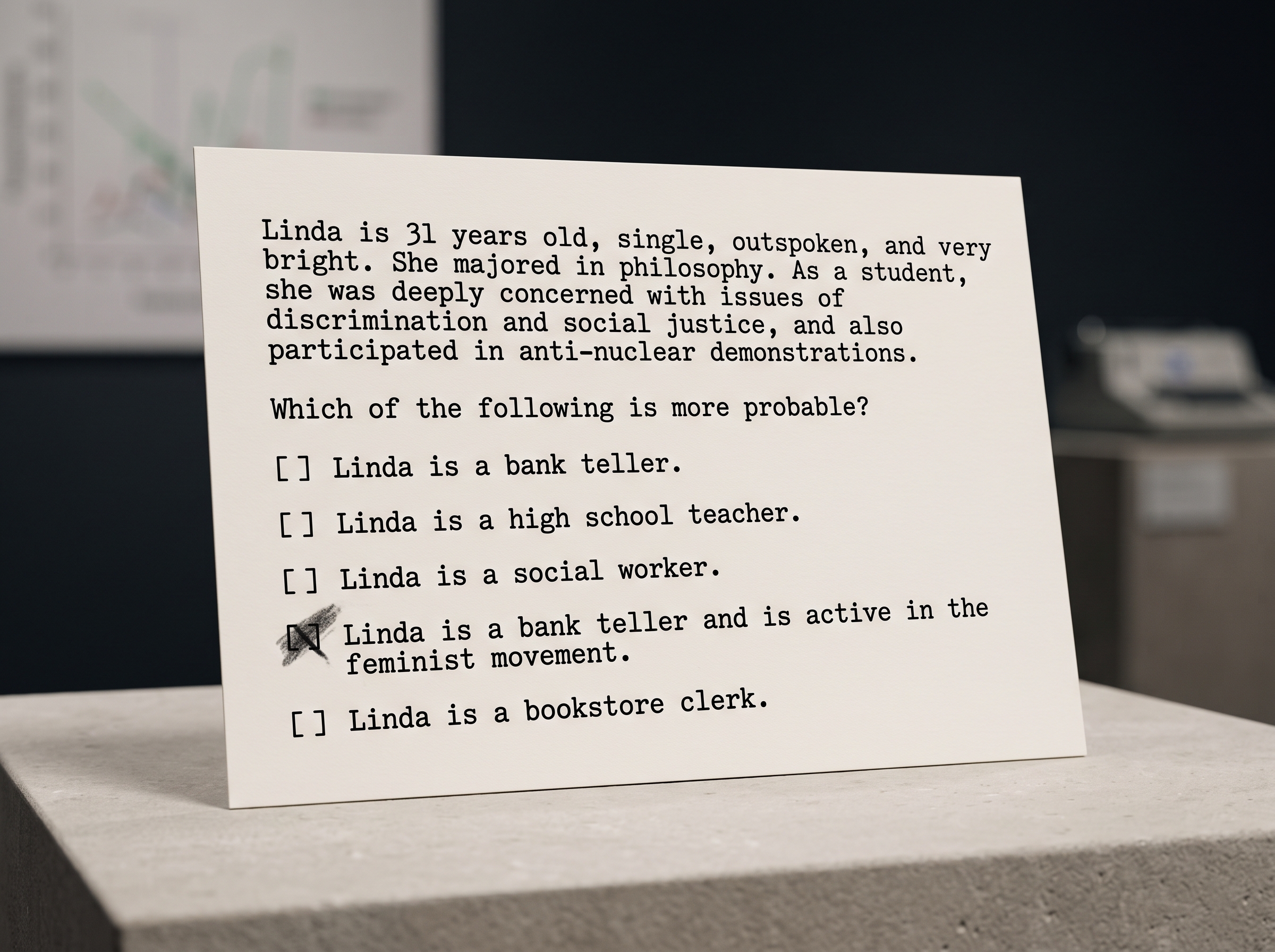
Artifact Details
An authentic 5x7 index card made of heavy off-white cardstock, typed with a mechanical IBM Selectric typewriter. The typescript features classic monospaced letterforms with minor strike misalignment, carbon ribbon smudging, and subtle ink fiber impressions. The text describes 'Linda' as single, outspoken, and deeply concerned with discrimination and social justice. Below, several options with square checkboxes are printed. One option, 'Linda is a bank teller and is active in the feminist movement', has its checkbox heavily filled in with a dark No. 2 graphite pencil, displaying a realistic metallic sheen, graphite grain texture catching on the cardstock fibers, and minor hand-shading smudges.
Primary Source
System 1 and System 2 in Human Judgment
The human pupil does not lie about the cost of thought. When a person is asked to multiply 17 by 24, their pupils dilate visibly, their heart rate rises, and their muscles tense. Conscious reasoning requires an immediate, measurable surge of glucose. In 1974, Amos Tversky and Daniel Kahneman began mapping the boundaries of this biological constraint. They discovered that the brain, operating under strict energy rationing, cannot afford to calculate every decision. Instead, it offloads the vast majority of our daily processing to a fast, automatic set of shortcuts. Human irrationality is a harsh metabolic compromise, forcing us to trade cognitive accuracy for physical survival.
Read Study (21 min) →Artifacts
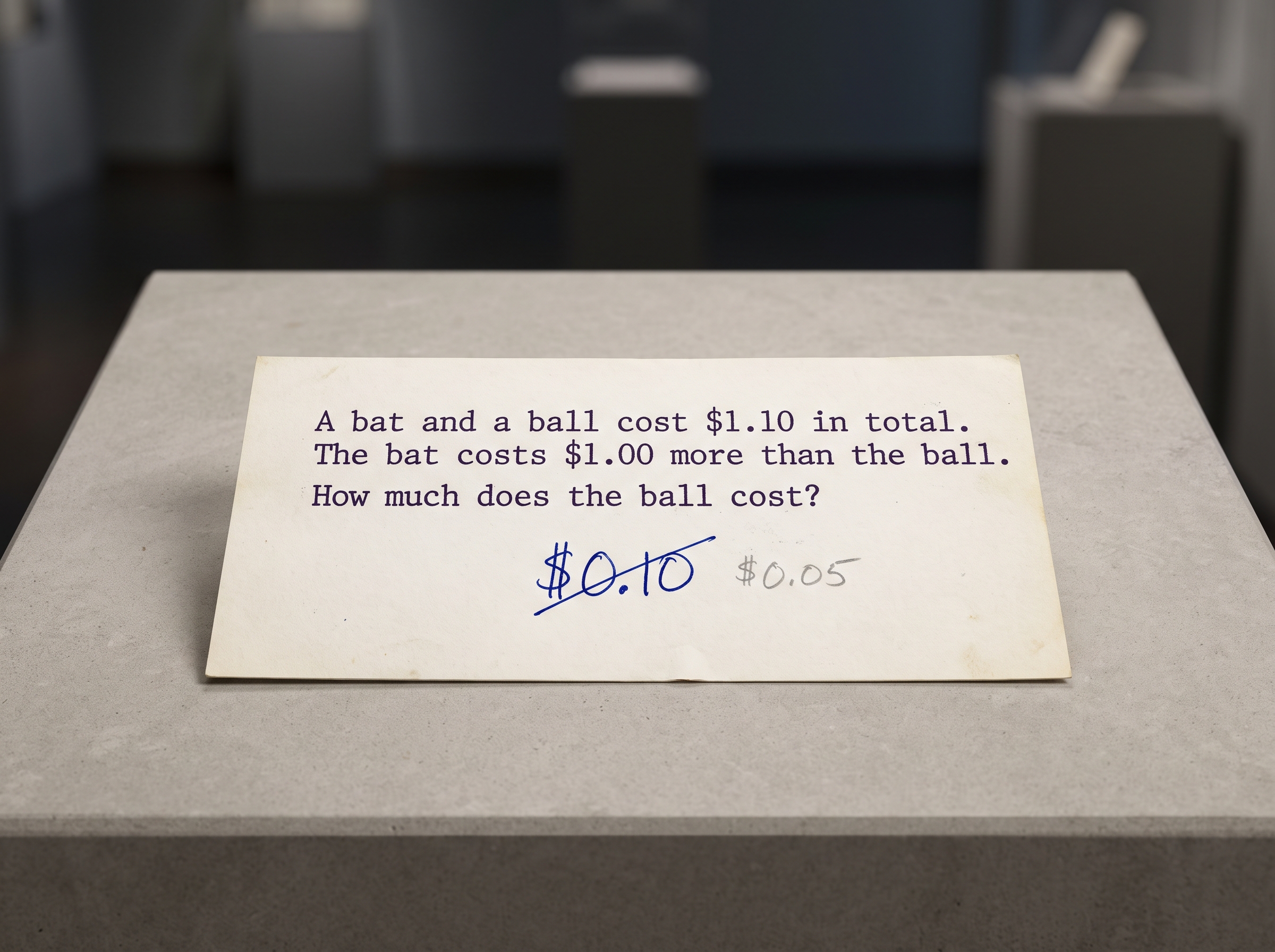
Bat and Ball Problem
A simple math problem designed to trigger a rapid, incorrect intuitive response, testing the engagement of System 2.

1968 Sveriges Riksbank Prize
The Nobel Memorial Prize awarded to Daniel Kahneman for mapping the cognitive limitations of economic agents.
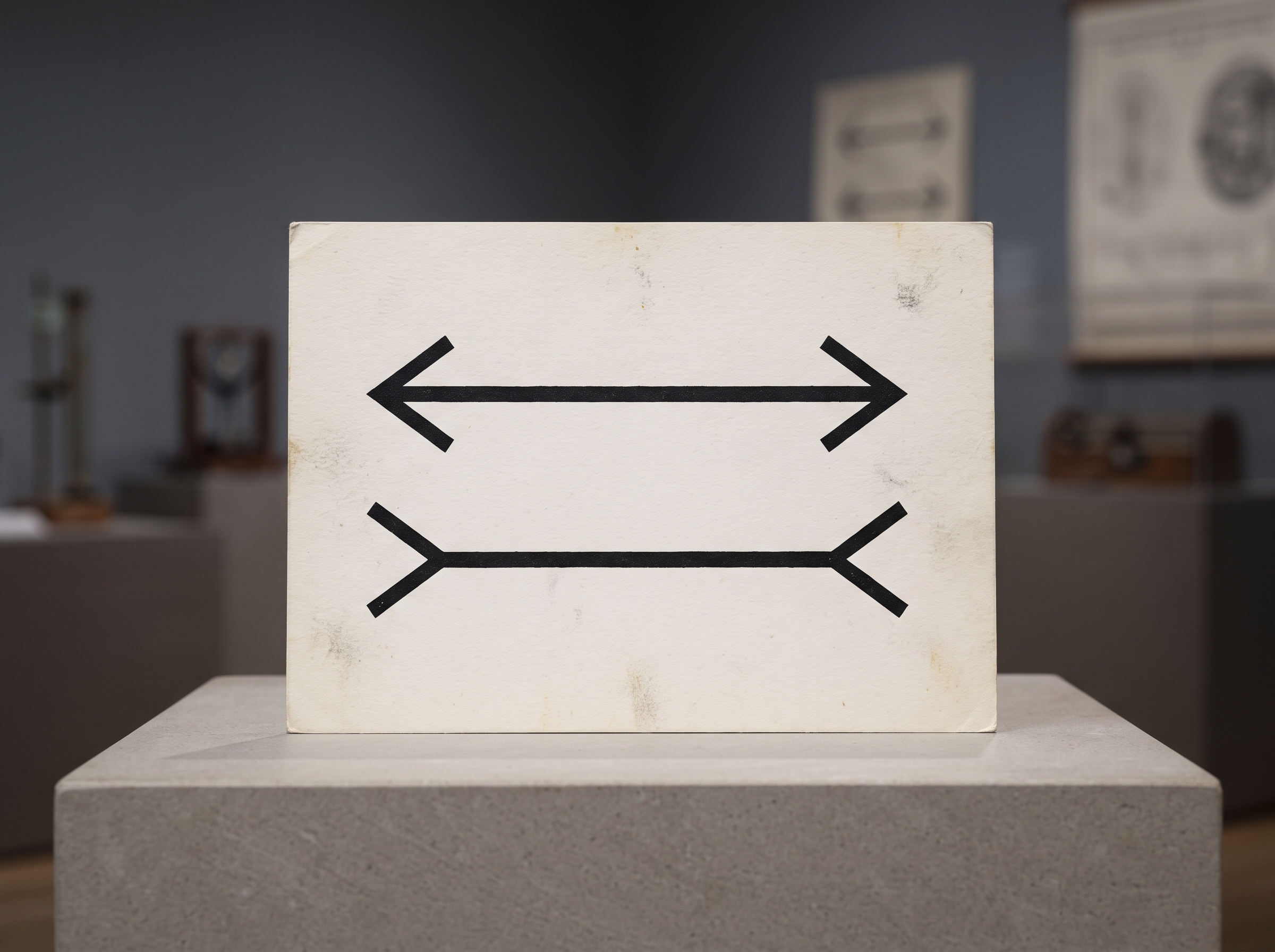
Müller-Lyer Illusion
A geometric optical illusion proving that System 1's automatic processing cannot be permanently overridden by System 2's factual knowledge.

Ego Depletion Apparatus
The bowl of radishes and plate of chocolate chip cookies used in Roy Baumeister's experiments to test willpower as a finite metabolic resource.
Glossary
- heuristic: A rapid, subconscious cognitive shortcut or rule of thumb deployed to bypass complex analytical calculations in favor of an immediate answer.
- availability bias: The systemic cognitive error where the mind estimates the probability of an event based entirely on how easily illustrative examples are recalled.
- ego depletion: The progressive exhaustion of finite mental energy and self-control reserves, leaving System 2 temporarily unable to override impulsive thoughts.
- base-rate neglect: A logical fallacy where the mind ignores broad statistical probabilities in favor of specific, emotionally vivid narrative descriptions.