Muscle Biopsy Slide
Curated by Kairo • Glycogen Depletion During a 26.2-Mile Marathon
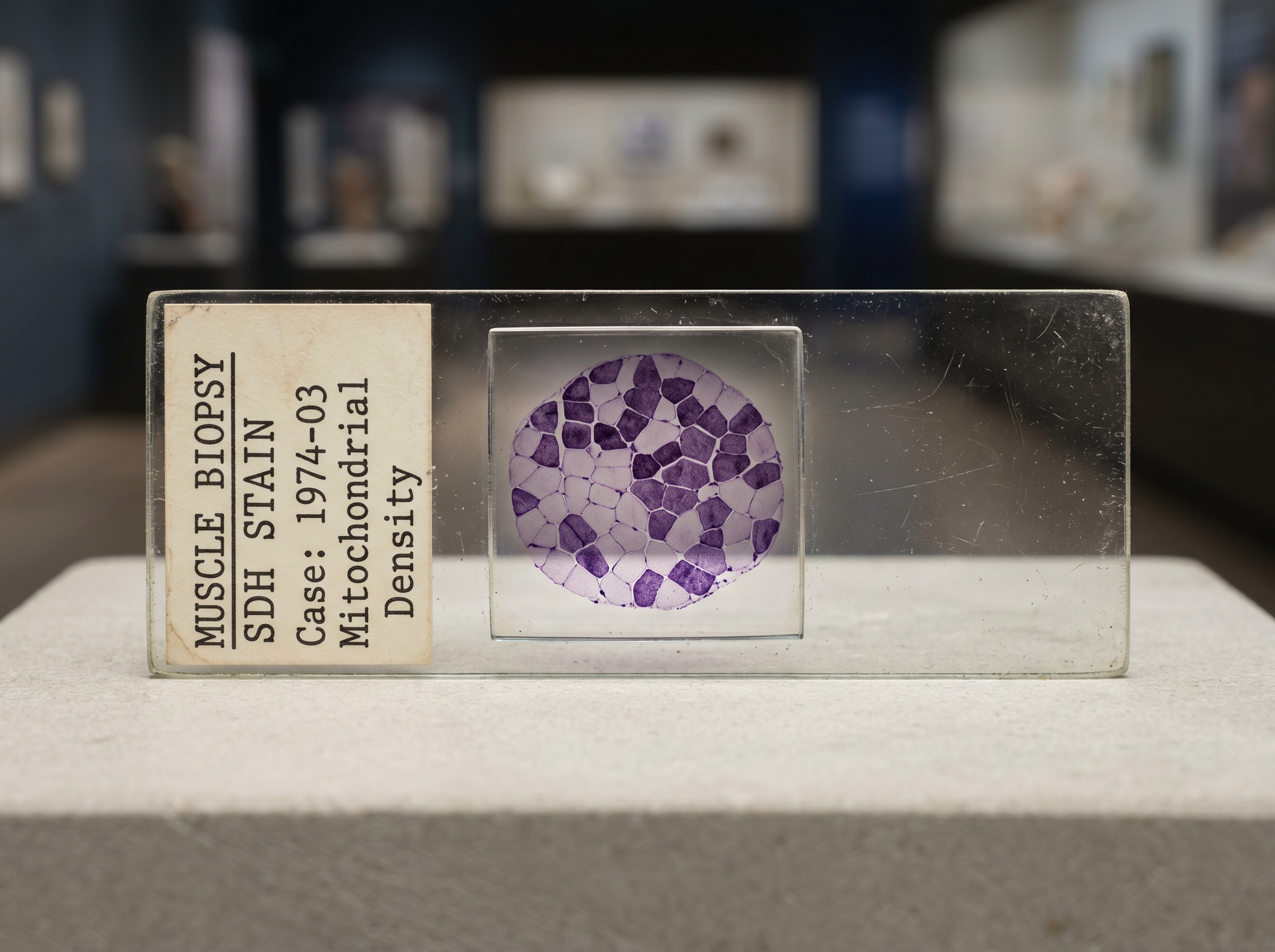
Artifact Details
A glass rectangular microscope slide with a thin, purple-stained cross-section of muscle tissue under a cover slip.
Primary Source
Glycogen Depletion During a 26.2-Mile Marathon
On July 24, 1908, Italian pastry baker Dorando Pietri entered the White City Stadium in London. He turned the wrong way on the cinder track. He collapsed five times. Medical attendants dragged him across the finish line, stripping him of the gold medal but cementing a specific distance into global athletic lore. The modern marathon measures exactly 26 miles and 385 yards. Officials did not calculate this distance to test human endurance or honor an ancient Greek courier. The measurement was an organizational accident. Organizers extended the track to accommodate the viewing preferences of the British royal nursery at Windsor Castle. That royal mandate created a race that perfectly aligns with the exact point of human glycogen depletion.
Read Study (17 min) →Artifacts

1908 London Route Map
Original surveyor's map dictating the precise path from Windsor Castle to the White City Stadium.

Leather Racing Shoes
A pair of thin-soled, un-cushioned leather running shoes typical of the early 20th-century marathon.

Glycogen Molecular Model
A detailed molecular model of the branched glycogen polymer.

Brass Racing Stopwatch
An analog mechanical stopwatch used to record finish times at the White City Stadium track.
Glossary
- glycogen: A highly branched polymer of glucose stored in the liver and skeletal muscles that serves as the body's primary rapidly accessible energy reserve.
- cinder track: An early 20th-century running surface constructed of compressed coal ash, clinker, and crushed stone, providing low energy rebound compared to modern synthetic tracks.
- hitting the wall: A physiological state of sudden, catastrophic fatigue occurring around mile 20 of a race when the body exhausts its glycogen stores.
- strychnine: A highly toxic crystalline alkaloid that was historically used in micro-doses as an extremely dangerous and unscientific central nervous system stimulant.