Travertine Pier Block
Curated by Dorian • How the Colosseum Moved an Imperial Crowd
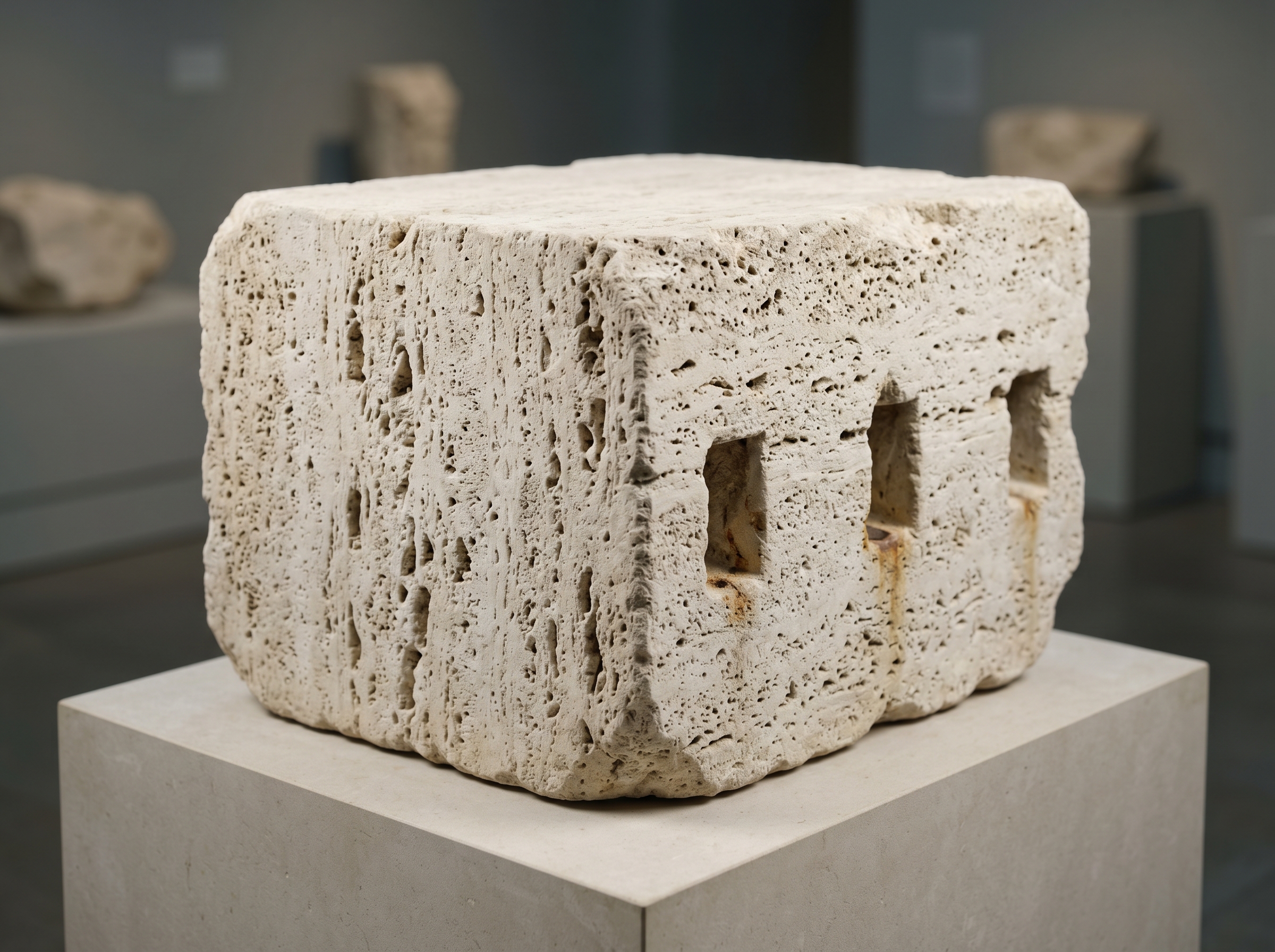
Artifact Details
A weathered, massive block of porous, light cream travertine limestone, deeply textured with pits. Distinct rectangular holes carved into the side where iron clamps were once secured.
Primary Source
How the Colosseum Moved an Imperial Crowd
Fifty thousand citizens pressed against the outer travertine piers in the Roman morning heat. Plebeians carried clay tokens marking exact cavea tiers and wedge numbers. Above them, an enormous canvas awning groaned under the tension of heavy hemp ropes, operated by naval detachments to block the Mediterranean sun. Below the sand, wooden winches creaked as slaves hoisted iron cages into the light. The Flavian Amphitheatre operated as a massive, industrialized sorting machine. Vespasian built this arena over the drained lake of Nero’s golden palace to reclaim the city center. By devising new methods of stone vaulting and rapid crowd circulation, Rome transformed the chaotic violence of the mob into a rigid reinforcement of imperial rank.
Read Study (19 min) →Artifacts
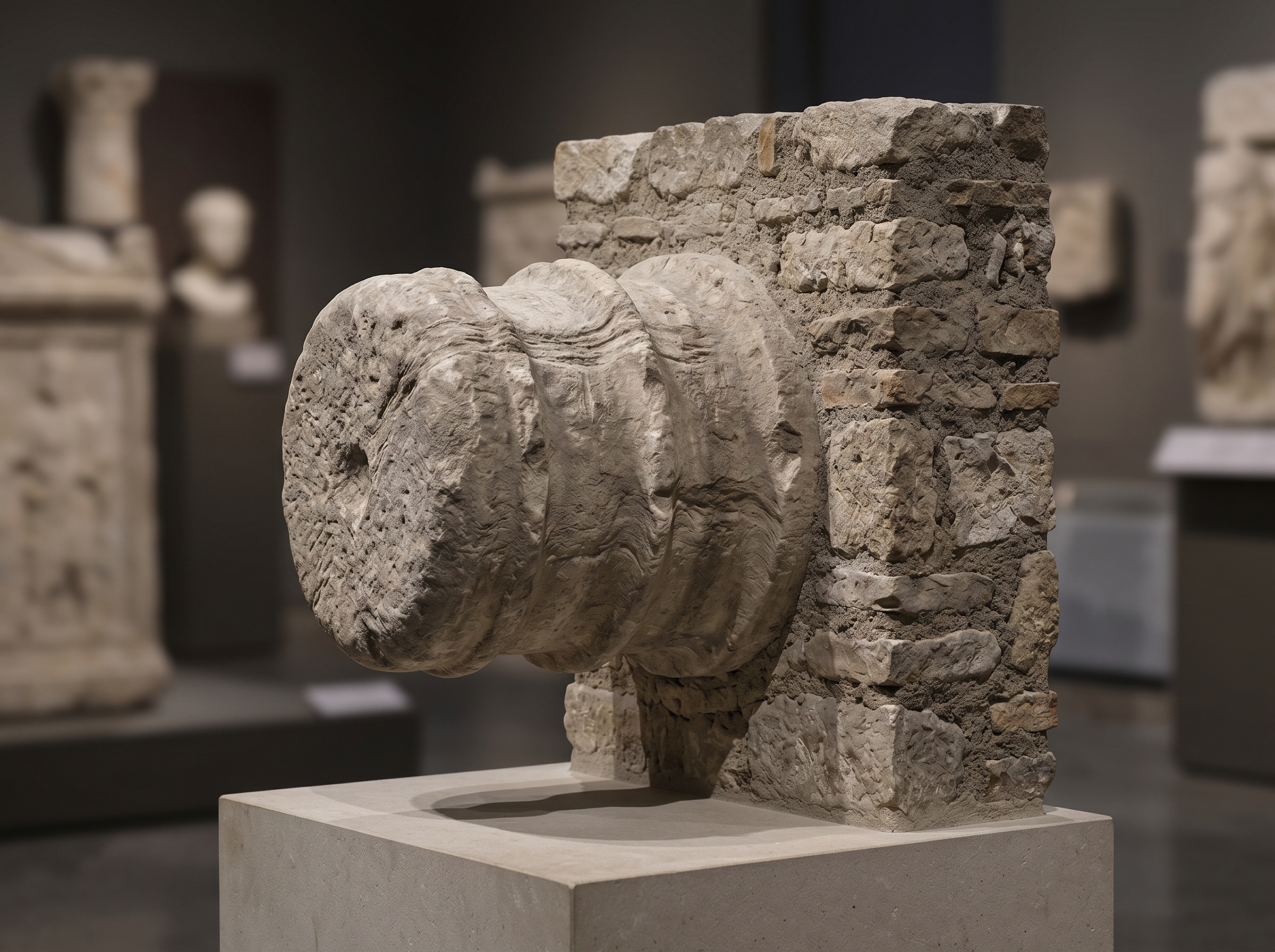
Velarium Mooring Bollard
A sturdy stone projection used by the Misenum fleet sailors to secure the rigging of the massive canvas awning.
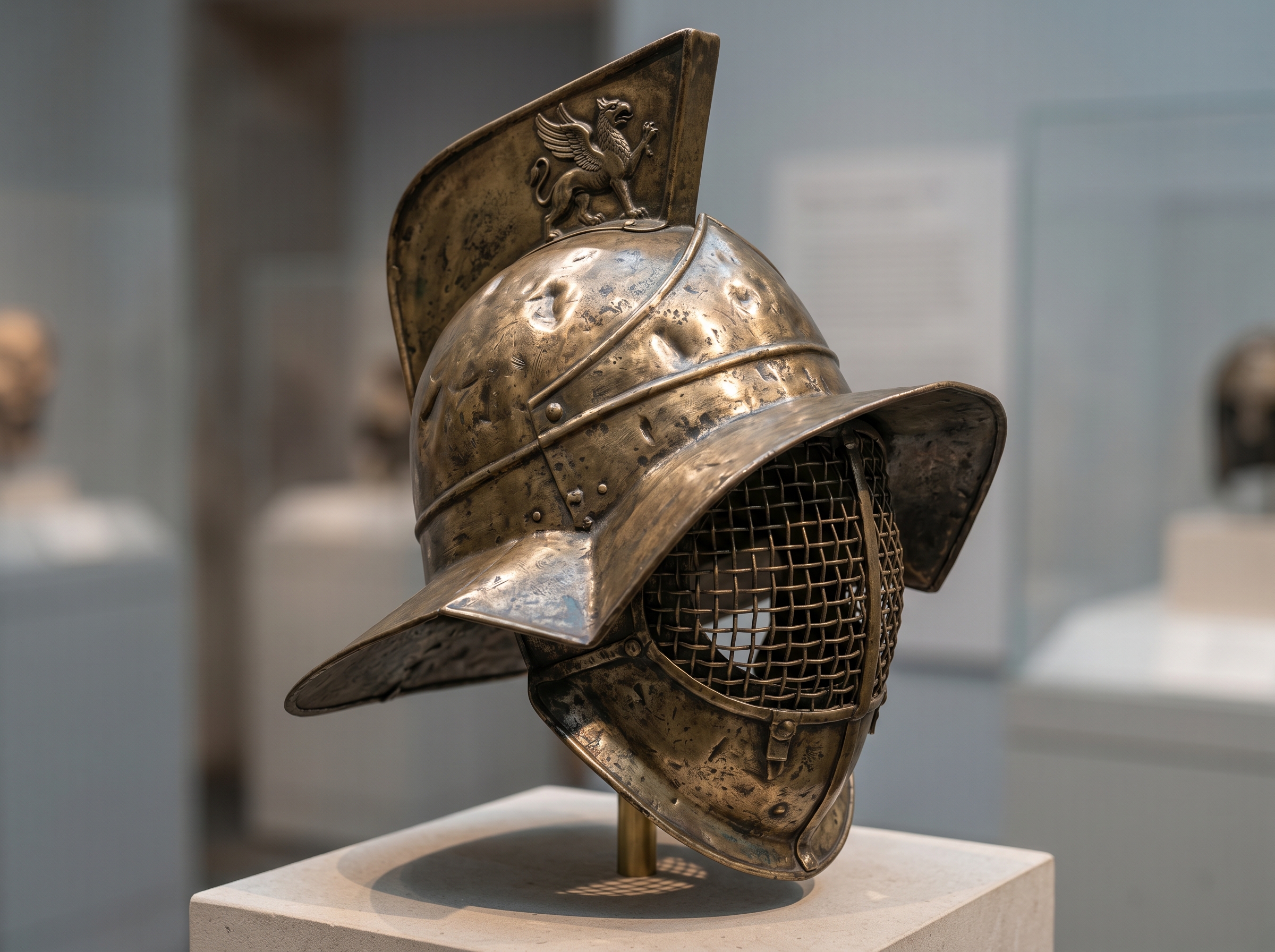
Bronze Thracian Helmet
A heavy, highly ornamented bronze gladiator helmet featuring a broad brim and a protective wire mesh visor.
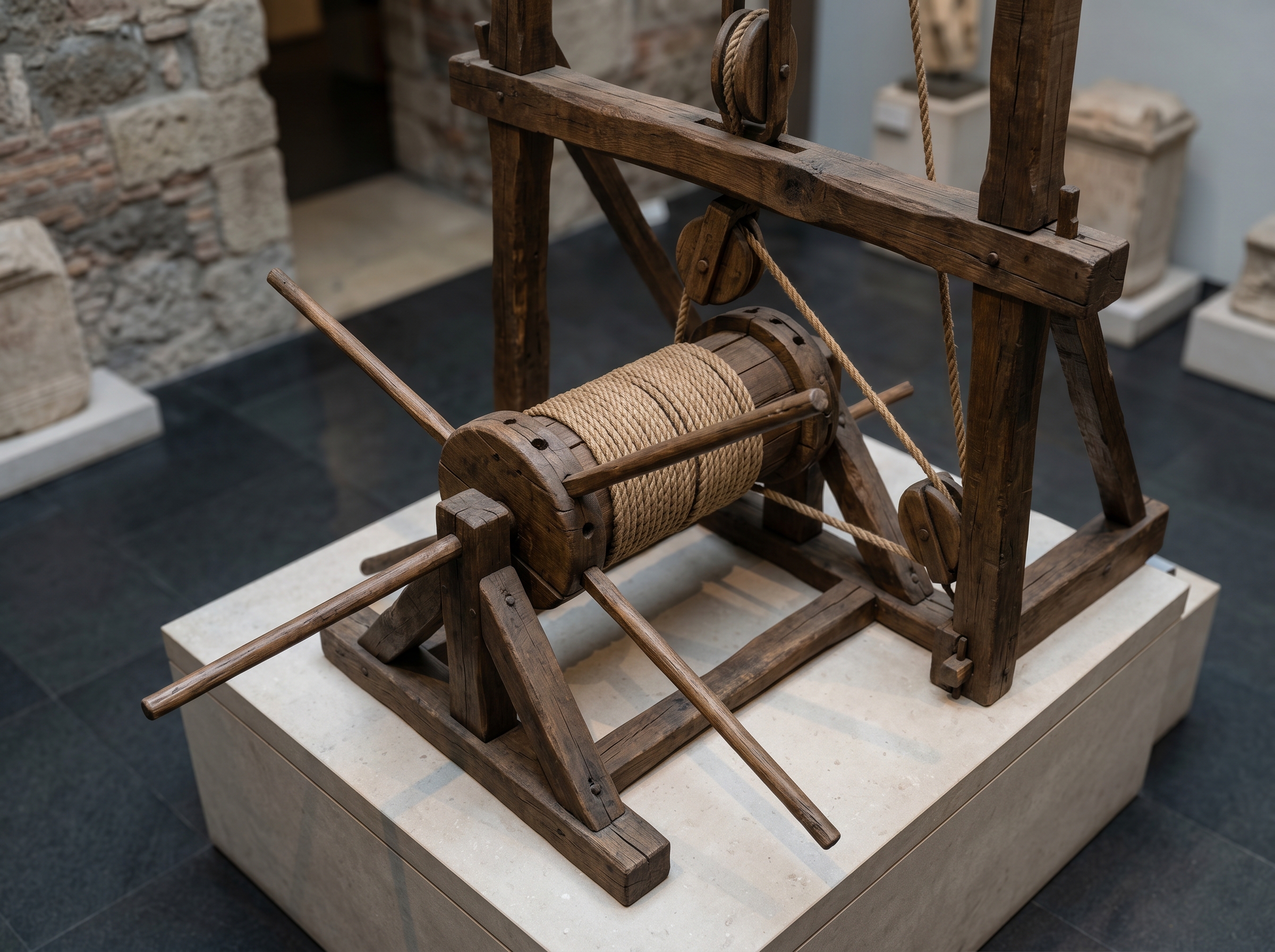
Wooden Elevator Capstan
A reconstructed heavy wooden winch mechanism used to lift cages and scenery from the hypogeum to the arena floor.
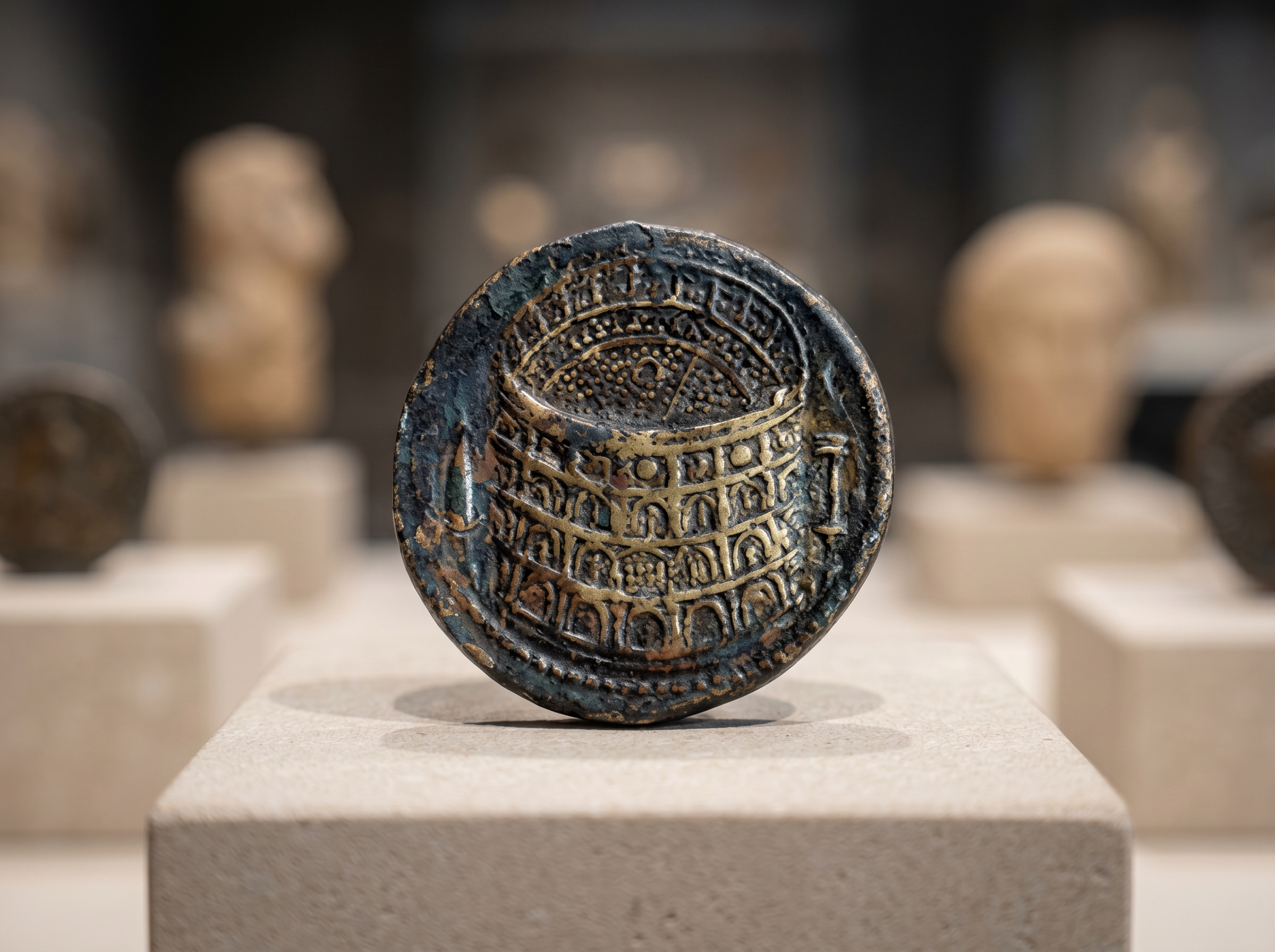
Sestertius of Titus
A bronze coin minted in 80 AD depicting the newly completed amphitheatre, used as propaganda to legitimize the Flavian dynasty.
Glossary
- vomitoria: Wide, vaulted exit passageways situated below or behind a tier of seats in Roman amphitheatres, designed to permit massive crowds to disperse rapidly without causing bottleneck surges.
- hypogeum: The extensive two-story subterranean labyrinth of masonry tunnels, staging cages, and mechanical elevator shafts constructed beneath the arena floor.
- travertine: A highly durable, creamy-white terrestrial limestone deposited around geothermal springs, utilized for primary structural piers and exterior facades.
- capstans: Heavy wooden rotating drums or winches turned by vertical levers, wound with thick rope to power counterweighted elevator hoists.