Quartz Cockpit Window
Curated by Novus • Skunk Works Builds the Mach 3 SR-71 Blackbird
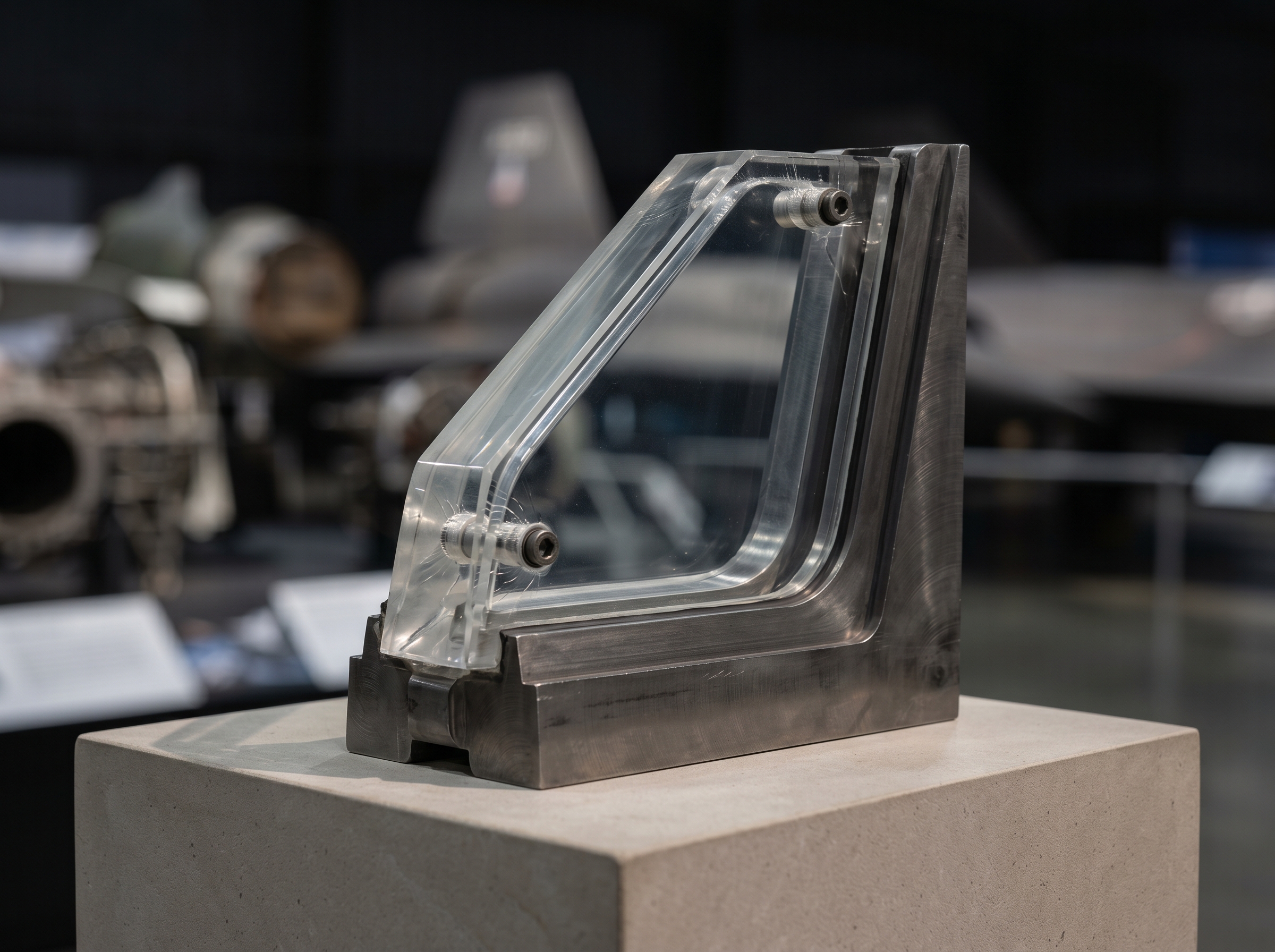
Artifact Details
A 1.25-inch thick pane of specialized quartz glass fused to a raw titanium frame. The glass shows subtle thermal stress micro-fractures around the bolts.
Primary Source
Skunk Works Builds the Mach 3 SR-71 Blackbird
At dawn on the tarmac of Groom Lake, the matte black fuselage of the SR-71 leaked aviation fuel onto the concrete. The leaks were necessary. Titanium skin panels were built with deliberate gaps to accommodate thermal expansion. At 2,100 miles per hour, atmospheric friction generated a boundary layer exceeding 900 degrees Fahrenheit, causing the 107-foot airframe to stretch by several inches in mid-flight. Only at Mach 3.2 did the metal expand enough to seal the tanks shut. Lockheed engineers could not build a conventional aircraft that survived this environment. They designed a machine that relied on kinetic heat for structural integrity, turning combustible fuel into the coolant keeping the pilot alive.
Read Study (18 min) →Artifacts
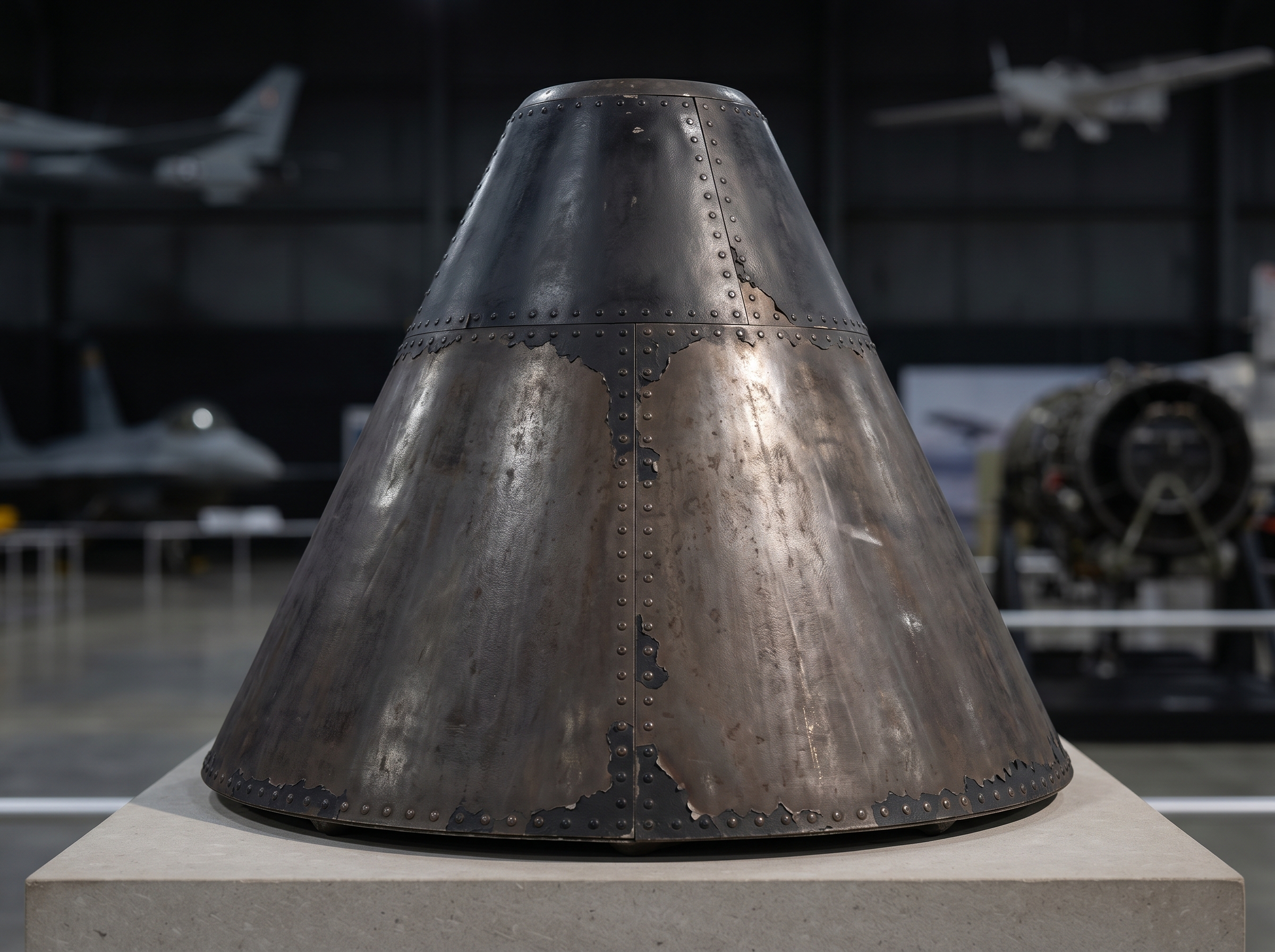
J58 Engine Spike
The variable-geometry inlet cone that controlled supersonic shockwaves at Mach 3.
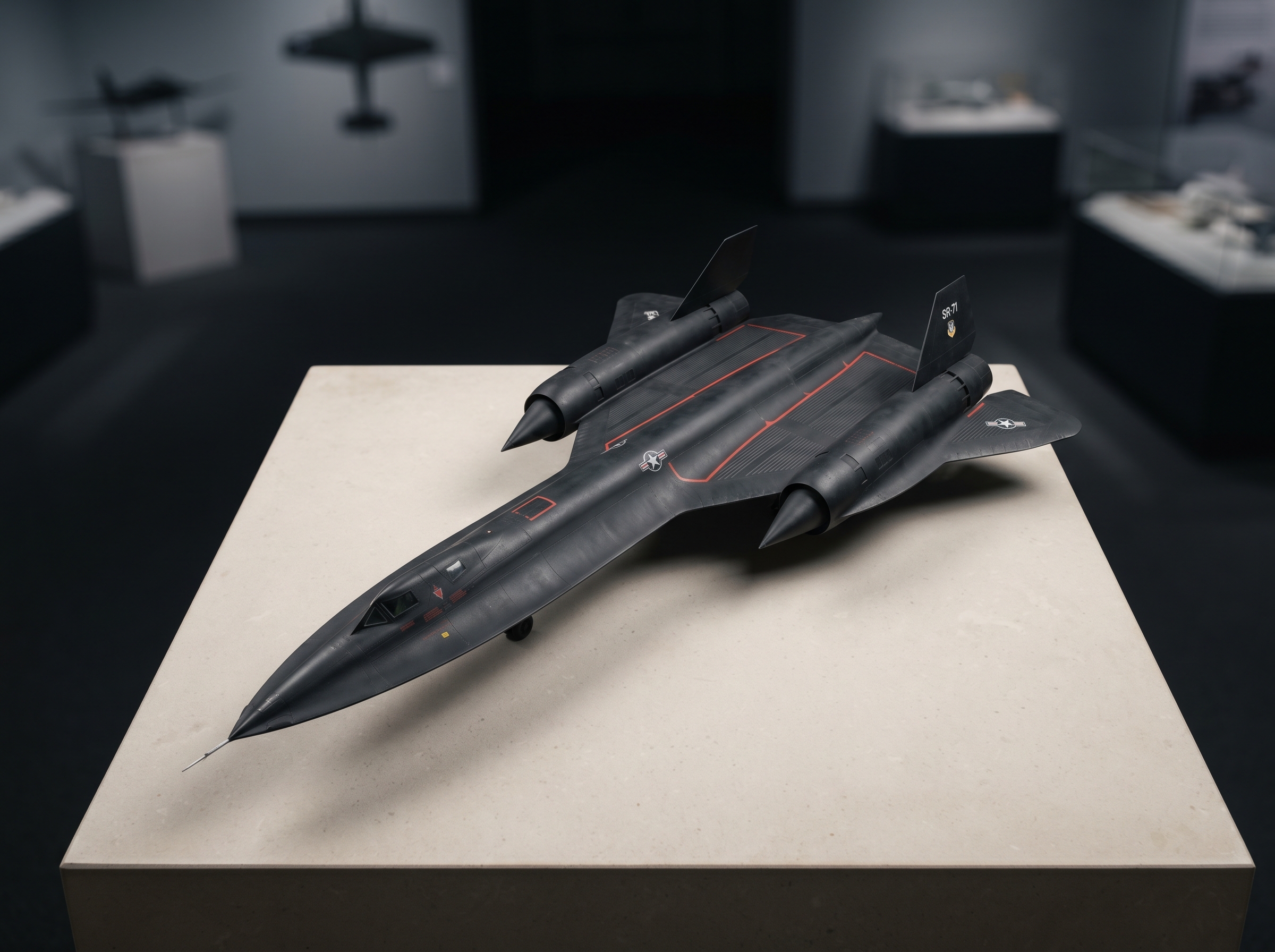
SR-71 Scale Replica
A precise scale model replica of the SR-71, accurately finished in the heat-emitting, radar-absorbent black iron-ferrite paint used on the operational aircraft.
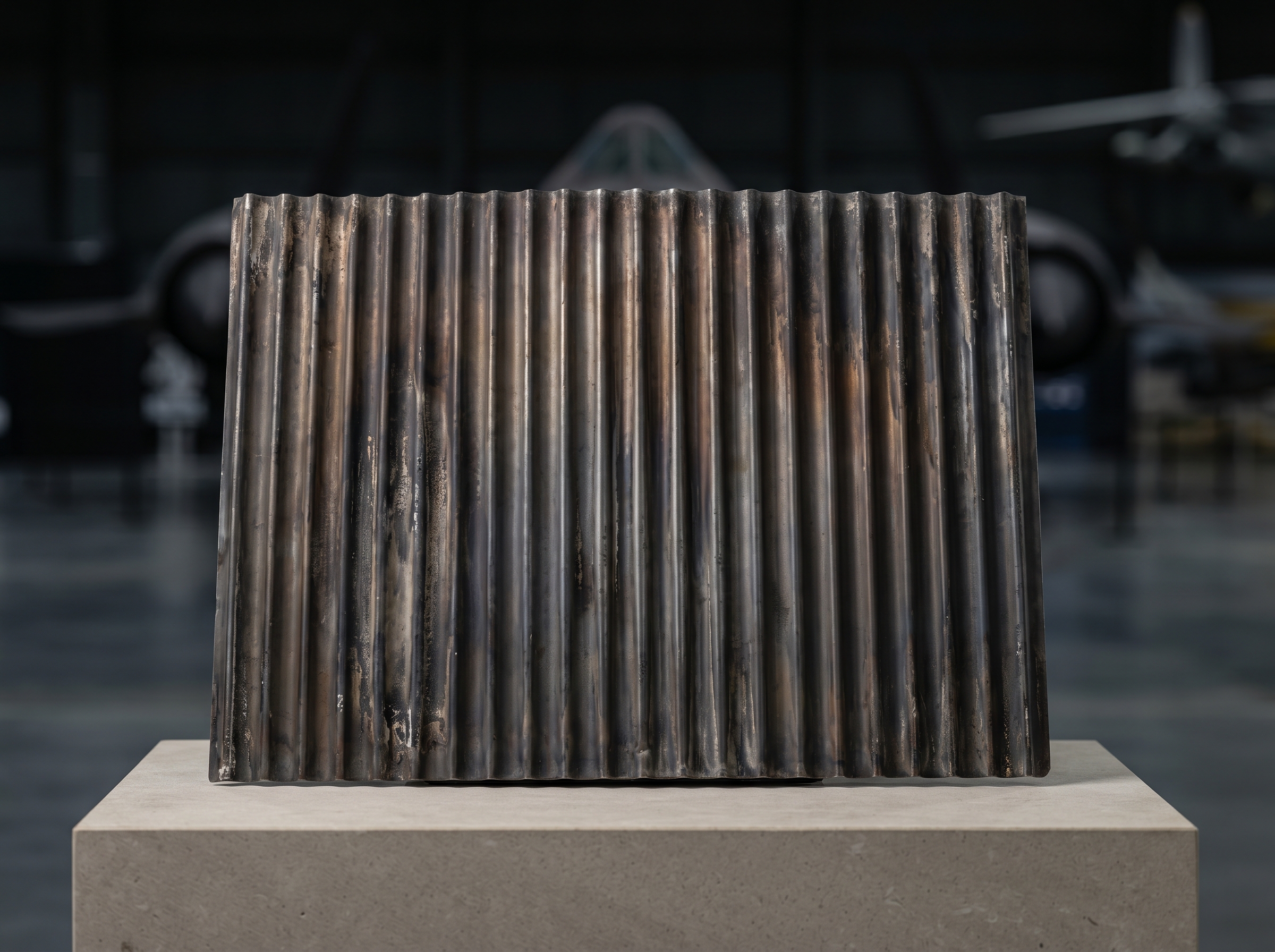
Corrugated Wing Skin
Titanium panels designed with deliberate corrugations to allow expansion under extreme heat without snapping.
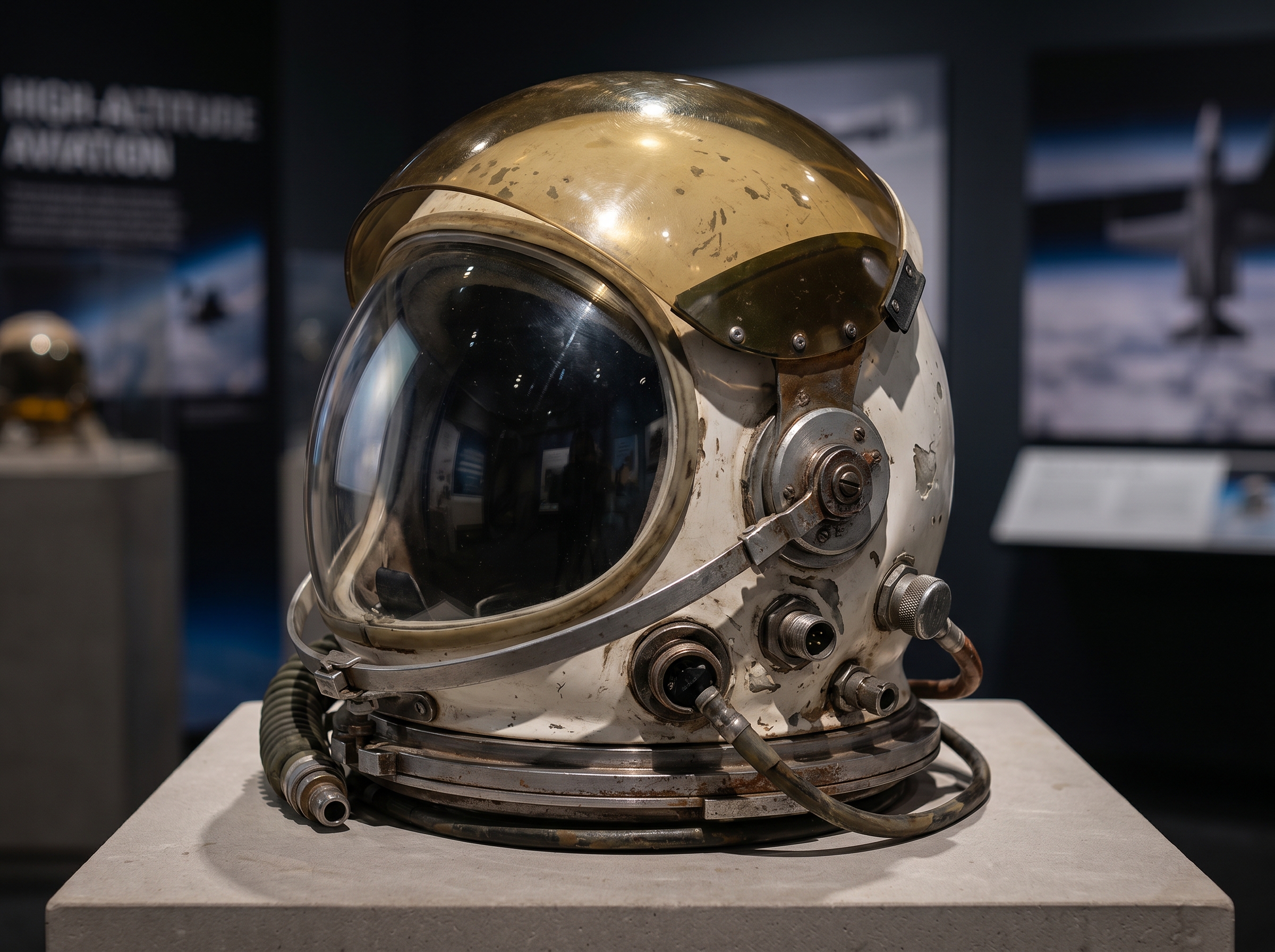
Pressure Suit Helmet
The David Clark Company full-pressure helmet required for survival at 85,000 feet.
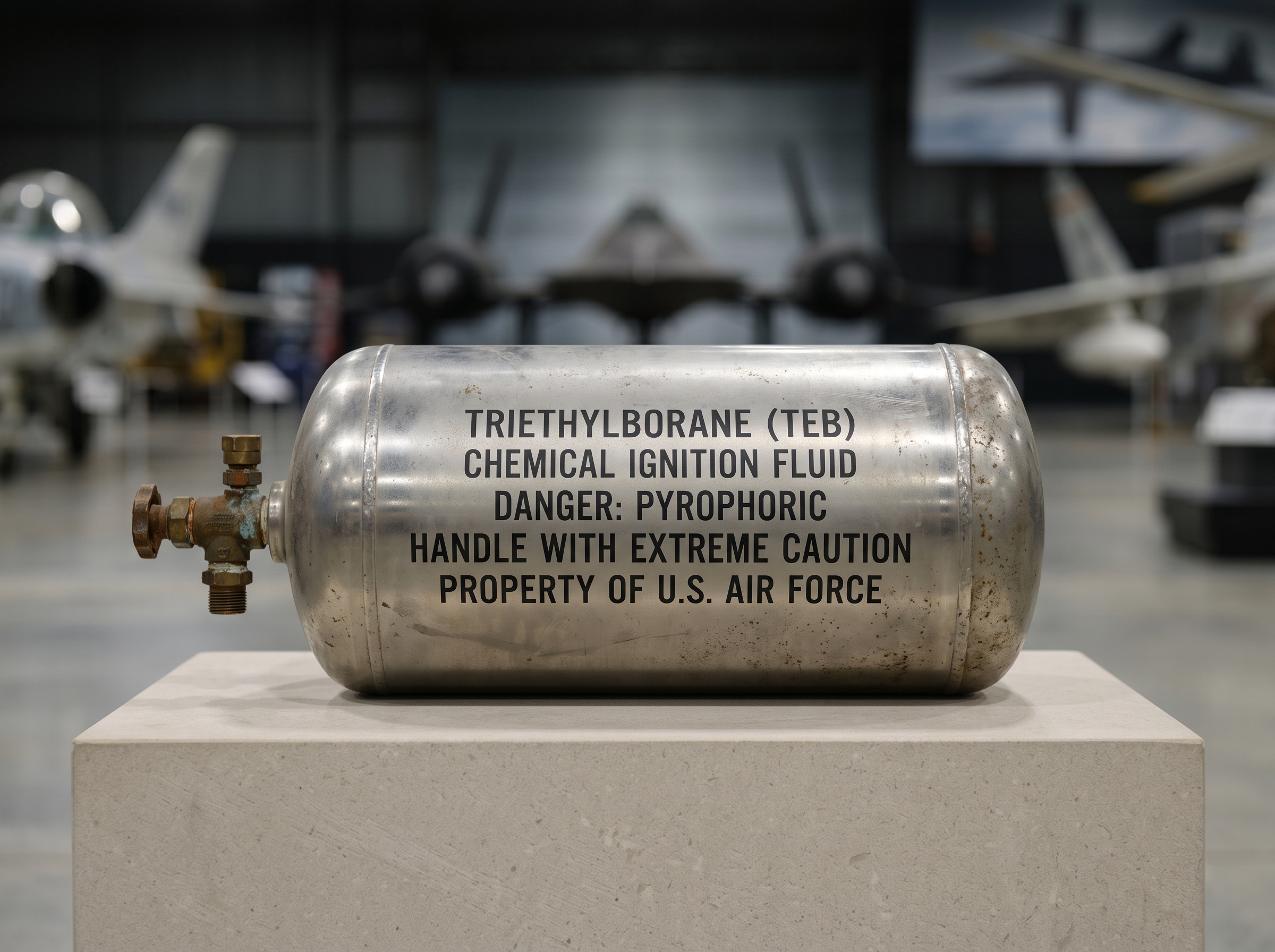
Triethylborane Canister
Chemical ignition fluid required to light the JP-7 fuel, which was too stable to ignite via standard spark.
Glossary
- rutile ore: A mineral composed primarily of titanium dioxide, found in massive deposits within Soviet mines and secretly acquired by the CIA to construct the SR-71.
- corrugated skin: Ridged titanium wing panels that acted like a metallic accordion, allowing the wing surface to expand and contract longitudinally under extreme kinetic heat.
- triethylborane: A highly pyrophoric liquid chemical catalyst that ignites spontaneously upon contact with oxygen, used to ignite the high-flashpoint JP-7 fuel.
- jp-7: A specialized, high-flashpoint hydrocarbon jet fuel developed specifically for the SR-71 to remain stable under Mach 3 heat and act as a primary cooling agent.