Standard Diving Dress
Curated by Altair • The Antikythera Mechanism’s 30 Surviving Gears
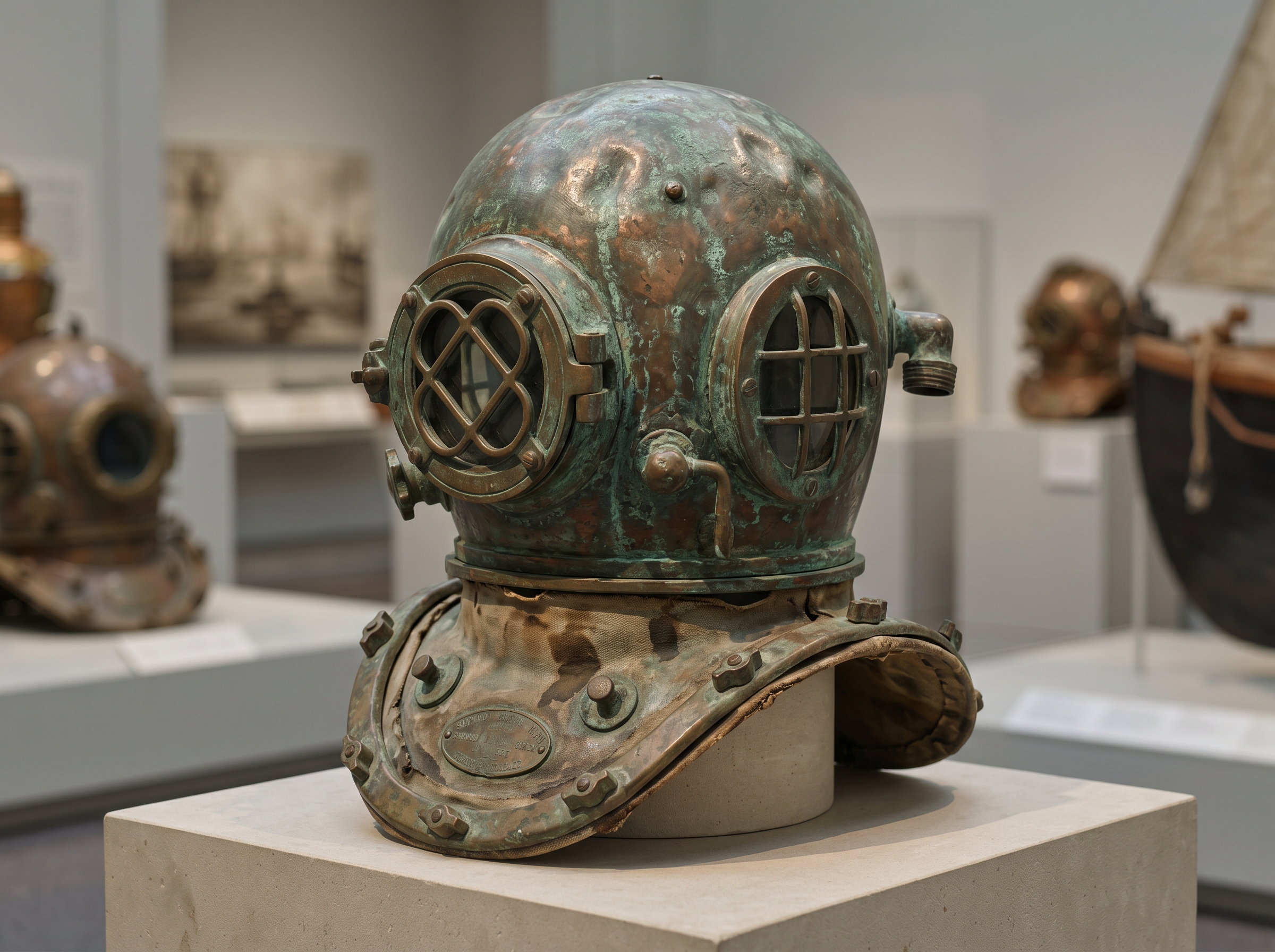
Artifact Details
A battered, copper diving helmet with thick glass viewports, attached to a heavy canvas collar. Wet, oxidized, resting on a wooden deck. Late 19th-century salvage equipment.
Primary Source
The Antikythera Mechanism’s 30 Surviving Gears
In the spring of 1901, Greek sponge divers working off the rugged coast of Antikythera surfaced with a heavily calcified lump of bronze. Dragged from a depth of 45 meters, the corroded mass appeared indistinguishable from the seabed rock. When the lump cracked open inside the National Archaeological Museum in Athens, it revealed a densely packed matrix of millimeter-scale bronze gear teeth. For decades, historians dismissed the artifact as an intrusive later deposit. Physical evidence contradicted the established timeline of human engineering. This bronze matrix operated as an epicyclic gear computer built in the second century BC, proving that Hellenistic mechanics achieved a level of analog computation unmatched until the 14th century.
Read Study (16 min) →Artifacts
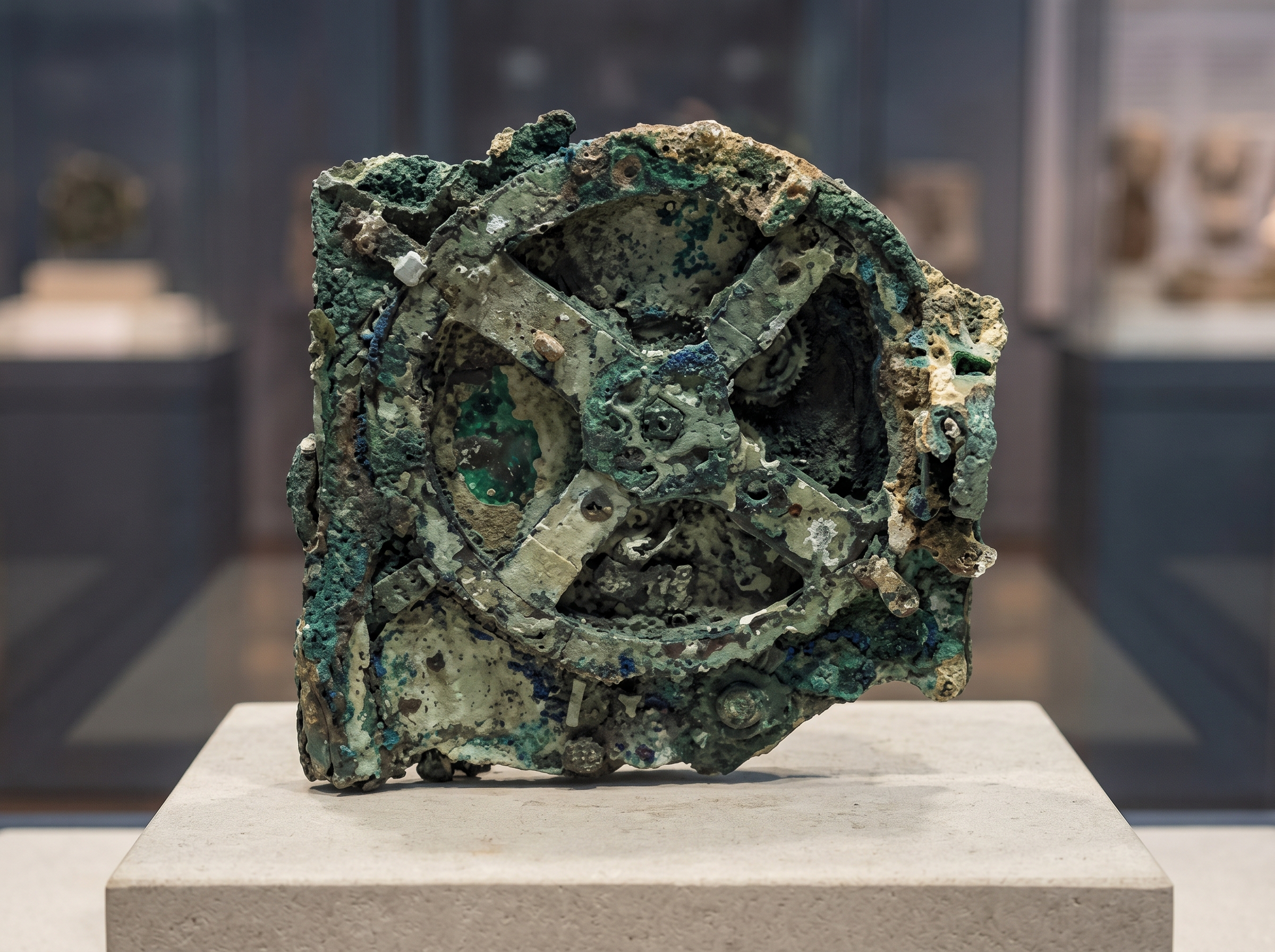
Corroded Fragment A
The largest surviving lump of the mechanism, containing the visible four-spoked main drive wheel.
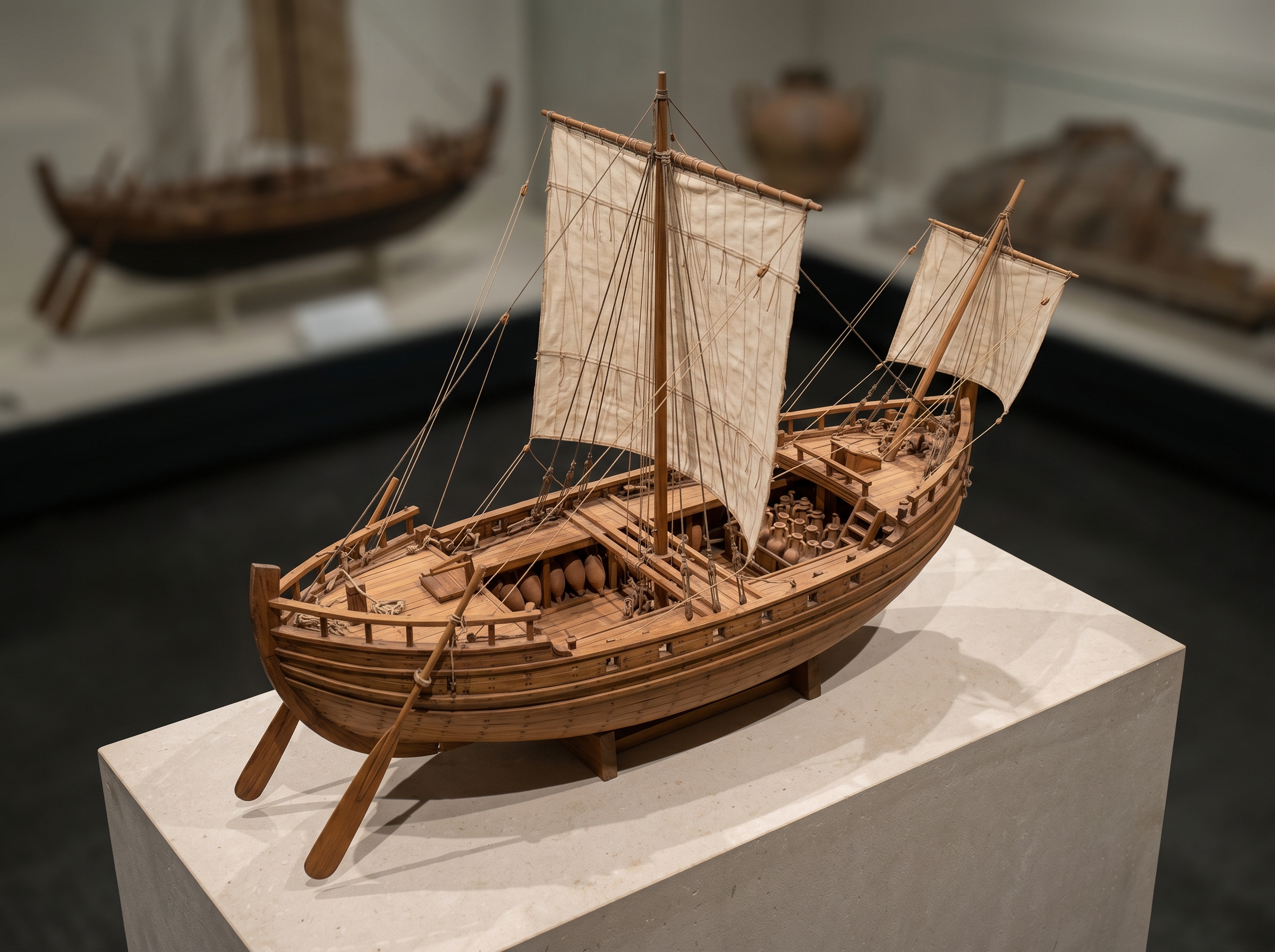
Roman Corbita Ship Model
A scale representation of the first-century BC broad-beamed Roman merchant freighter that carried the mechanism.
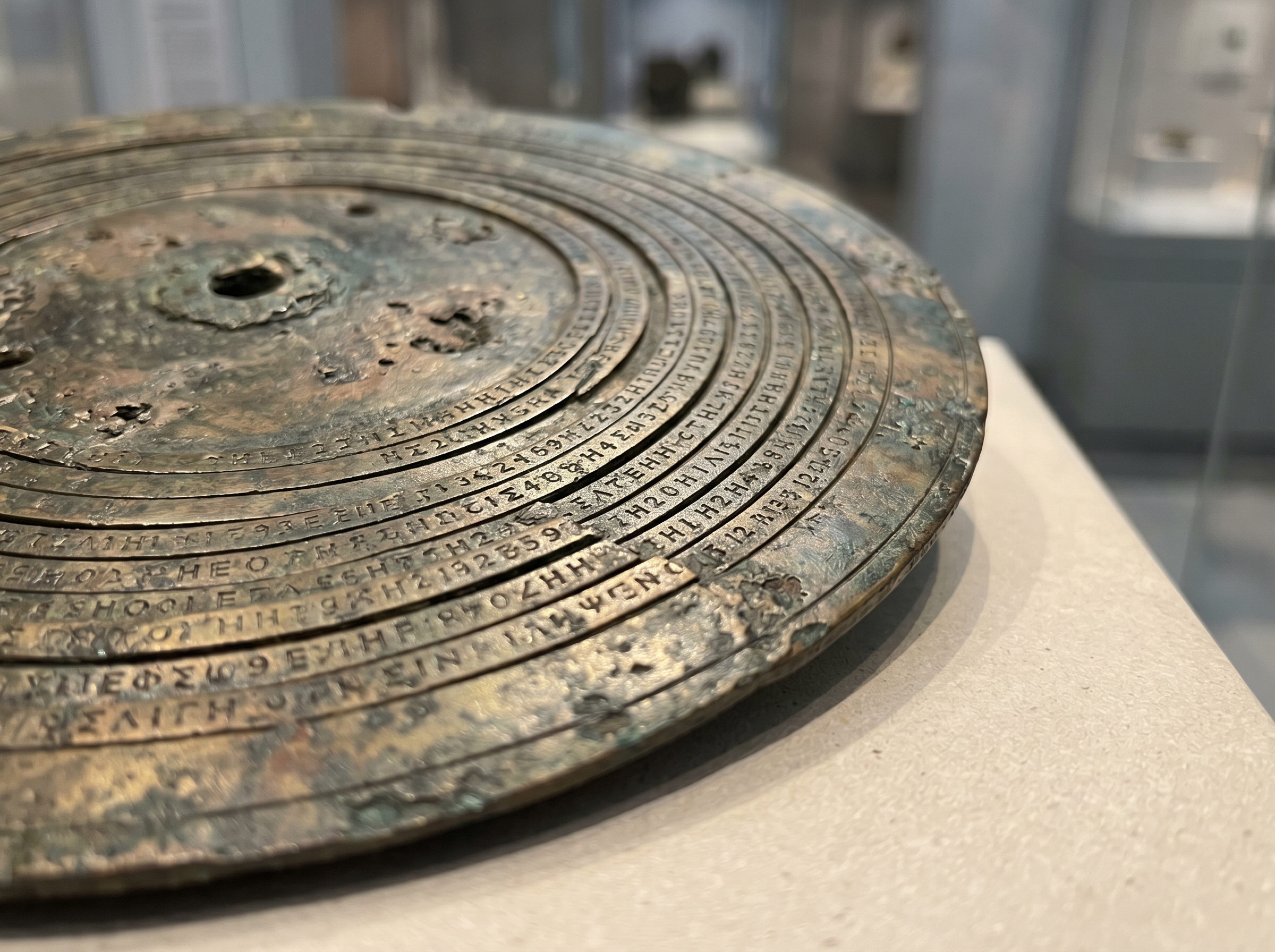
Saros Dial Inscription
Minute Greek characters engraved on the rear spiral dial indicating eclipse predictions.
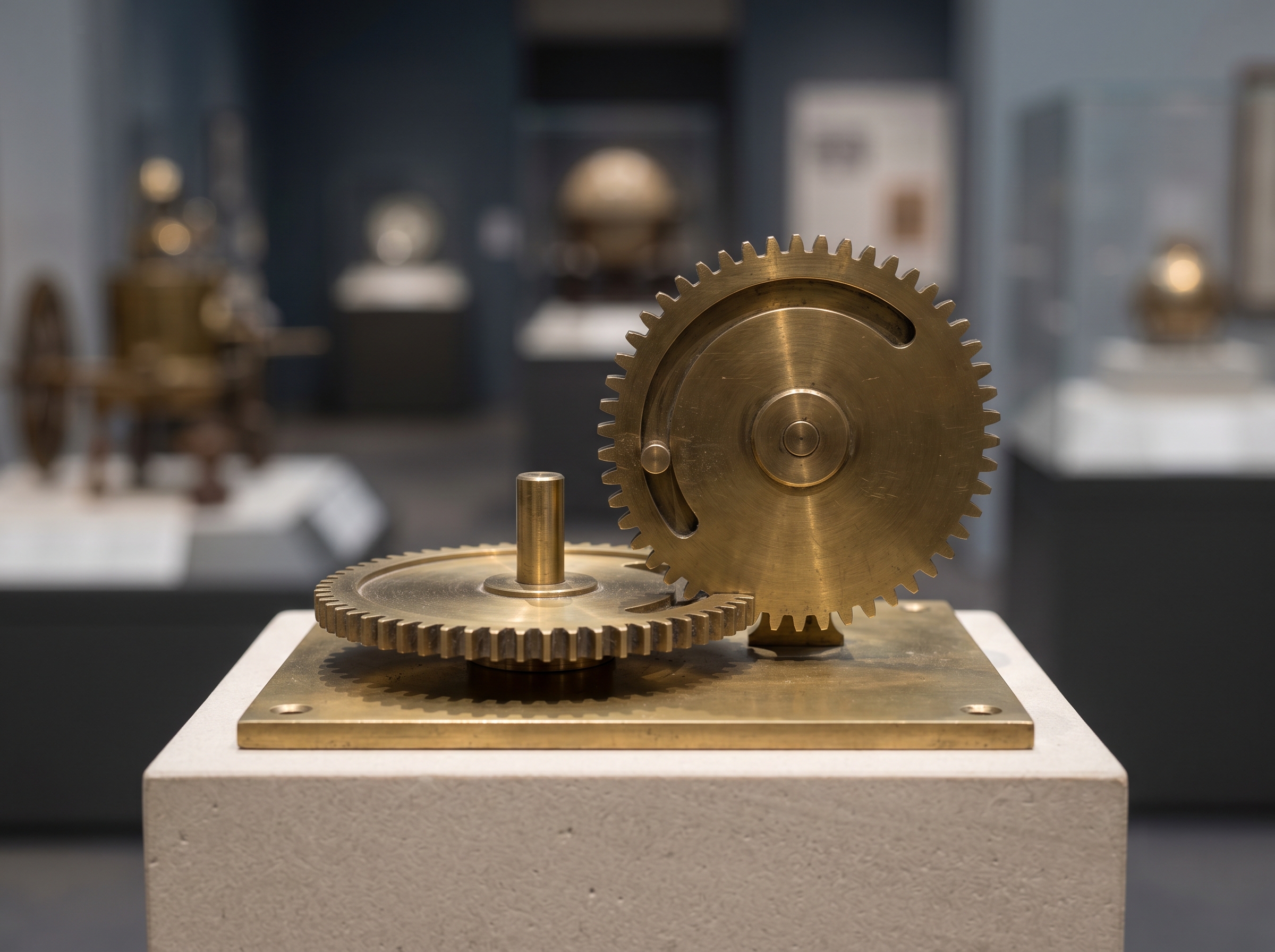
Pin-and-Slot Mechanism
A mechanical linkage designed to replicate the variable velocity of the moon's elliptical orbit.
Glossary
- epicyclic gearing: An advanced planetary gear system where one or more outer gears rotate around a central sun gear, used to model complex orbital variations.
- pin-and-slot: An ingenious mechanical linkage that links offset gears with a sliding pin to translate uniform motion into variable planetary velocity.
- calcification: The biological and chemical accumulation of dense calcium carbonate crusts that fused the submerged bronze mechanism over millennia.
- amphorae: Two-handled ancient clay jars of standardized capacity, primarily used by Greek and Roman merchants to transport oil, wine, or grain.