Campanian Pozzolana Sample
Curated by Dorian • The Pantheon’s 43-Meter Unreinforced Concrete Dome
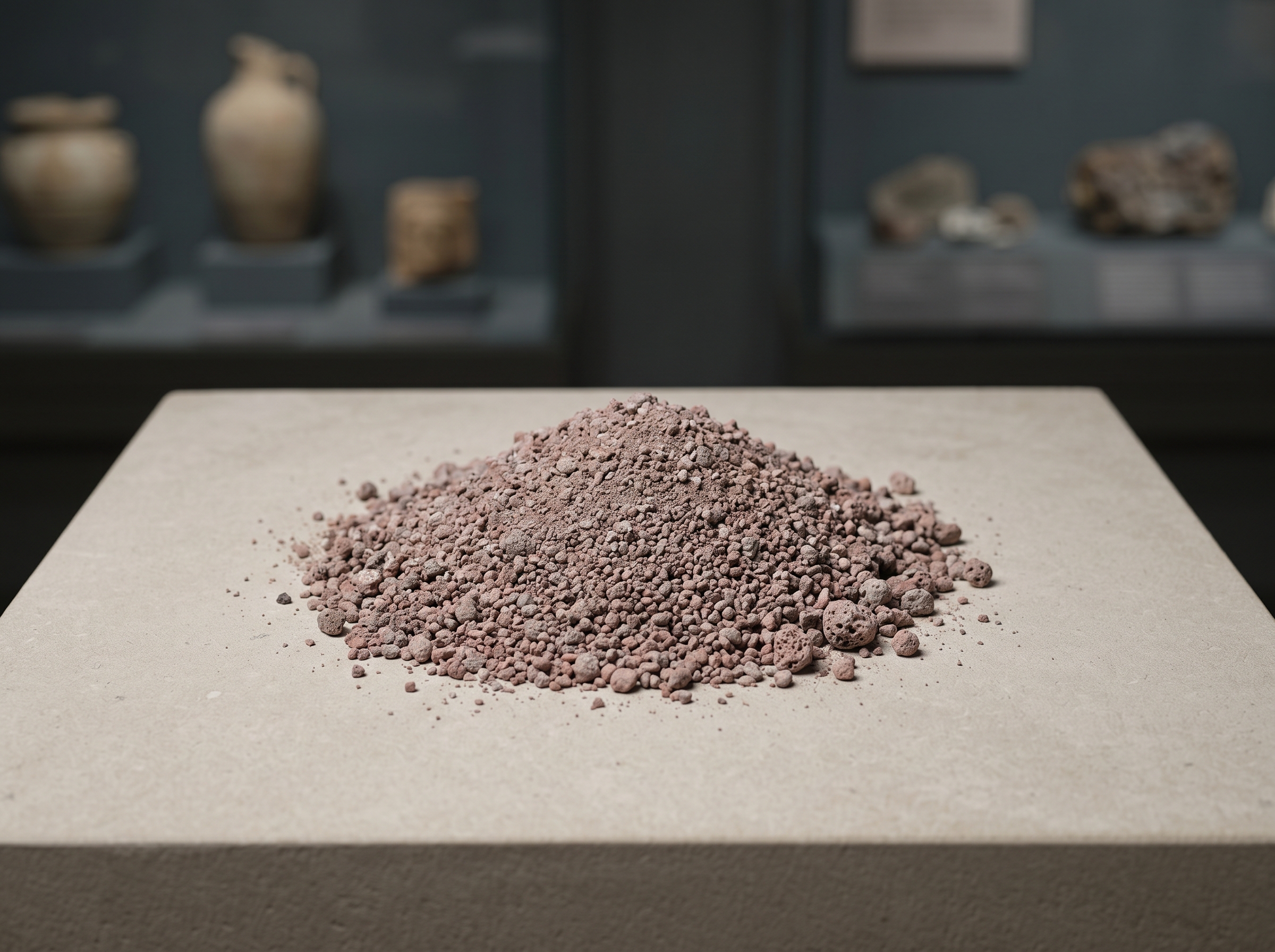
Artifact Details
A small, stark pile of coarse, reddish-grey, pumice-rich volcanic sand. A precise, sharply focused macro photograph revealing the abrasive, dry texture of the silica-rich ash. No background elements.
Primary Source
The Pantheon’s 43-Meter Unreinforced Concrete Dome
A wooden mold forms a circle 8.2 meters wide against the blinding Roman sky. Below it, thousands of tons of slaked lime, volcanic ash, and pumice rest on a vast timber centering scaffold. It is A.D. 125. Workers pour the final layers of opus caementicium around the central ring, completing a 43.3-meter hemispherical vault. Gravity immediately attempts to pull the structure apart. Unreinforced concrete possesses immense compressive strength but shatters under expansive tension. If a dome this massive acts as a rigid shell, lateral forces will rip it open at the base. Rome's builders neutralized this destructive force by constructing a pre-fractured artificial mountain that yields to the load of its own mass.
Read Study (16 min) →Artifacts
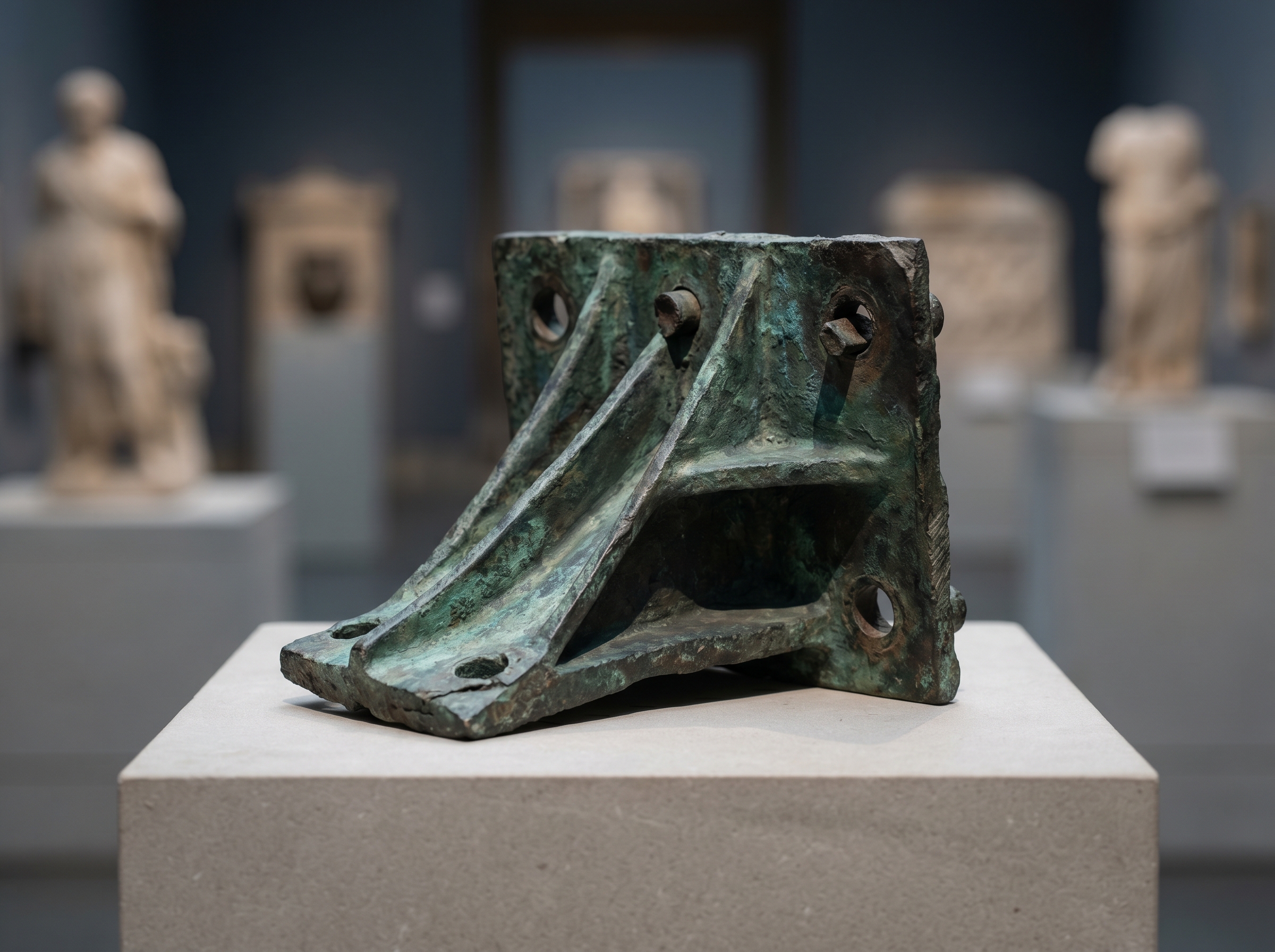
Bronze Truss Bracket
A surviving fragmented joining bracket from the structural bronze roof trusses of the Pantheon portico, before Pope Urban VIII melted them down in 1626.
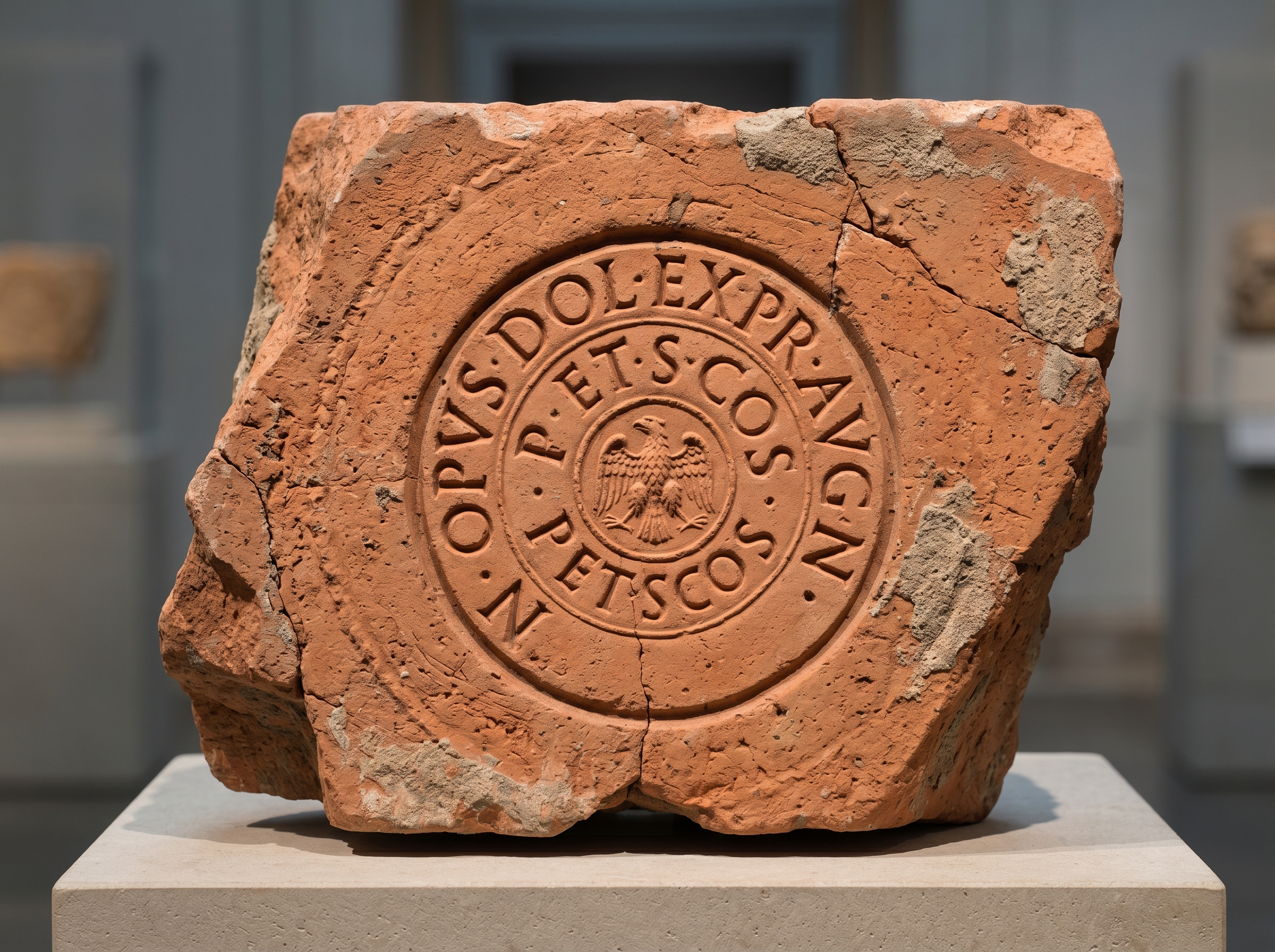
Trajanic Brick Stamp
A fired clay brick extracted from the Pantheon rotunda structure, stamped with the consular date marking its manufacture during the reign of Trajan.
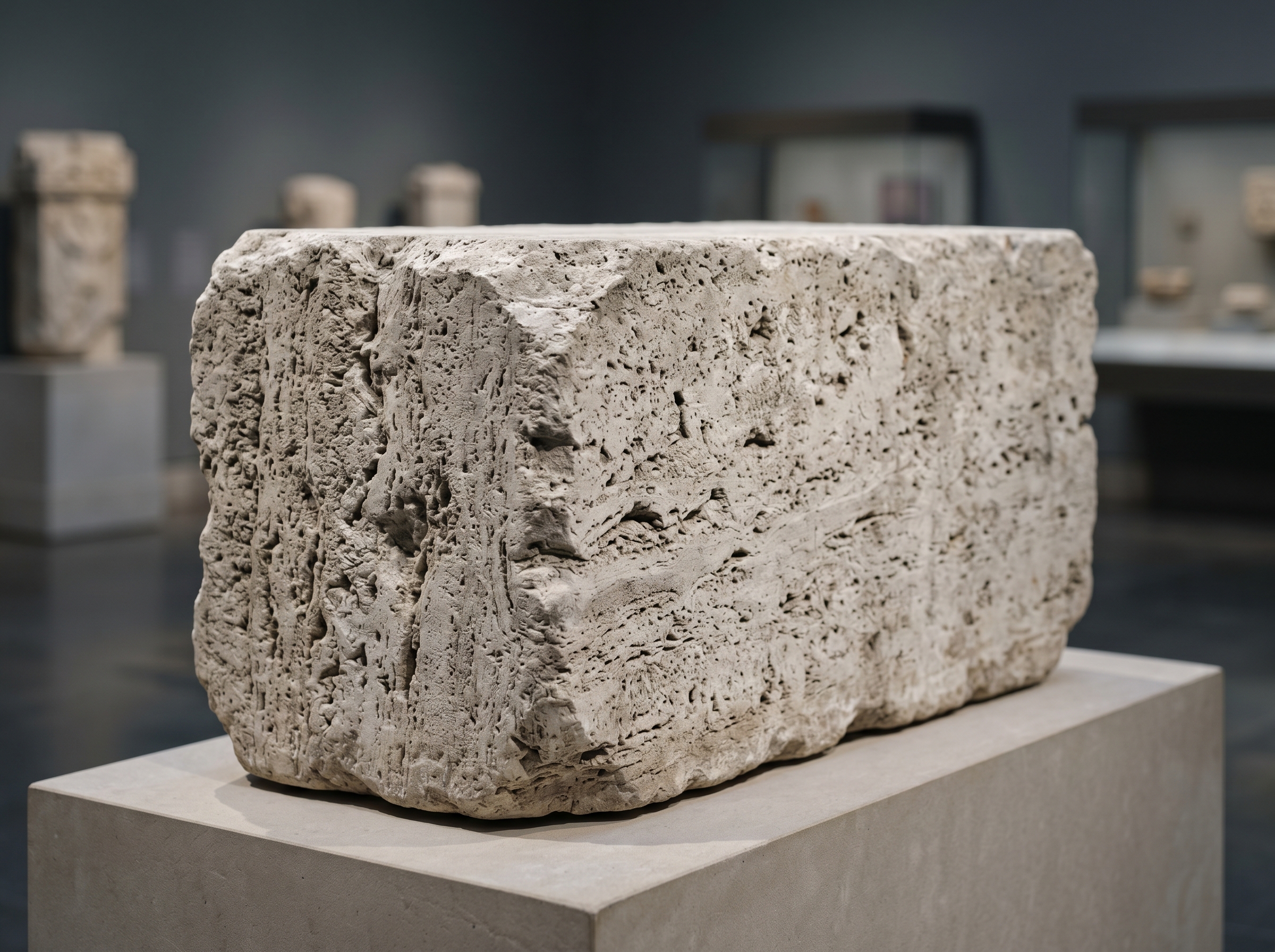
Travertine Foundation Block
A solid, block of dense Roman travertine stone used in the deep subterranean ring wall that supports the immense weight of the structure.
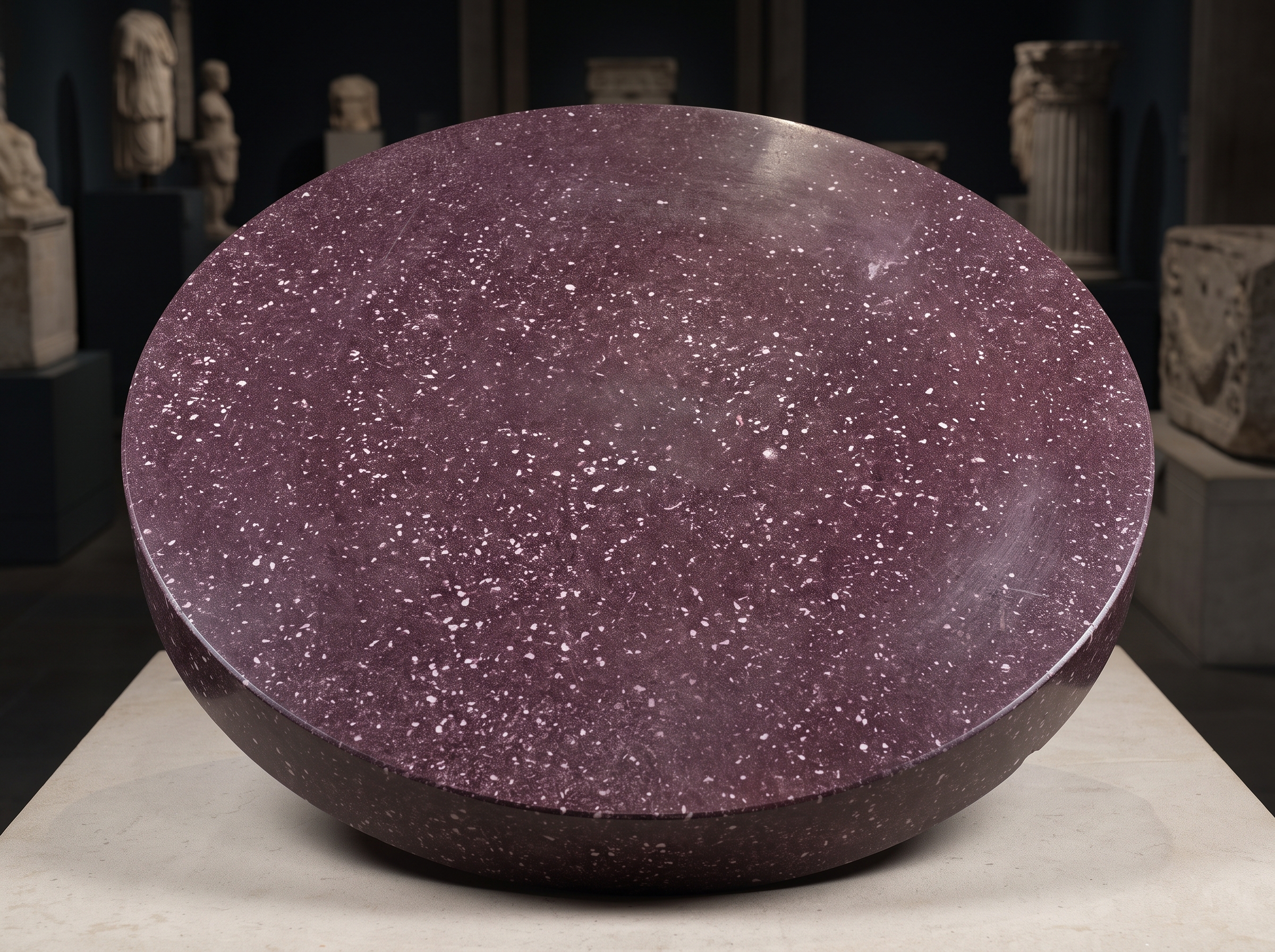
Porphyry Floor Roundel
A massive, heavy disc of imperial purple porphyry stone, cut for the geometric floor pattern of the Pantheon. Extracted from the single quarry at Mons Porphyrites in Egypt.
Glossary
- opus caementicium: Roman concrete; a highly durable building material composed of a hydraulic mortar (slaked lime and volcanic pozzolana) mixed with stone and brick aggregates.
- oculus: The circular opening at the apex of a dome. In the Pantheon, it acts as a compression ring that stabilizes the vault while reducing dead weight at its weakest point.
- coffers: A series of deeply recessed panels in the ceiling dome, designed to geometrically reduce the massive dead weight of the concrete without compromising structural strength.
- hoop stress: The circumferential tension in a dome that pushes outward toward the base, threatening to tear unreinforced masonry structures apart.