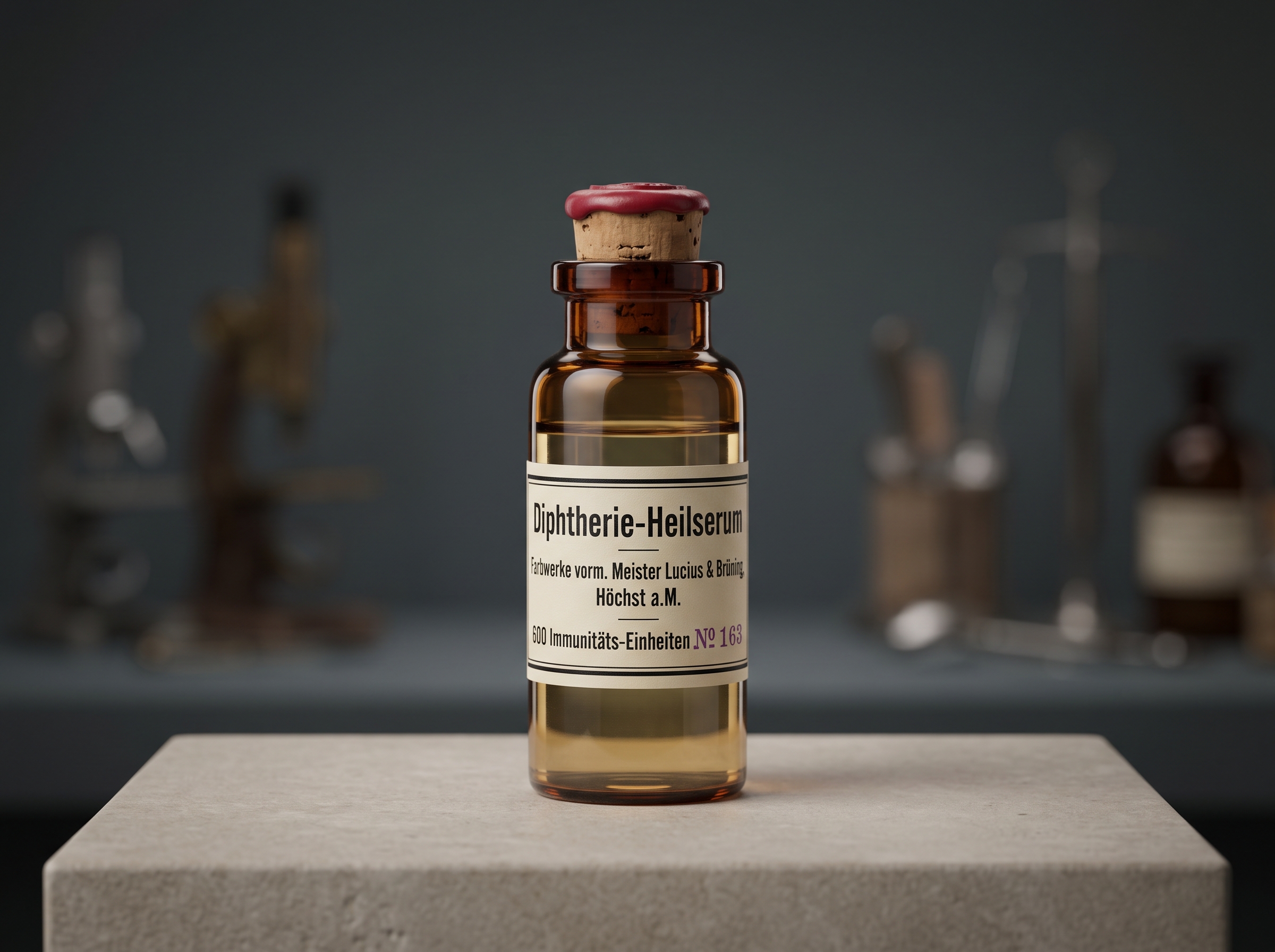
Hoechst Diphtheria Serum Vial
Curated by Kairo • Phagocytes, Antibodies and the Rise of Immunology
Artifact Details
An 1894 cylindrical thick-walled amber-brown apothecary glass phial containing pale straw-colored liquid equine serum, stoppered with a natural cork plug capped in brittle matte crimson paraffin sealing wax stamped with the Hoechst lion crest, and wrapped in a rectangular cream laid-paper label bordered in thin black rules and printed in sharp black German typography reading 'Diphtherie-Heilserum', 'Farbwerke vorm. Meister Lucius & Brüning, Höchst a.M.', and '600 Immunitäts-Einheiten' alongside a purple rubber-stamped control number.
Primary Source
Phagocytes, Antibodies and the Rise of Immunology
In December 1882, exiled Russian zoologist Élie Metchnikoff plucked a sharp thorn from a festive tangerine tree in Messina, Sicily, and drove the wooden point into the translucent body of a larval starfish. Lacking blood vessels or nerve ganglia, the marine organism could not mount a conventional vascular inflammation. By dawn, a dense cluster of wandering mesoderm cells had migrated across the fluid cavity to engulf the splinter. That microscopic siege overturned 2,000 years of pathology, proving that white blood cells actively devour invading microbes in the tissues. Survival depends on an internal cellular war that must annihilate foreign invaders without digesting the host's own flesh.
Read Study (18 min) →Artifacts

Ivory-Handled Bleeding Lancet
Late 18th-century double-edged steel thumb lancet with folding tortoise-shell and ivory scales used for arm-to-arm cowpox inoculation.
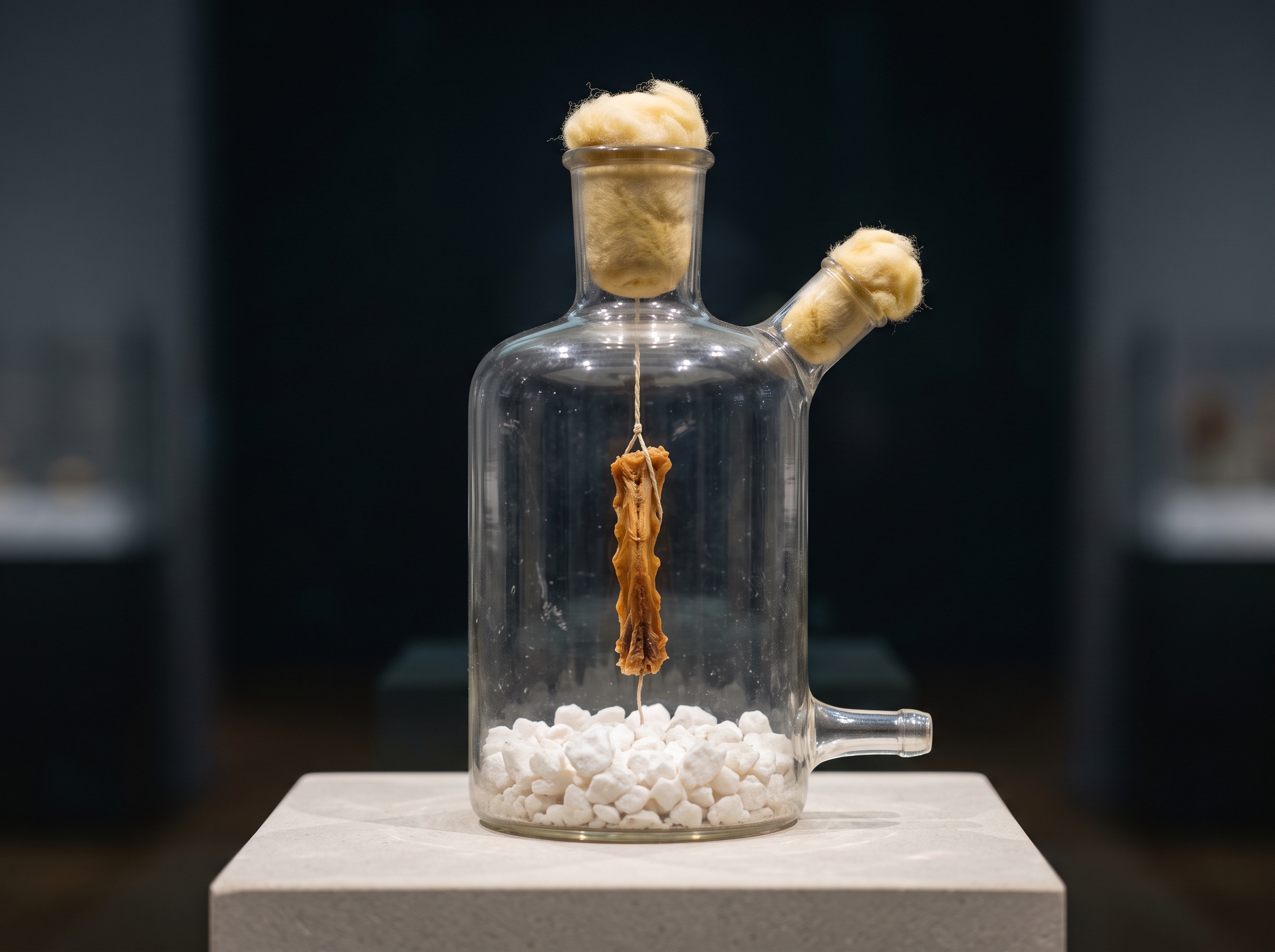
Roux Double-Necked Desiccation Flask
Blown borosilicate glass flask containing caustic potash crystals at the base and a suspended rabbit spinal cord for rabies attenuation.
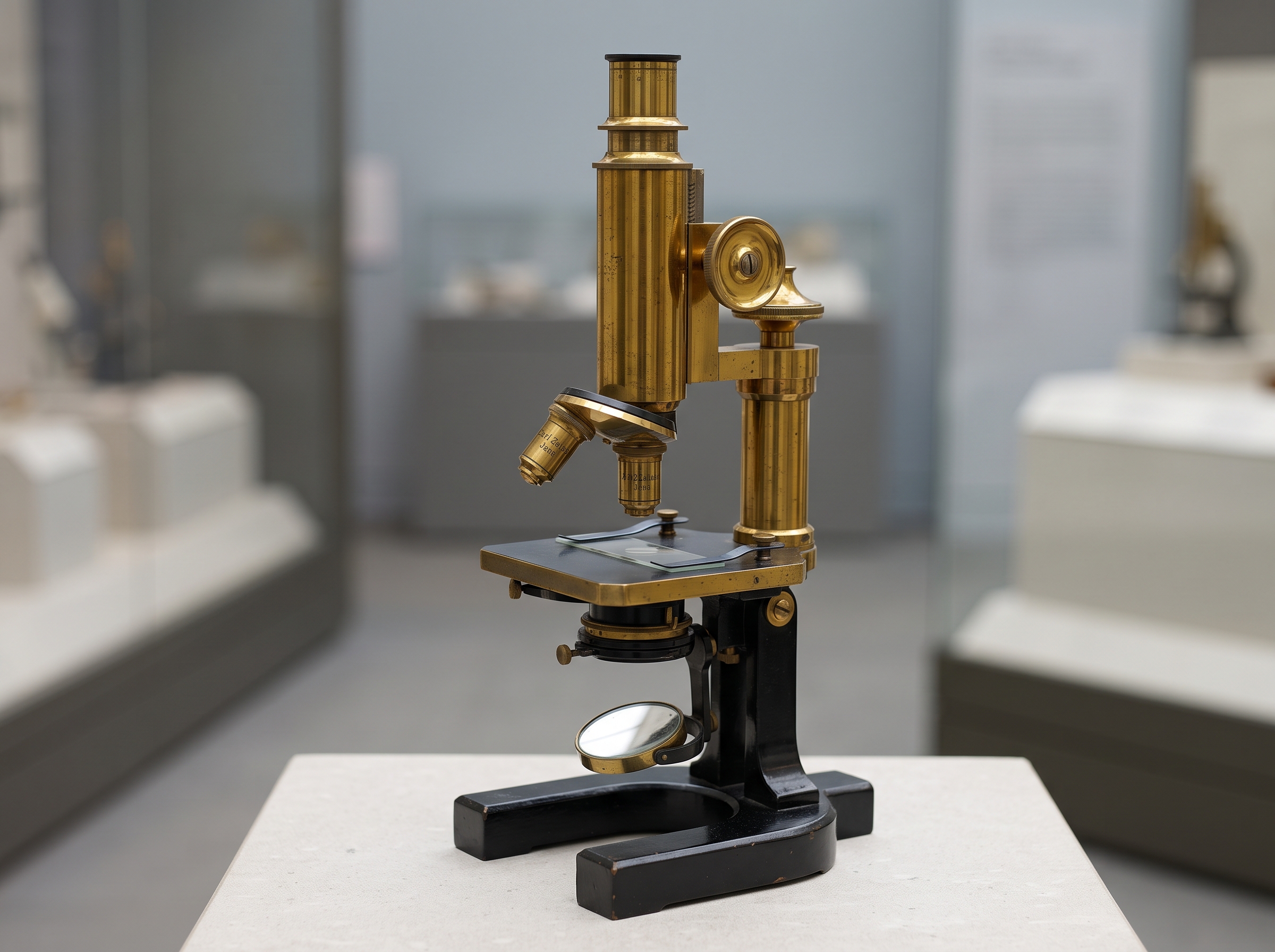
Brass Monocular Microscope
Late 19th-century lacquered brass compound microscope with rack-and-pinion coarse adjustment and substage concave mirror.
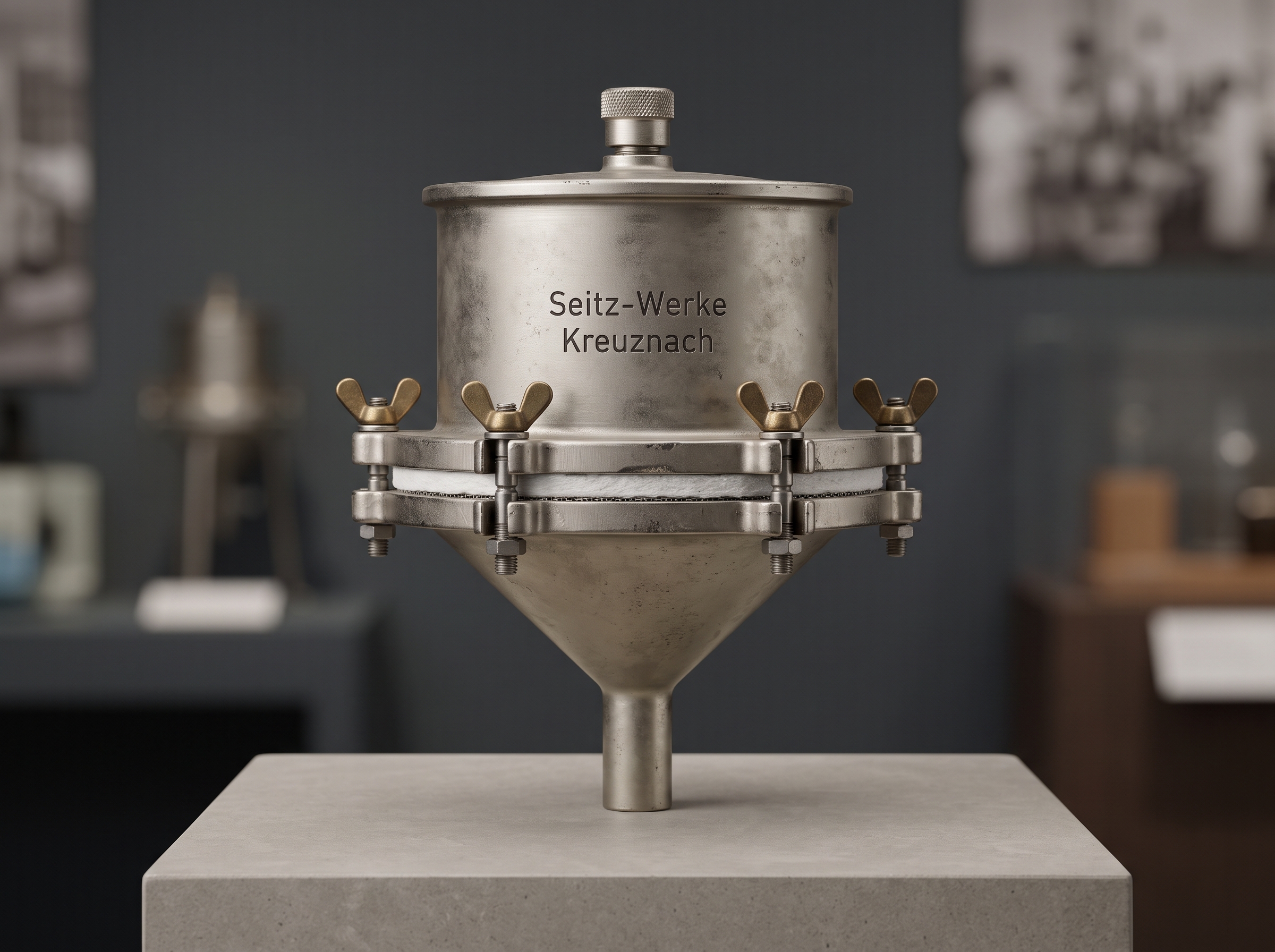
Seitz Asbestos Pad Filter
Heavy nickel-plated bronze pressure filtration housing used in mid-20th-century vaccine manufacturing to remove viral aggregates.
Glossary
- variolation: The deliberate inoculation of an uninfected person with live fluid or dried scabs harvested from human smallpox pustules to induce a milder case of the disease.
- phagocytosis: The cellular process by which specialized amoeboid leukocytes engulf and enzymatically digest foreign particulates and bacteria.
- horror autotoxicus: Paul Ehrlich's turn-of-the-century immunological doctrine asserting that an organism possesses built-in physiological safeguards preventing it from generating toxic antibodies against its own tissues.
- haptens: Small, chemically defined organic molecules that cannot trigger an immune response on their own but elicit specific antibodies when covalently bound to larger carrier proteins.