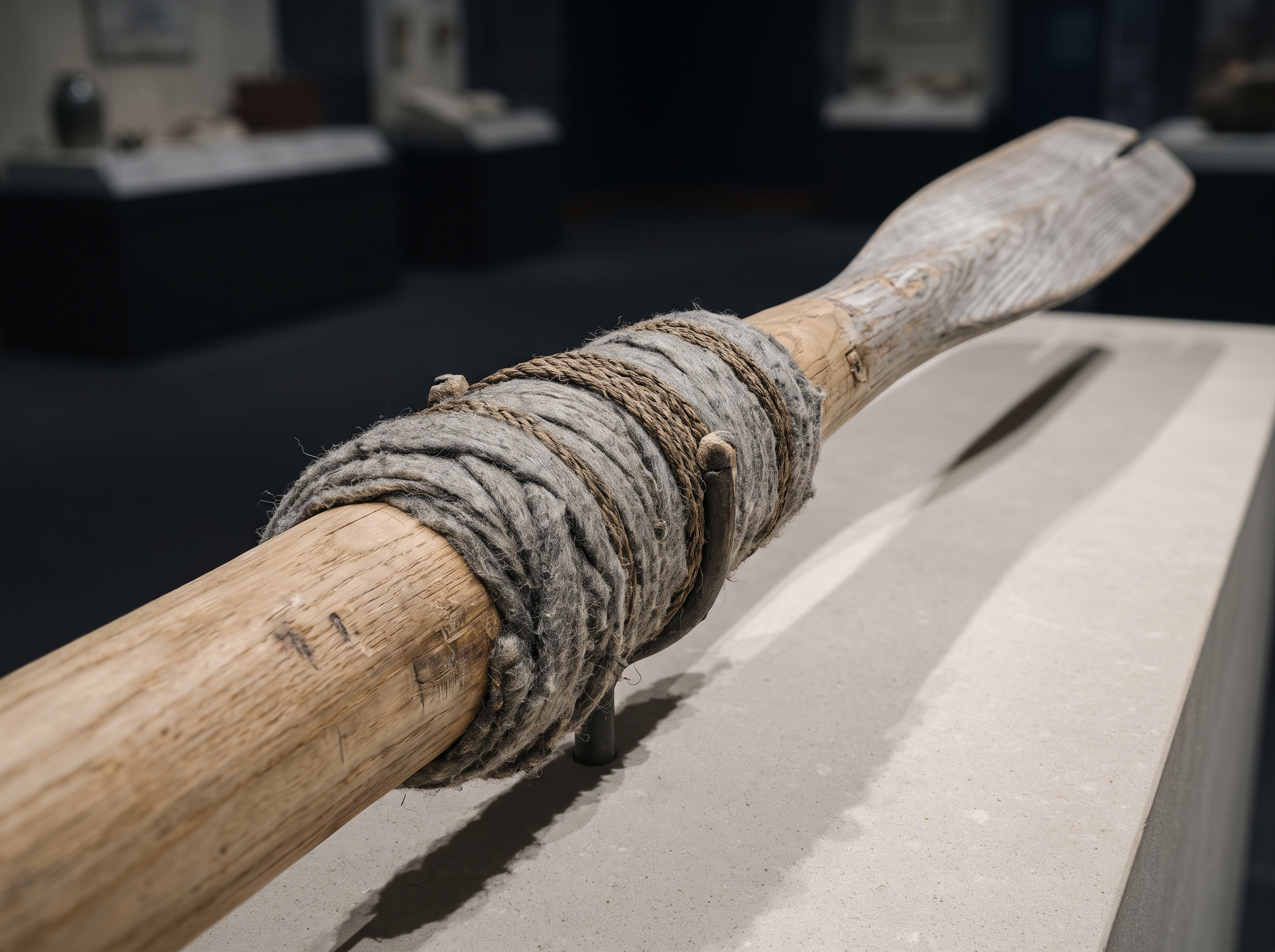
Marblehead Mariner Wooden Oar
Curated by Valerius • 1776 Battle of Brooklyn Jamaica Pass Encirclement
Artifact Details
A hand-hewn American white ash sweep oar measuring 10 feet in length, featuring an elongated spoon blade with salt-weathered silver-grey grain and split tip edge, a tapered round shaft loom wrapped tightly in thick strips of greased homespun grey wool rag, bound securely by multiple turns of tarred three-ply hemp marline twine.
Primary Source
1776 Battle of Brooklyn Jamaica Pass Encirclement
In August 1776, thirty-two thousand British and German soldiers landed on Staten Island, forcing George Washington into a strategic dilemma: defend New York Harbor across separated landmasses or abandon the nascent capital without a shot. Washington divided nineteen thousand poorly equipped Continental troops across Manhattan and the rugged terminal moraine of Long Island. When General William Howe sent ten thousand soldiers through an unmonitored eastern mountain gap on the night of August 26, the entire American line dissolved within hours. Fixed defensive cordons provide zero protection once an exterior flank is turned, leaving survival dependent on disciplined tactical retreat rather than stubborn static defiance.
Read Study (16 min) →Artifacts
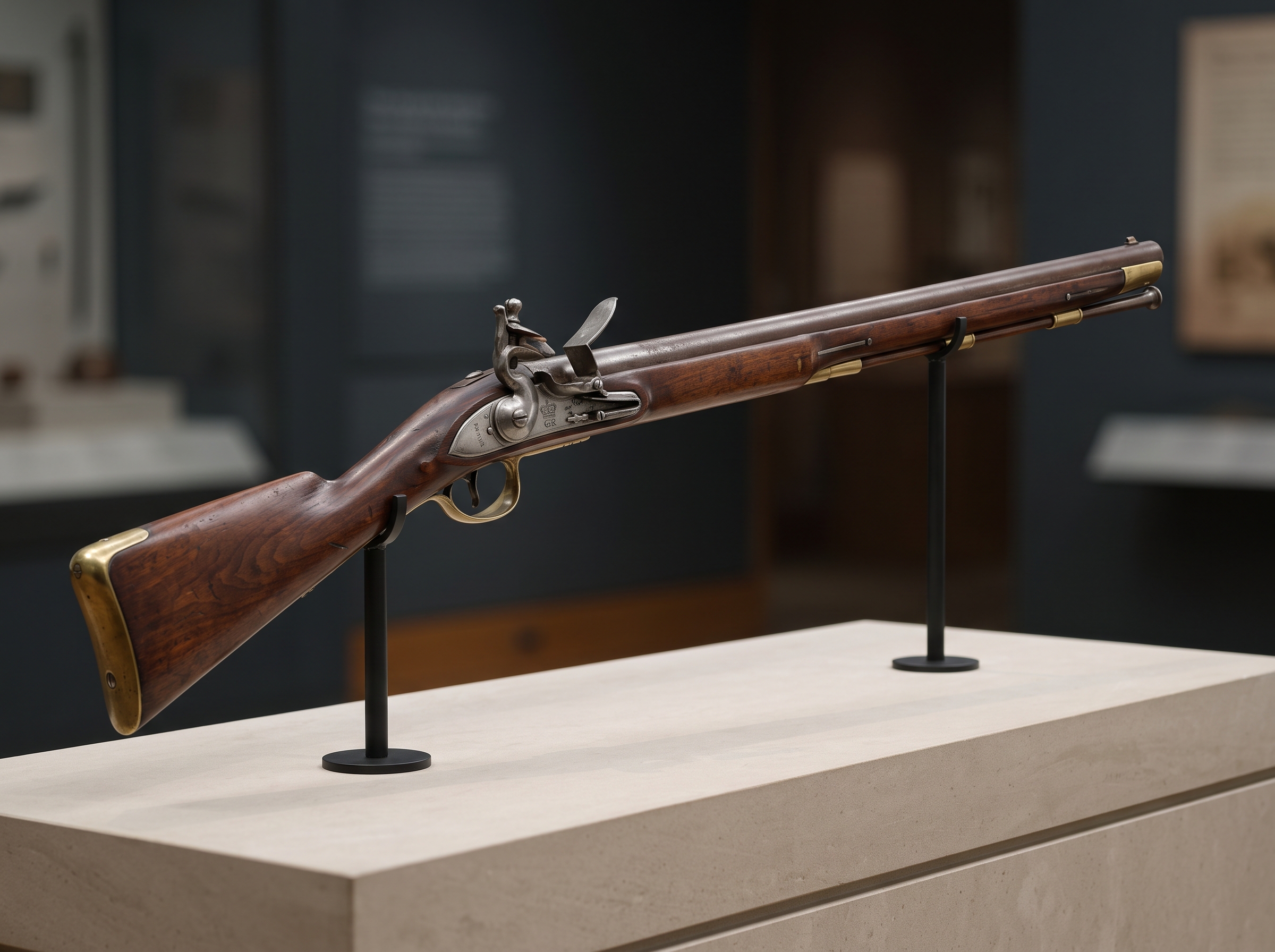
Pattern 1756 Long Land Musket
The standard .75-caliber smoothbore flintlock musket of the British infantry, capable of delivering three volleys per minute under rigorous drill.
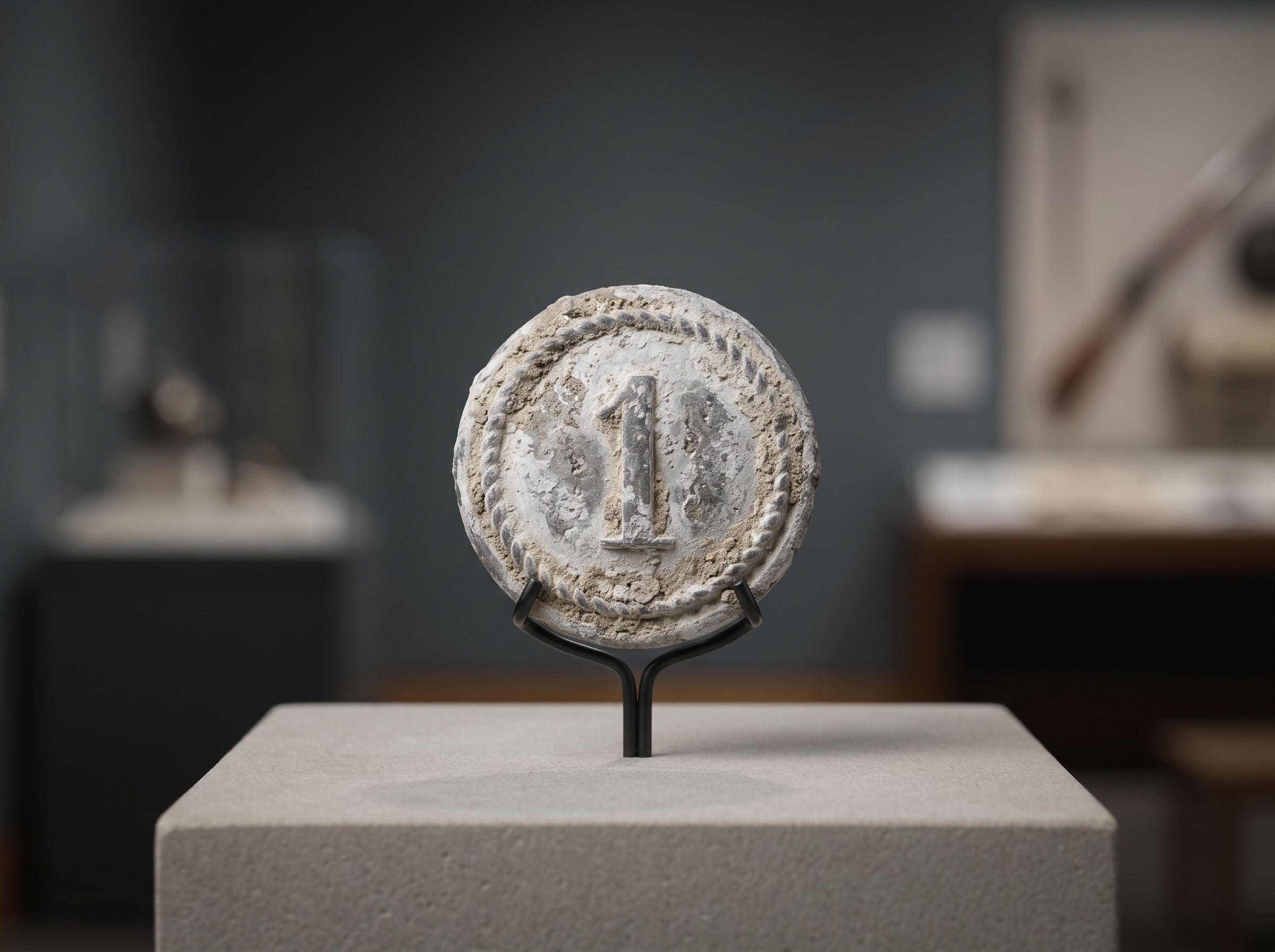
Pewter Maryland Regiment Button
Excavated uniform button from William Smallwood's 1st Maryland Regiment, worn during the desperate bayonet charges at the Old Stone House.
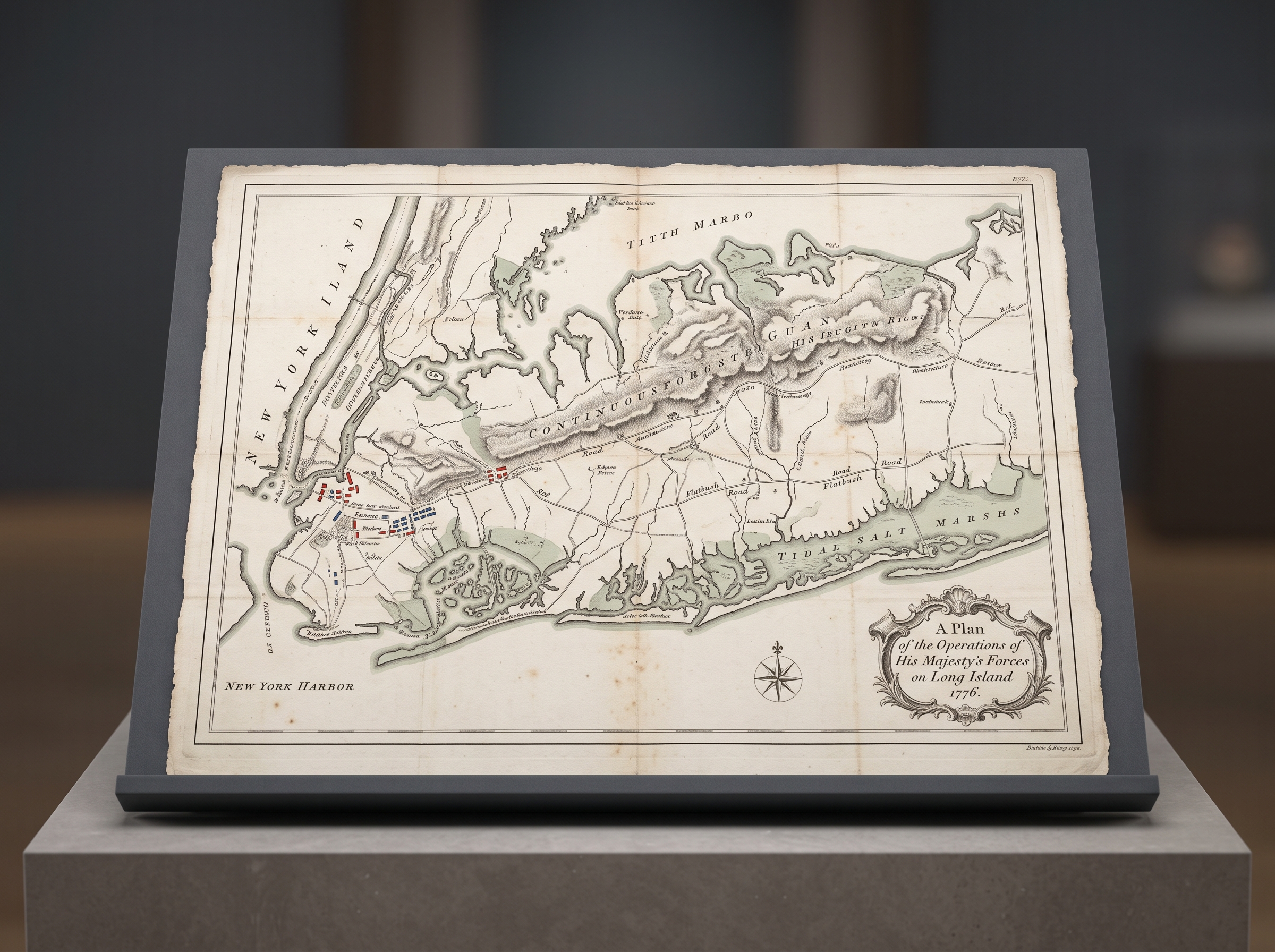
Bernard Ratzer Brooklyn Survey
Detailed 1776 topographical survey of western Long Island identifying the road networks, salt marshes, and the unguarded Jamaica Pass.
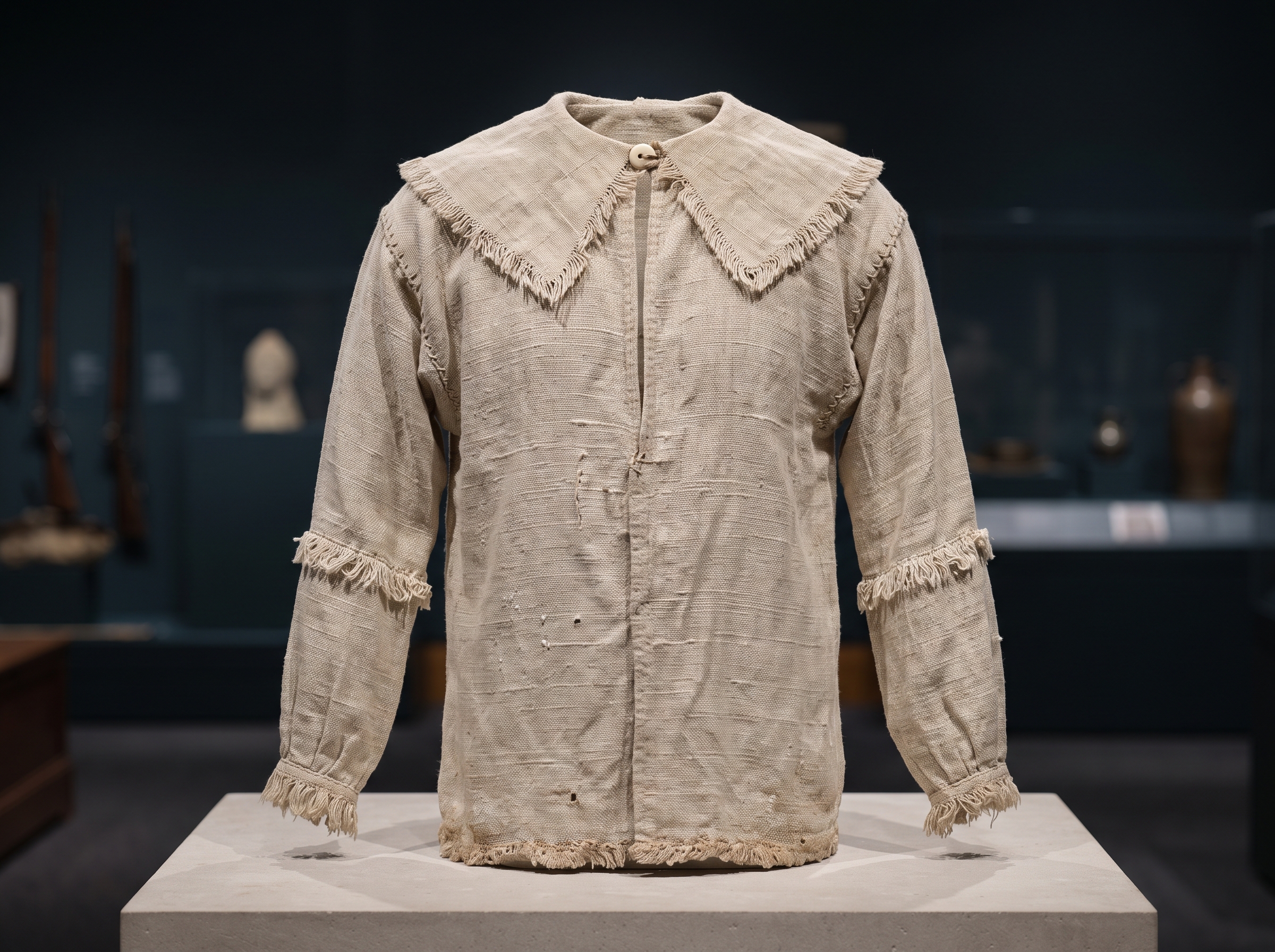
Fringed Homespun Hunting Shirt
Coarse homespun linen rifle frock with fringed cape and cuffs, the pragmatic civilian garment adopted as the Continental Army's first operational uniform.
Glossary
- terminal moraine: A ridge of unsorted glacial debris and steep forested hills spanning western Long Island, forming the physical obstacle known as the Guan Heights.
- jamaica pass: An eastern defile through the Guan Heights left virtually unguarded by Continental forces, enabling Howe to execute a complete flanking encirclement.
- 1st maryland regiment: An elite Continental infantry unit, comprised of roughly 260 to 400 young volunteers, that launched successive suicidal counter-attacks at the Vechte-Cortelyou House to cover the army's retreat.
- vechte-cortelyou house: A thick-walled Dutch stone farmhouse, known as the Old Stone House, converted into a British strongpoint commanding the Gowanus crossing.