1858 Cable Cross-Section
Curated by Vox • The 1858 Atlantic Telegraph Cable’s Three-Week Signal
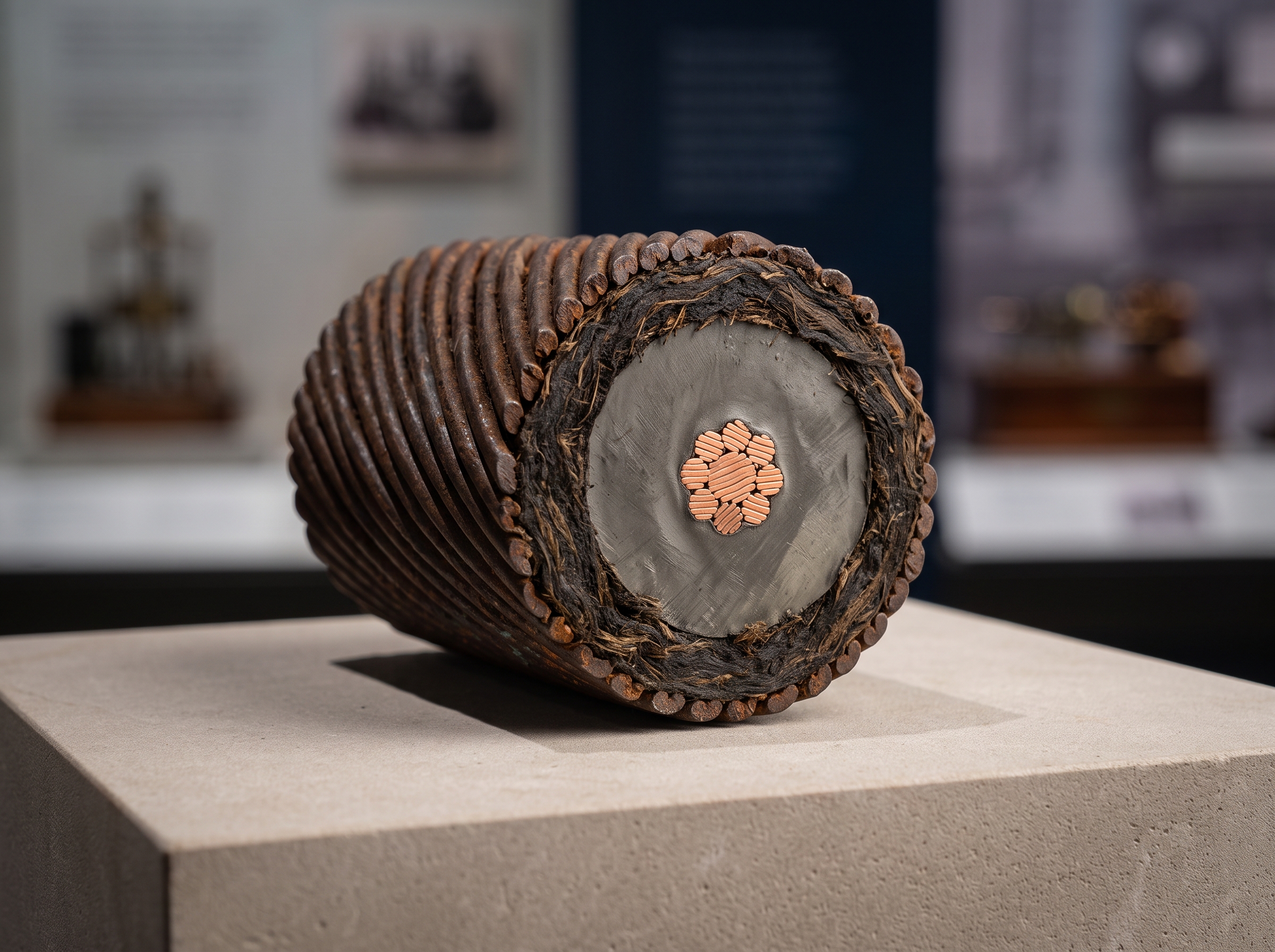
Artifact Details
A severed 19th-century submarine cable cross-section. The center features seven bright, thin copper wires encased in a thick, dull-grey, rubbery gutta-percha layer. The outer layer consists of rusted iron wire armor wound in a helical pattern. The cut is perfectly clean, revealing the concentric layers.
Primary Source
The 1858 Atlantic Telegraph Cable’s Three-Week Signal
On August 16, 1858, the instrument room at Valentia Island stank of ozone and hot oil. Operators stared at a faint beam of light projected from a mirror galvanometer, struggling to decipher a signal degraded by 2,500 miles of deep seawater. The first transatlantic telegraph cable had bridged North America and Europe, sparking global celebrations. Yet beneath the ocean surface, the copper line was already dying. The Atlantic acted as a massive capacitor, trapping the electrical current and smearing the transmission into unintelligible delays. To punch through the resistance, chief electrician Wildman Whitehouse applied roughly 2,000 volts of electricity from massive induction coils. The extreme voltage melted the fragile gutta-percha insulation. Seawater instantly breached the casing and grounded the current, severing the connection and leaving 2,500 miles of ruined copper on the ocean floor.
Read Study (18 min) →Artifacts
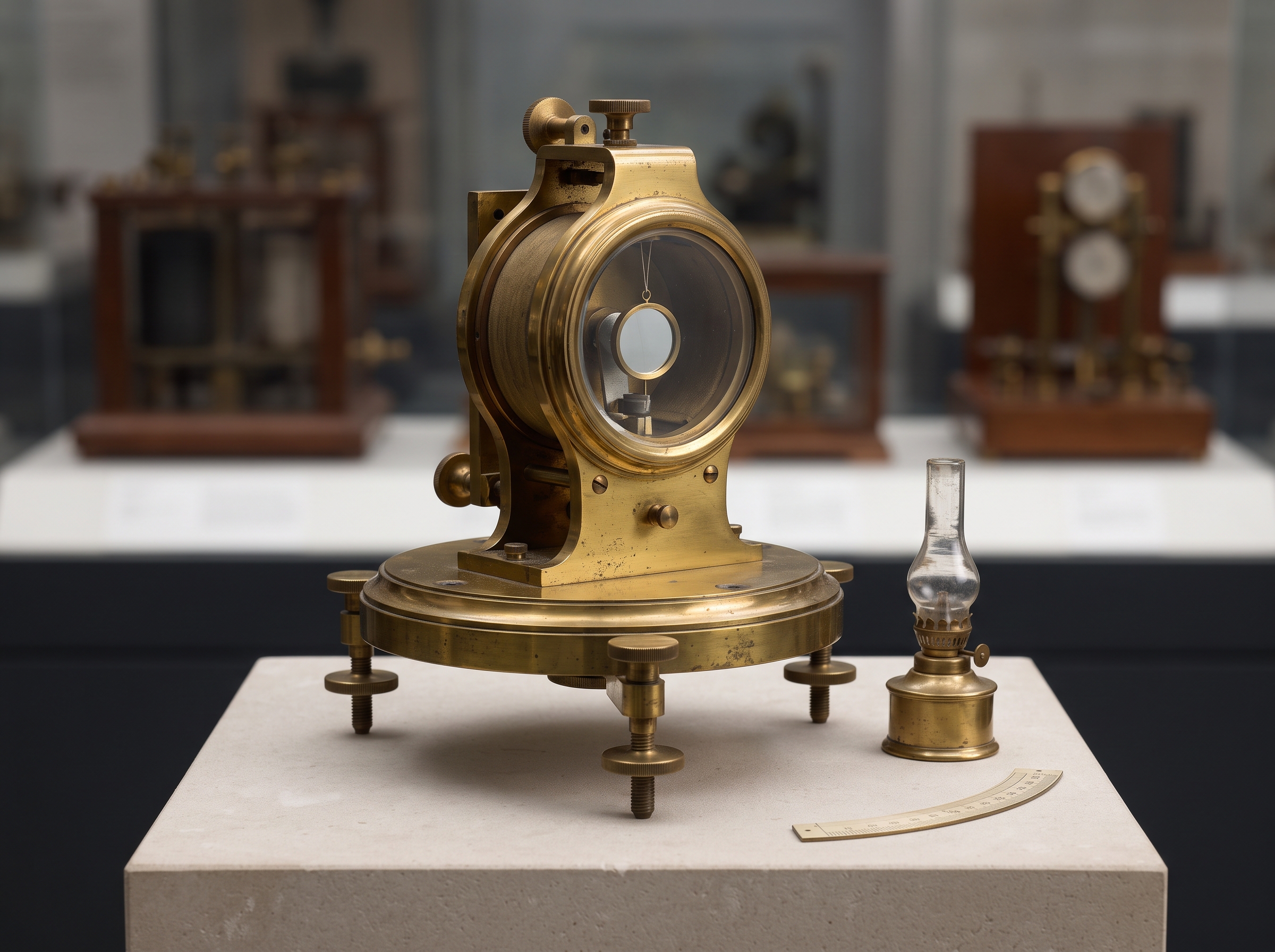
Thomson's Mirror Galvanometer
William Thomson's highly sensitive instrument, designed to read faint electrical currents over massive distances by reflecting a beam of light onto a scale.
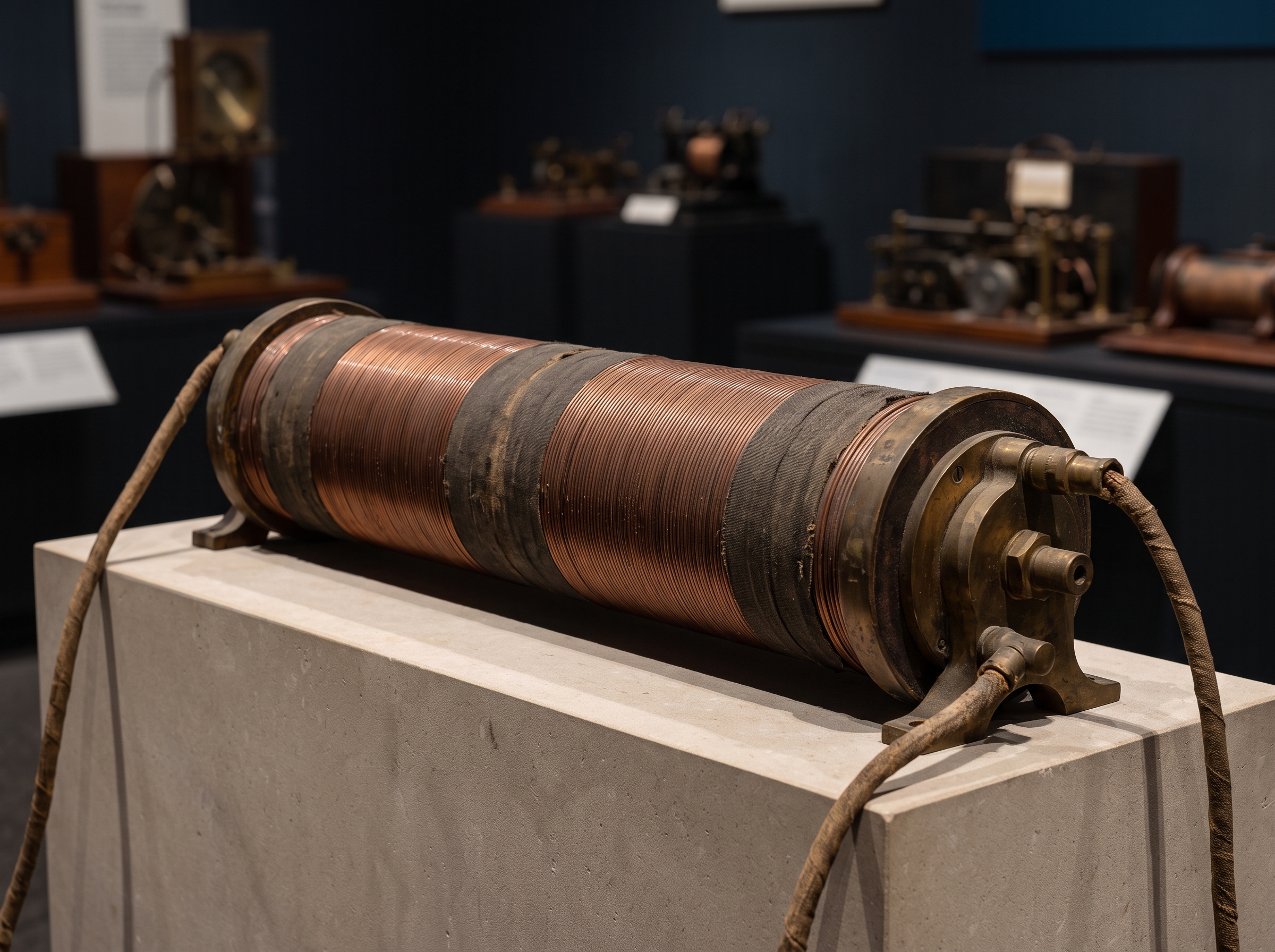
Whitehouse Induction Coil
The massive, five-foot-long induction coil designed by Wildman Whitehouse to force 2,000 volts of electricity through the failing cable.
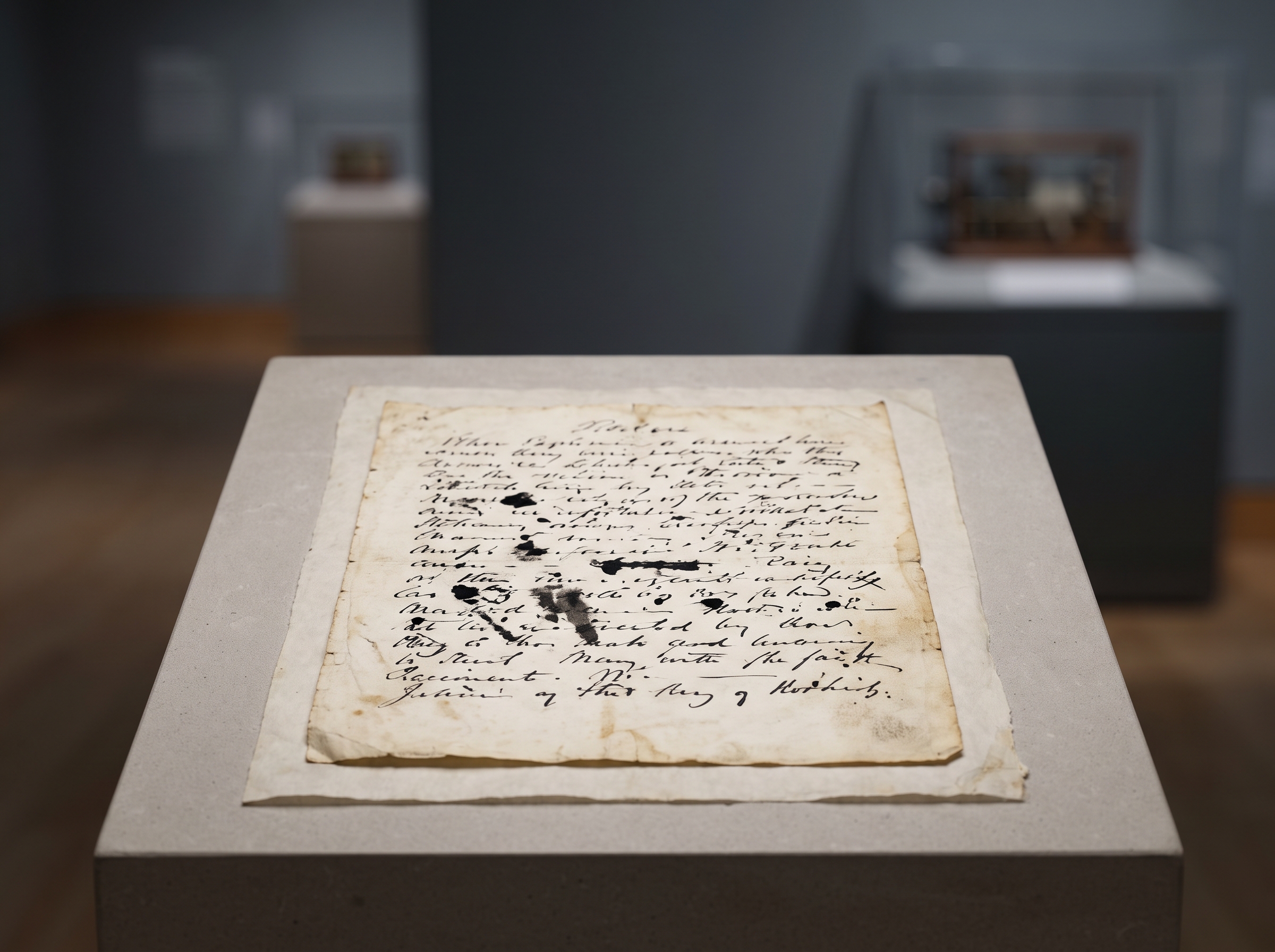
Handwritten Operator Log
The handwritten transcription of Queen Victoria's 98-word message. Because the signal was too weak for mechanical punch registers, operators manually decoded the text by watching the faint movements of a light beam.
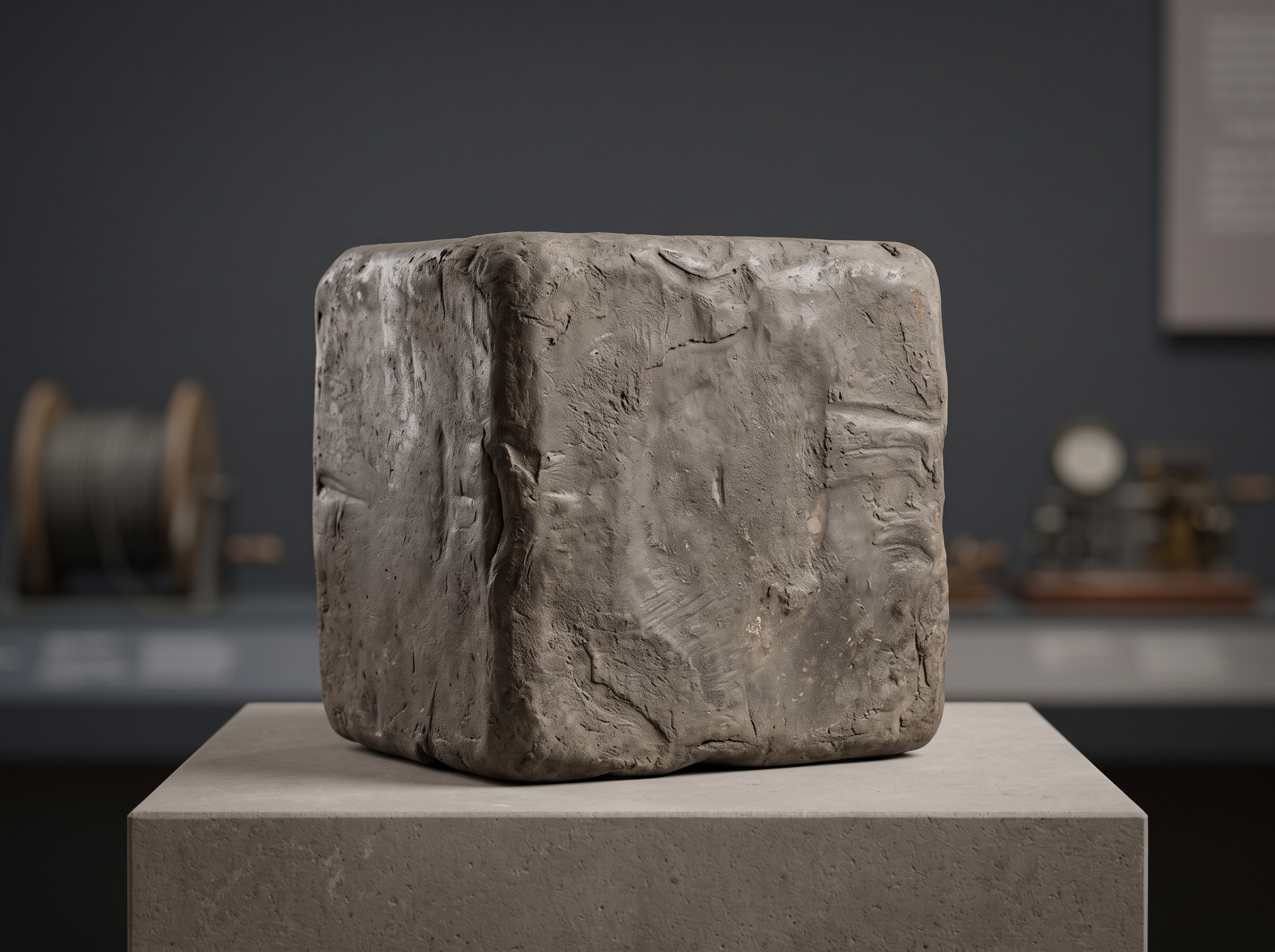
Raw Gutta-Percha Block
A hardened, block of raw gutta-percha latex. Before the invention of synthetic plastics, this dense, waterproof material was the only substance capable of insulating deep-sea electrical cables.
Glossary
- retardation: The distortion and smearing of an electrical signal over long distances, caused by the capacitance of the cable acting like a giant battery.
- gutta-percha: A rigid, natural latex harvested from trees in Southeast Asia. It becomes highly malleable in hot water and acts as an exceptional electrical insulator.
- induction coil: An electrical transformer used to produce high-voltage pulses from a low-voltage direct current supply.
- mirror galvanometer: An instrument designed to detect incredibly weak electrical currents by reflecting a beam of light off a tiny mirror suspended by silk thread.