Macedonian Aspis Shield
Curated by Valerius • Alexander the Great and the March Against Starvation
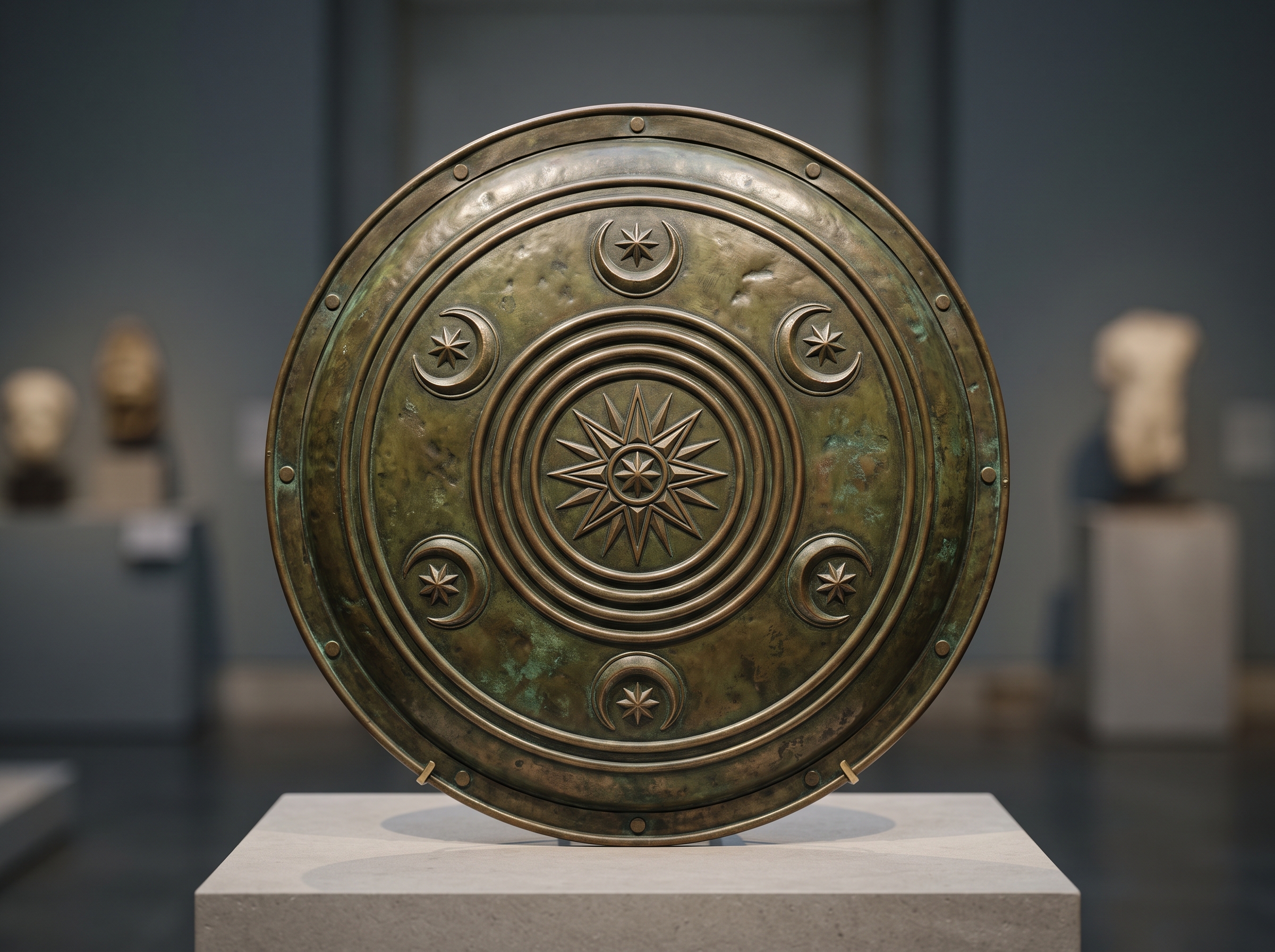
Artifact Details
A circular 65-centimeter concave Macedonian infantry shield (pelte/aspis facing) constructed of hammered sheet bronze over a core of laminated lime-wood planks. The convex exterior face features repoussé embossed concentric raised bronze rings encircling a central geometric Argead starburst emblem surrounded by seven outer crescent star-boss medallions. The outer perimeter features a folded bronze rim secured by flat-headed perimeter bronze rivets. The metal surface shows authentic campaign wear, shallow sword and javelin strike indents, hammered planishing tool marks, and a stratified patina of rich olive-green verdigris, powdery malachite, and dark coppery bronze.
Primary Source
Alexander the Great and the March Against Starvation
In the spring of 334 B.C., 37,000 Macedonian soldiers crossed the Hellespont carrying 70 talents of debt and barely 30 days of rations. Royal treasuries in Pella were empty. King Philip II had transformed an army to move twice as fast as any rival by stripping away carts, banishing camp followers, and forcing each infantryman to carry 80 pounds of weapons and grain. To survive, Alexander III had to capture Persian supply depots before his men starved. Tactical prowess mattered far less than the unforgiving arithmetic of flour and forage. Asian conquest was an operational gamble where marching speed was the only defense against total supply breakdown.
Read Study (16 min) →Artifacts
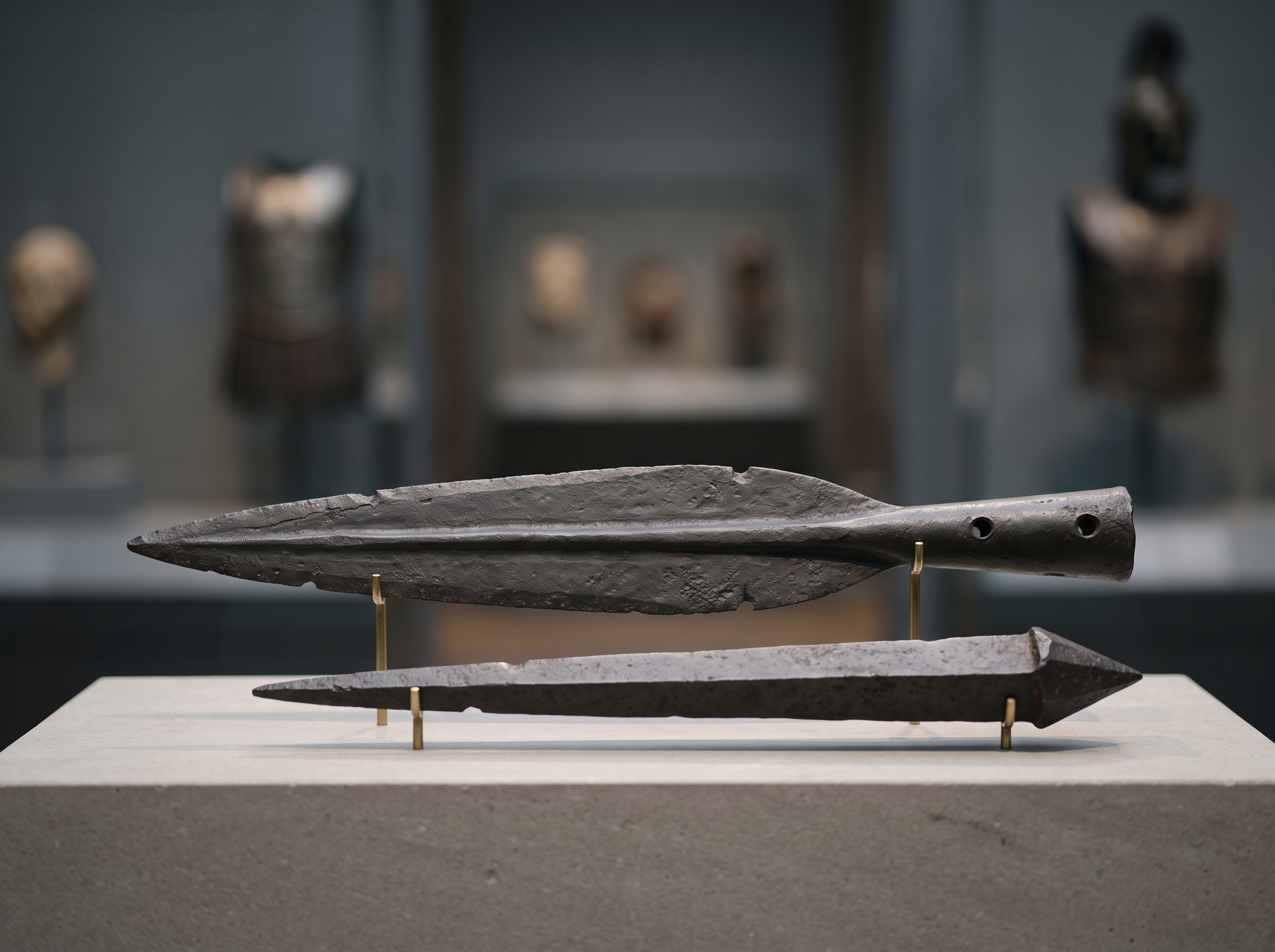
Iron Sarissa Spearhead
A heavy leaf-shaped iron spearhead with a hollow socket and iron butt-spike used to anchor the Macedonian 18-foot pike.
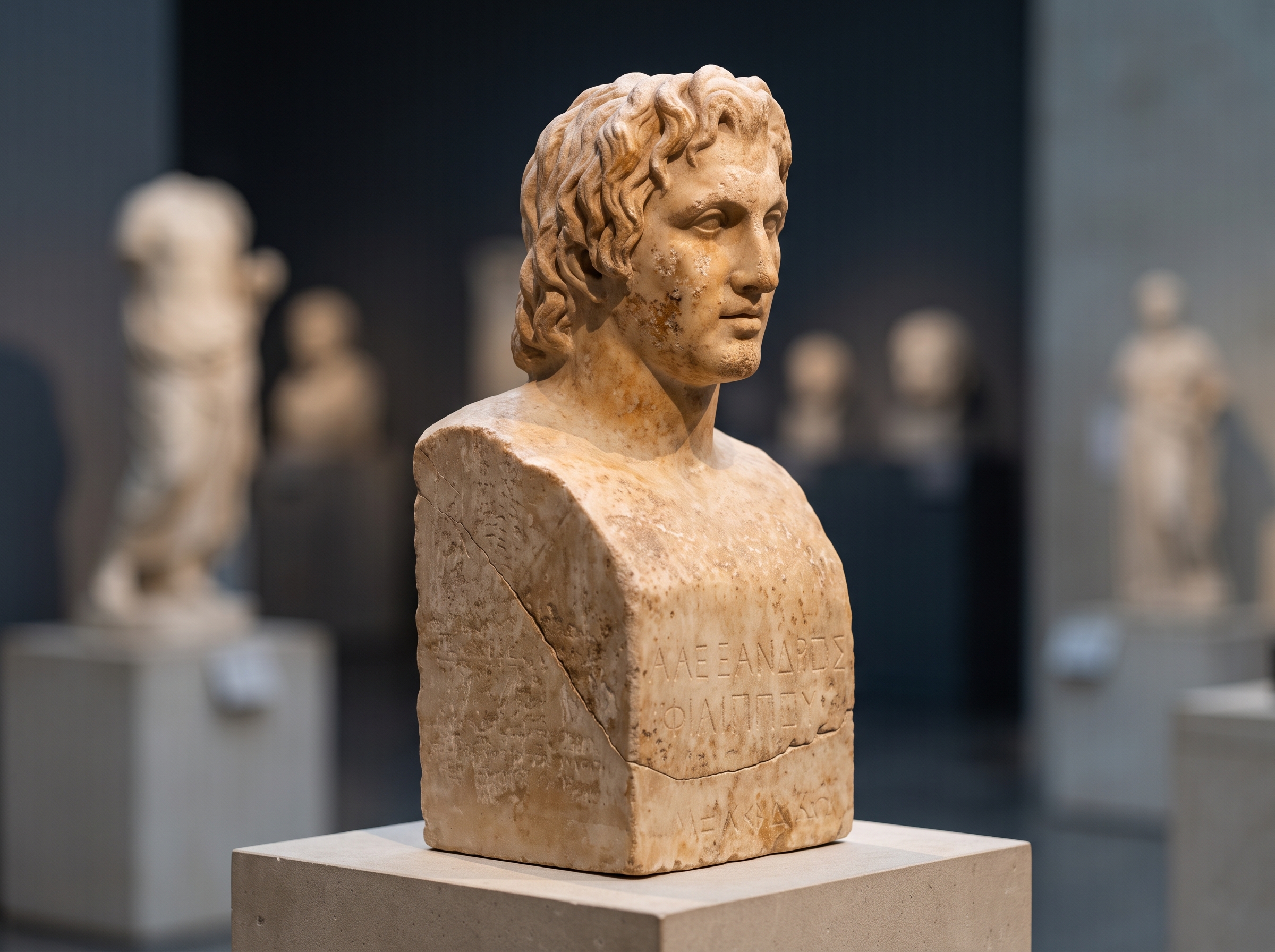
Azara Herm Portrait
A Roman Pentelic marble herm portrait copy after Lysippos's 4th-century B.C. bronze original, bearing the Greek inscription 'Alexander, son of Philip, of Macedon'.
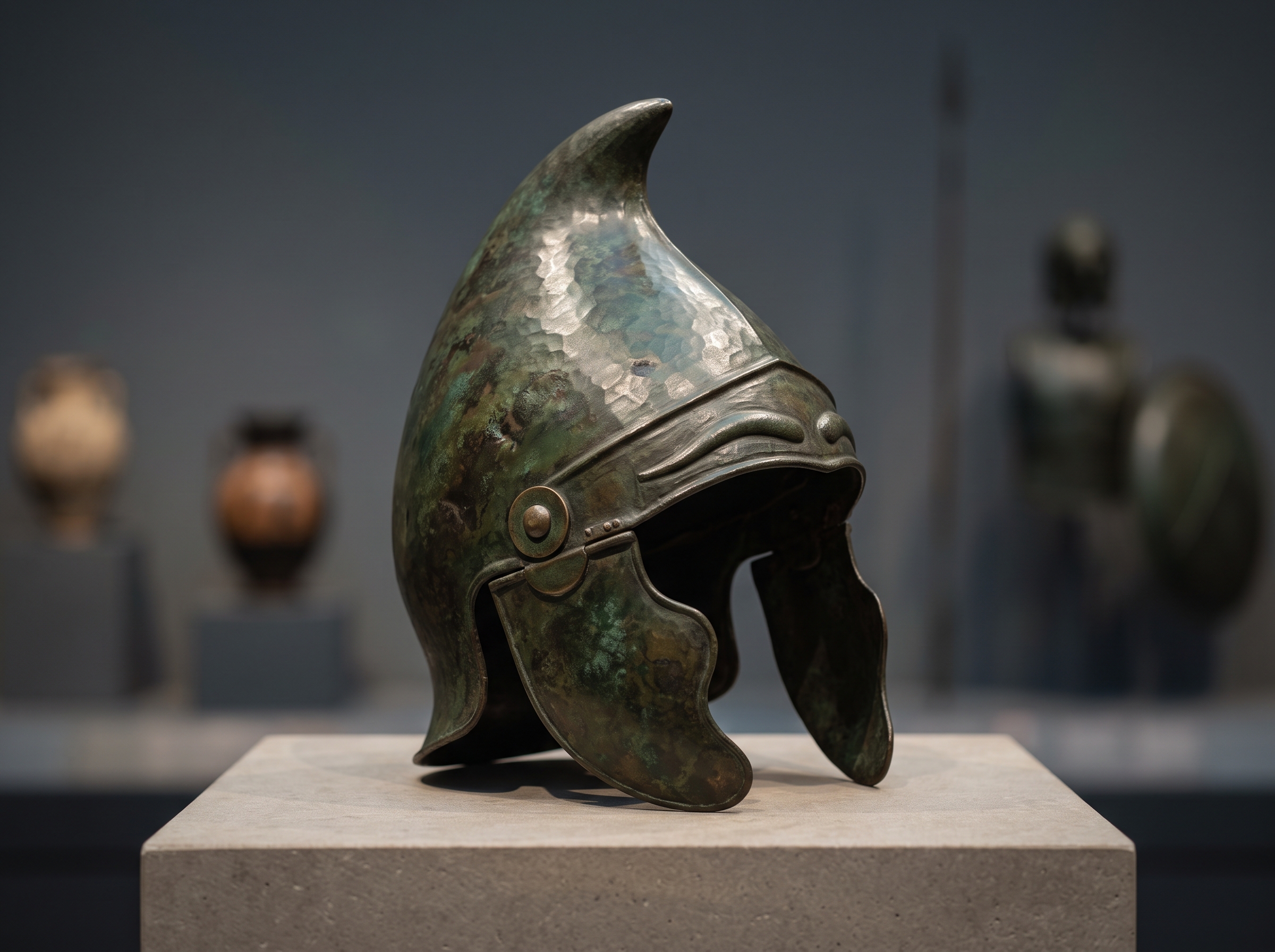
Phrygian Bronze Helmet
A Hellenistic cast bronze infantry helmet with a forward-curving peak and cheek guards, optimized for visibility and acoustic communication.
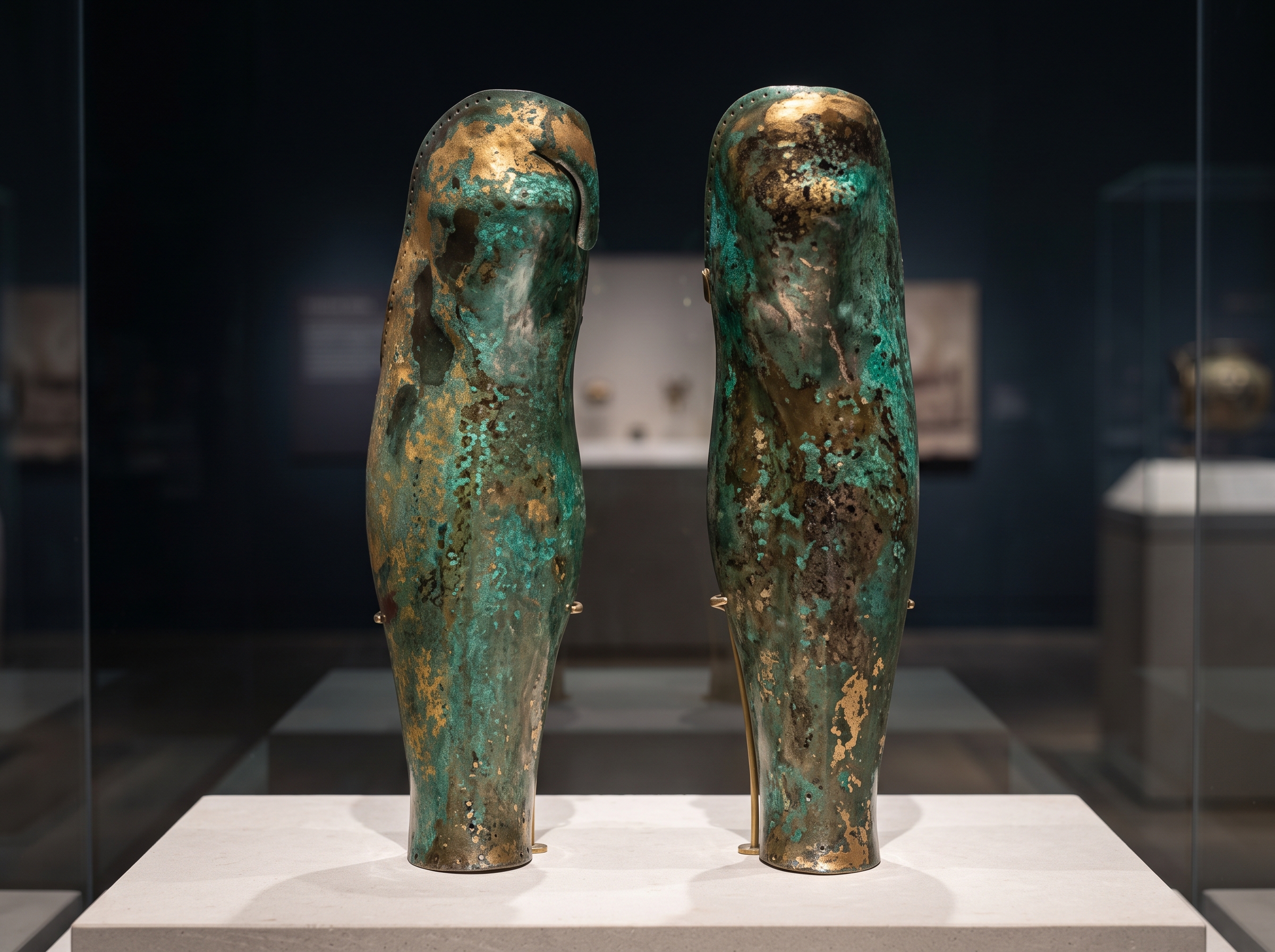
Gilded Bronze Greaves
A pair of asymmetrical hammered bronze leg guards from the Macedonian Royal Tombs at Vergina, engineered to anatomical contours.
Glossary
- Sarissa: A long two-handed pike measuring between 15 and 18 feet, constructed from dense cornel wood with an iron point and a counterbalancing iron butt-spike.
- Phalangite: A heavily trained Macedonian infantryman in the phalanx formation, equipped with the 18-foot sarissa pike, bronze helmet, and strapped peltē shield.
- Phalanx: A dense rectangular tactical formation of heavy infantry marching shoulder-to-shoulder, presenting a bristling multi-layered wall of leveled pikes.
- Royal Road: The ancient 1,600-mile highway network built by the Persian Achaemenid Empire to link Susa with Sardis, featuring imperial waystations and supply depots.