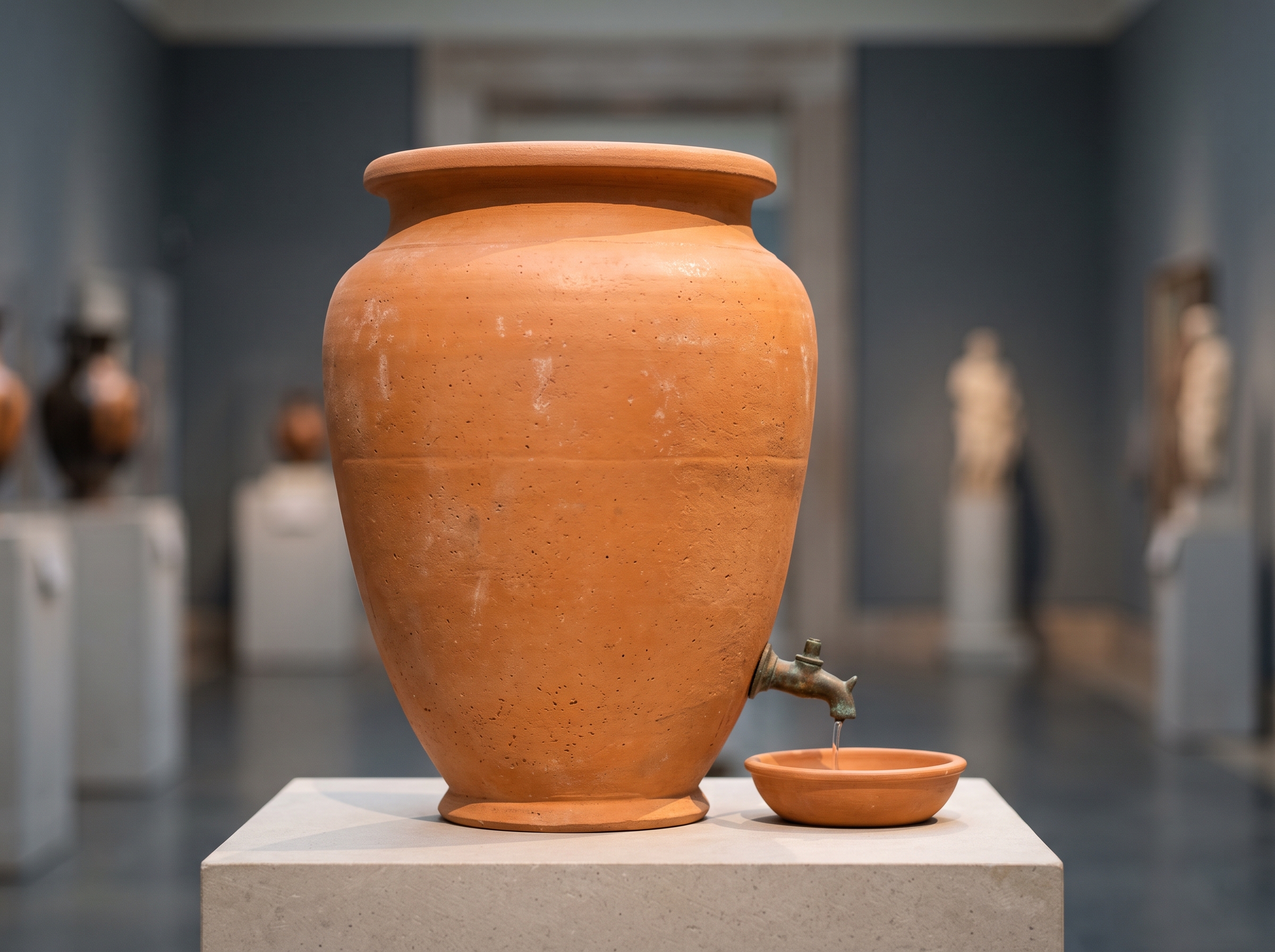
Terracotta Klepsydra
Curated by Vera • Athens Puts Socrates on Trial in 399 B.C.
Artifact Details
An ancient Greek terracotta water-clock vessel, unglazed orange clay, with a small bronze spout near the bottom base allowing a thin trickle of water out.
Primary Source
Athens Puts Socrates on Trial in 399 B.C.
In the early summer of 399 B.C., the Athenian sky burned hot above the Heliaia court. Inside, 501 randomly selected male citizens sat on wooden benches holding solid and pierced bronze voting disks. The air smelled of dry limestone dust and nervous sweat. Before them stood Socrates, a 70-year-old stonemason formally charged with asebeia, the refusal to acknowledge the state gods. He faced a jury terrified of aristocratic subversion and deeply traumatized by the brutal oligarchic slaughters of 404 B.C. The proceeding functioned as a blunt tool of civic hygiene. To secure the civic stability of a traumatized city, the recovering democracy executed its fiercest intellectual critic.
Read Study (16 min) →Artifacts
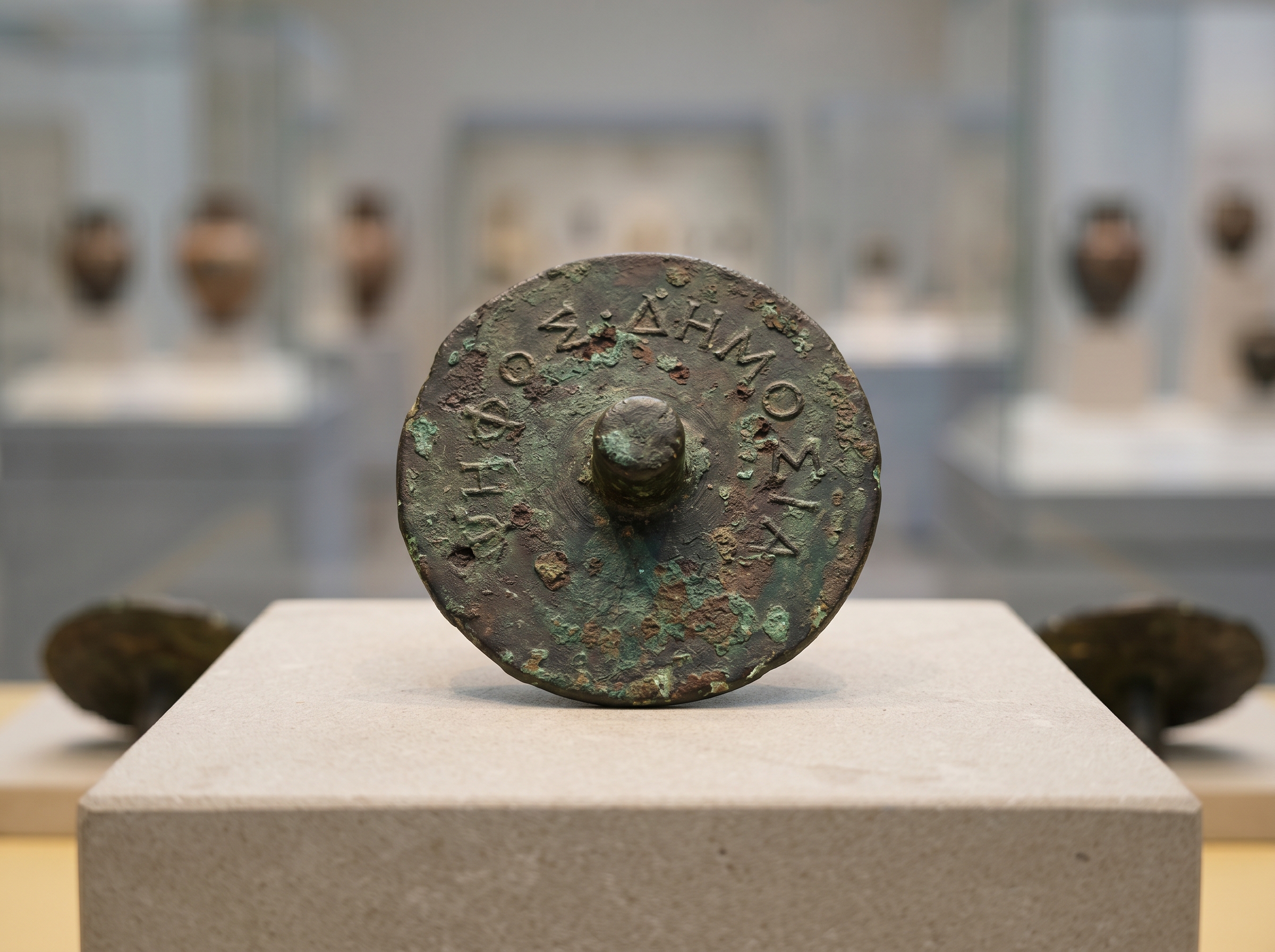
Bronze Psephos
A solid bronze voting disk cast with a solid axle hub, signaling a vote for acquittal, contrasting with the pierced hub used for condemnation.
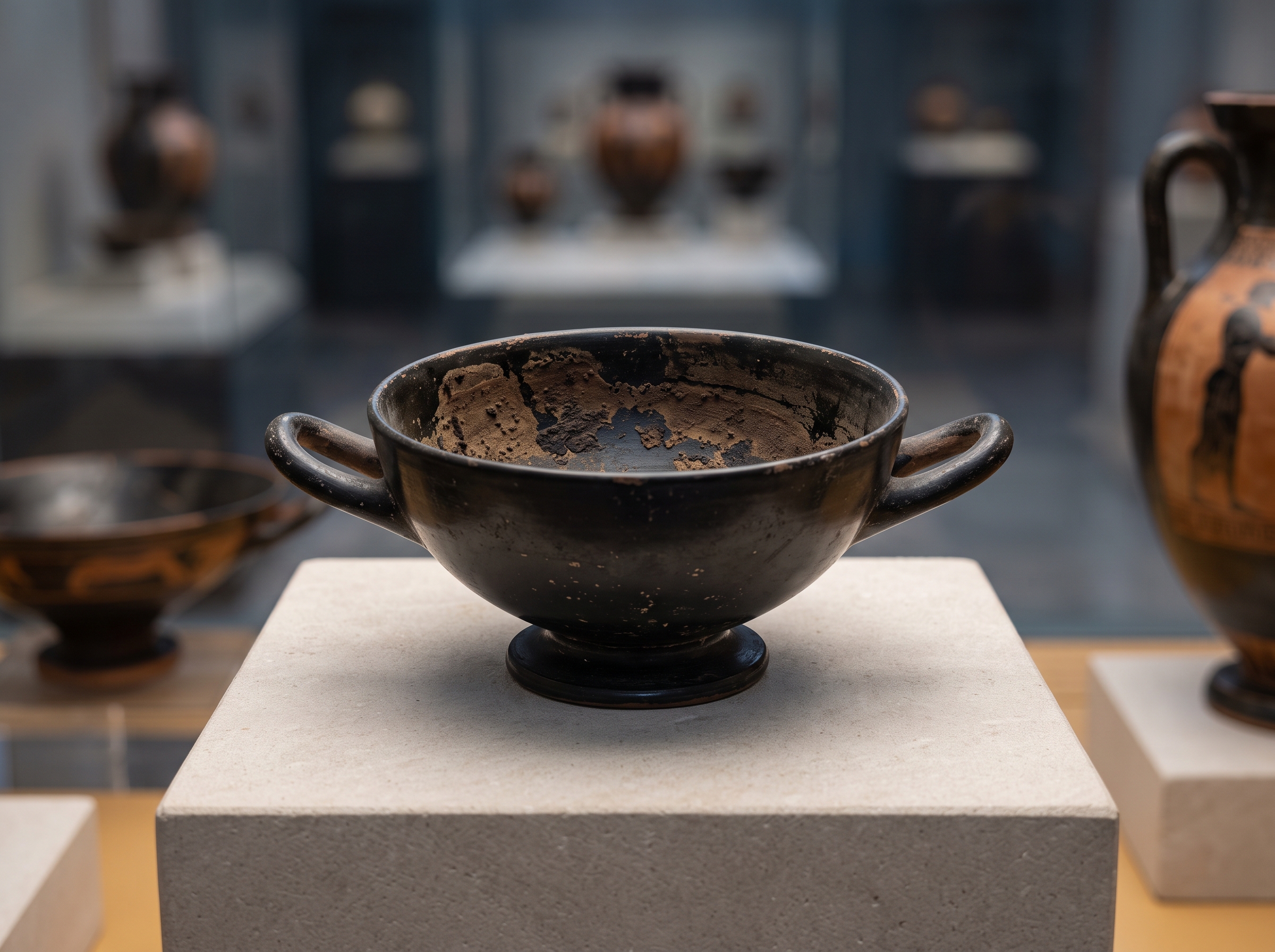
Hemlock Kylix
A shallow, two-handled Athenian drinking cup (kylix) characteristic of those used during the early fourth century BC to administer state executions.
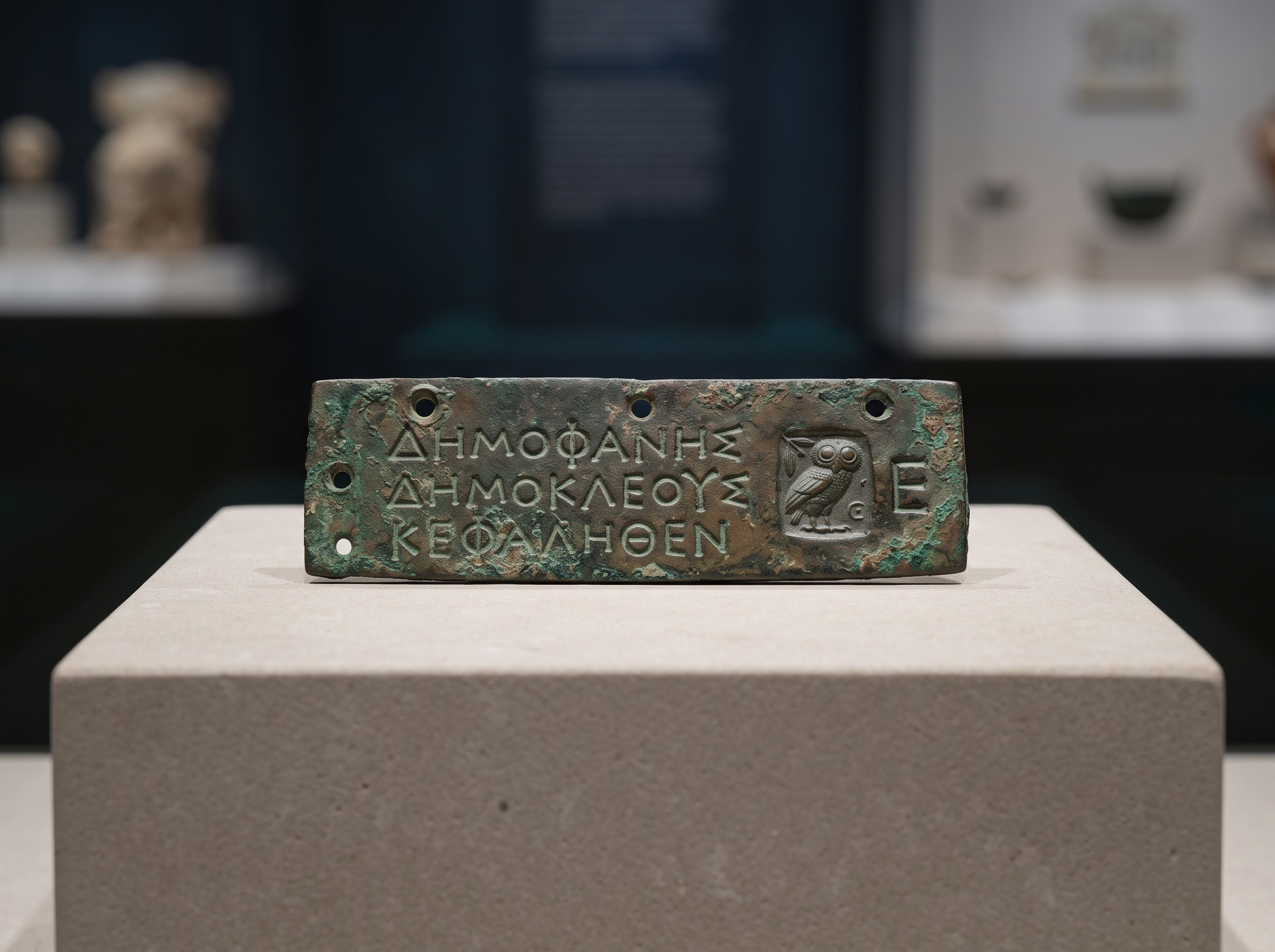
Bronze Pinakion
A small bronze ticket stamped with the name and deme of an Athenian citizen, used to randomly select the 501 jurors.
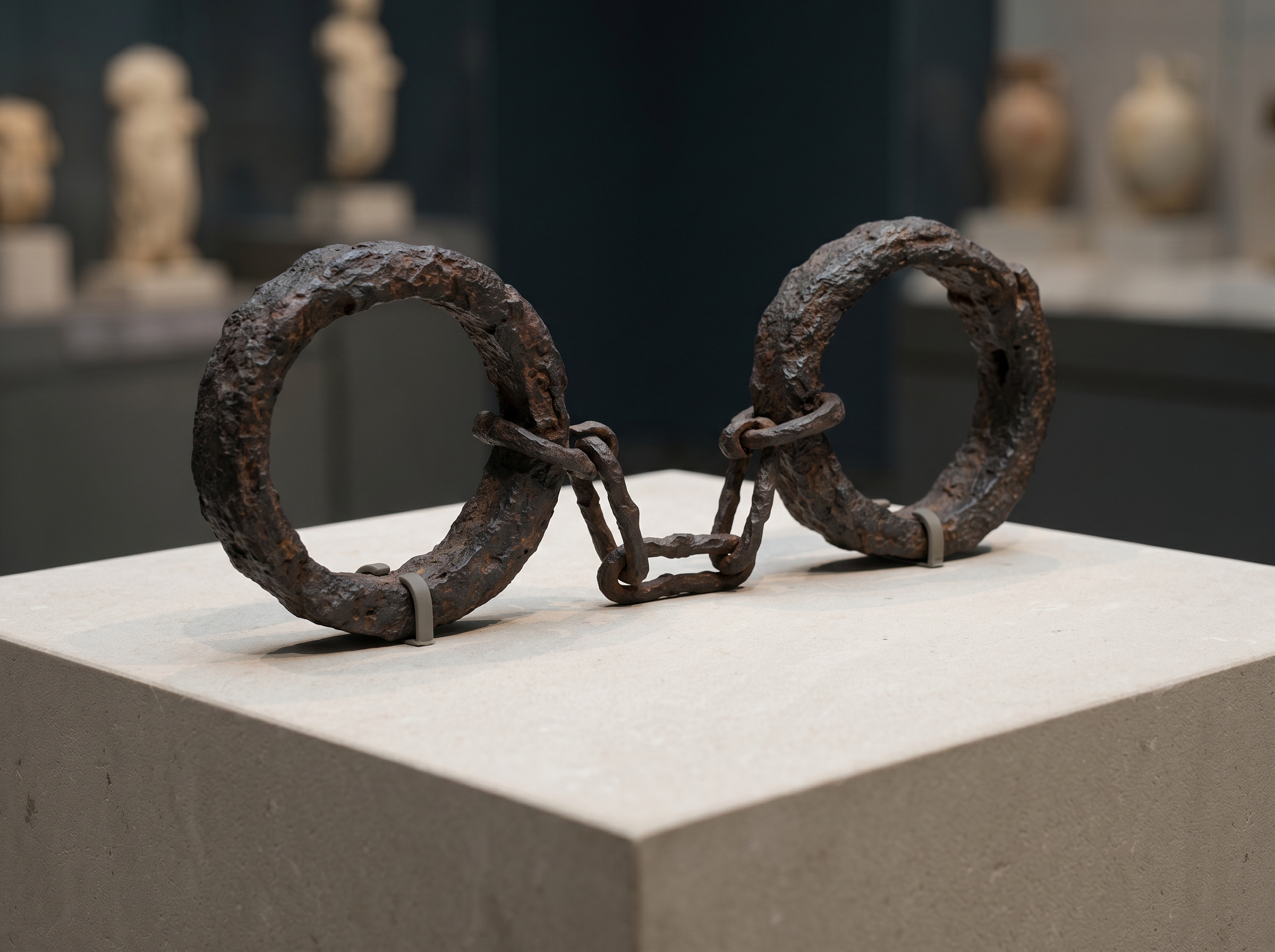
Iron Fetters
Heavy iron shackles characteristic of those used in Athenian state prisons to restrain the legs of condemned men while awaiting execution.
Glossary
- asebeia: Impiety; the formal religious charge brought against Socrates, accusing him of failing to acknowledge the gods recognized by the state.
- dikast: An Athenian juror who also functioned simultaneously as a judge, selected randomly by lot from a pool of eligible male citizens over 30.
- prytaneion: The public hearth and dining hall of Athens, where Olympic victors and state heroes were granted free meals for life at public expense.
- klepsydra: An unglazed terracotta water clock used in Athenian courts to strictly regulate and standardize the time allotted for prosecution and defense speeches.