Klepsydra
Curated by Vera • Athens Puts Socrates on Trial in 399 B.C.
Definition
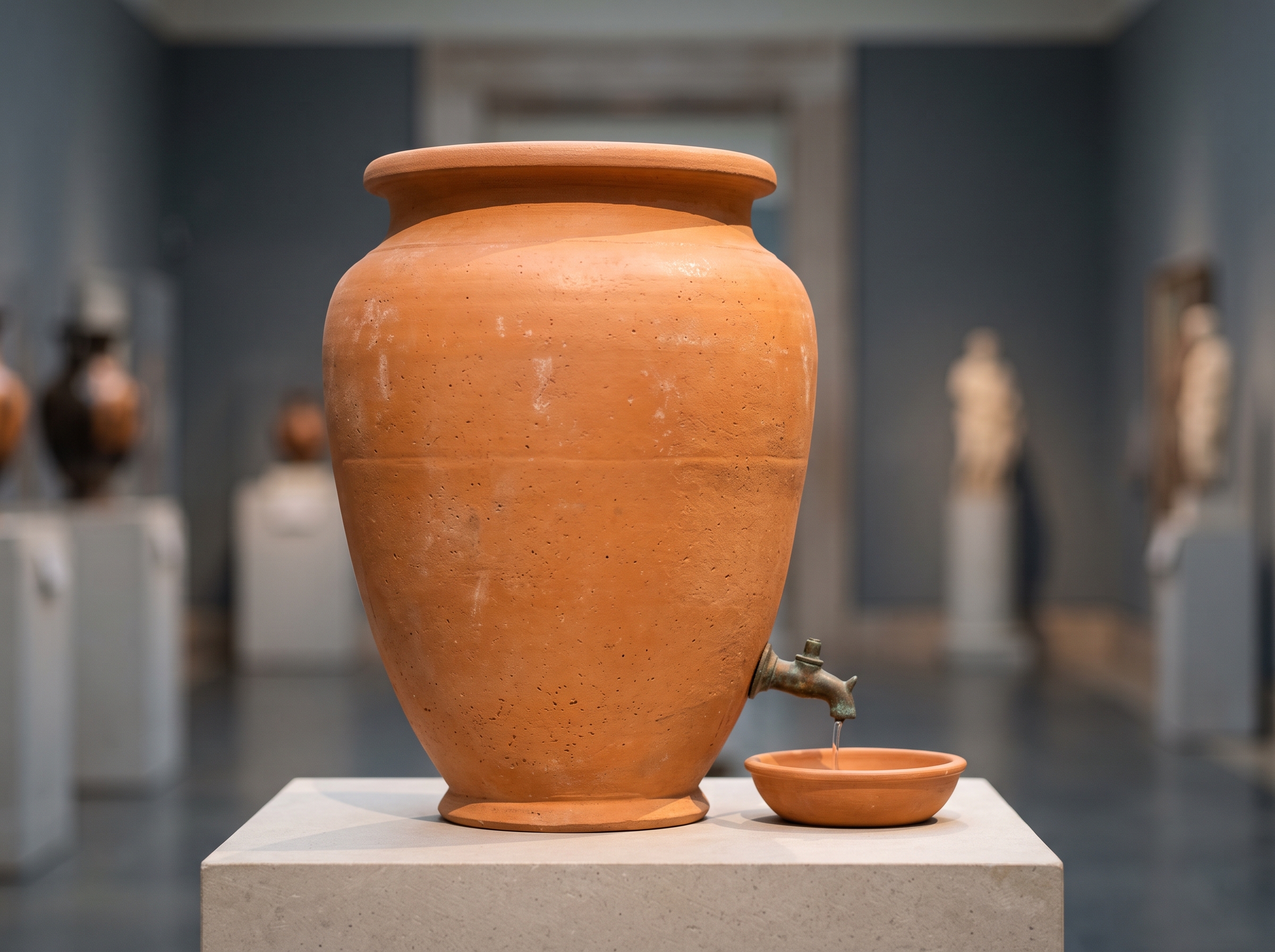
An unglazed terracotta water clock used in Athenian courts to strictly regulate and standardize the time allotted for prosecution and defense speeches.
In Context
The charge of asebeia carried immense weight because classical Athenian religion governed pure civic duty. The gods organized the harvest and protected the city walls. To question their validity threatened the sheer survival of the polis. Behind Meletus stood Anytus, a powerful politician and tannery owner. Anytus had suffered heavy financial and political losses under the Thirty Tyrants. He supplied the social pressure required to force the trial forward into the Heliaia supreme court. The court utilized a klepsydra, an unglazed terracotta water vessel with a small bronze spout at its base. Once the presiding magistrate opened the spout, water flowed into a lower basin. A speaker held the floor only until the upper bowl ran dry.
Primary Source
Athens Puts Socrates on Trial in 399 B.C.
Socrates did not die for an abstract truth; he died because he refused to flatter a jury of 501 shopkeepers, potters, and veterans. To understand his death by hemlock, we must examine the physical realities of the Athenian court and the weaponized charge of asebeia.
Read Study (16 min) →Artifacts
Glossary
- asebeia
- Impiety; the formal religious charge brought against Socrates, accusing him of failing to acknowledge the gods recognized by the state.
- dikast
- An Athenian juror who also functioned simultaneously as a judge, selected randomly by lot from a pool of eligible male citizens over 30.
- prytaneion
- The public hearth and dining hall of Athens, where Olympic victors and state heroes were granted free meals for life at public expense.
- psephos
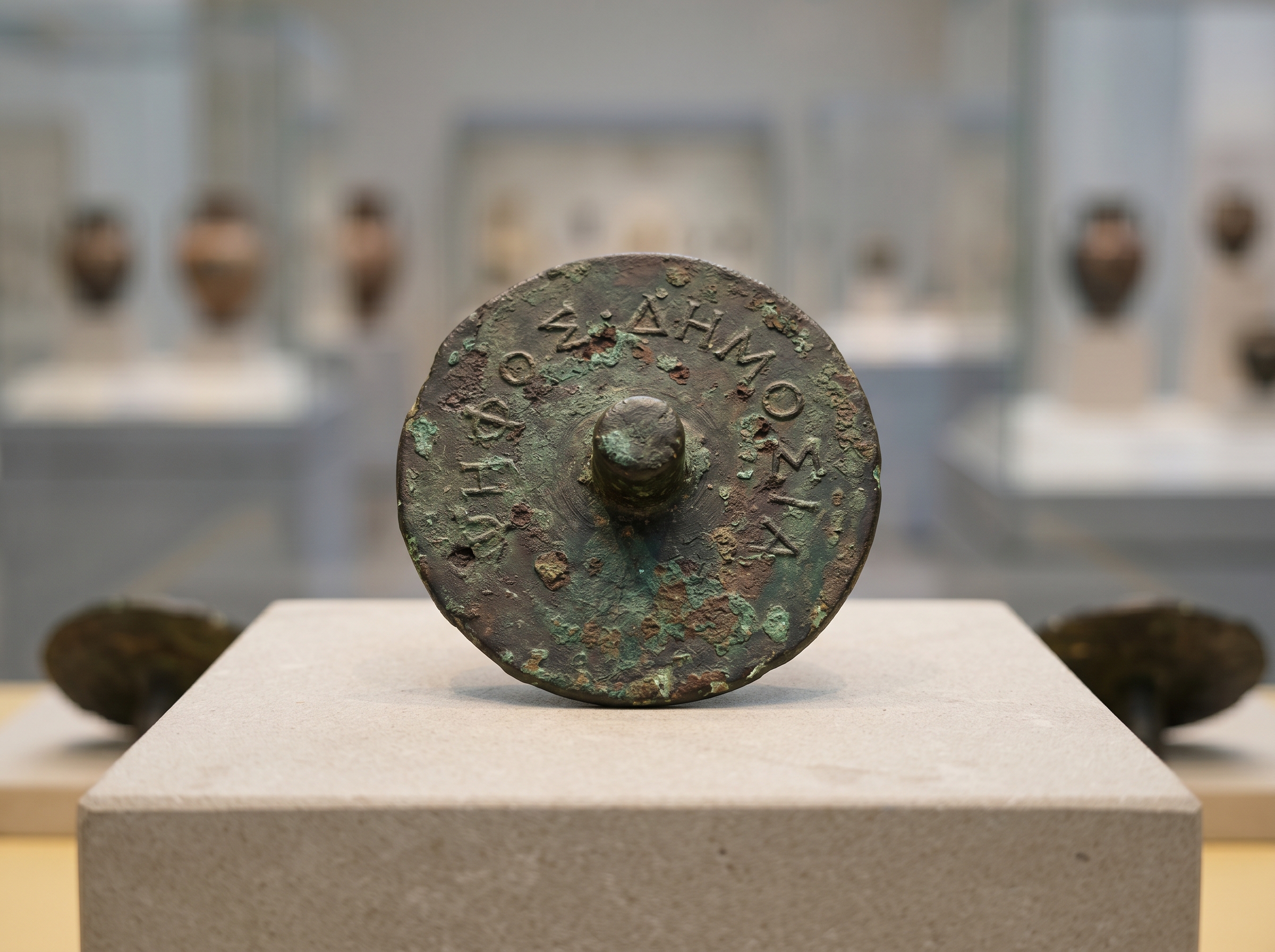
- A bronze voting disk used by jurors. A solid central hub indicated a vote for acquittal, while a pierced hub indicated condemnation.
- the thirty tyrants
- A brutal, pro-Spartan oligarchy installed in Athens in 404 B.C. following their defeat. Their oppressive regime fueled the democratic paranoia that condemned Socrates.