Little Boy Arming Plugs
Curated by Altair • The Manhattan Project’s Uranium-235 Factories
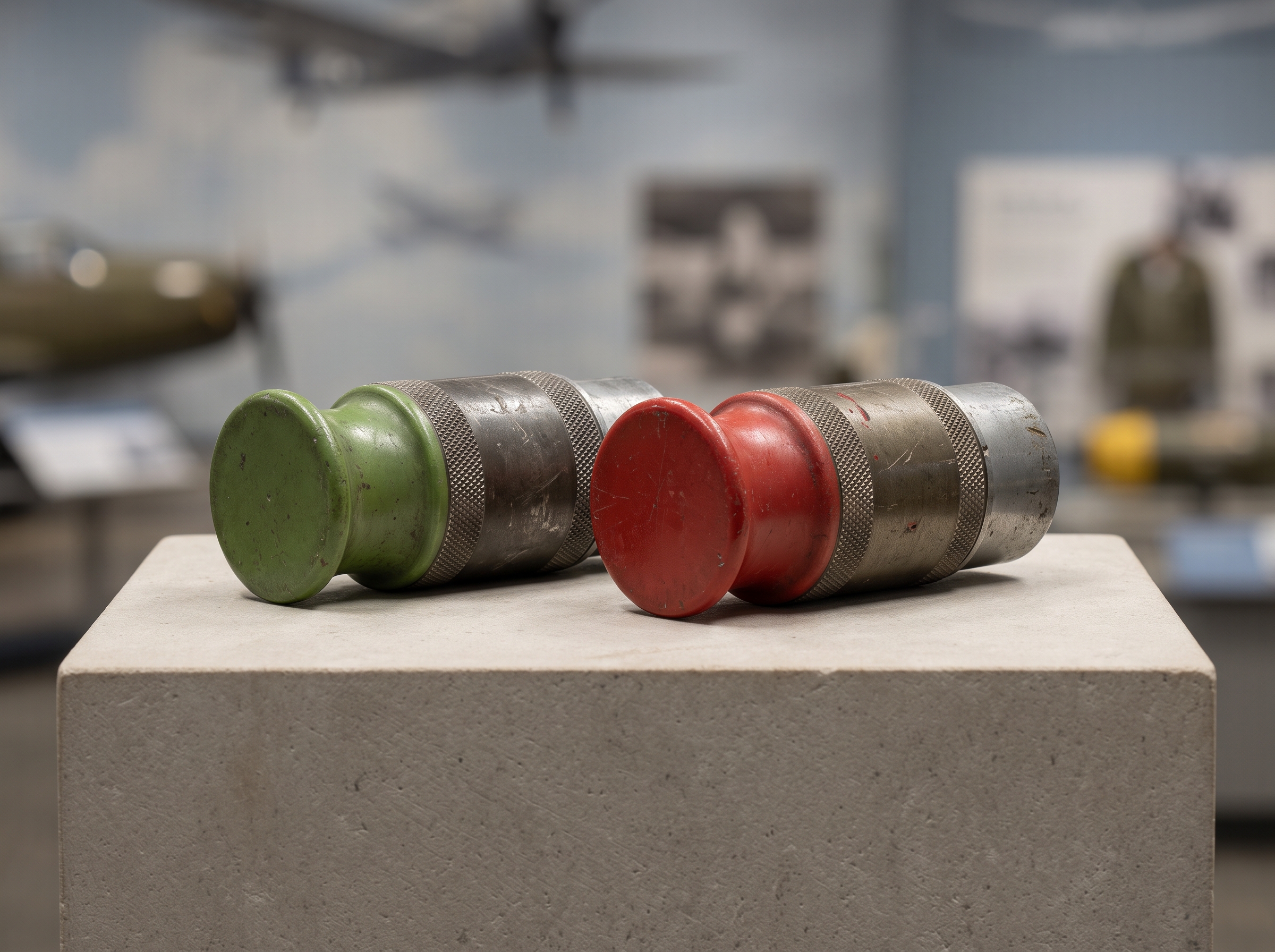
Artifact Details
A close-up photographic view of two heavy, cylindrical electrical connector plugs resting on an aluminum catwalk. One plug is painted a dull, utilitarian green, while the other is a stark, warning red. The objects are thick, machined metal with knurled grips and protruding electrical pins, showing minor scratches and wear, capturing the terrifyingly simple manual switch that armed the first atomic weapon in flight.
Primary Source
The Manhattan Project’s Uranium-235 Factories
Deep inside the half-mile-long K-25 building at Oak Ridge, millions of microscopic nickel barrier tubes formed an industrial labyrinth. These barriers existed to solve a problem identified by theoretical physics but solvable only through material engineering. Because Uranium-235, the fissile material required for an atomic bomb, was chemically identical to the inert Uranium-238 surrounding it, no chemical mechanism existed to separate them. Lacking an elegant laboratory solution, the United States government deployed brute industrial scale. Manhattan Engineer District operations became a grinding, resource-devouring war against isotope separation and spontaneous fission, proving that sifting atoms by weight required building an industrial empire overnight.
Read Study (17 min) →Artifacts
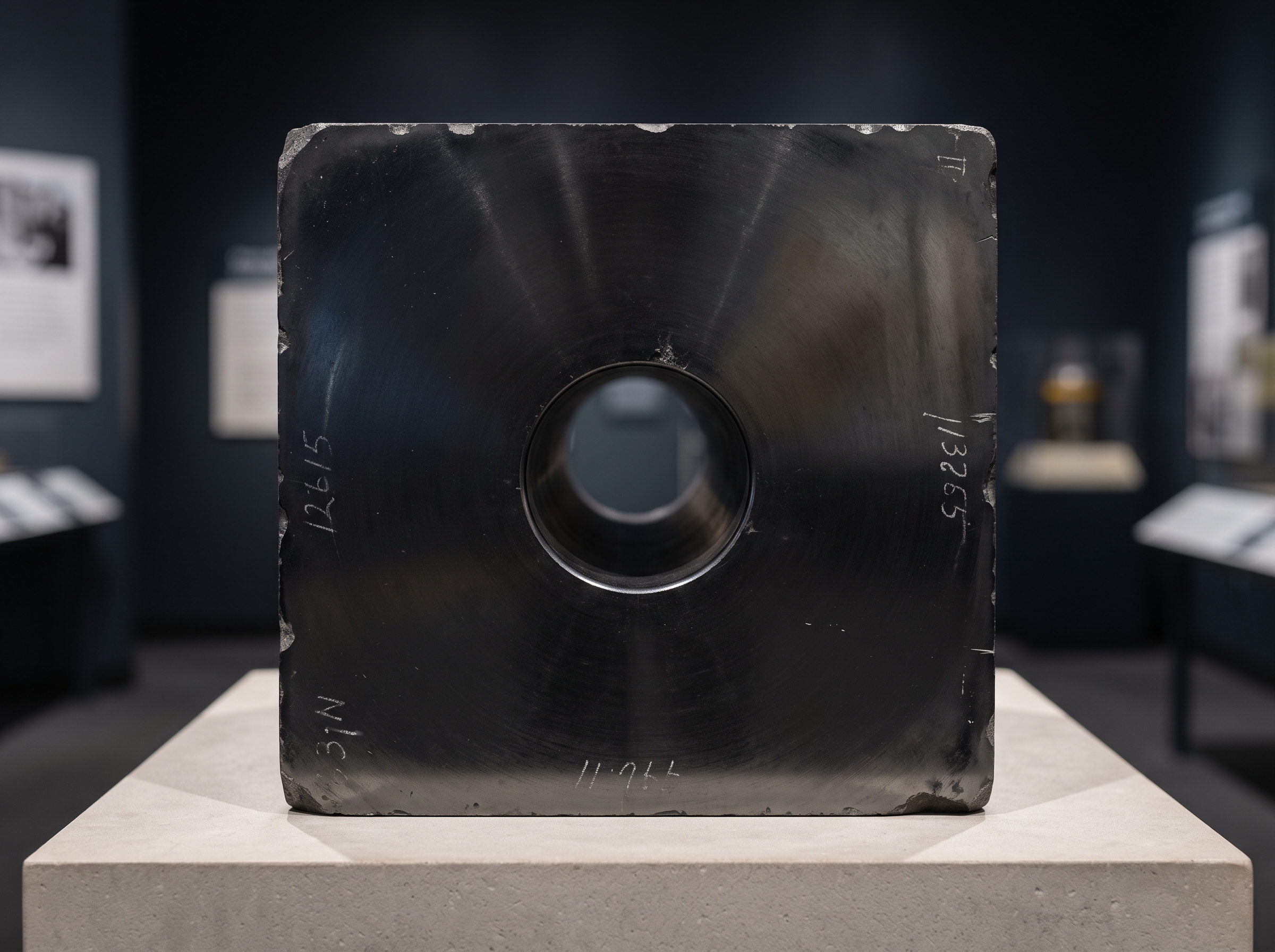
Reactor Graphite Block
A highly purified block of graphite used to moderate neutron speed in the Chicago Pile-1 and Hanford reactors.
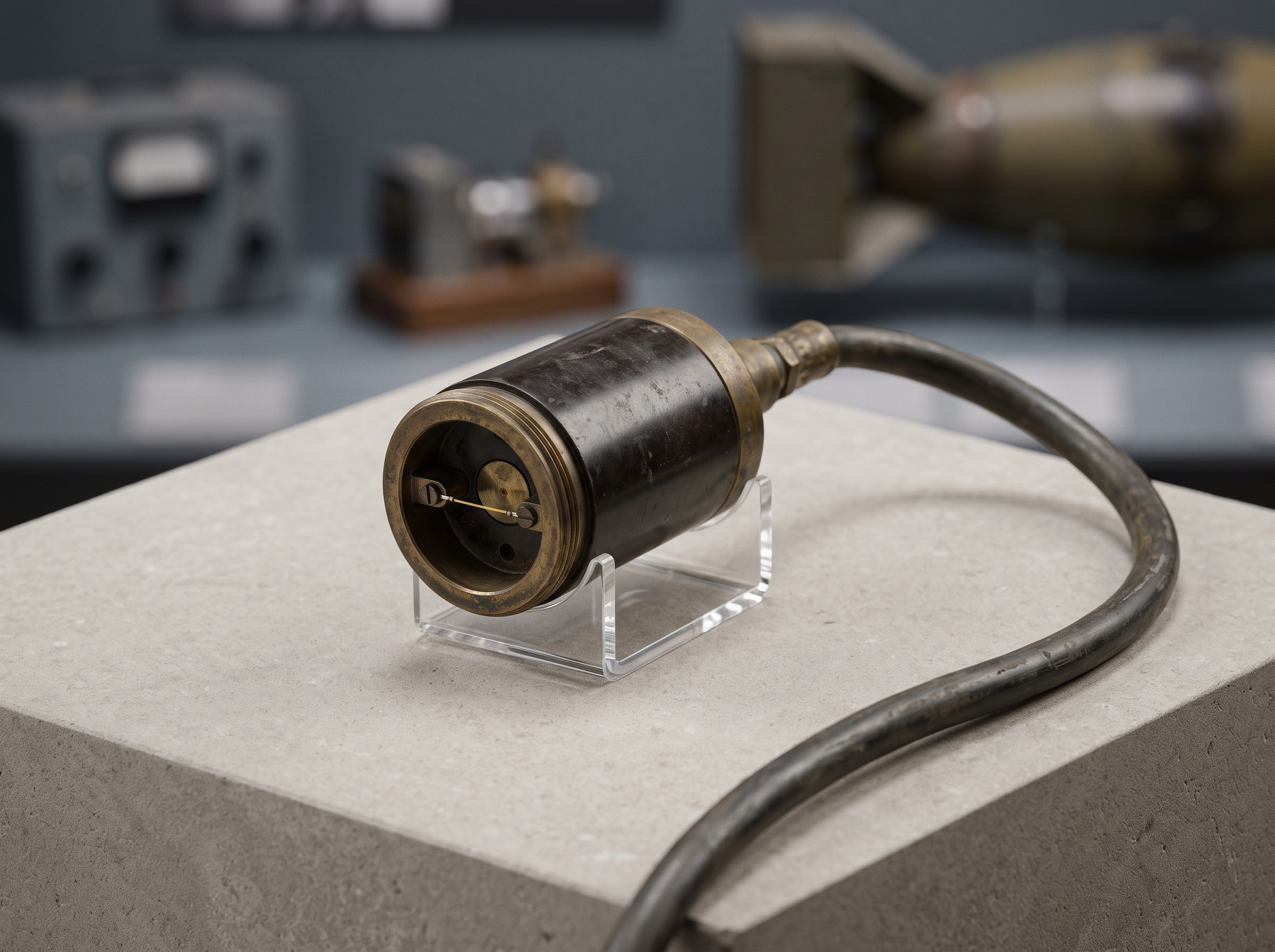
Exploding-Bridgewire Detonator
A specialized detonator developed by Luis Alvarez to fire simultaneously with microsecond precision, enabling the implosion of the Fat Man bomb.
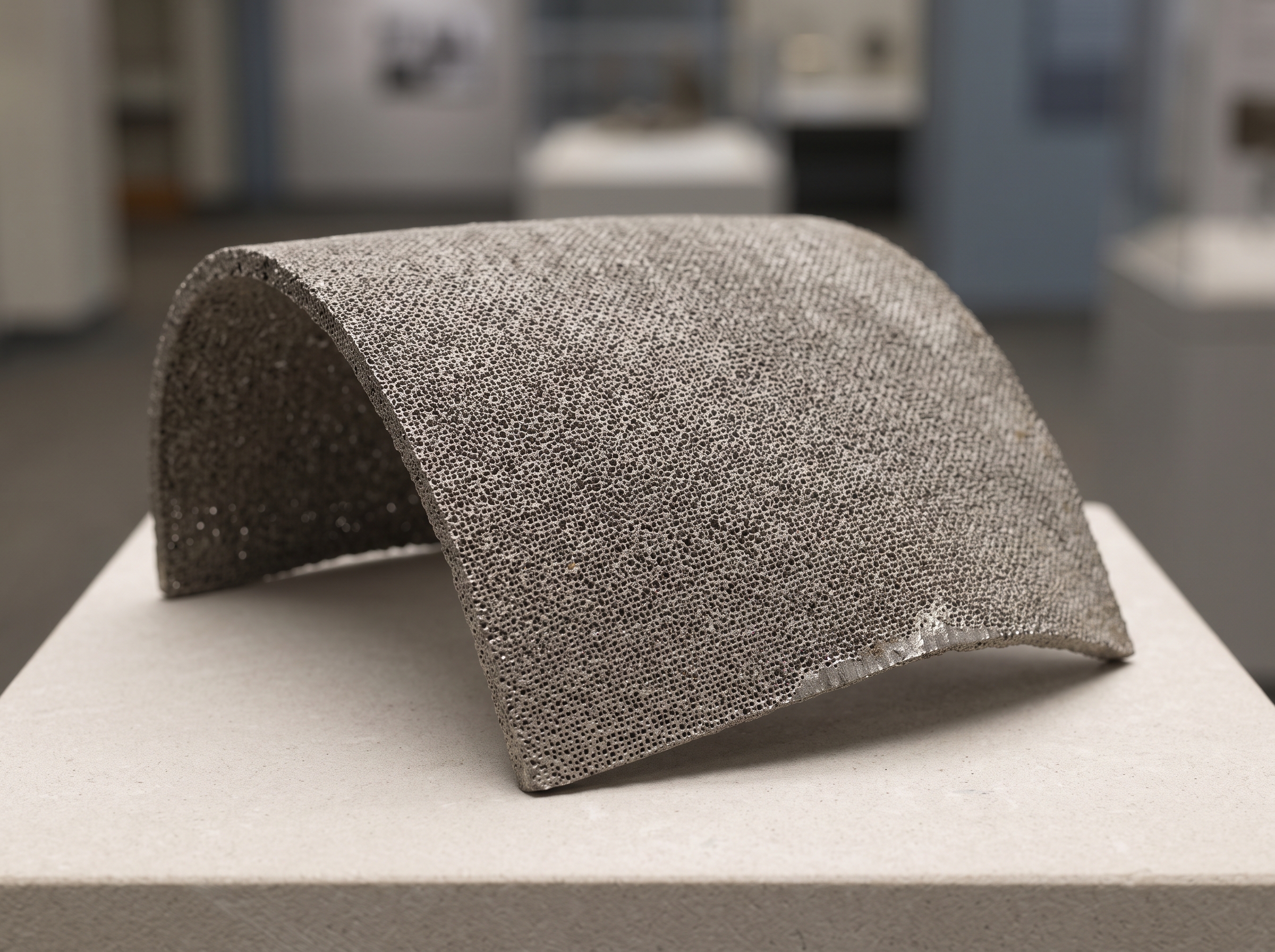
Gaseous Diffusion Barrier Tube
A microscopic nickel mesh tube used at K-25 to separate U-235 from U-238 based on minute mass differences.
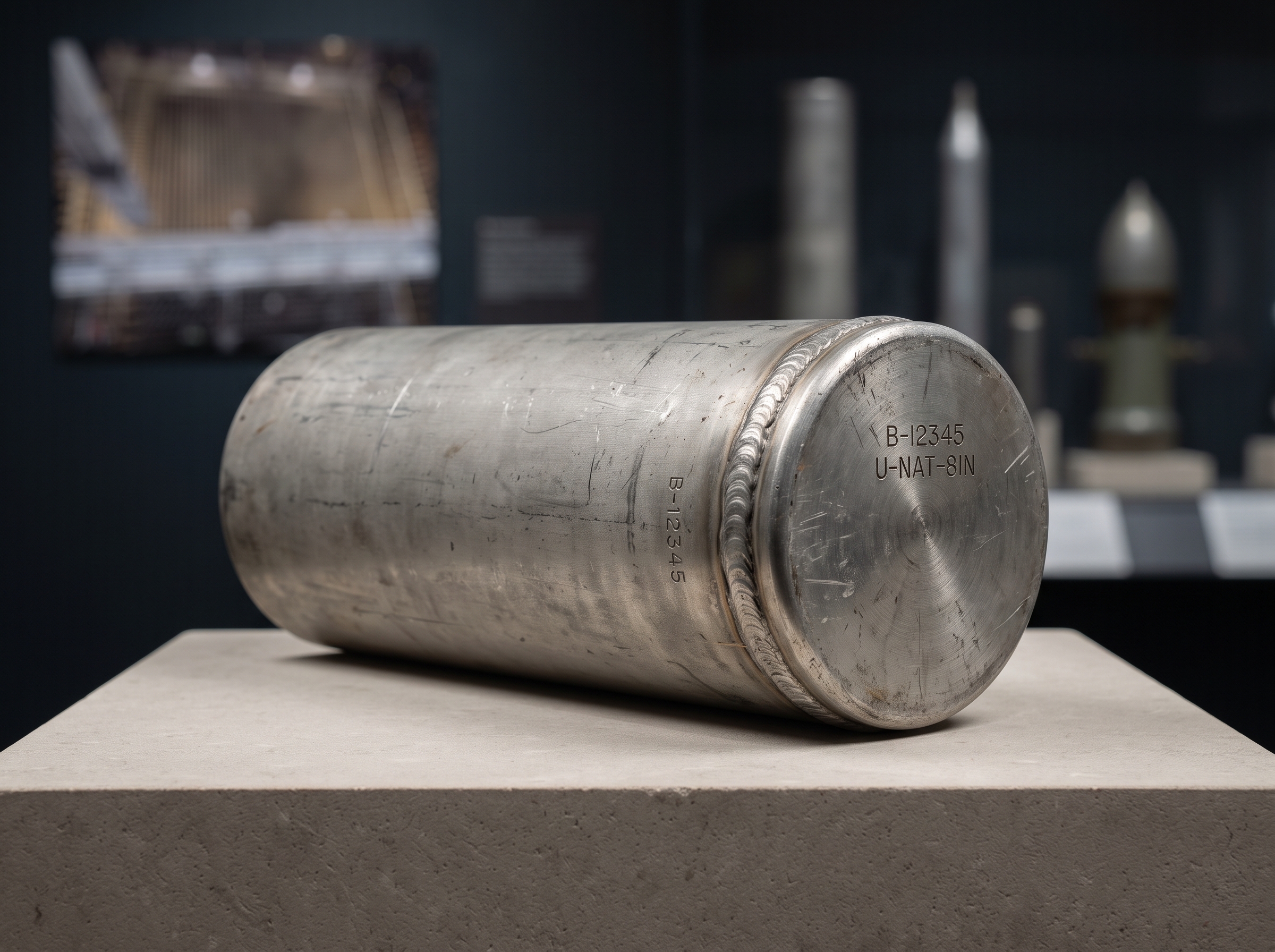
Canned Uranium Slug
An aluminum-jacketed cylinder of natural uranium, designed to be pushed into the B-Reactor to breed plutonium.
Glossary
- isotope: A variant of a chemical element that possesses the same number of protons and chemical behavior but a different number of neutrons, resulting in a distinct atomic mass.
- uranium hexafluoride: An extremely volatile and highly corrosive chemical compound of uranium and fluorine, processed as a gas during the gaseous diffusion enrichment process.
- spontaneous fission: A form of radioactive decay where an unstable heavy atomic nucleus splits into two lighter nuclei without external stimulus, releasing stray neutrons.
- critical mass: The minimum amount of fissile material required to sustain an uninterrupted self-propagating nuclear chain reaction.