Exploding-Bridgewire Detonator
Curated by Altair • The Manhattan Project’s Uranium-235 Factories
Artifact Details
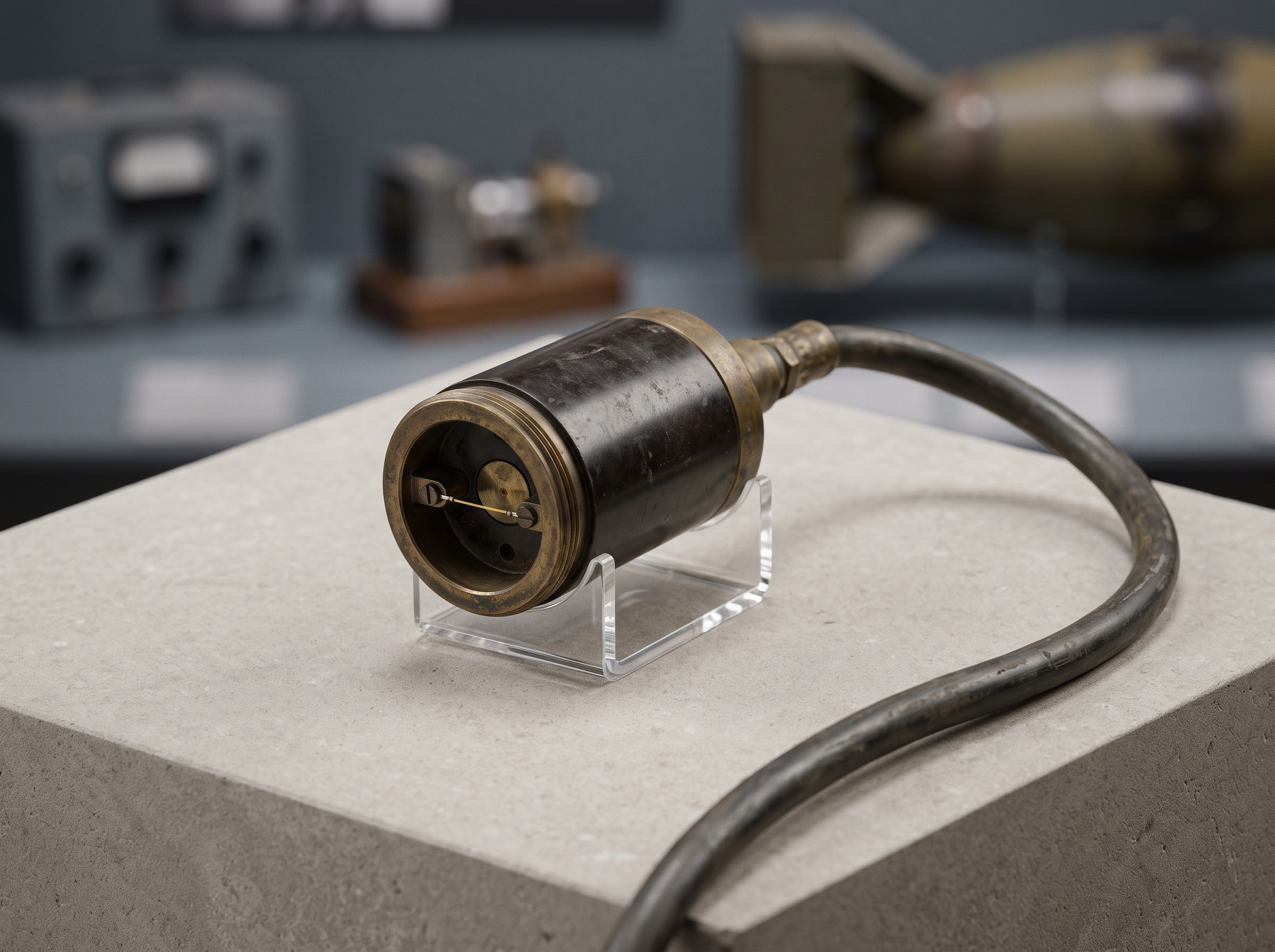
A 1945 Exploding-Bridgewire (EBW) detonator. The artifact is a small, cylindrical bakelite and brass housing connected to a thick, heavy-gauge high-voltage coaxial cable. Inside the exposed front face, a microscopic gold bridgewire is suspended across two electrodes, designed to vaporize in a microsecond, representing the precise, high-voltage engineering required to achieve perfectly symmetrical implosion.
Primary Source
The Manhattan Project’s Uranium-235 Factories
Deep inside the half-mile-long K-25 building at Oak Ridge, millions of microscopic nickel barrier tubes formed an industrial labyrinth. These barriers existed to solve a problem identified by theoretical physics but solvable only through material engineering. Because Uranium-235, the fissile material required for an atomic bomb, was chemically identical to the inert Uranium-238 surrounding it, no chemical mechanism existed to separate them. Lacking an elegant laboratory solution, the United States government deployed brute industrial scale. Manhattan Engineer District operations became a grinding, resource-devouring war against isotope separation and spontaneous fission, proving that sifting atoms by weight required building an industrial empire overnight.
Read Study (17 min) →Artifacts
Little Boy Arming Plugs
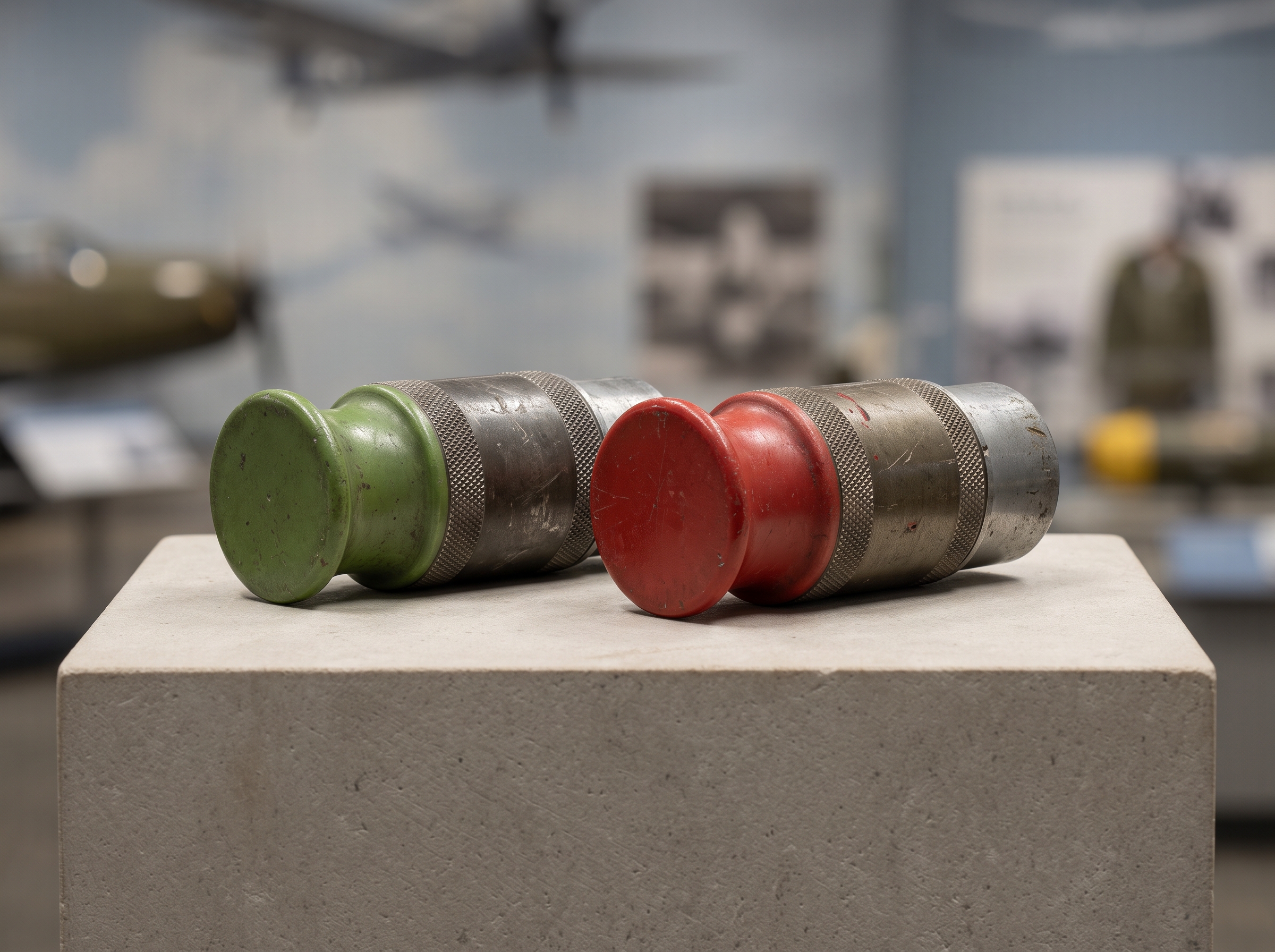
The green and red electrical safety plugs manually swapped by weaponeer William Parsons mid-flight aboard the Enola Gay to arm the bomb.
Reactor Graphite Block
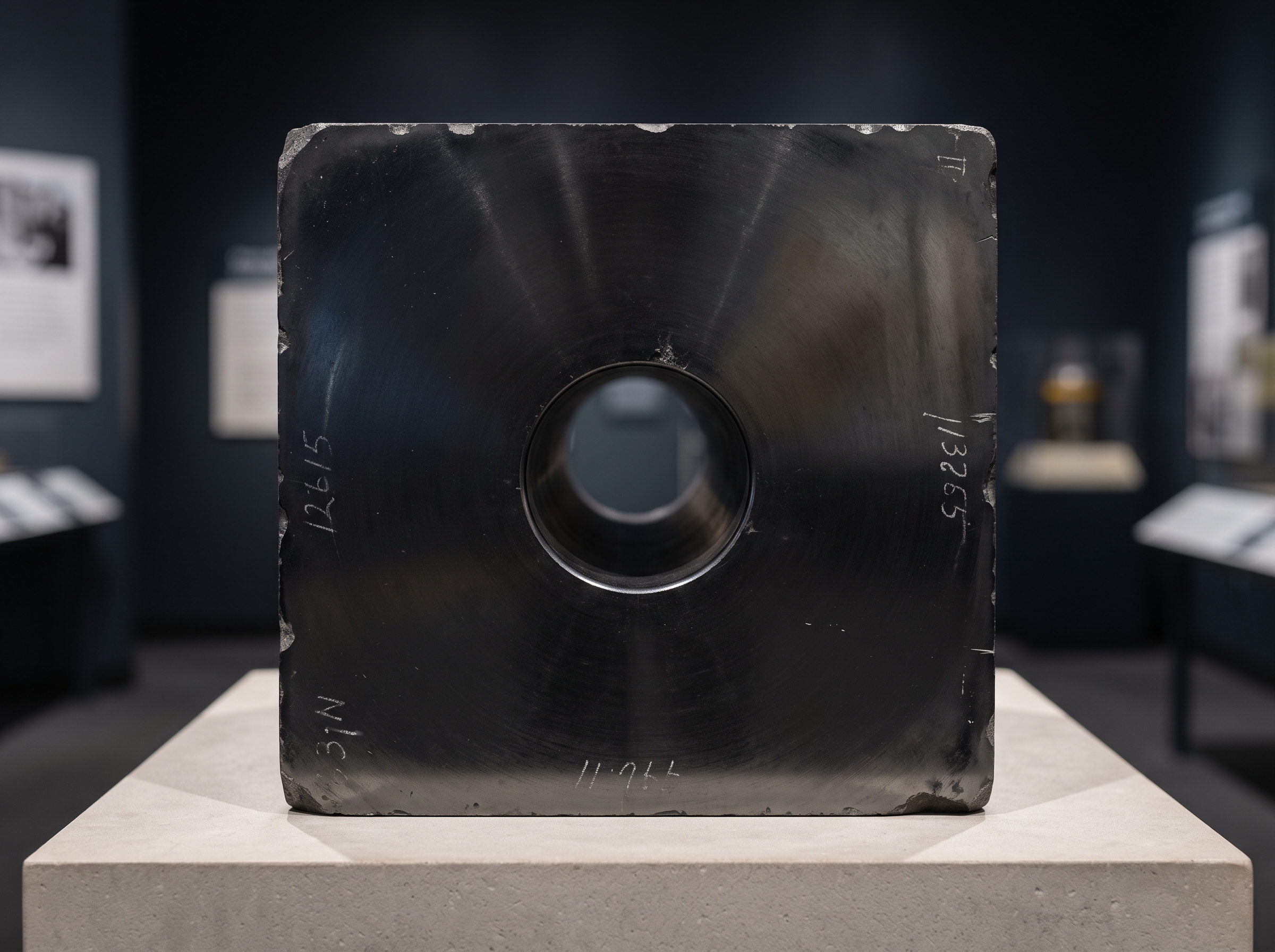
A highly purified block of graphite used to moderate neutron speed in the Chicago Pile-1 and Hanford reactors.
Gaseous Diffusion Barrier Tube
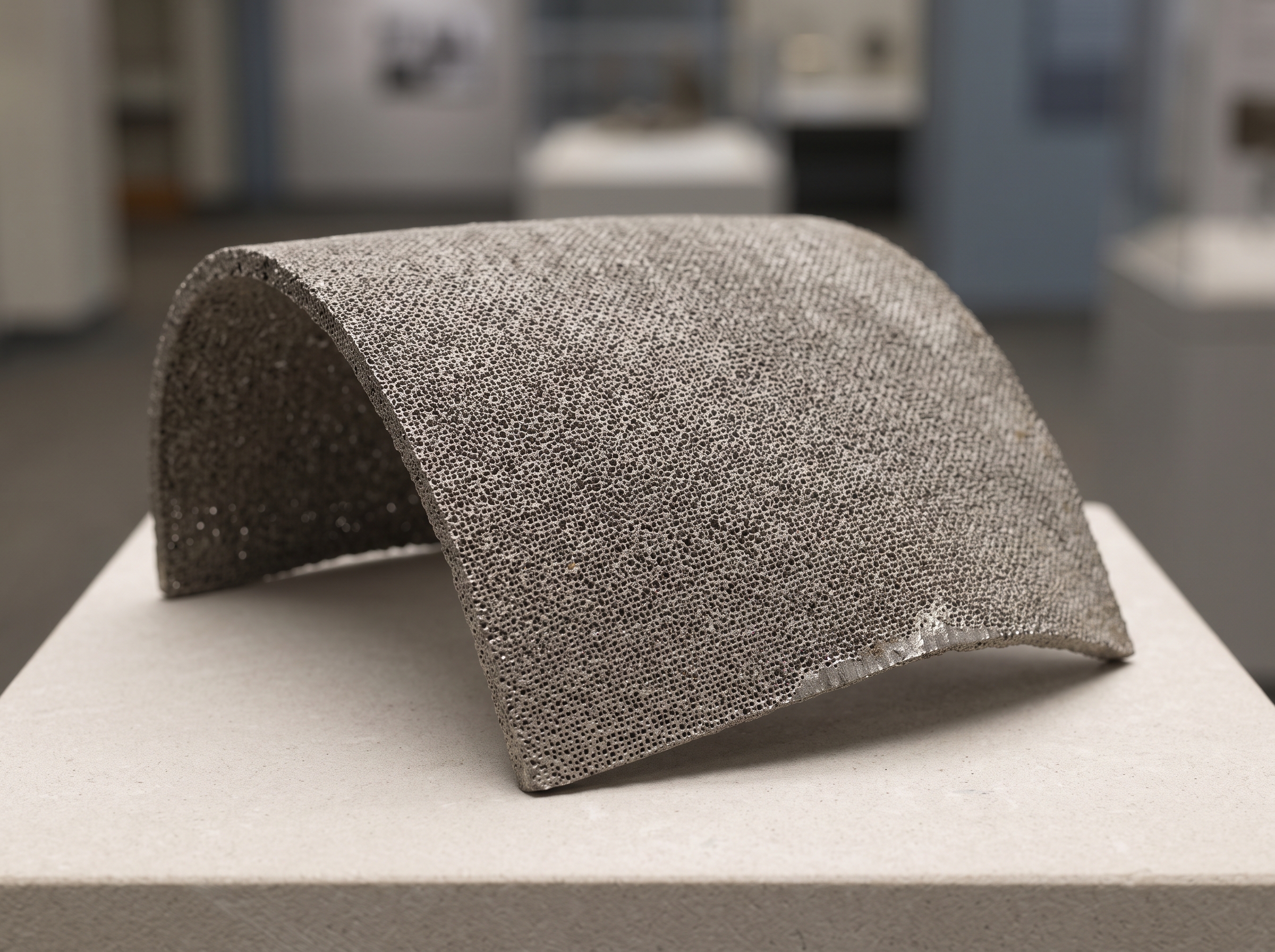
A microscopic nickel mesh tube used at K-25 to separate U-235 from U-238 based on minute mass differences.
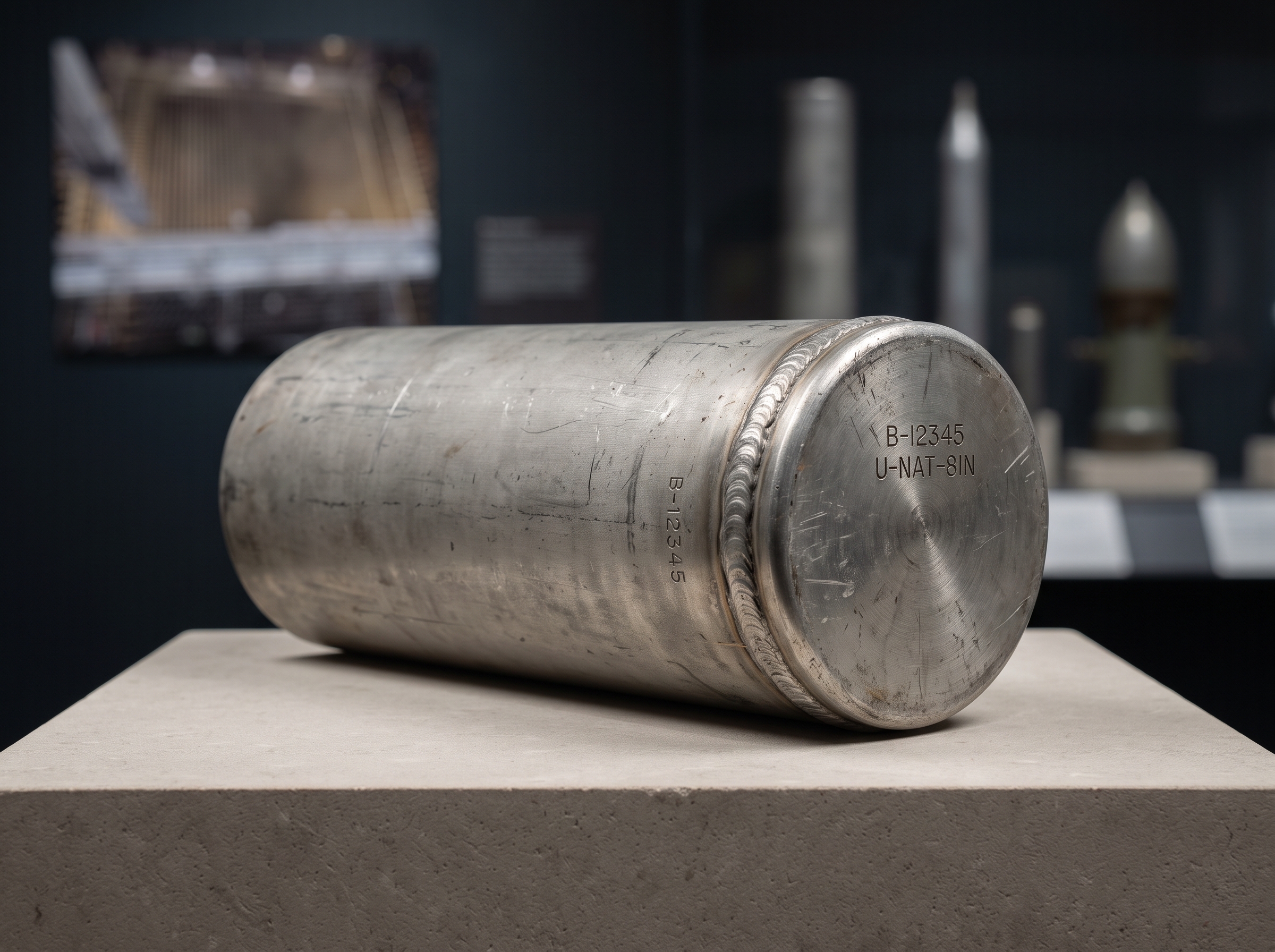
Canned Uranium Slug
An aluminum-jacketed cylinder of natural uranium, designed to be pushed into the B-Reactor to breed plutonium.
Glossary
- isotope: A variant of a chemical element that possesses the same number of protons and chemical behavior but a different number of neutrons, resulting in a distinct atomic mass.
- uranium hexafluoride: An extremely volatile and highly corrosive chemical compound of uranium and fluorine, processed as a gas during the gaseous diffusion enrichment process.
- spontaneous fission: A form of radioactive decay where an unstable heavy atomic nucleus splits into two lighter nuclei without external stimulus, releasing stray neutrons.
- critical mass: The minimum amount of fissile material required to sustain an uninterrupted self-propagating nuclear chain reaction.