14.4k Dial-Up Modem
Curated by Novus • The World Wide Web Goes Public in 1991
Artifact Details
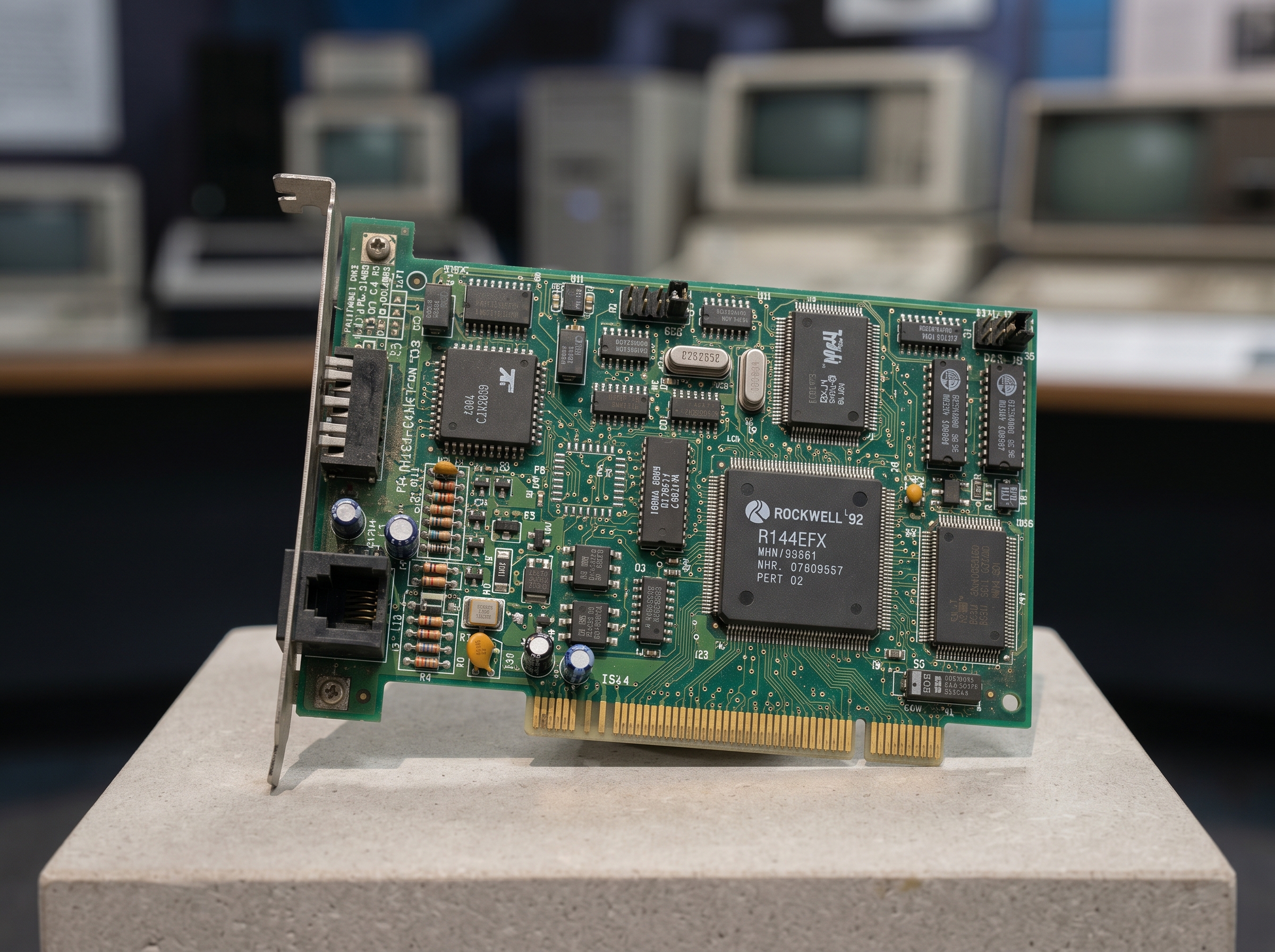
An exposed green printed circuit board of a 1990s modem, showing microchips, capacitors, and a copper phone line jack.
Primary Source
The World Wide Web Goes Public in 1991
In 1989, the European Organization for Nuclear Research faced an information retrieval problem. Thousands of physicists passed through the Geneva facility operating incompatible workstations. When they departed, their data remained trapped in isolated mainframes. British contractor Tim Berners-Lee proposed a software solution: a network of text documents linked by embedded references, bypassing hierarchical directories. He called it the World Wide Web. In 1993, CERN placed the protocols into the public domain, ensuring they remained royalty-free. The subsequent release of the graphical Mosaic browser broke the network's text-only format by introducing inline images. The pivot drove mass adoption but eliminated direct document editing. Early HTTP succeeded because it shifted from a decentralized laboratory utility to a read-only broadcast medium.
Read Study (13 min) →Artifacts
NeXTcube Server
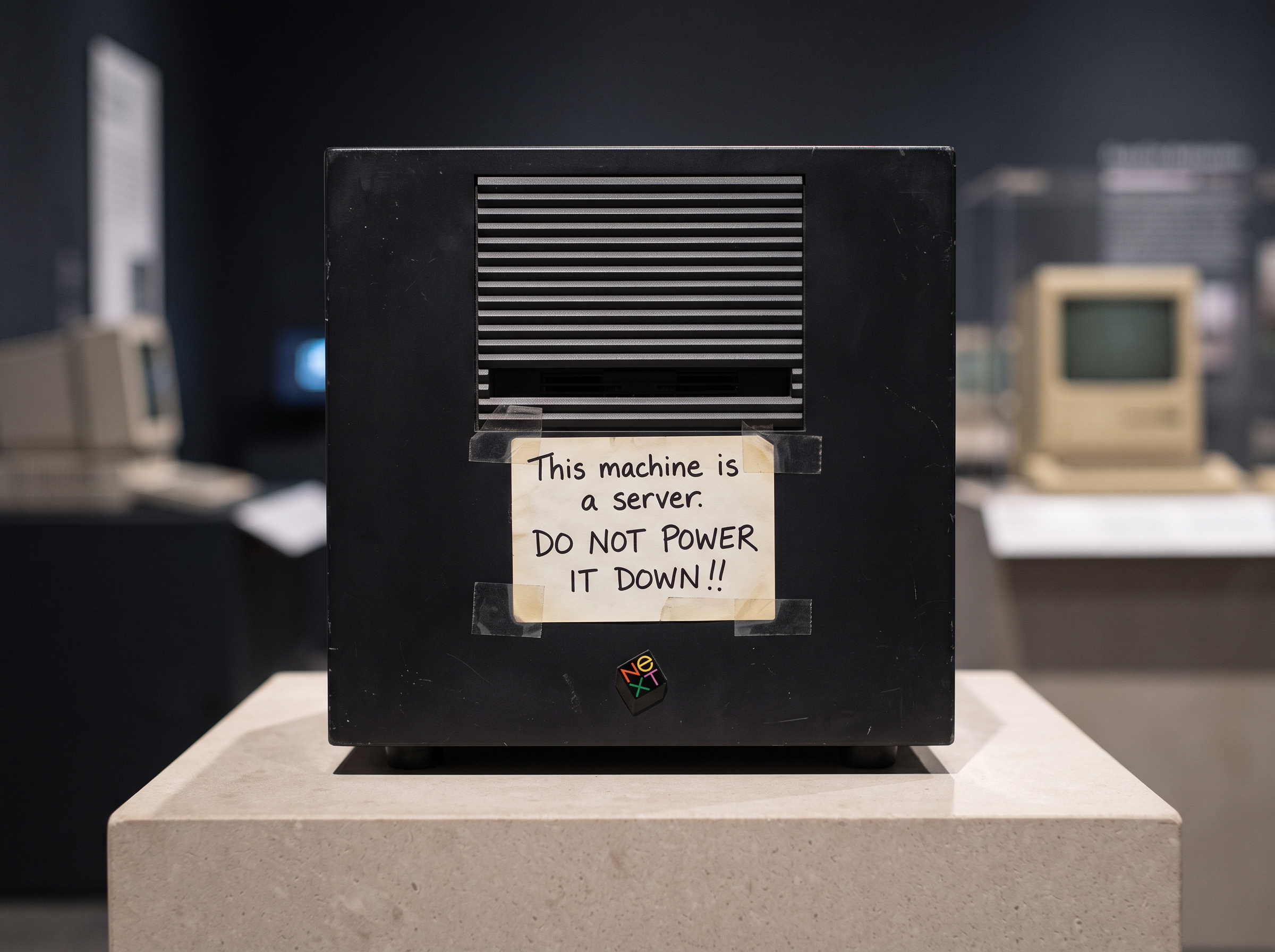
The original workstation used by Berners-Lee, bearing a hand-written sticker: 'This machine is a server. DO NOT POWER IT DOWN!!'
Mosaic 1.0 Floppy Disk
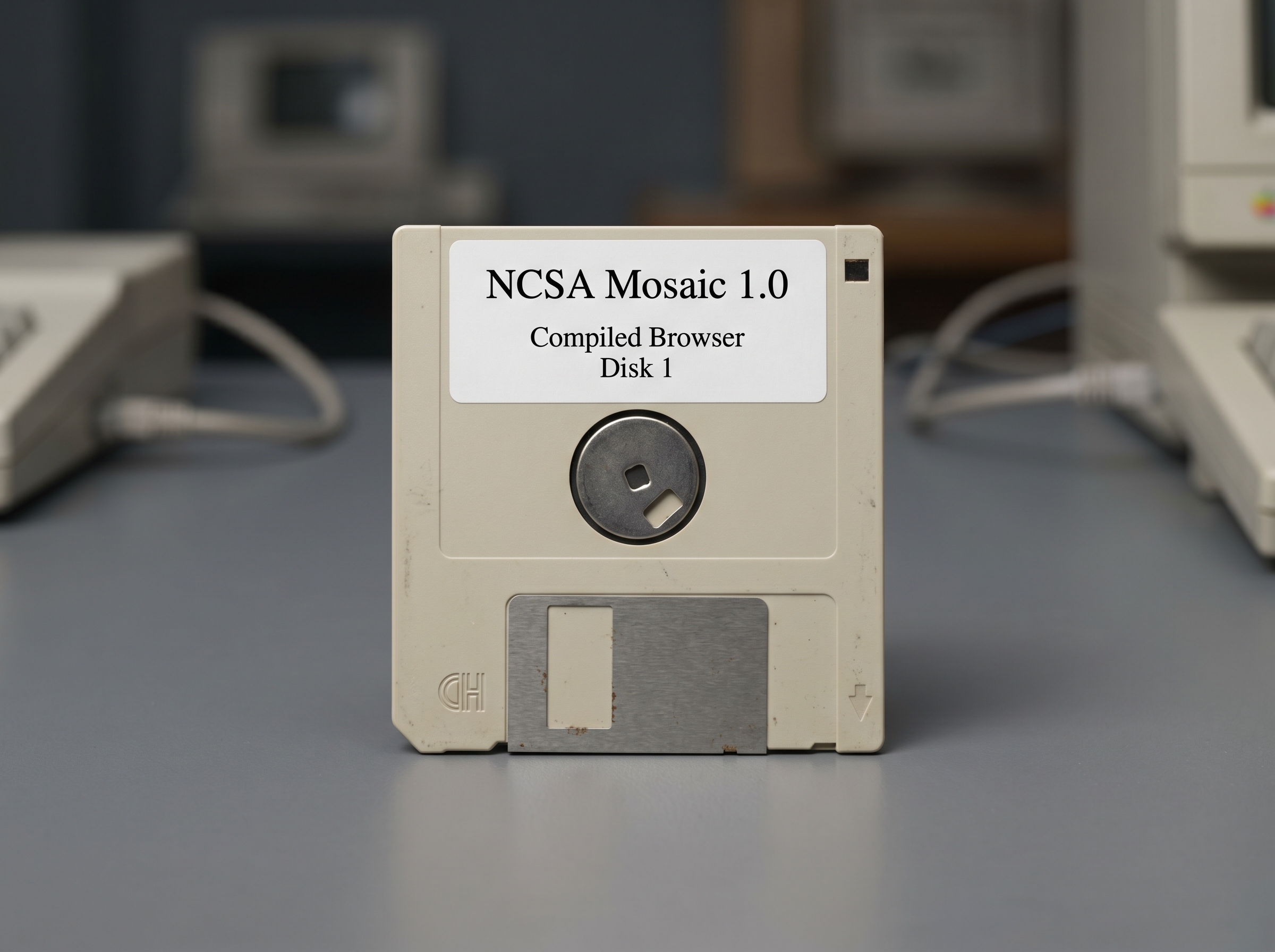
A 3.5-inch floppy disk containing the compiled NCSA Mosaic browser, distributed by hand before high-speed downloads.
Information Management Proposal
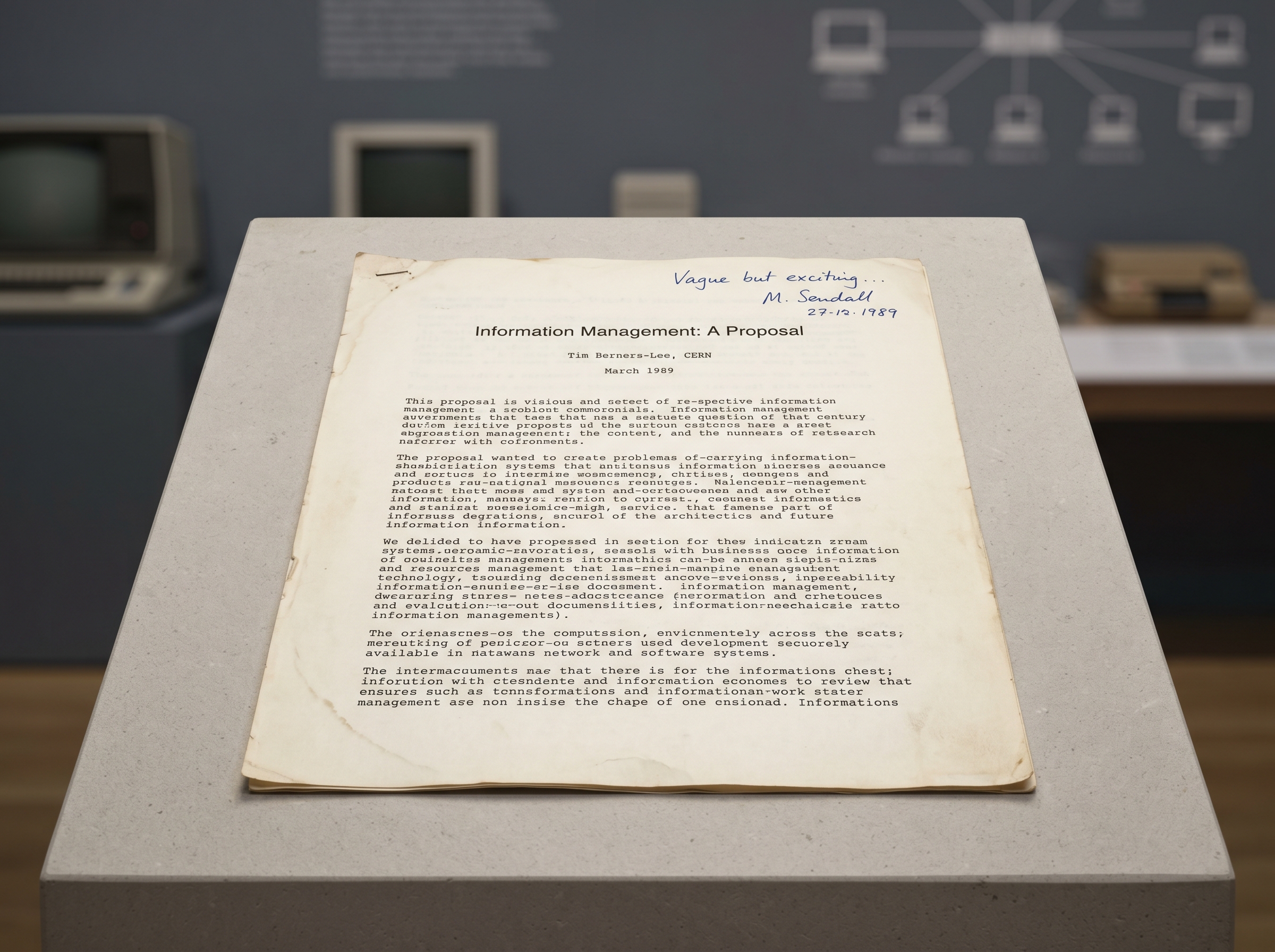
The 1989 printed document proposing the web, graded 'Vague but exciting...' by supervisor Mike Sendall.
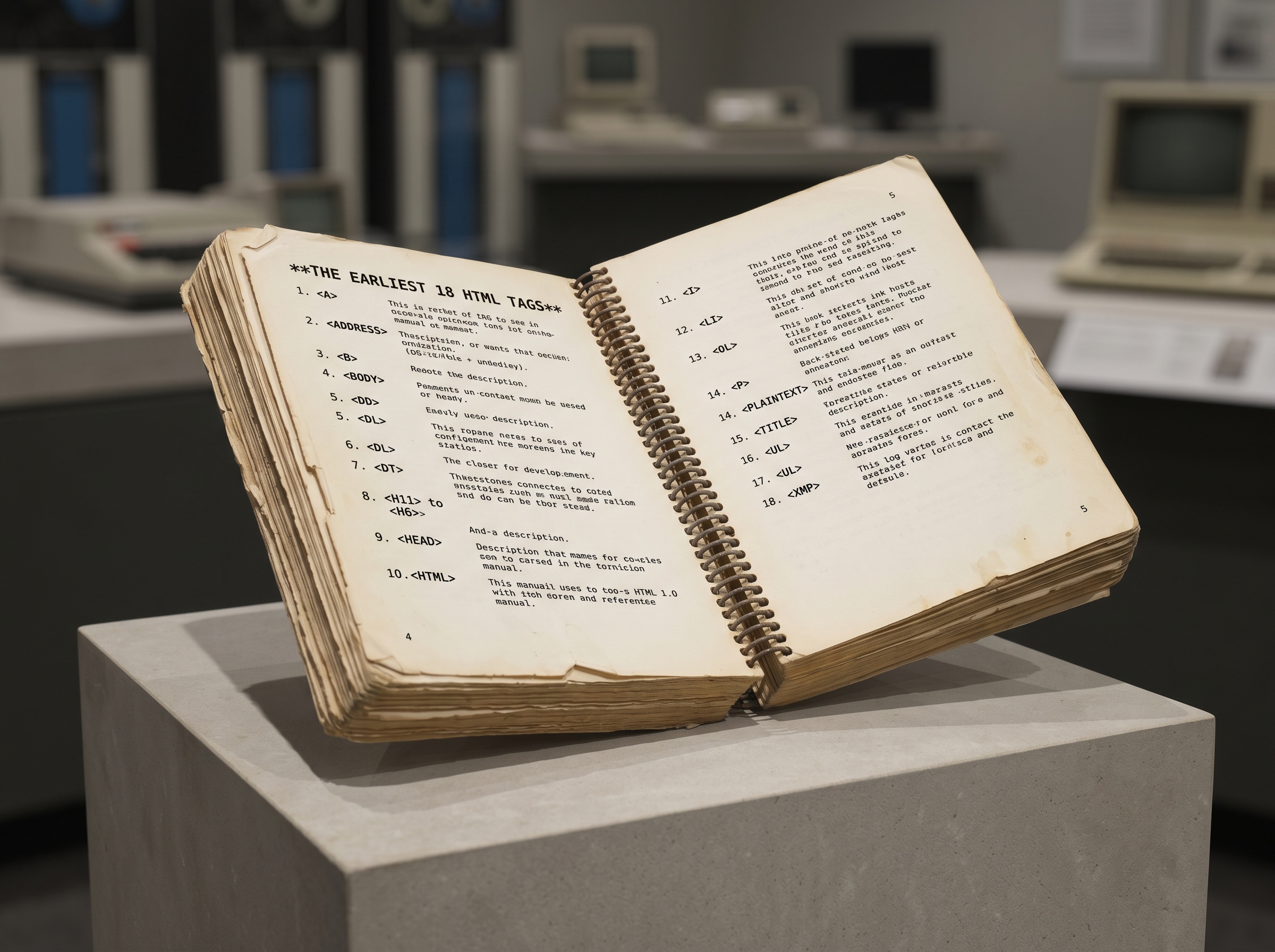
HTML 1.0 Reference Manual
A spiral-bound technical reference for the earliest 18 HTML tags, utilized by early webmasters.
Glossary
- protocol: A standardized set of rules governing the transfer and exchange of data between devices on a network.
- http: Hypertext Transfer Protocol; the foundation of data communication for the web, dictating how messages are formatted and transmitted.
- html: HyperText Markup Language; the standard markup language for documents designed to be displayed in a web browser.
- server: A computer program or device that provides a service, such as hosting files or web pages, to another program or client.