Otis Hydraulic Valve Assembly
Curated by Elian • Building the Eiffel Tower from 18,038 Iron Parts
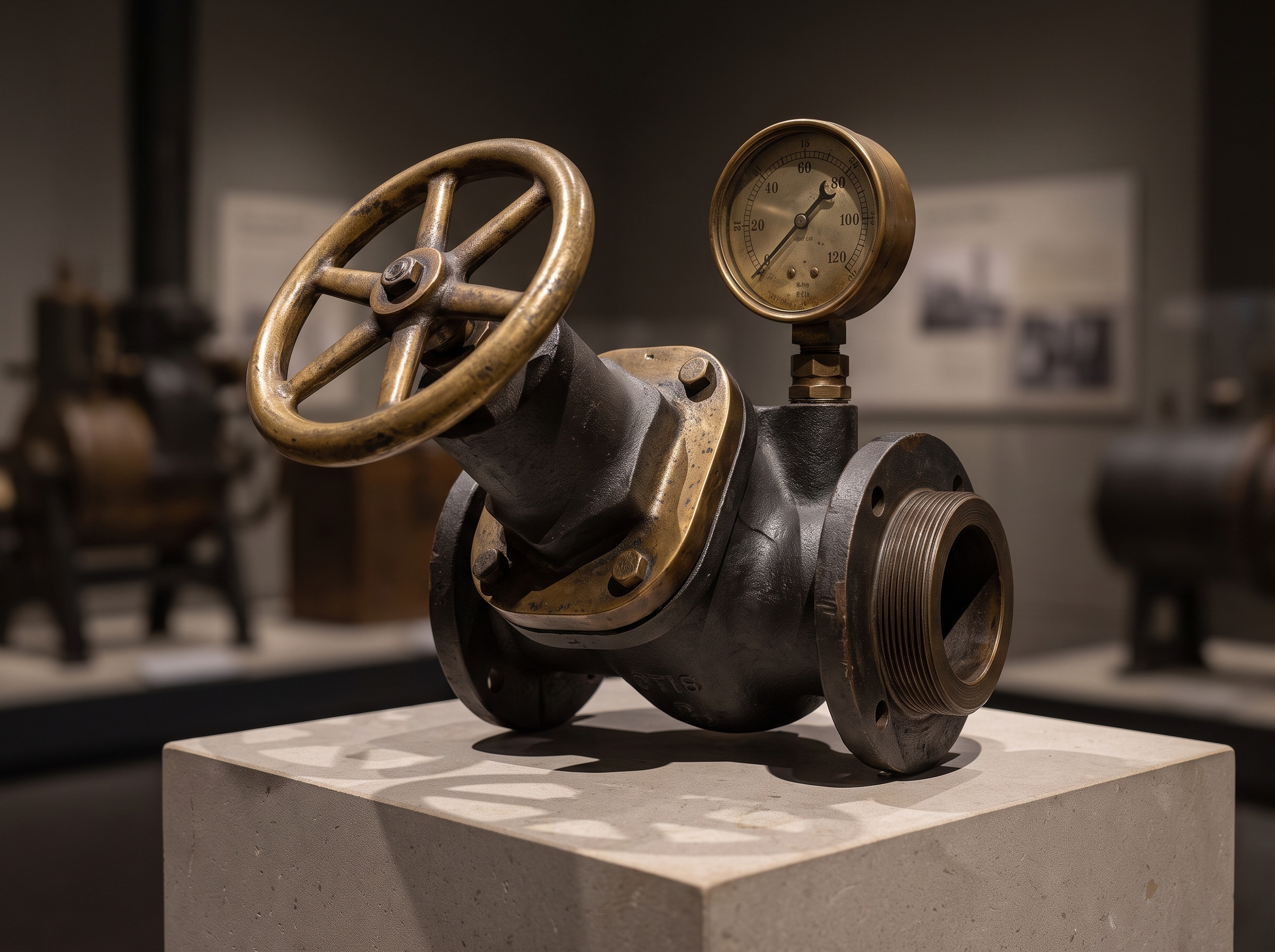
Artifact Details
An 1889 industrial control valve assembly made of heavy cast iron and brass. Features a main circular spoke handwheel, an integrated circular brass pressure gauge displaying imperial units, and a thick threaded flange connection. The cast iron shows a dark, textured charcoal finish, while the brass components exhibit a deep, tarnished golden patina with oil-grease smudges and minor surface pitting.
Primary Source
Building the Eiffel Tower from 18,038 Iron Parts
On May 6, 1889, visitors entering the Exposition Universelle in Paris passed beneath a towering arch of interlocking dark metal that challenged the sky. Standing exactly 300 meters high, the structure was a calculation of materials and force. Its design bypassed traditional stone monumentality, employing a delicate, open latticework of Lorraine puddle iron to slip through the heavy Atlantic winds. Beneath the soaring arches lay a geopolitical assertion of French industrial sovereignty, designed to silence domestic political division and project French technological mastery to the world. The massive iron monument proved that material utility, when pushed to its structural limits, defines the supreme aesthetic of the industrial age.
Read Study (21 min) →Artifacts
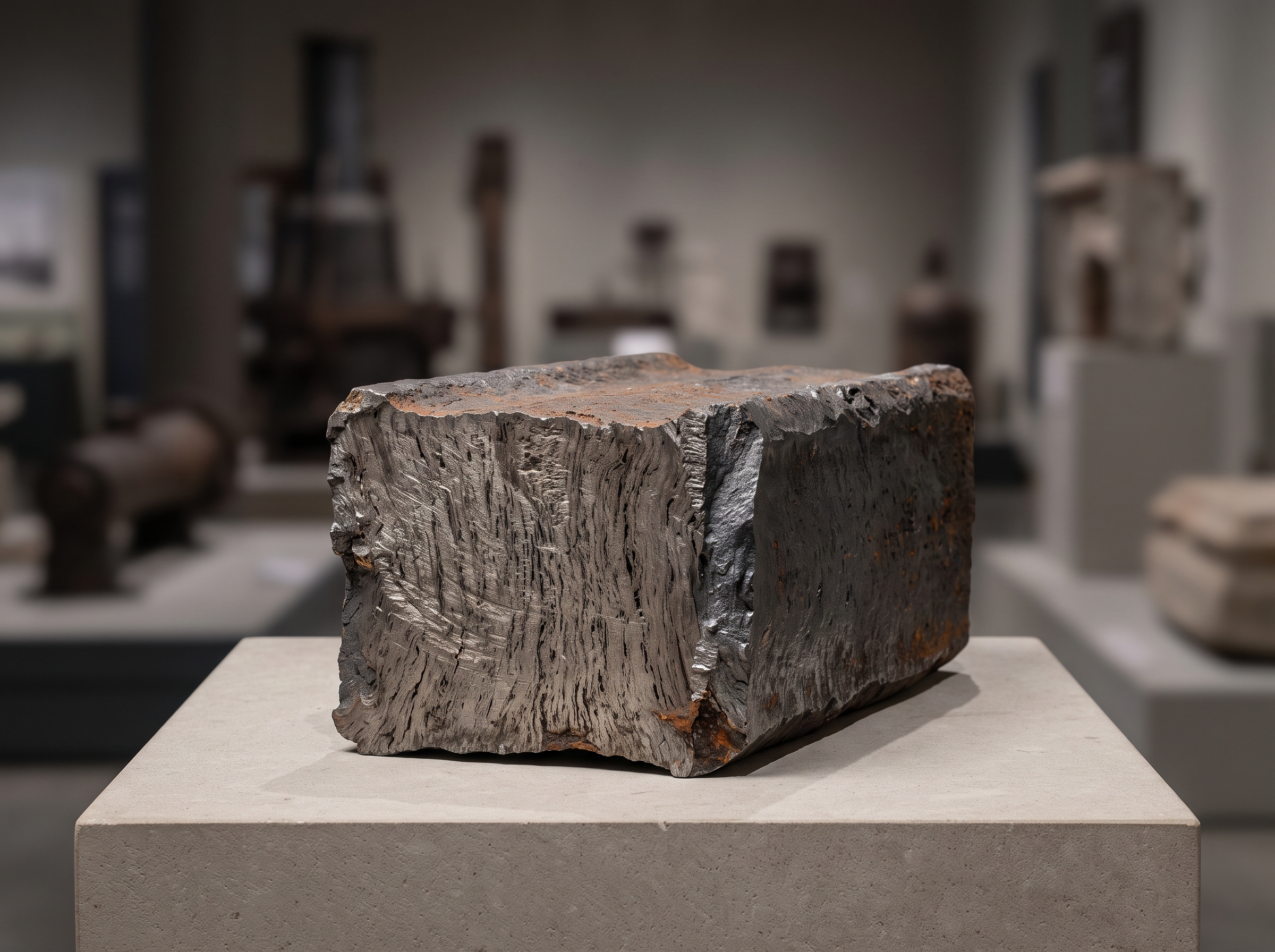
Pompey Puddle Iron Segment
A piece of structural puddle iron from the Pompey ironworks in Lorraine, showing the fibrous silicate layers that give the tower its tensile flexibility.
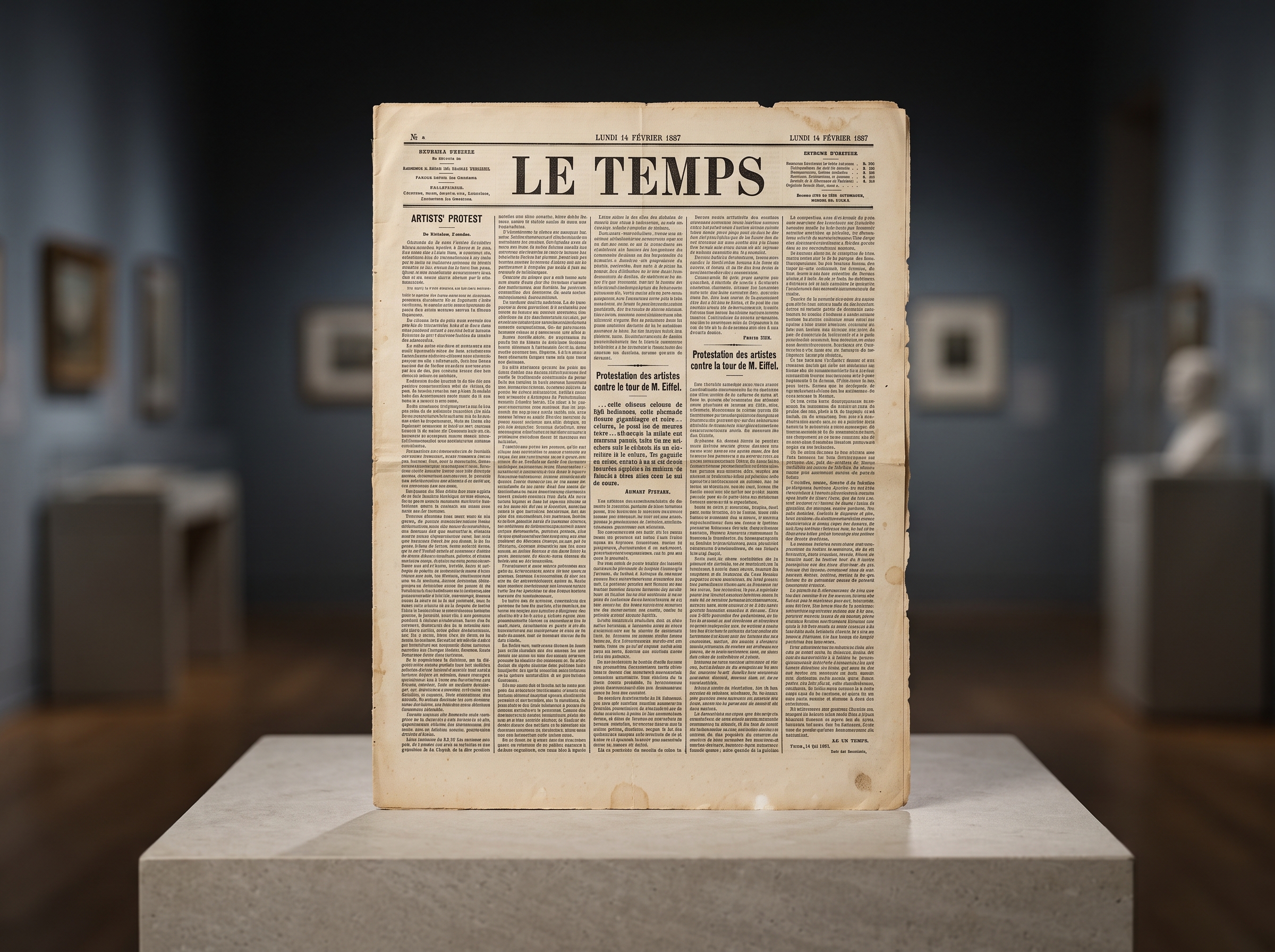
Le Temps Protest Publication
The printed February 14, 1887 issue of Le Temps containing the Artists' Protest, calling the tower a 'gigantic black factory chimney' that would deface Paris.
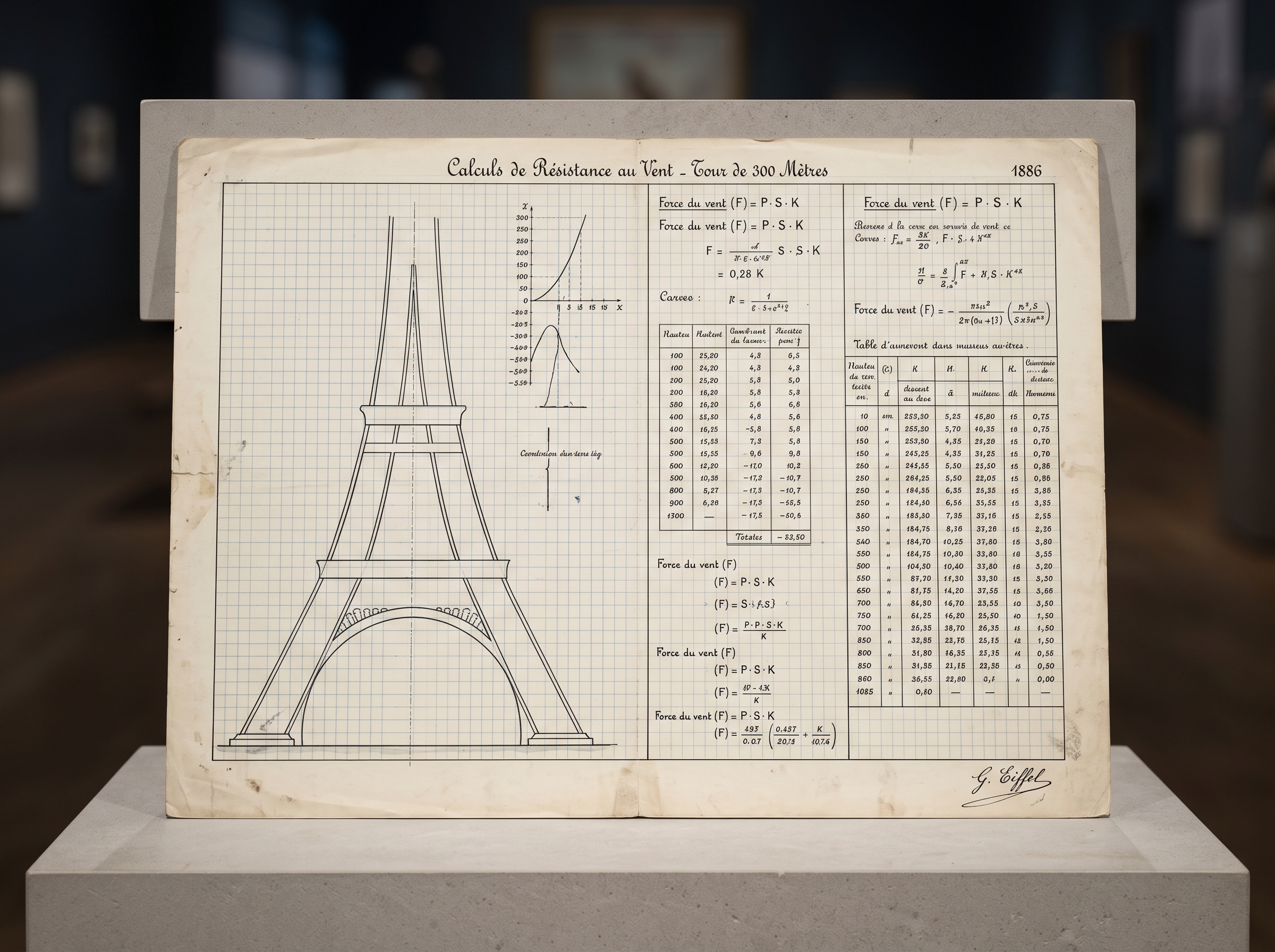
Eiffel Wind Calculation Sheet
A set of Gustave Eiffel's original hand-drawn mathematical sheets calculating the specific wind load resistance and curves of the tower's supporting pillars.
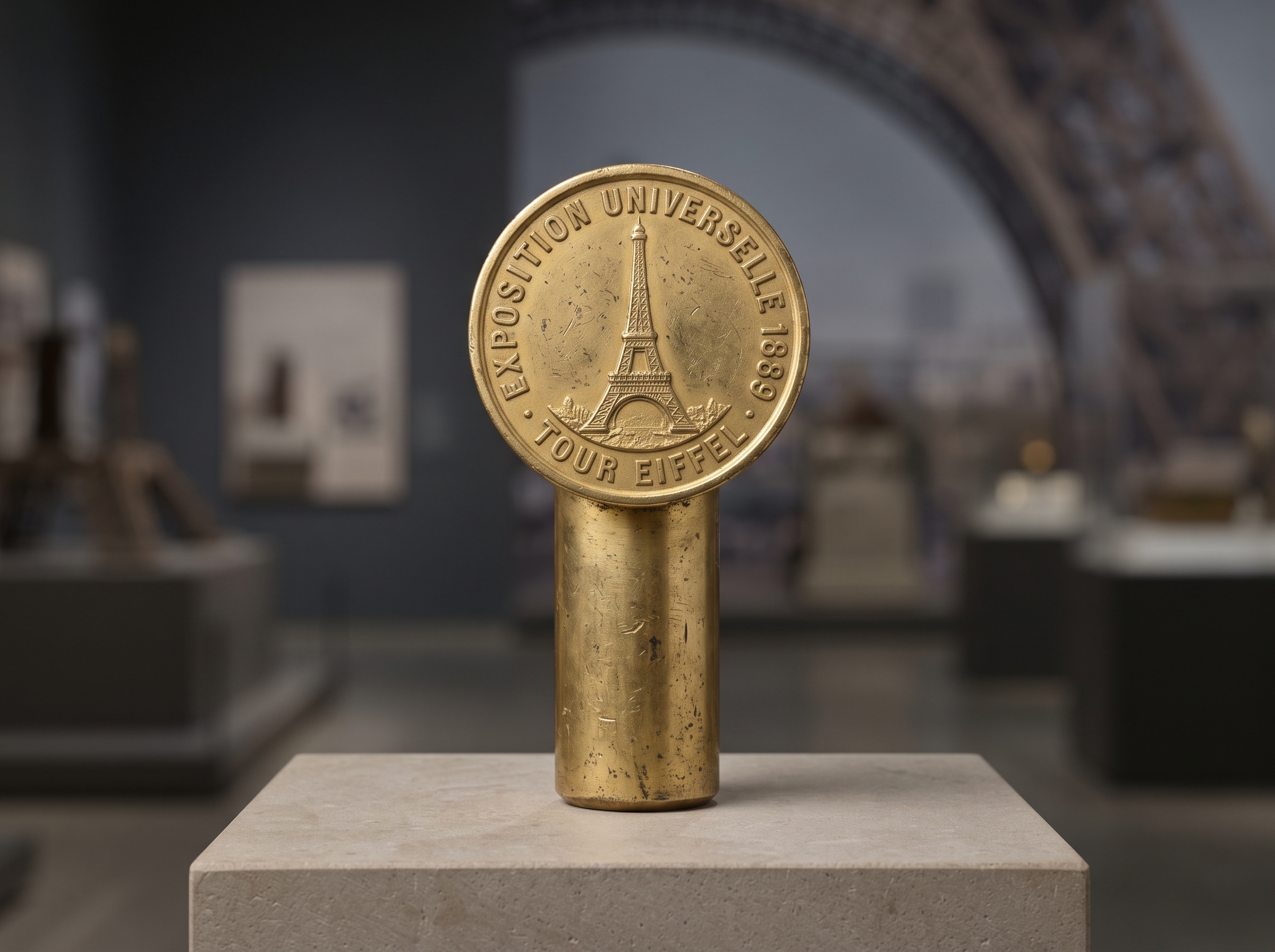
1889 Souvenir Gilt Rivet
A commemorative gilded rivet struck during the 1889 Exposition Universelle as a souvenir for VIP guests attending the inauguration.
Glossary
- puddle iron: Cast iron refined in a reverberatory furnace where air is stirred into the molten metal, oxidizing carbon to produce a low-carbon, highly flexible iron with high tensile strength.
- exposition universelle: The 1889 World's Fair hosted in Paris to celebrate the centennial of the French Revolution and showcase French industrial power.
- reverberatory furnace: A furnace where fuel is burned in a separate chamber, and the heat and flames are reflected downward onto the metal being melted, separating it from fuel contaminants.
- artists' protest: A high-profile public petition signed by Paris's cultural elite protesting the construction of the tower as an aesthetic stain.