Embroidered Medical Caduceus Brassard
Curated by Kairo • 1918 Reconstruction Aides Neuromuscular Retraining
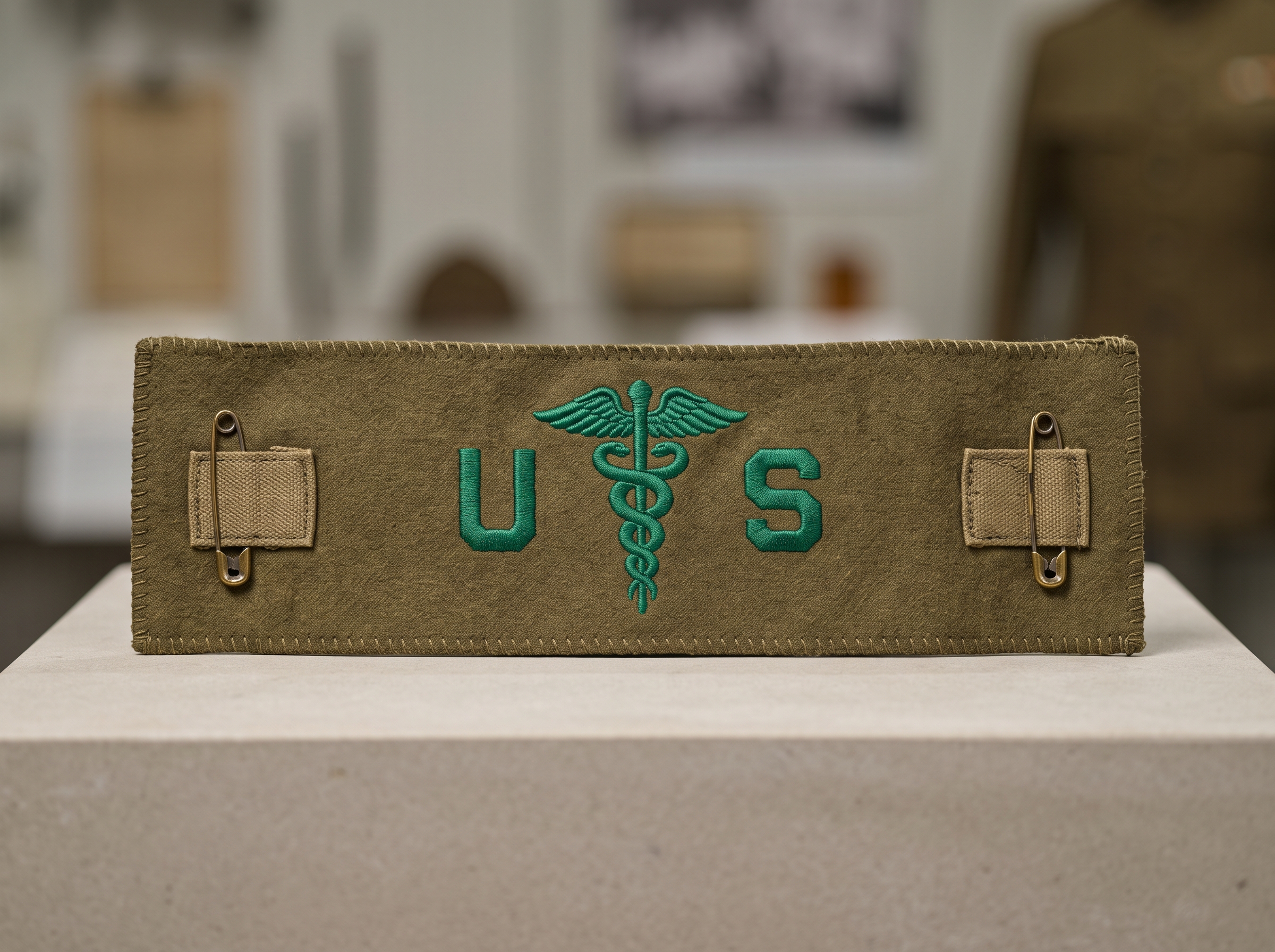
Artifact Details
Rectangular olive-drab woolen melton cloth arm brassard measuring 4.5 by 16 inches, displaying a hand-embroidered emerald green silk caduceus staff flanked by block letters 'U' and 'S', whipstitched raw hem edges, and two tarnished brass safety pins anchored through reinforced canvas backing tabs.
Primary Source
1918 Reconstruction Aides Neuromuscular Retraining
In November 1918, surgical wards across Savenay held thousands of soldiers whose fractured bones had knitted while their joints hardened into permanent stone. Military surgeons excised artillery shrapnel and immobilized limbs in plaster for months, following an ancient orthopedic conviction that quiet beds guaranteed recovery. Instead, immobilized knees locked. Scar tissue cemented tendons to periosteum. Muscle fibers withered into fibrous cords before men ever stood. Sent to France without military rank or officer pay, civilian women equipped with canvas plinths, hot water, and calibrated weights challenged that dogma. They forced rigid joints into rhythmic, painful excursion, establishing that living human tissue heals only when subjected to disciplined mechanical work.
Read Study (16 min) →Artifacts
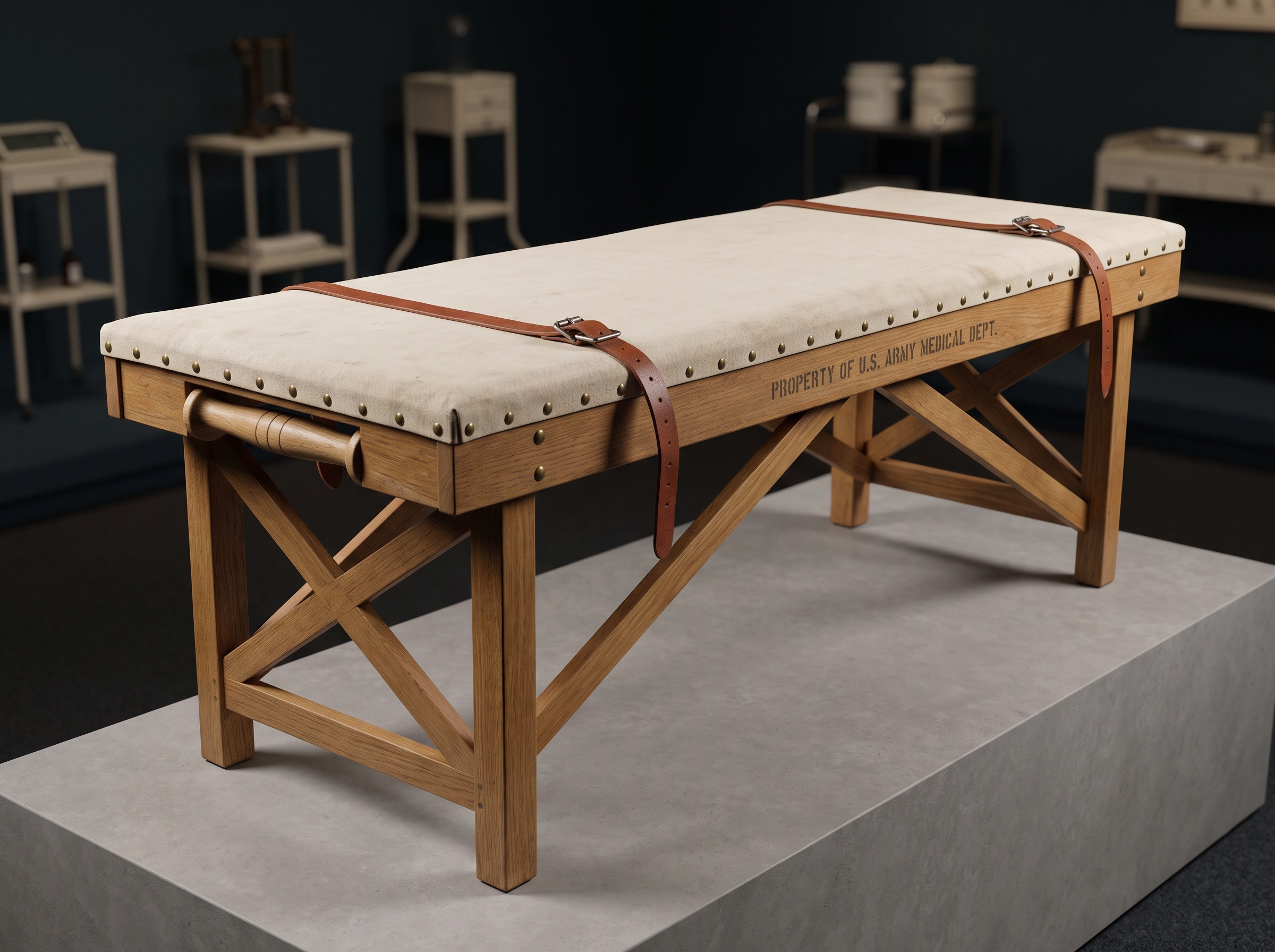
Hardwood Plinth Treatment Table
U.S. Army Medical Department standard treatment plinth featuring unbleached cotton duck canvas and oak framing for manual joint mobilization.
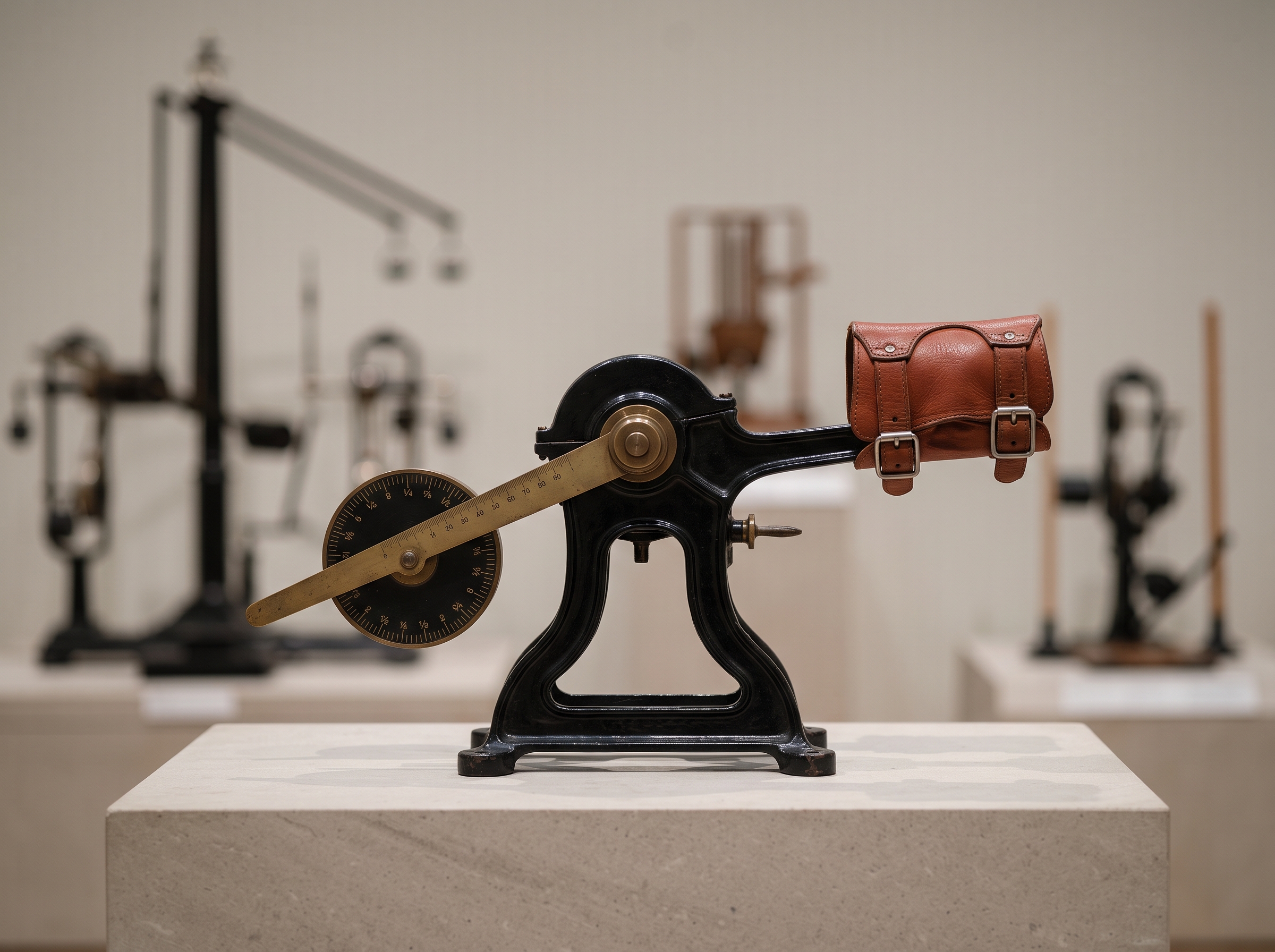
Zander Pendulum Mechanotherapy Apparatus
Swedish mechanotherapy apparatus model G-1 with pendulum counterweights, engineered for calibrated passive mobilization of contracted joints.
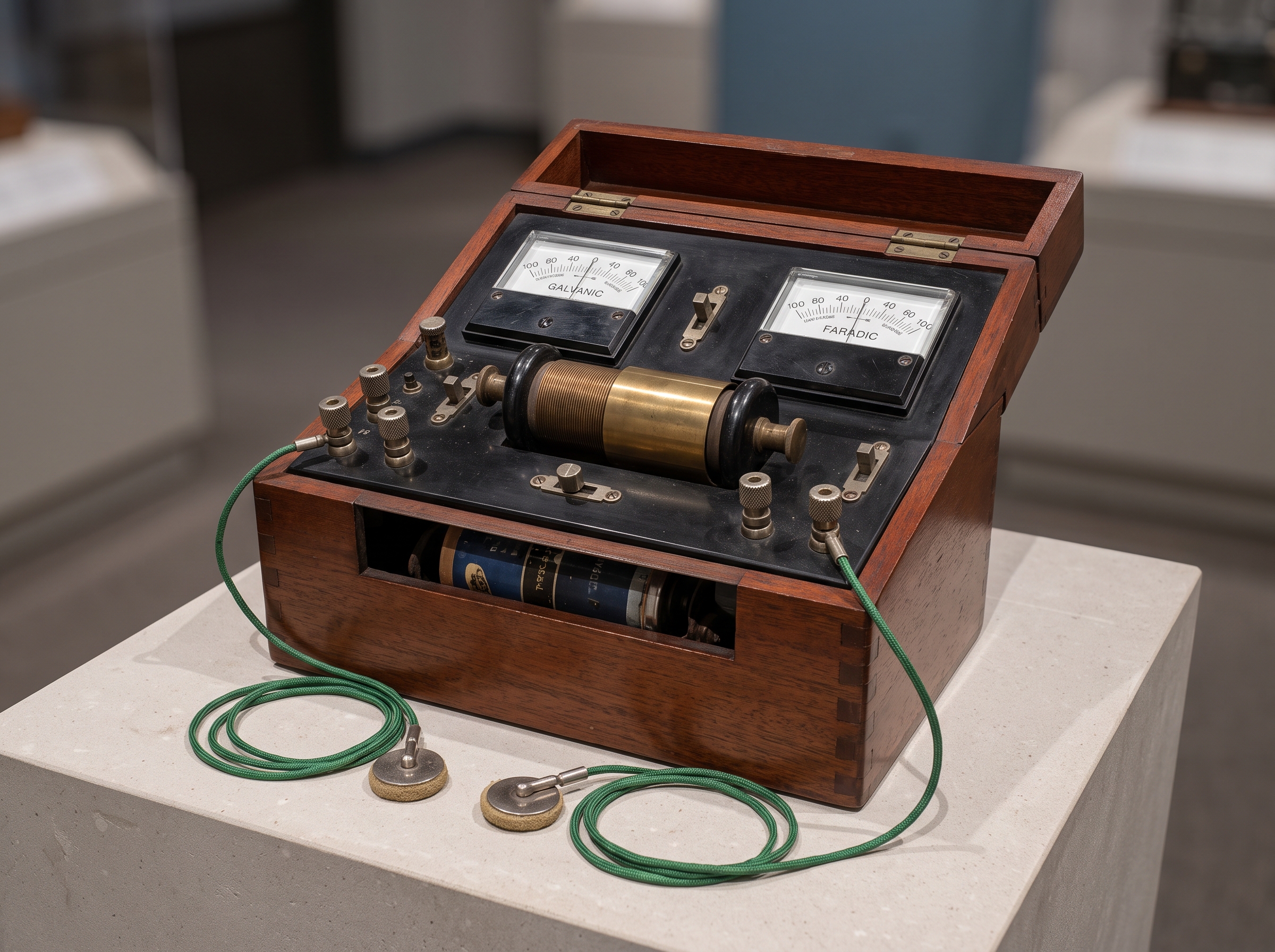
Portable Galvanic Faradic Generator
Dual-circuit electromedical unit with induction coil and chemical cell battery supplying galvanic and faradic currents to paralyzed muscle groups.
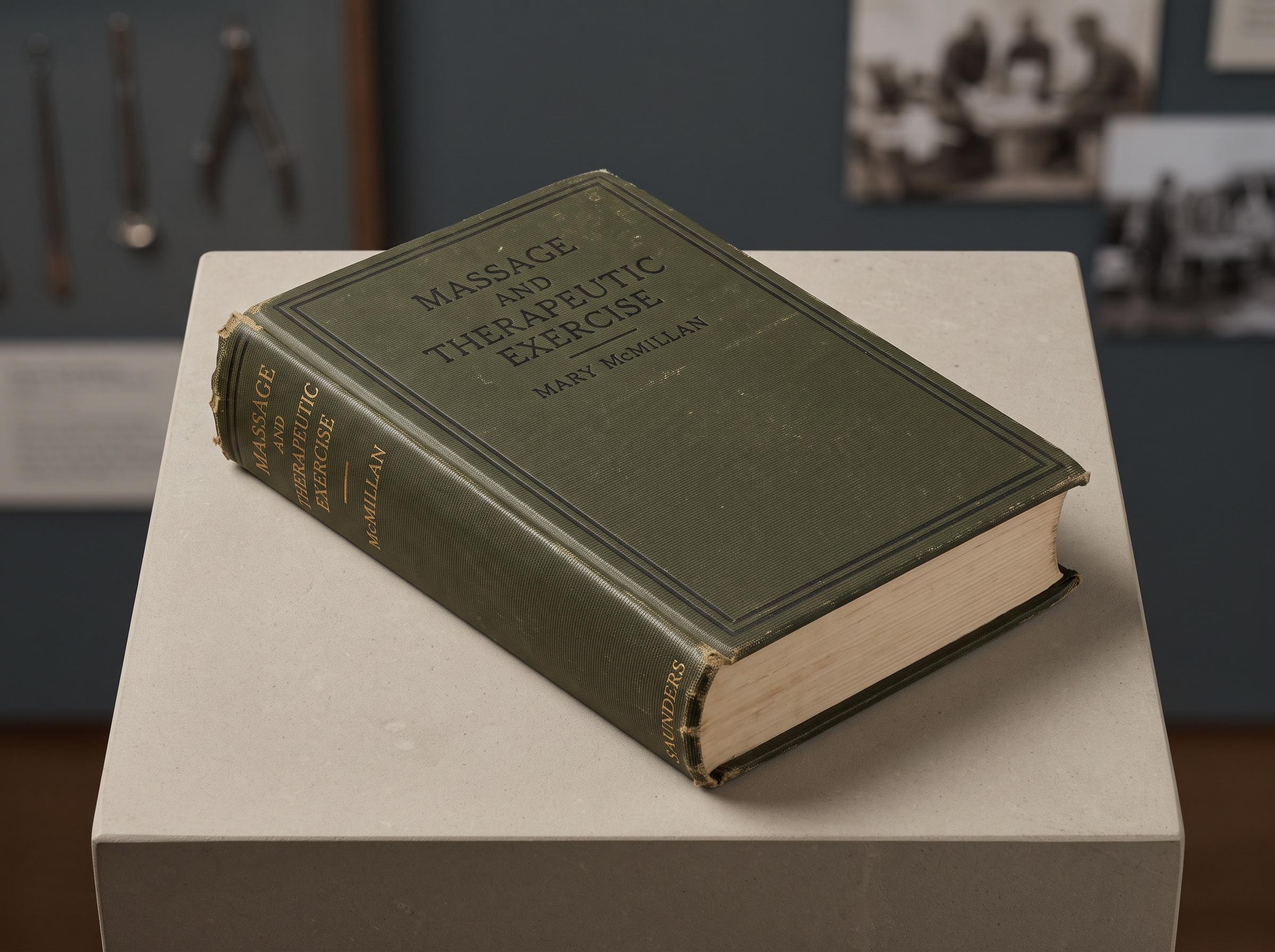
1921 Massage and Exercise Manual
First edition of Mary McMillan's seminal 1921 clinical treatise codifying wartime reconstruction methods and therapeutic kinesiology.
Glossary
- debridement: The surgical excision of devitalized, contaminated tissue and foreign fragments from a wound bed to arrest infection and promote cellular healing.
- denervation atrophy: The rapid wasting and loss of contractile tone in skeletal muscle fibers following traumatic severance or impairment of their governing motor axons.
- reconstruction aides: Civilian women recruited and trained by the U.S. Army Medical Department during World War I to deliver physical therapy and rehabilitation to wounded soldiers.
- hydrotherapy: The clinical use of temperature-controlled, agitated water immersion to stimulate local arterial circulation, soften dense scar tissue, and relieve muscular hypertonicity.