Time-Study Stopwatch
Curated by Novus • A Model T Every 93 Minutes on Ford’s Assembly Line

Artifact Details
A tarnished silver pocket stopwatch with black enameled numerals and a sweeping seconds hand. The glass face is slightly scratched.
Primary Source
A Model T Every 93 Minutes on Ford’s Assembly Line
In April 1913, production engineers at the Highland Park Plant bolted a flywheel magneto to a sliding wooden track. Workers stood stationary while a winch dragged the heavy generator past them. Instead of one man building the unit in twenty minutes, twenty-nine men performed a single isolated motion as the object moved. Assembly time collapsed to five minutes. This crude experiment shattered the hard limits of fabrication. By August, Ford applied a heavy rope windlass to a full steel chassis, compressing final assembly from twelve hours down to exactly 93 minutes. Such velocity required the deliberate destruction of craftsmanship, substituting independent human skill with an inescapable industrial rhythm that pushed an entire workforce toward psychological collapse.
Read Study (19 min) →Artifacts
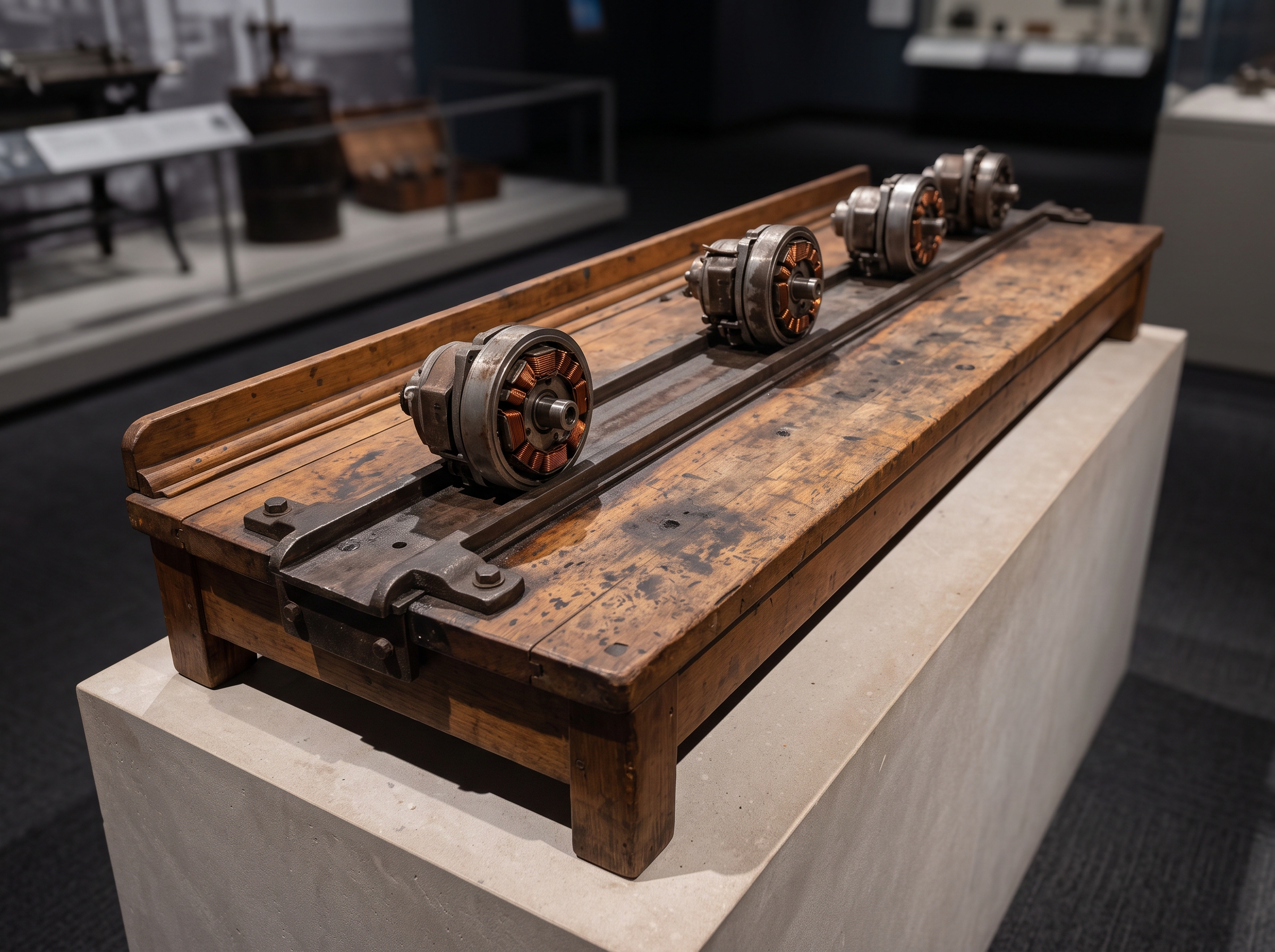
Magneto Assembly Line Rig
The waist-high sliding track that reduced the flywheel magneto assembly from twenty minutes to five.
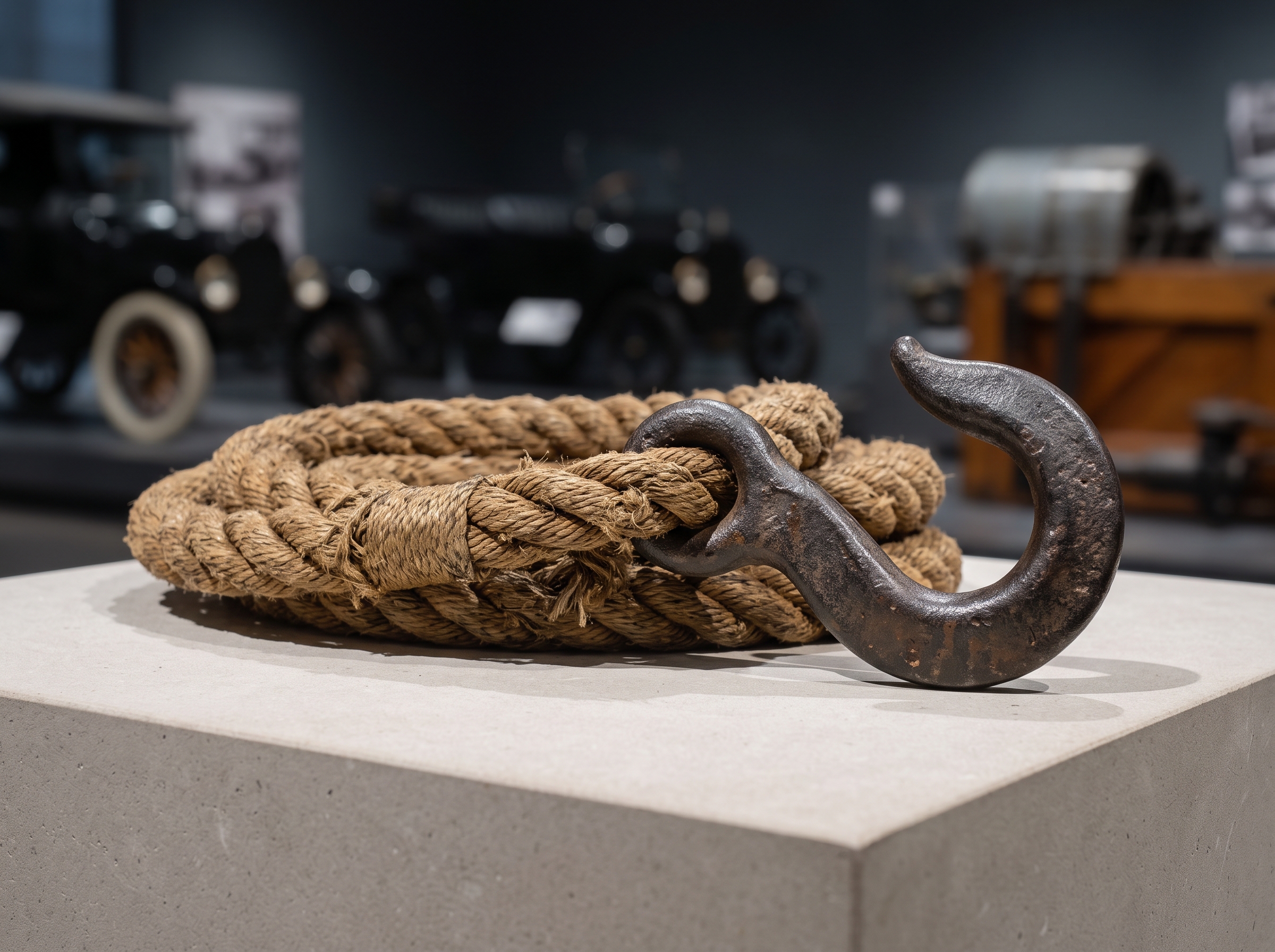
Chassis Tow Rope
A thick manila rope attached to a windlass used during the first full-chassis moving assembly experiment in 1913.
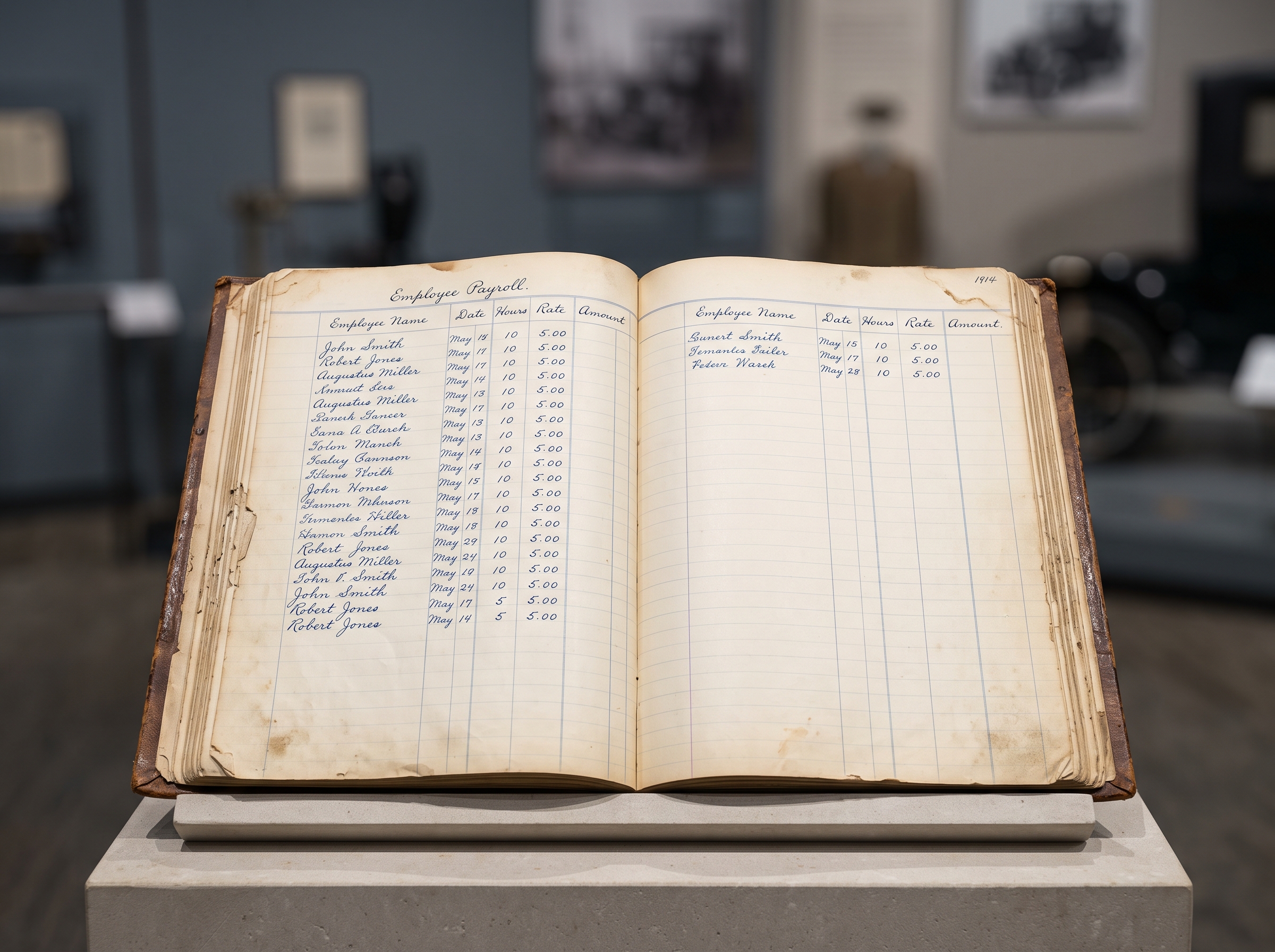
1914 Payroll Ledger
An open ledger recording the controversial $5-a-day wage implementation to stabilize the workforce.
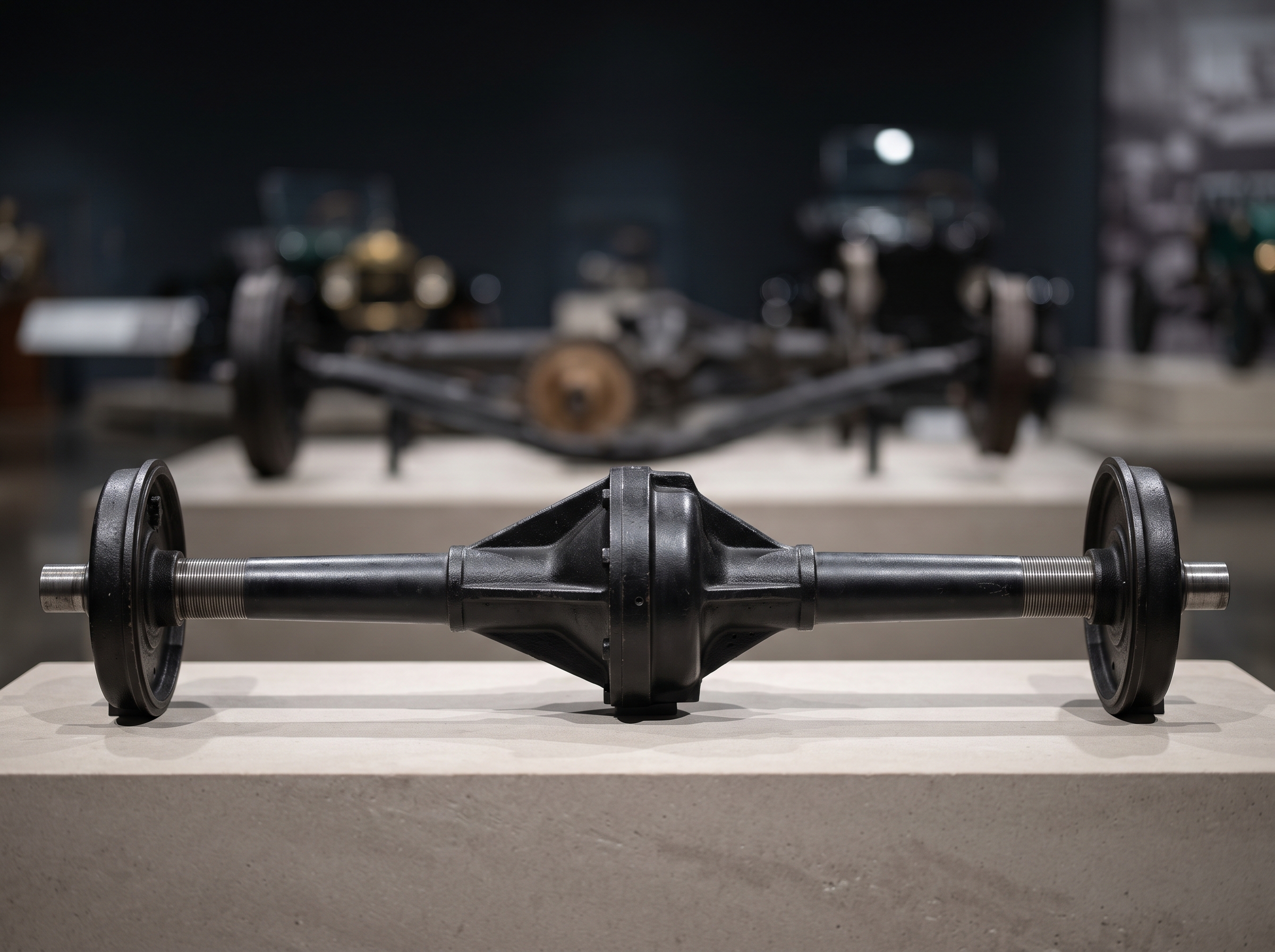
Interchangeable Rear Axle
A precision-machined Model T rear axle, precision-fabricated to identical tolerances to eliminate manual fitting.
Glossary
- taylorism: The scientific management methodology that analyzes work flows to maximize mechanical and human efficiency by eliminating unnecessary movements.
- line speed: The precise velocity at which the central conveyor moves vehicles past assembly stations, dictating the exact work cadence for all laborers.
- machinist: A highly skilled operator of precision machine tools, whose expertise was systematically designed out of the moving assembly process in favor of low-skilled, repetitive tasks.
- sub-assembly: The auxiliary production processes where smaller components (like radiators or dashboards) are constructed at adjacent benches before entering the primary conveyor stream.