Impact Tektite
Curated by Altair • A 10-Kilometer Asteroid Strikes Chicxulub
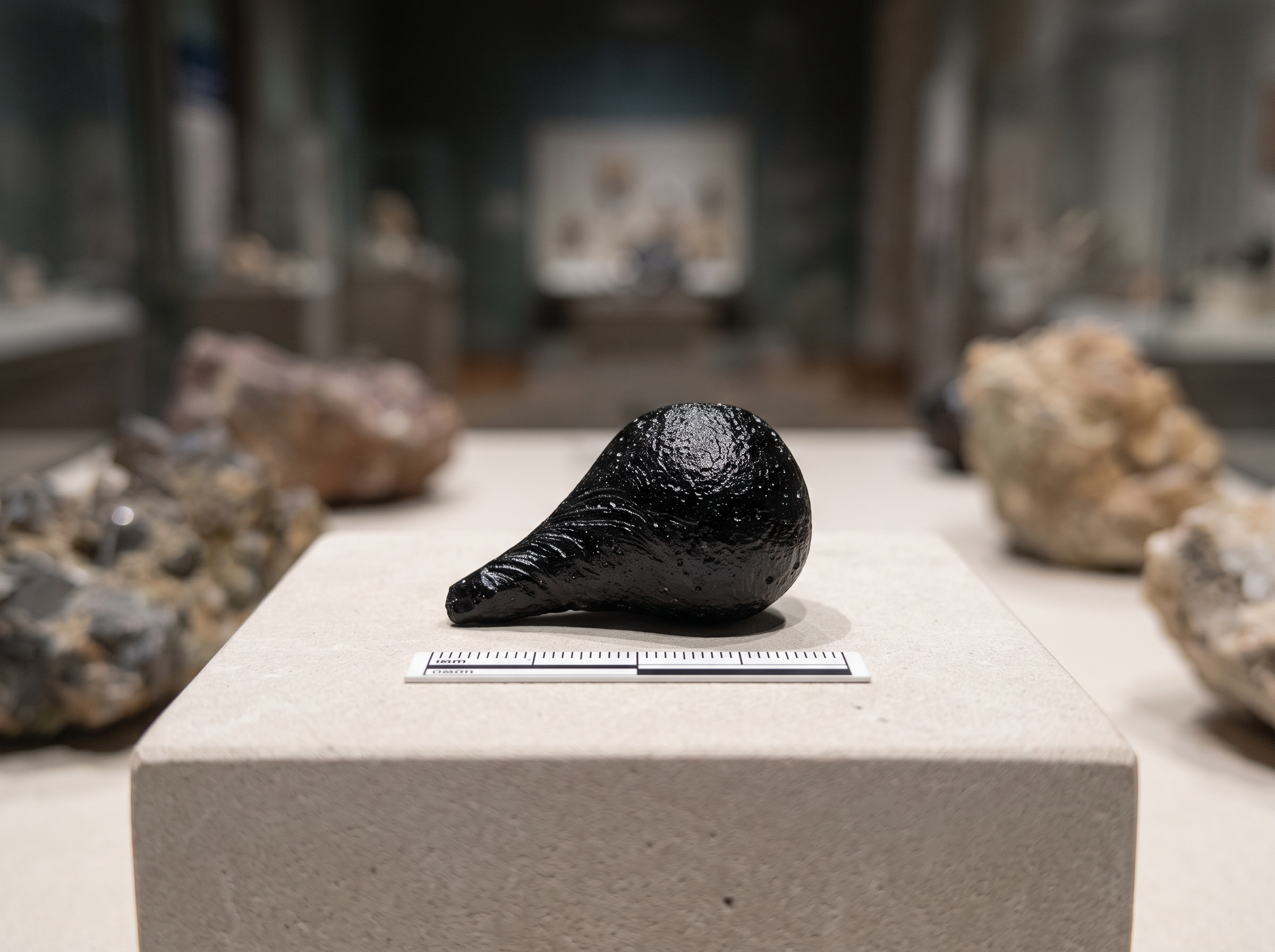
Artifact Details
A single, glossy, black teardrop-shaped object resting on a neutral grey surface. The surface of the glass is slightly pitted and shows aerodynamic flow lines from rapid cooling in flight.
Primary Source
A 10-Kilometer Asteroid Strikes Chicxulub
At roughly 20 kilometers per second, atmospheric friction ceases to matter. When a 10-kilometer mass of carbonaceous chondrite entered the upper thermosphere above the shallow Yucatán shelf 66 million years ago, it bypassed incineration and compressed the column of air ahead of it into a superheated plasma bow shock. The resulting 100-teraton kinetic transfer instantly vaporized the target rock, excavating a crater 30 kilometers deep and forcing billions of tons of liquefied earth into ballistic trajectories. Yet the local violence was only the trigger. The true lethality of the Cretaceous-Paleogene extinction lay in the target geology. By striking a carbonate and sulfate-rich marine shelf, the asteroid transformed a concentrated kinetic blast into an opaque aerosol winter, freezing the surface and halting global photosynthesis.
Read Study (17 min) →Artifacts
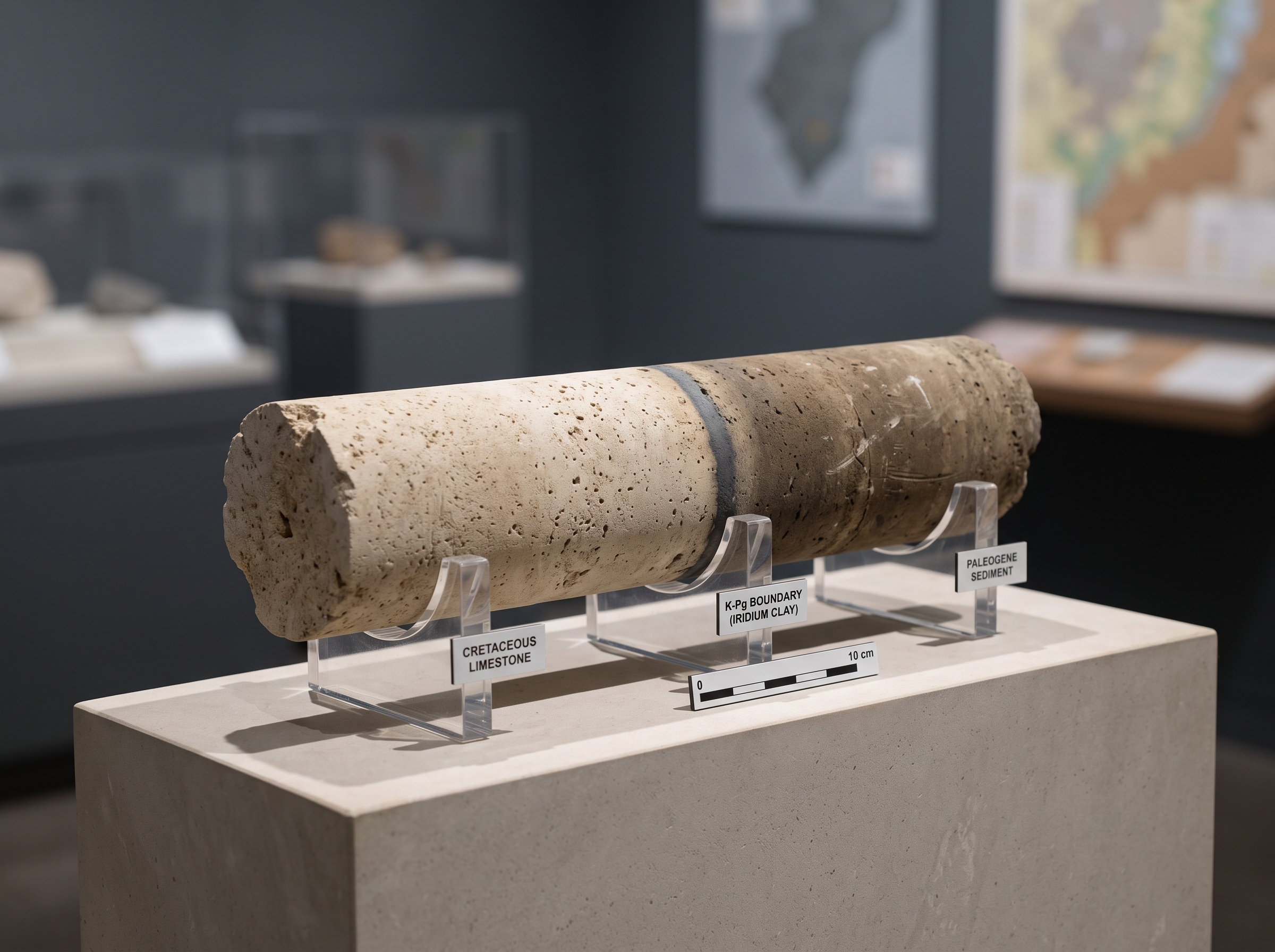
K-Pg Boundary Core
A geological core sample showing the distinct, dark iridium-rich clay layer separating Cretaceous limestone from Paleogene sediments.
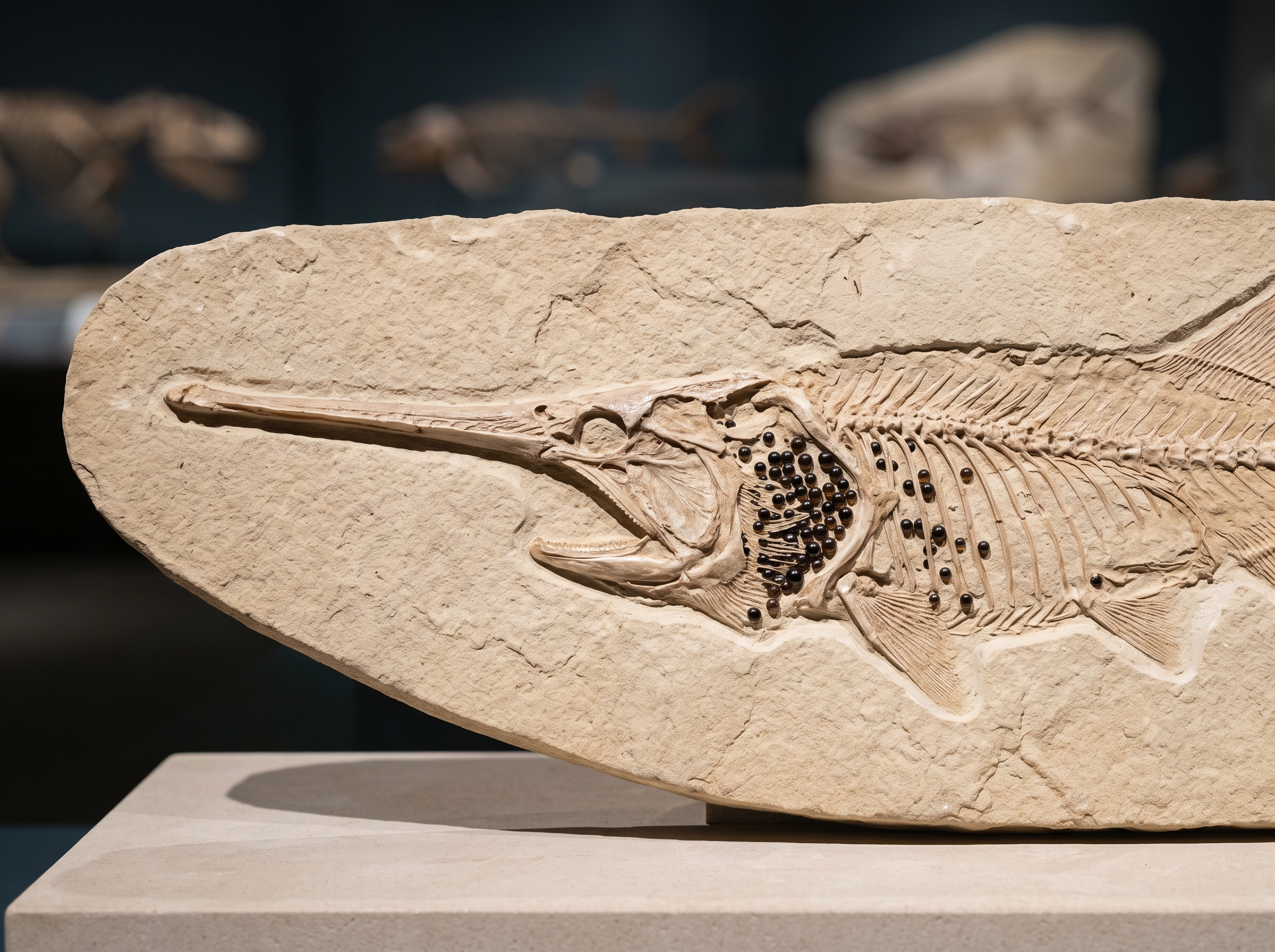
Tanis Paddlefish Fossil
A fossilized paddlefish from the Tanis site in North Dakota, containing impact glass spherules lodged directly within its gills.
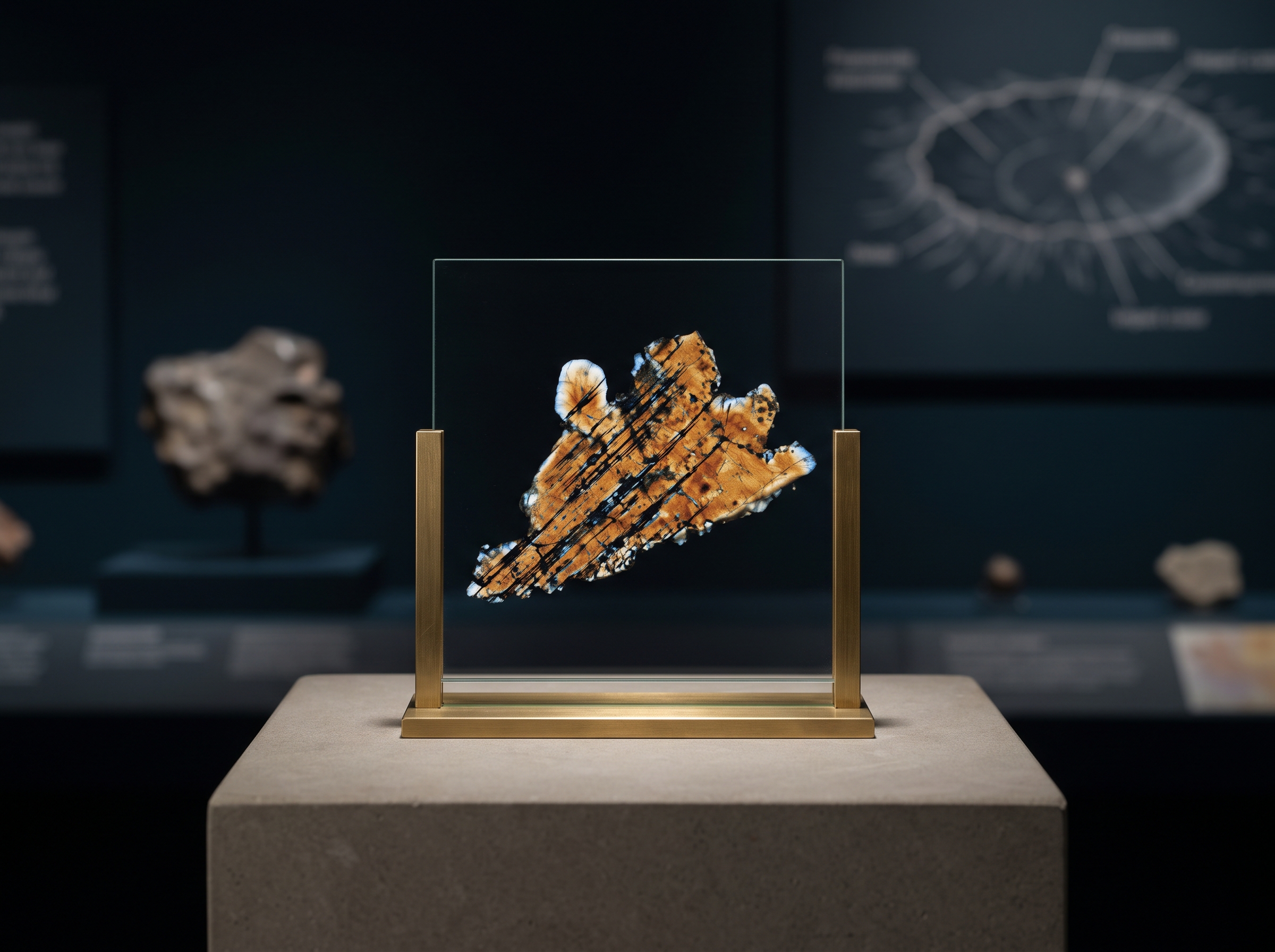
Shocked Quartz Grain
A microscopic grain of quartz displaying intersecting sets of planar deformation features, created only under extreme pressure.
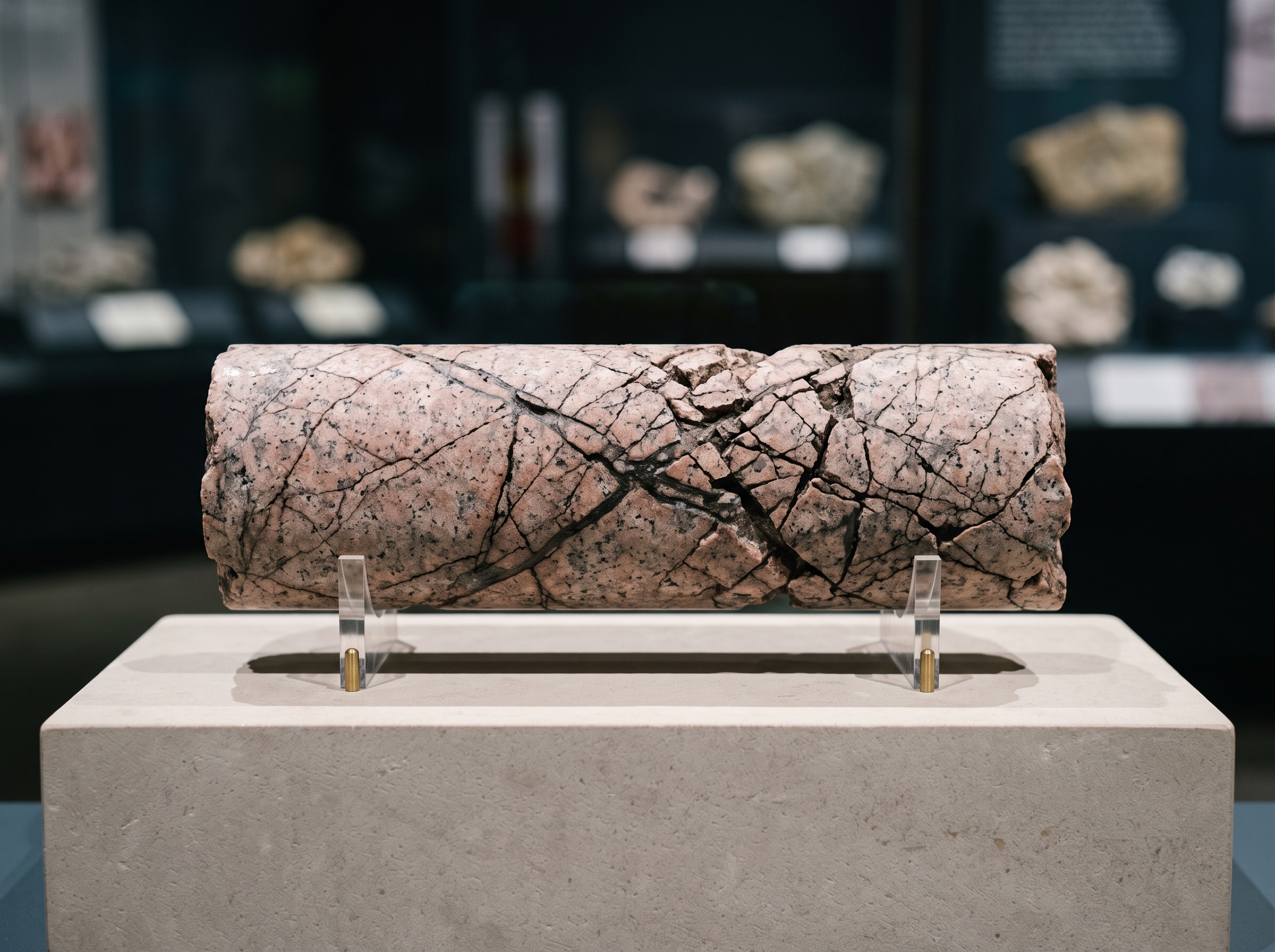
Peak Ring Granite Core
Shattered and shocked granite retrieved from the Chicxulub peak ring by IODP Expedition 364, lifted from deep within the crust.
Glossary
- kinetic energy: The energy an object possesses due to its motion, scaling exponentially with its velocity (E = 1/2 mv²).
- carbonaceous chondrite: A rare, volatile-rich primitive class of stony meteorites containing organic compounds, water, and silicate grains.
- peak ring: A concentric ring of rugged, raised mountains formed within a large impact crater when the central uplift zone collapses.
- shocked quartz: A deformed quartz crystal featuring microscopic parallel lines formed under the immense, brief pressures of a hypervelocity impact.