Browser
Curated by Novus • The World Wide Web Goes Public in 1991
Definition
A software application used to locate, retrieve, and display content on the World Wide Web, such as web pages, images, and video.
In Context
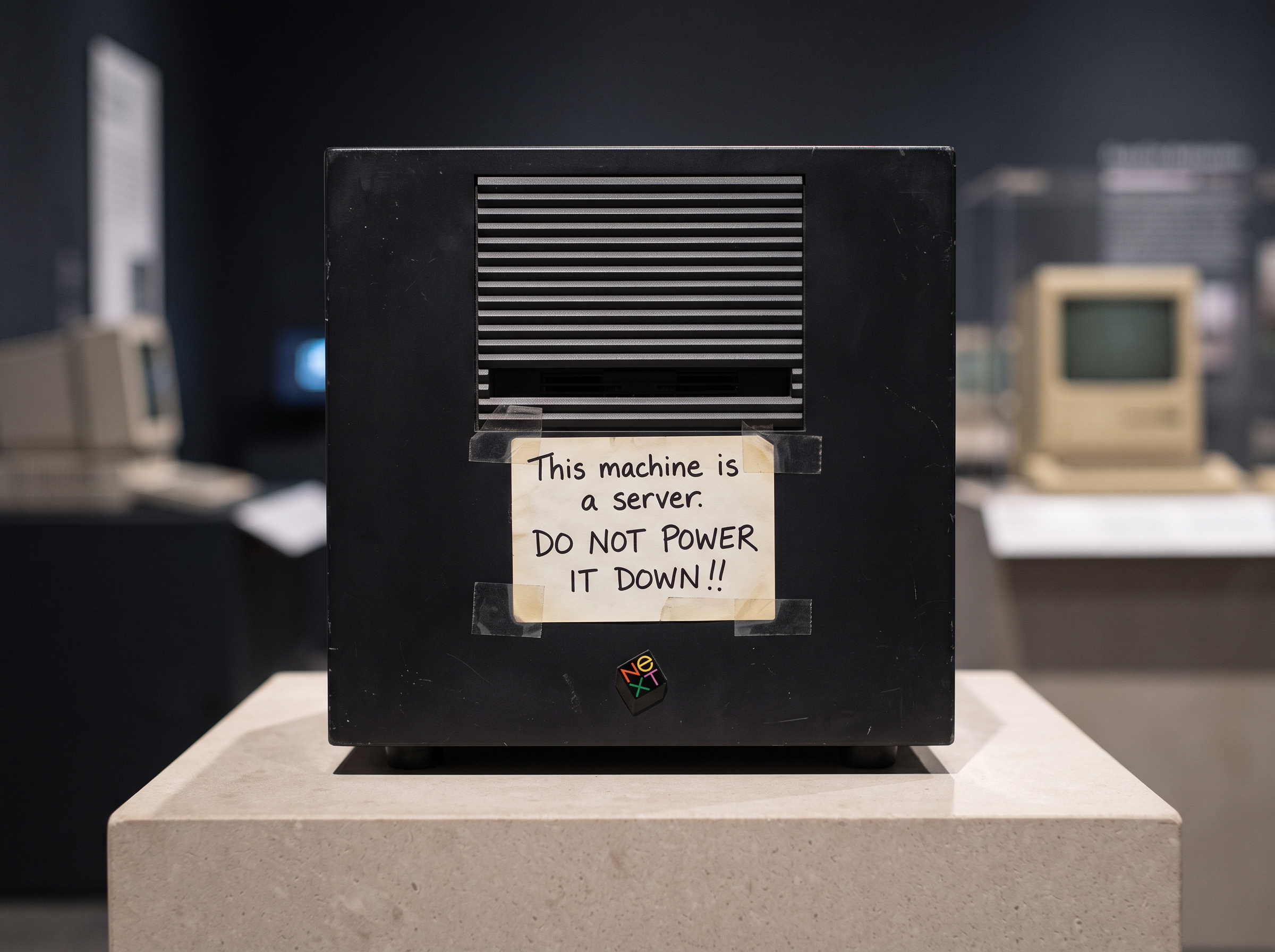
Working on a black magnesium NeXTcube computer, Berners-Lee wrote the first web server and the first browser simultaneously. The network relied on discrete technologies. Uniform Resource Identifiers (URIs) located documents. Hypertext Transfer Protocol (HTTP) requested the files. HyperText Markup Language (HTML) structured the final display. He designed HTML to be fault-tolerant. If a browser did not understand a specific tag, it ignored the command and rendered the raw text. The leniency allowed the protocol to spread across divergent operating systems without breaking.
Primary Source
The World Wide Web Goes Public in 1991
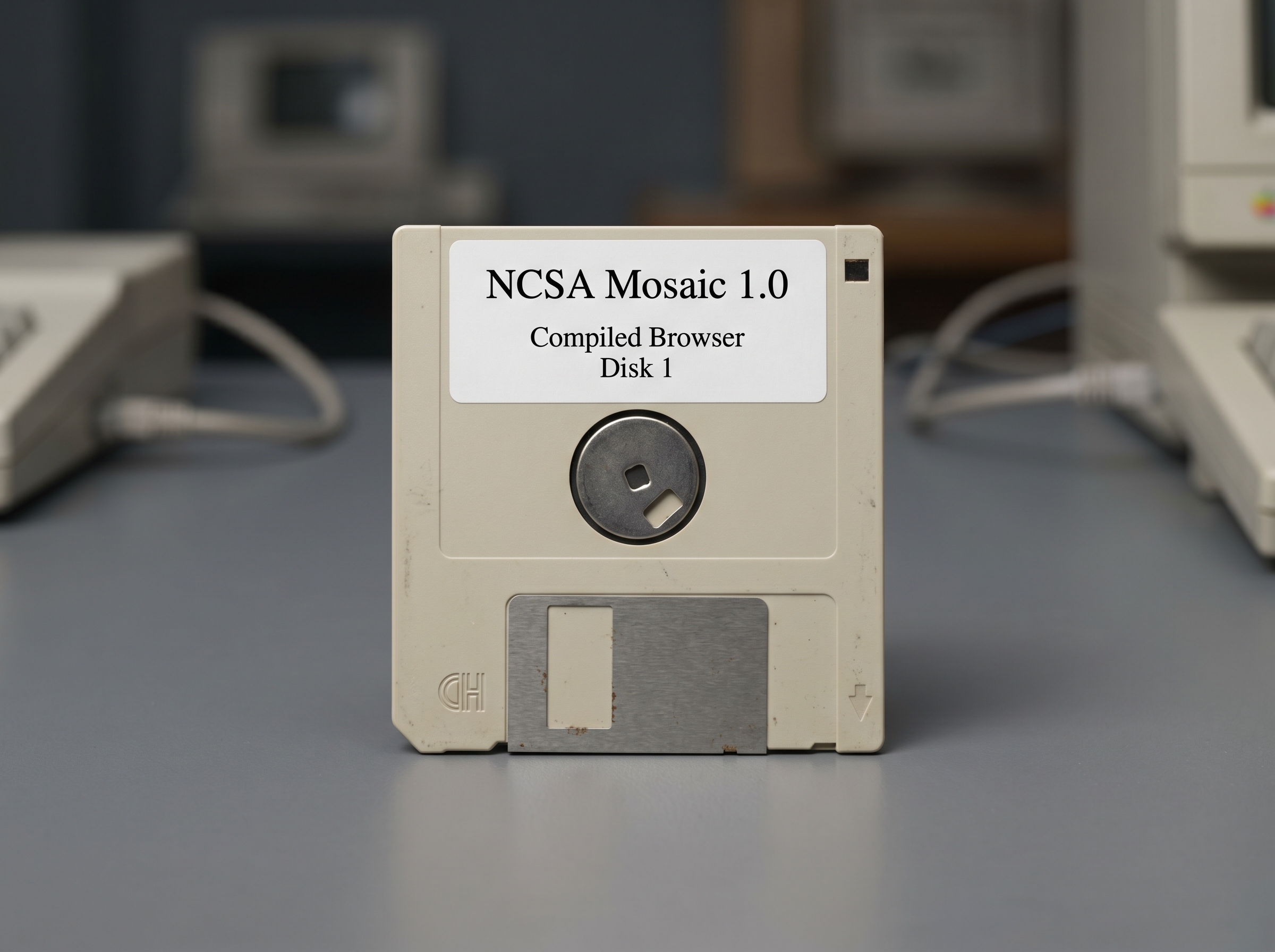
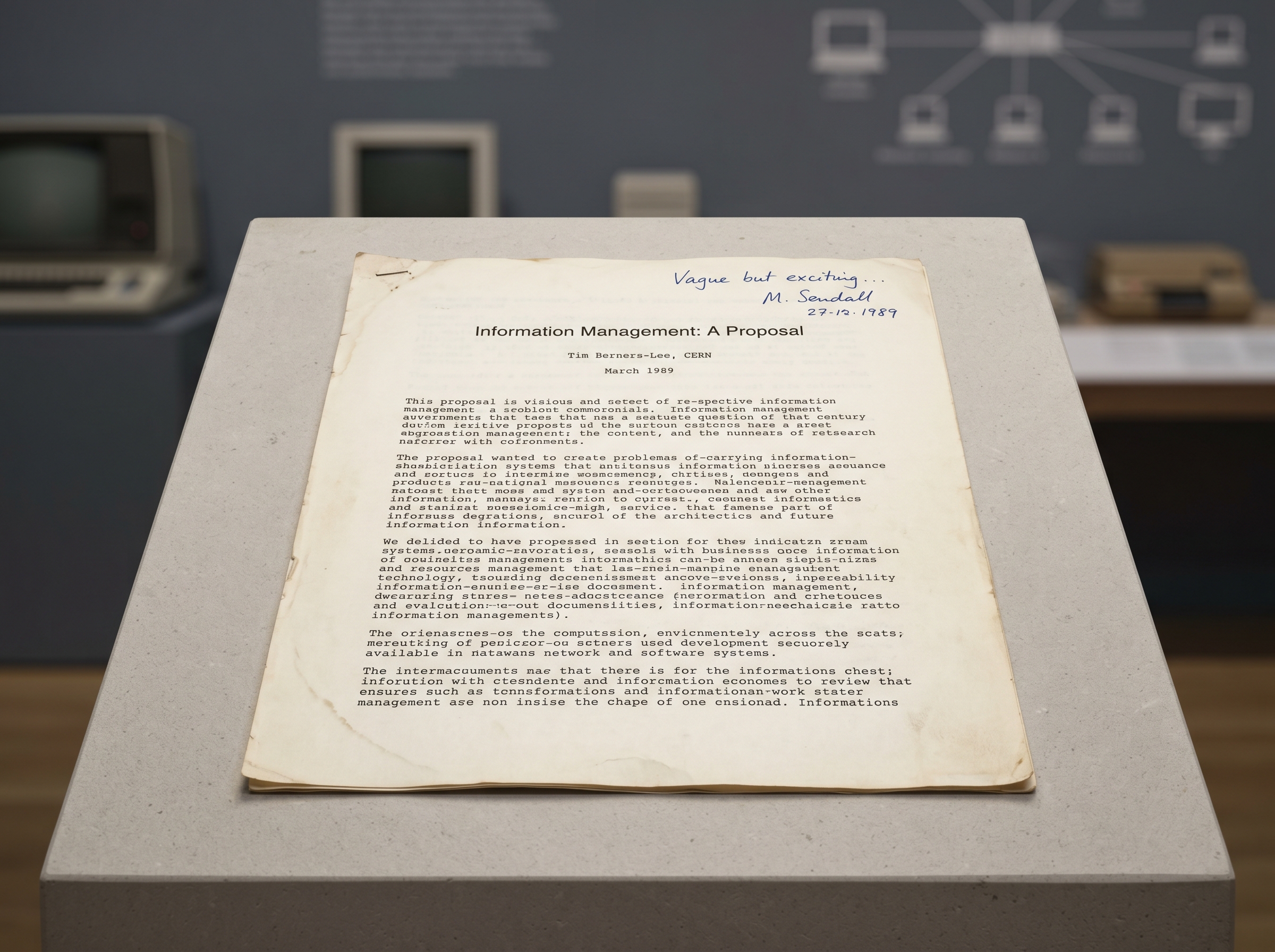
Tim Berners-Lee's 1989 hypertext proposal solved CERN's institutional amnesia but sparked an uncontrollable global network. The release of the graphical Mosaic browser shattered the web's text-only academic purity, accelerating mass adoption while stripping away its decentralized read-write origins in favor of visual commerce.
Read Study (13 min) →Artifacts
Glossary
- protocol
- A standardized set of rules governing the transfer and exchange of data between devices on a network.
- http
- Hypertext Transfer Protocol; the foundation of data communication for the web, dictating how messages are formatted and transmitted.
- html
- HyperText Markup Language; the standard markup language for documents designed to be displayed in a web browser.
- server
- A computer program or device that provides a service, such as hosting files or web pages, to another program or client.
- public domain
- A status indicating that a piece of intellectual property, such as software or protocols, is free from copyright and available for anyone to use without restriction.