Gokstad Ship
Curated by Novus • Clinker-Built Viking Longships on the North Atlantic
Definition
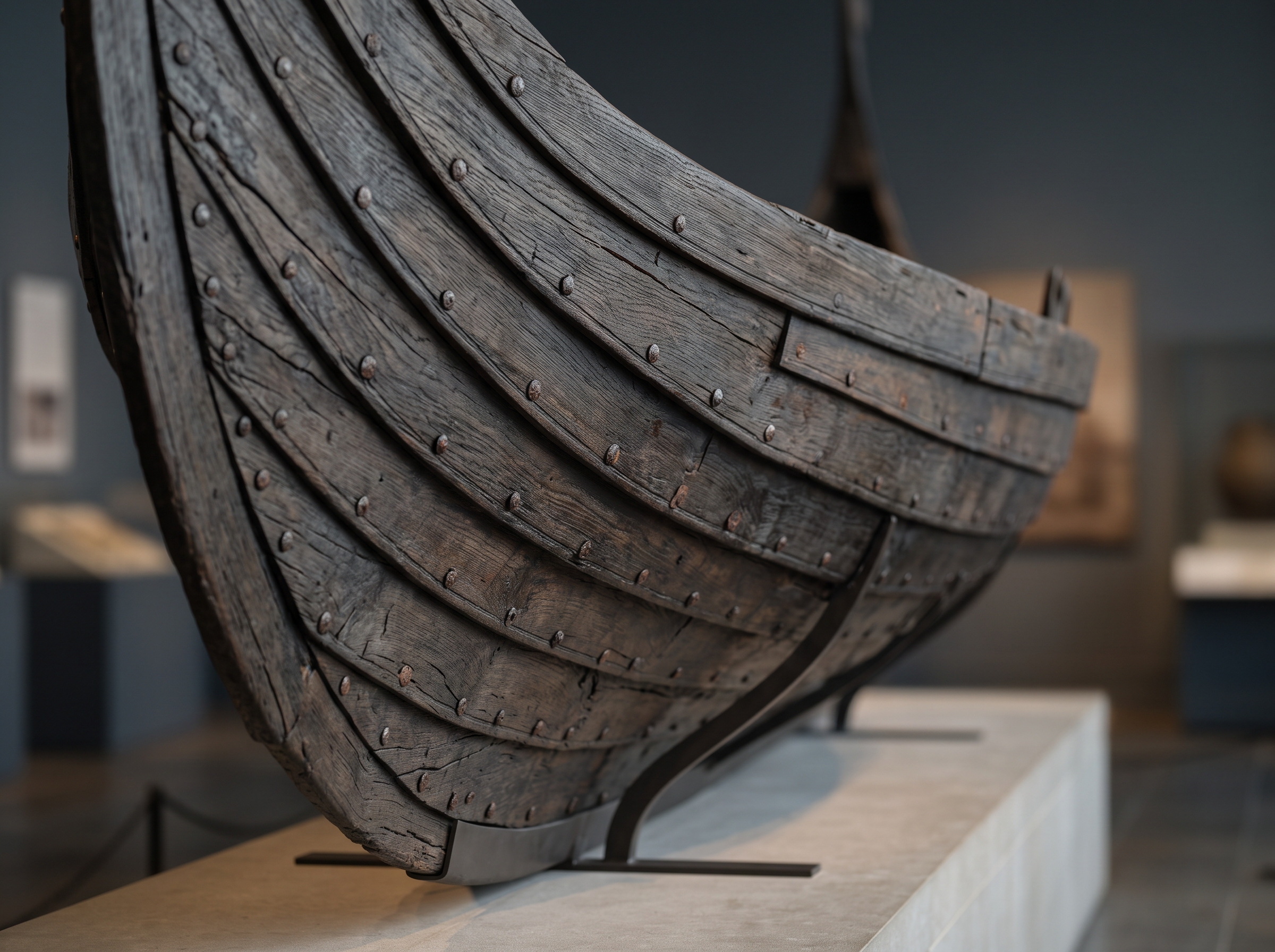
A remarkably intact ninth-century Viking ship excavated from a burial mound in Norway, proving the T-shaped keel design and flexible hull performance.
In Context
This single-timber requirement dictated the shape of the ship. The keel absorbed the downward thrust of the mast during a storm. Surviving examples like the Gokstad ship demonstrate a deep, T-shaped cross-section carved precisely into this bottom timber. This specific cut provided essential hydrodynamic grip in the water. The deep profile prevented the shallow, flat-bottomed vessel from slipping sideways, or making leeway, when sailing across the wind on the open ocean.
Primary Source
Clinker-Built Viking Longships on the North Atlantic
The Norse longship altered European warfare through its one-meter draft. This clinker-built engineering allowed crews to cross the Atlantic and navigate shallow inland rivers, bypassing the static defenses of medieval geography.
Read Study (18 min) →Artifacts
Glossary
- clinker construction
- A shipbuilding technique where the wooden hull planks overlap along their edges and are secured with rivets, giving the ship exceptional flexibility in rough seas.
- iron rivets
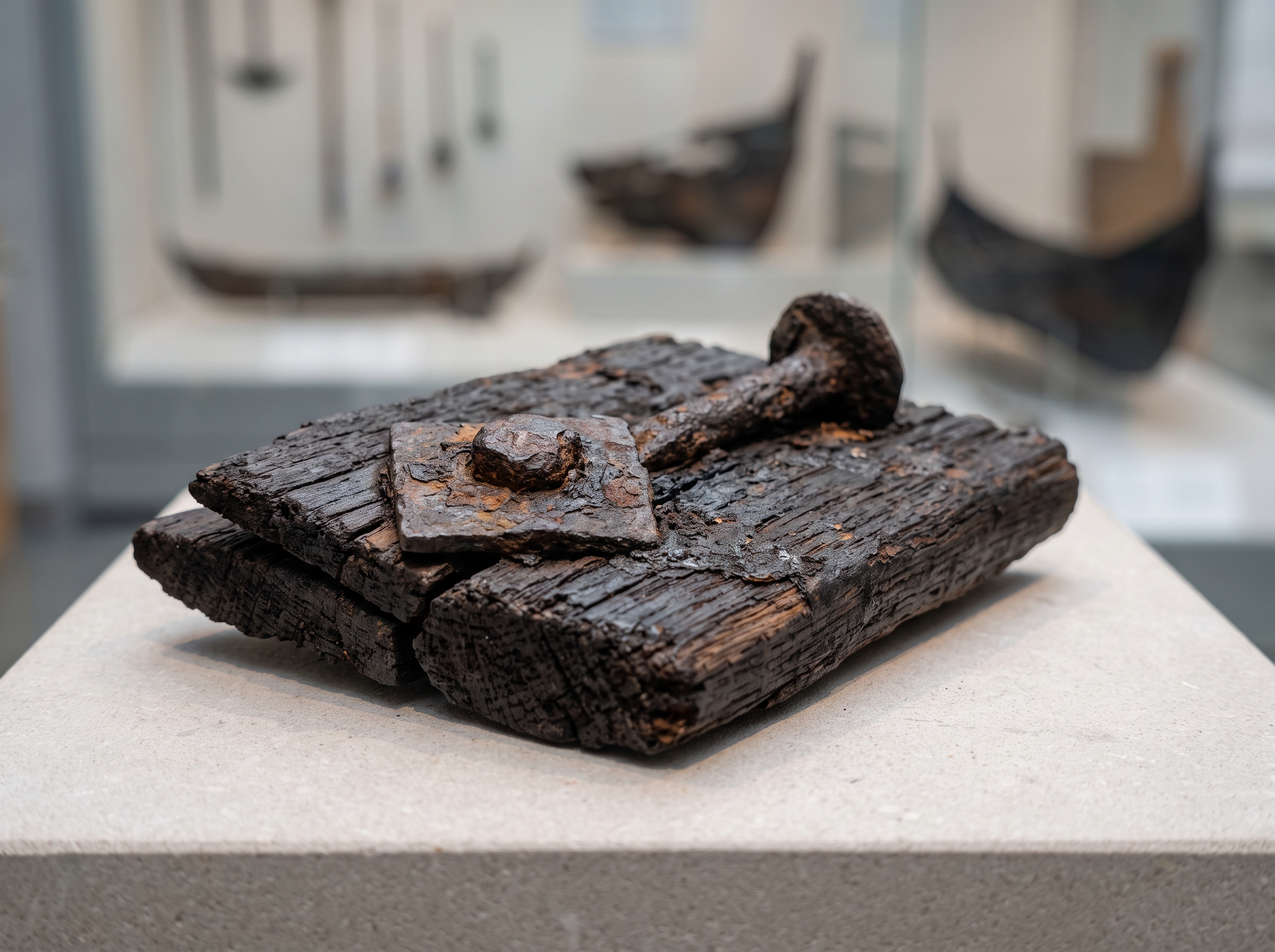
- Hand-forged iron fasteners driven through overlapping planks and clinched over square washers to hold the clinker hull together.
- stýri-borð
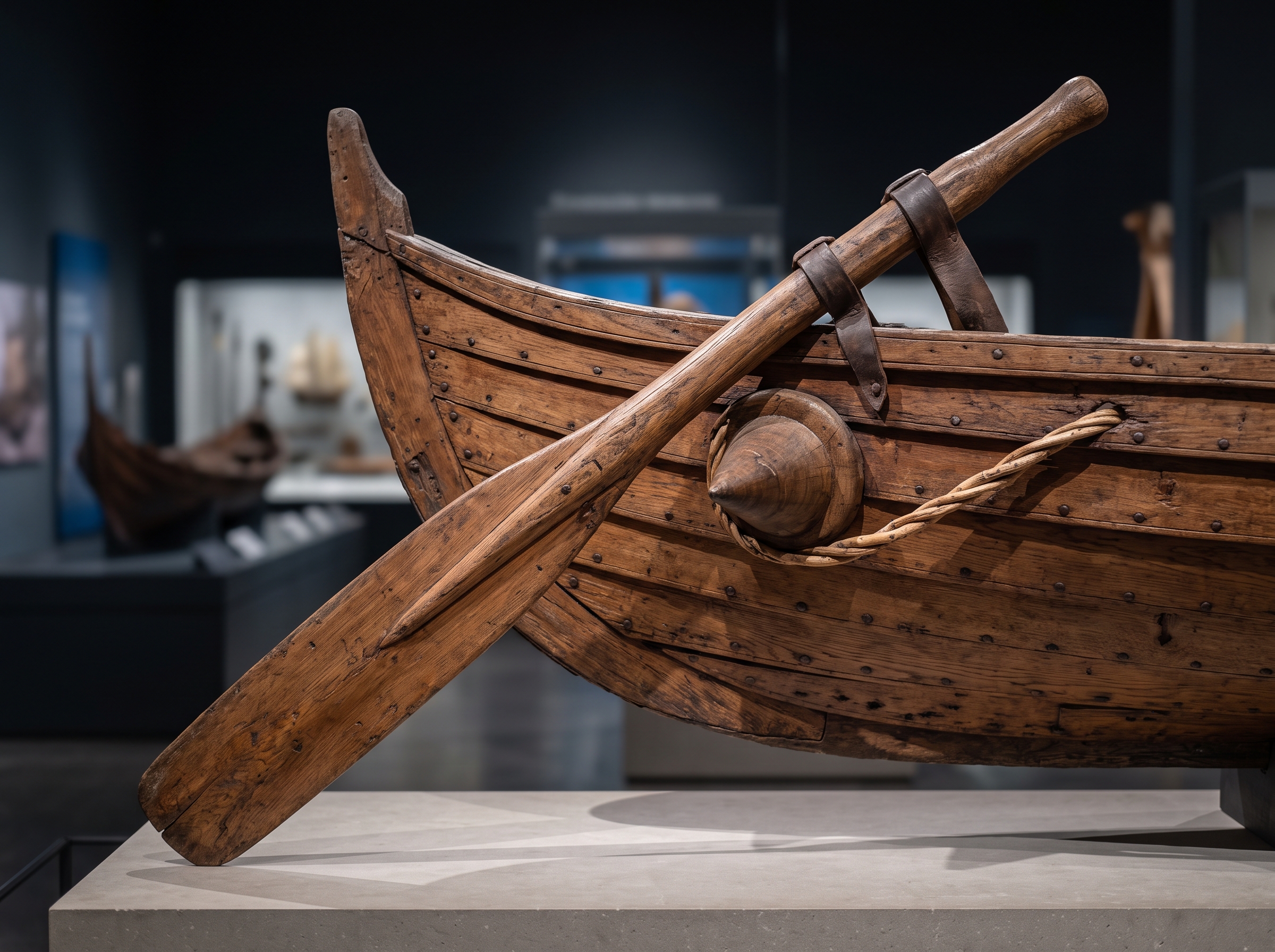
- The Old Norse term meaning 'steering board,' referring to the massive steering oar mounted on the right side of the ship, which gave rise to the modern word 'starboard'.
- sun compass
- A simple Norse navigational tool consisting of a carved wooden disc and central gnomon used to determine latitude by measuring shadow lengths at noon.
- edict of pîtres
- A royal edict issued by King Charles the Bald of West Francia in A.D. 864, ordering the construction of low, fortified bridges to block Viking river raids.