Heliopause
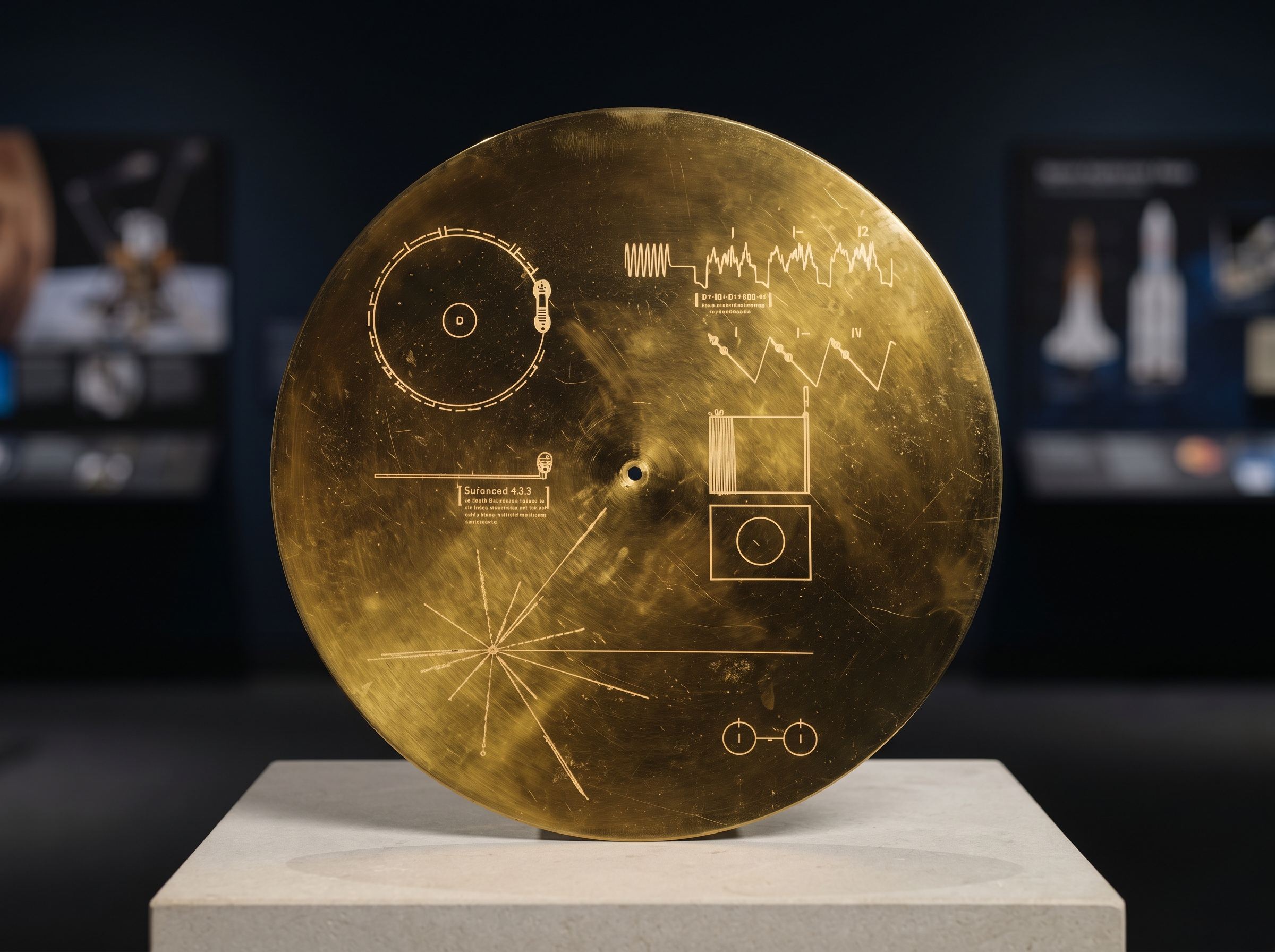
Curated by Altair • Earth on the 12-Inch Voyager Golden Record
Definition
The boundary where the solar wind from the Sun is slowed down and stopped by the interstellar medium, marking the outer edge of the heliosphere.
In Context
Voyager 1 officially crossed the heliopause in August 2012. Leaving the solar wind behind, the probe entered the cold interstellar medium. Onboard instruments detected a massive spike in galactic cosmic rays, proving the spacecraft had breached the protective bubble generated by our sun. Power conservation forced engineers to shut down the cameras long ago. Today, the thrusters barely function.
Primary Source
Earth on the 12-Inch Voyager Golden Record
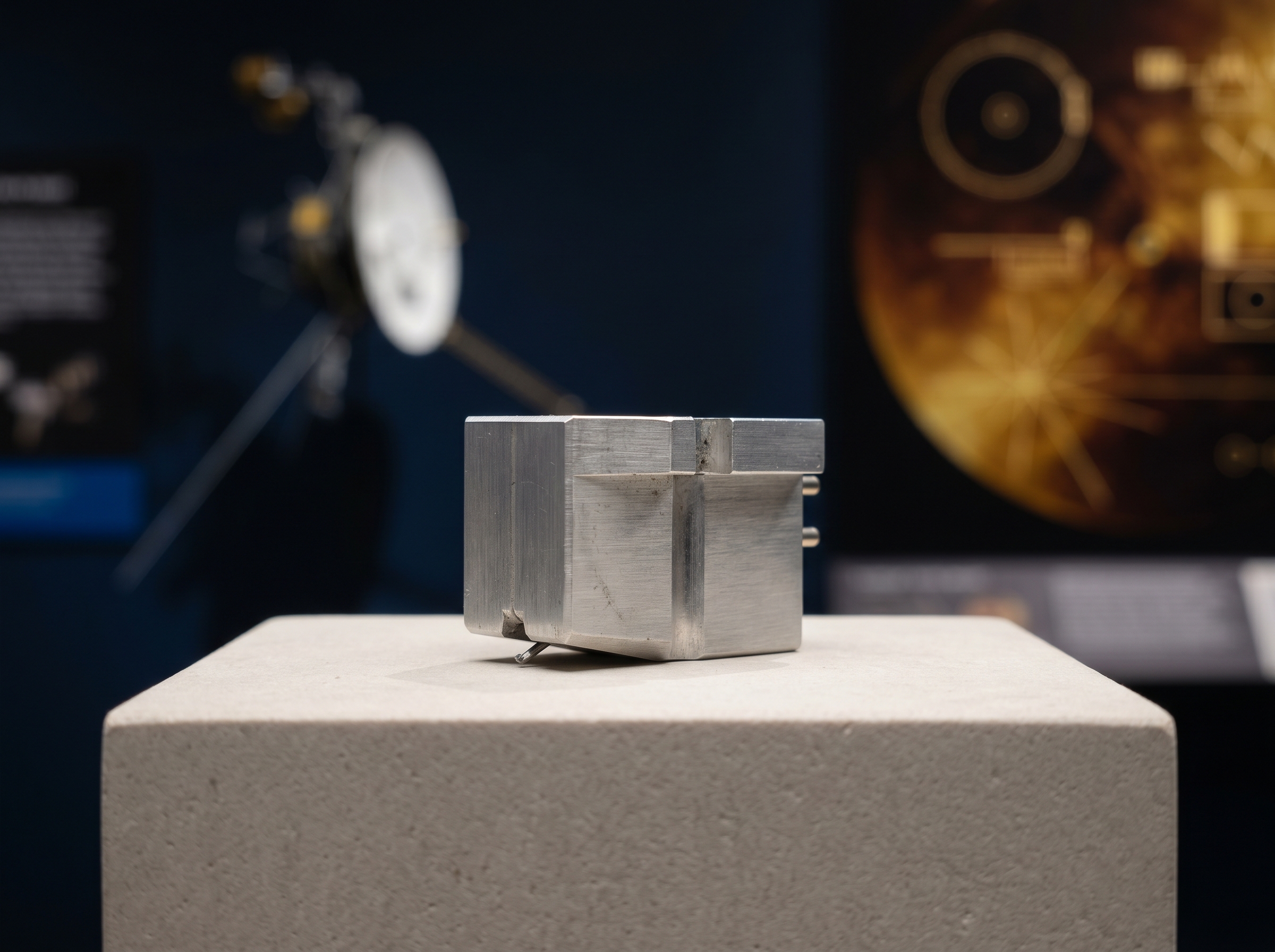
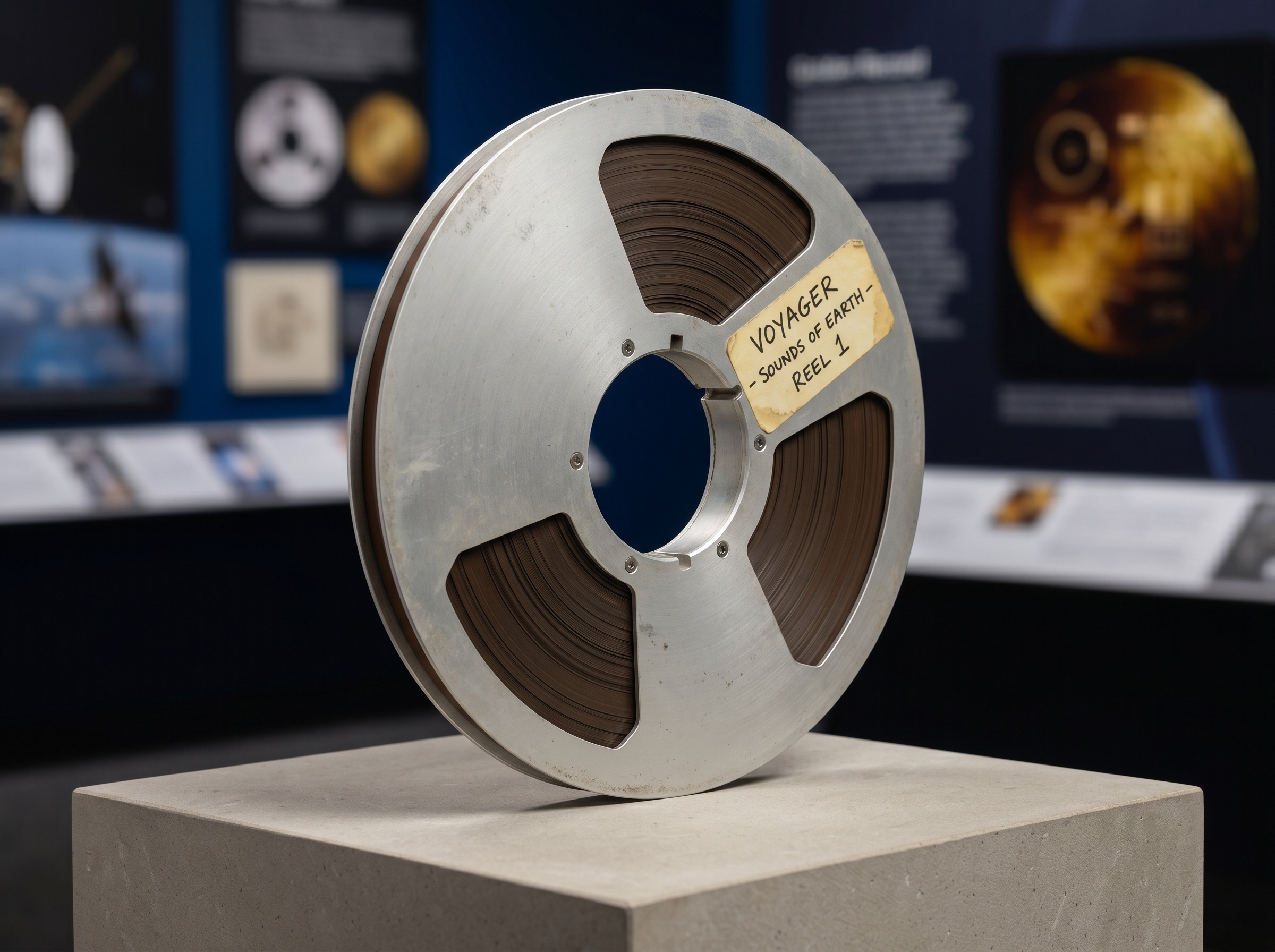
NASA engineers confronted an impossible archival constraint in 1977, encoding 116 images and 90 minutes of audio onto a 12-inch copper disk. The resulting artifact was bolted to the Voyager probes as a definitive material record, designed to endure a billion years in the interstellar vacuum.
Read Study (17 min) →Artifacts
Glossary
- electroplated
- The electrochemical process of applying a thin layer of one metal (such as gold or copper) onto another metal surface using an electrical current.
- pulsar map
- The diagram etched onto the Voyager record cover that triangulates the Sun's position relative to 14 known rapidly spinning neutron stars.
- analog rasterization
- The conversion technique of dividing a visual image into successive lines of audio frequency, mimicking standard television scanning patterns.
- uranium-238
- The most common naturally occurring isotope of uranium, possessing a precise half-life of 4.468 billion years, utilized on the probe as a radiometric stopwatch.
- lacquer
- A nitrocellulose-coated disc onto which the master audio grooves were cut before being plated with metal to form negative stampers.