Final Letter from Ugarit
Curated by Valerius • Late Bronze Age Collapse from Mycenae to Ugarit
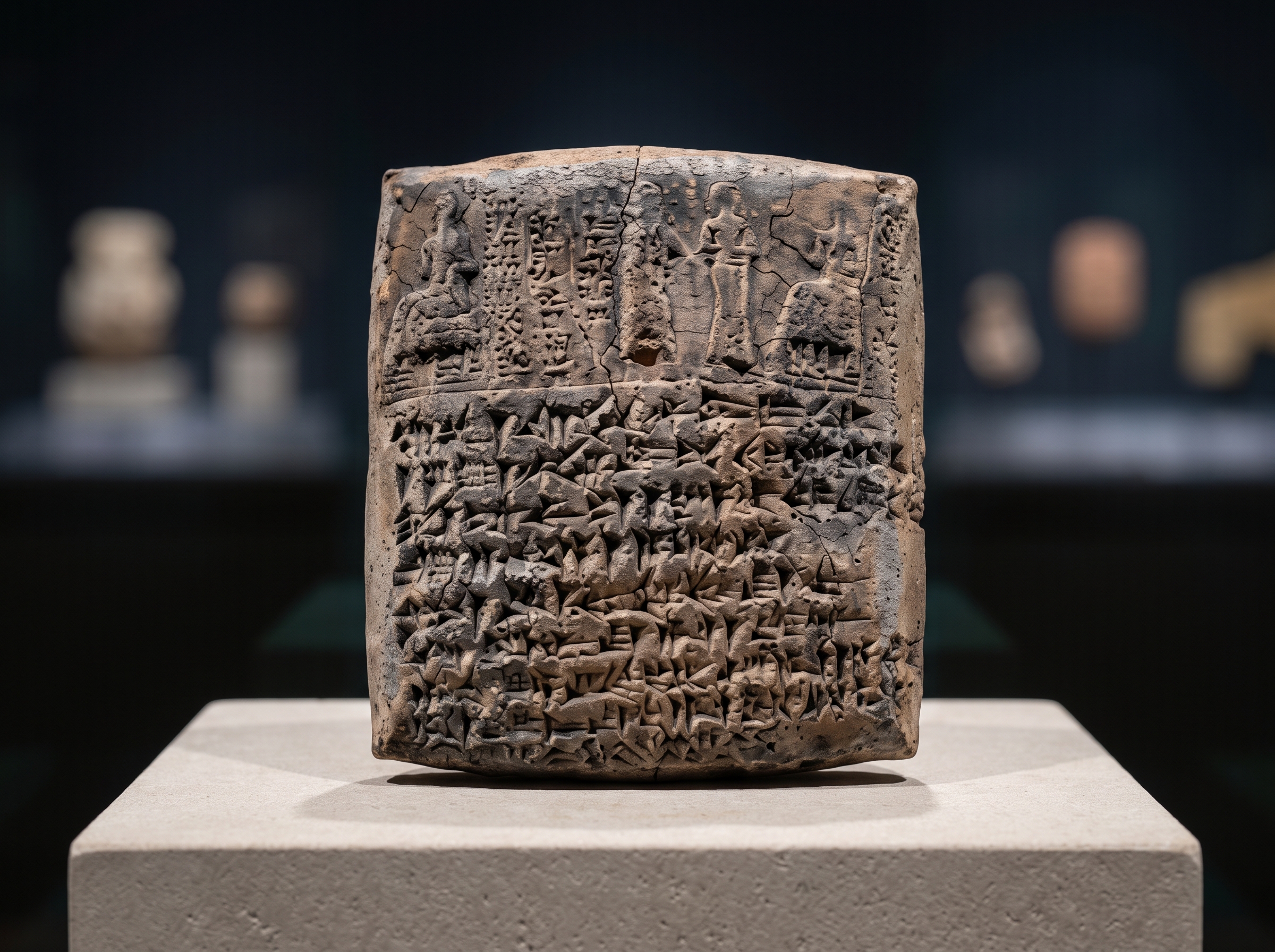
Artifact Details
A rough, unbaked clay tablet covered in Ugaritic cuneiform script. The surface is cracked, bubbled, and scorched black from the intense heat of the burning palace.
Primary Source
Late Bronze Age Collapse from Mycenae to Ugarit
1190 B.C. Ugarit. The final administrative record of the greatest merchant port in the Eastern Mediterranean was never baked. An unknown scribe pressed a frantic plea into wet clay, demanding military aid from Cyprus as hostile ships breached the harbor. He thrust the tablet into a kiln just as the palace roof collapsed. When archaeologists found the document 3,000 years later, the clay was scorched black by the fires that consumed the city. Ugarit did not fall in isolation. Within 50 years, every major palatial economy from Mycenae to Hattusa was erased. The Bronze Age collapse exposed the fragility of an integrated international supply chain unable to absorb compounding environmental shocks.
Read Study (15 min) →Artifacts
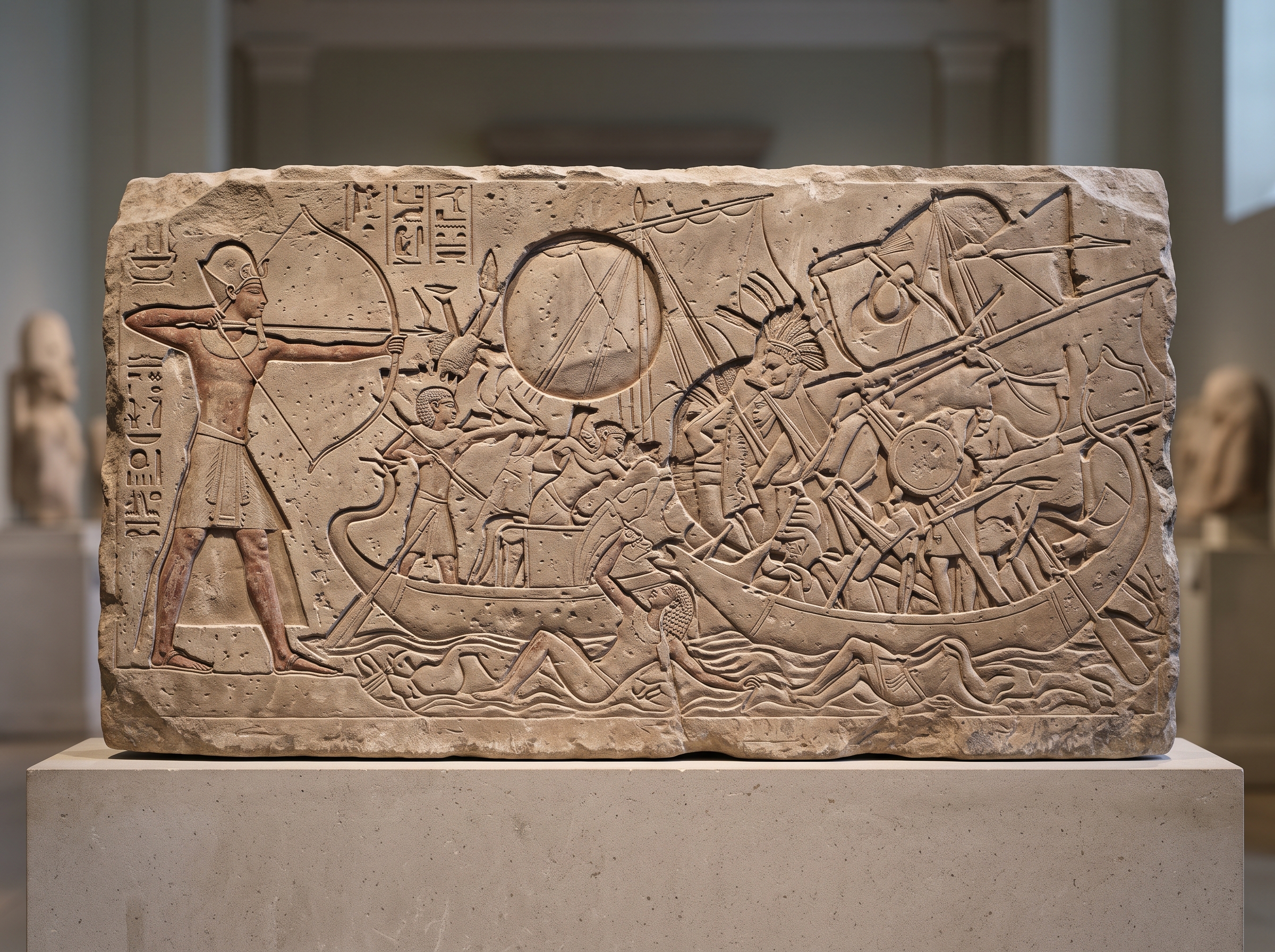
Medinet Habu Relief
Egyptian stone carvings depicting the chaotic naval battle between Ramses III and the Sea Peoples.
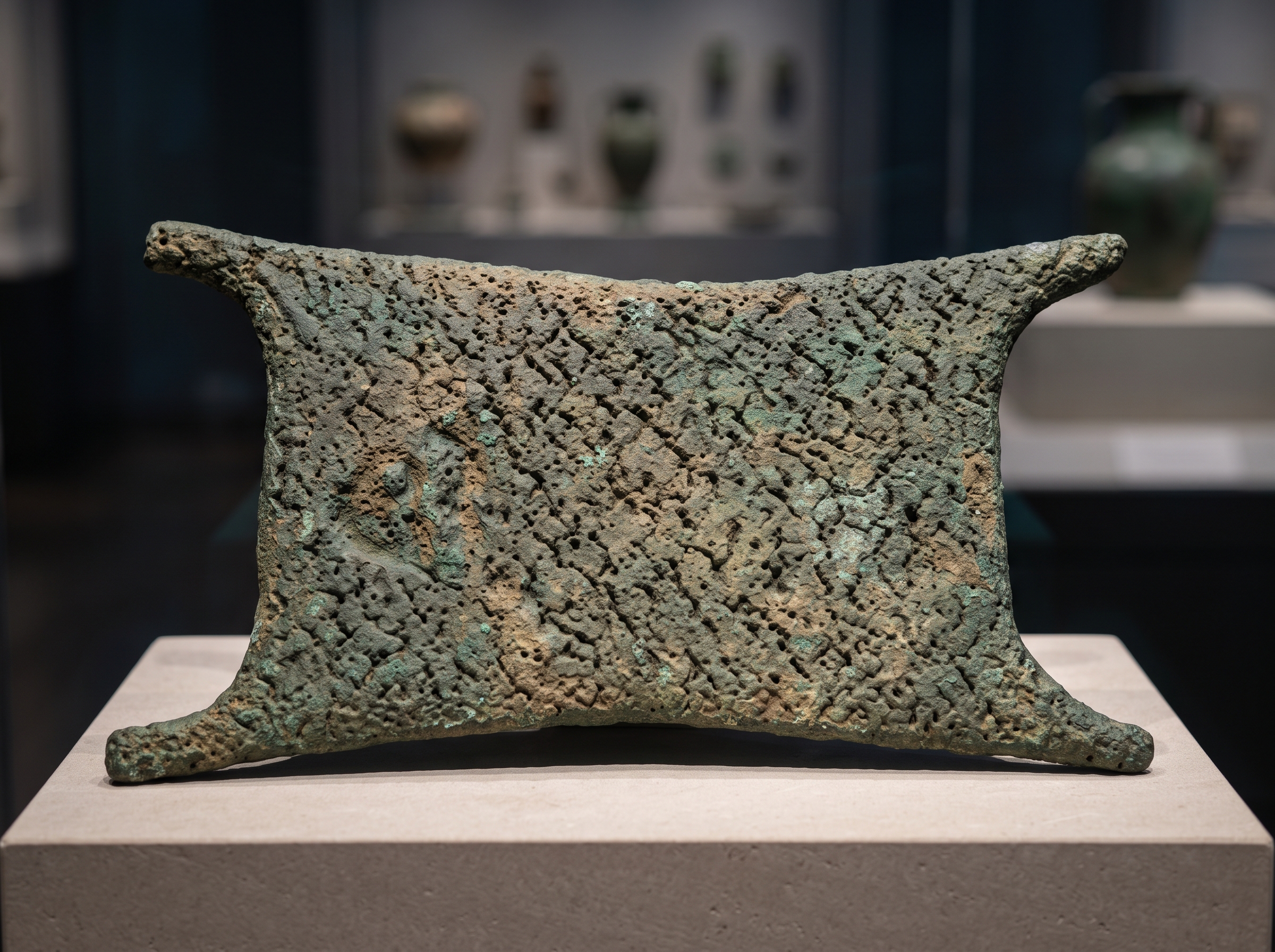
Copper Oxhide Ingot
A standard unit of Bronze Age currency and raw material, shaped like a stretched ox hide for easy transport.
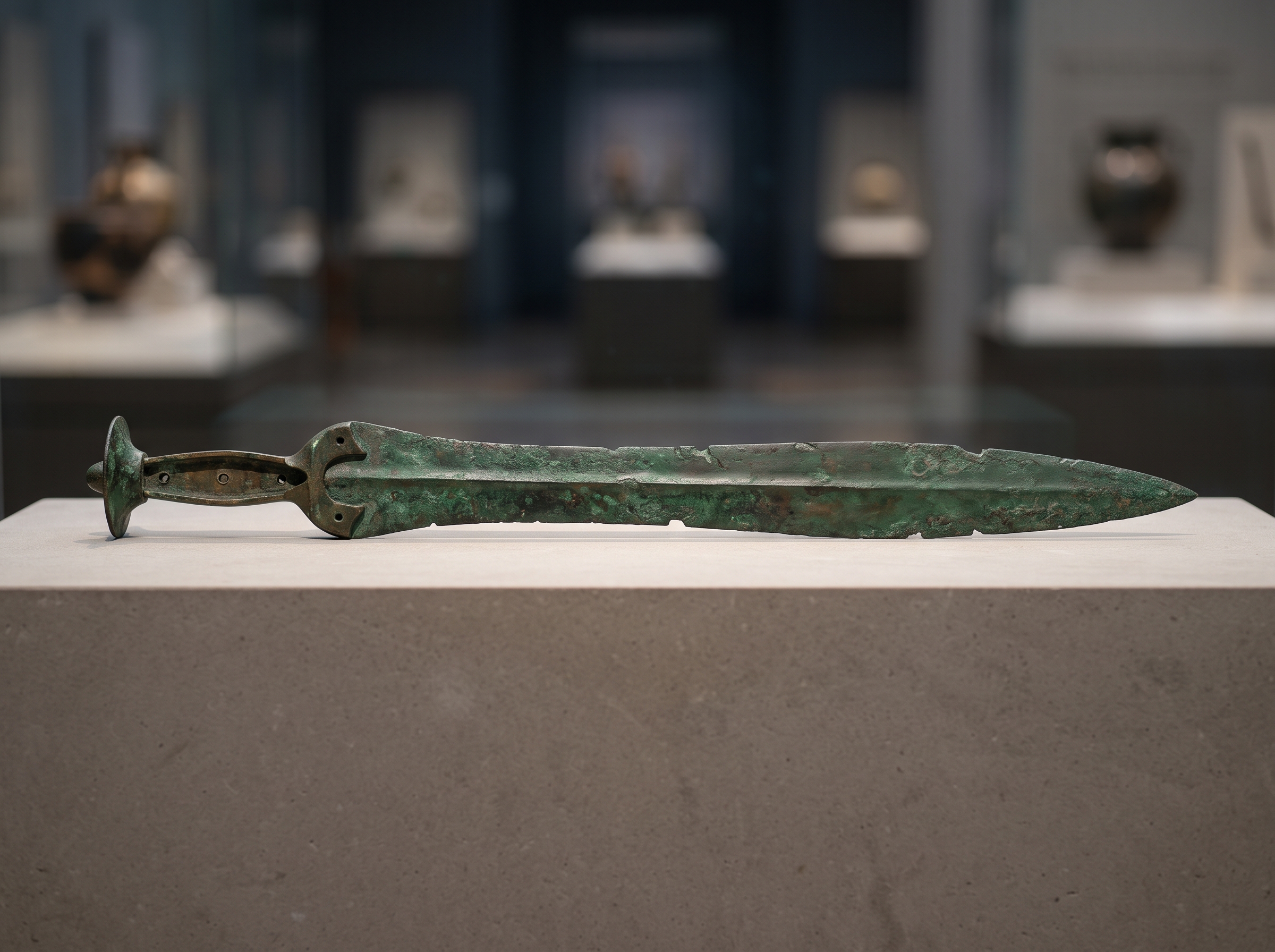
Naue II Type Sword
A highly effective, cut-and-thrust bronze sword adopted by various infantry forces during the collapse.
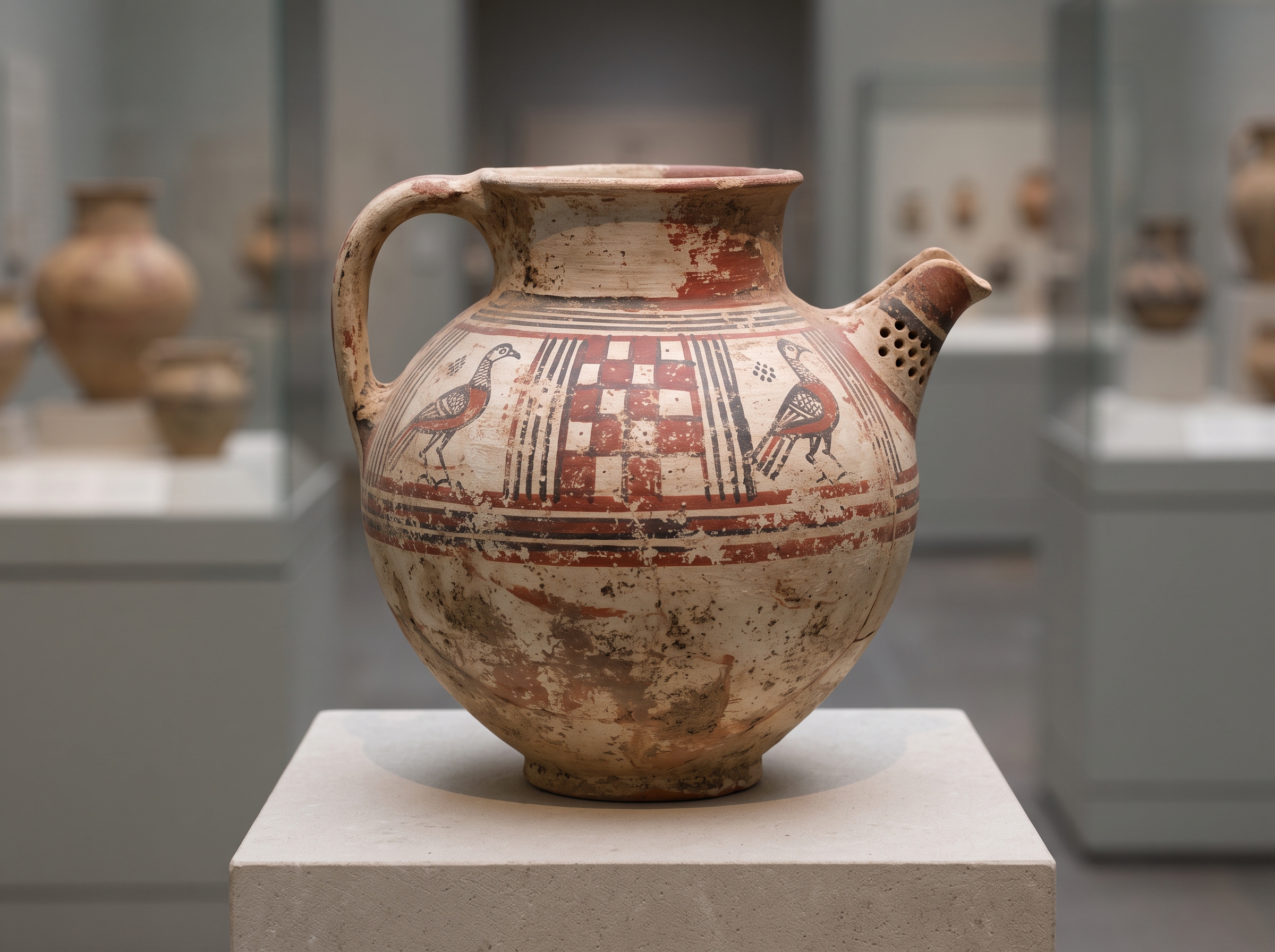
Philistine Bichrome Jug
A distinct style of pottery that emerged in the Levant, showing Mycenaean stylistic influences brought by migrants.
Glossary
- palatial economies: Highly centralized Bronze Age state structures where a central authority managed the collection, storage, and redistribution of agricultural and trade goods.
- sea peoples: A modern archaeological term for the confederation of displaced maritime groups, refugees, and raiders who assaulted the Eastern Mediterranean at the end of the Bronze Age.
- cuneiform: An ancient wedge-shaped writing system pressed into wet clay tablets, used for diplomacy, trade records, and state administration.
- oxhide ingots: Heavy, 30-kilogram slabs of cast copper shaped like stretched animal hides with four corner handles, used as standard units of trade.