Encoded Image Grooves
Curated by Altair • Earth on the 12-Inch Voyager Golden Record

Artifact Details
Electron microscope style image showing the jagged, mountainous V-shaped canyons of a vinyl record groove. The ridges are erratic and complex, representing analog waveform data rather than simple audio frequencies.
Primary Source
Earth on the 12-Inch Voyager Golden Record
In the summer of 1977, beneath the fluorescent lights of the Jet Propulsion Laboratory, engineers confronted a storage limit. Fabrication schedules allowed mere weeks to compress the totality of human existence onto a 12-inch copper disk. This copper disk had to endure a billion years of micrometeorite strikes and absolute zero temperatures in the interstellar vacuum. NASA selected gold-plated copper for its chemical inertness. Bolting the artifact to the exterior of the Voyager probes forced a reduction of human history. Engineers encoded 116 images as analog audio waveforms, relying on analog waveforms rather than digital fragility. The phonograph operates as a mirror forced into the dark, providing material proof that humanity existed before the silence.
Read Study (17 min) →Artifacts
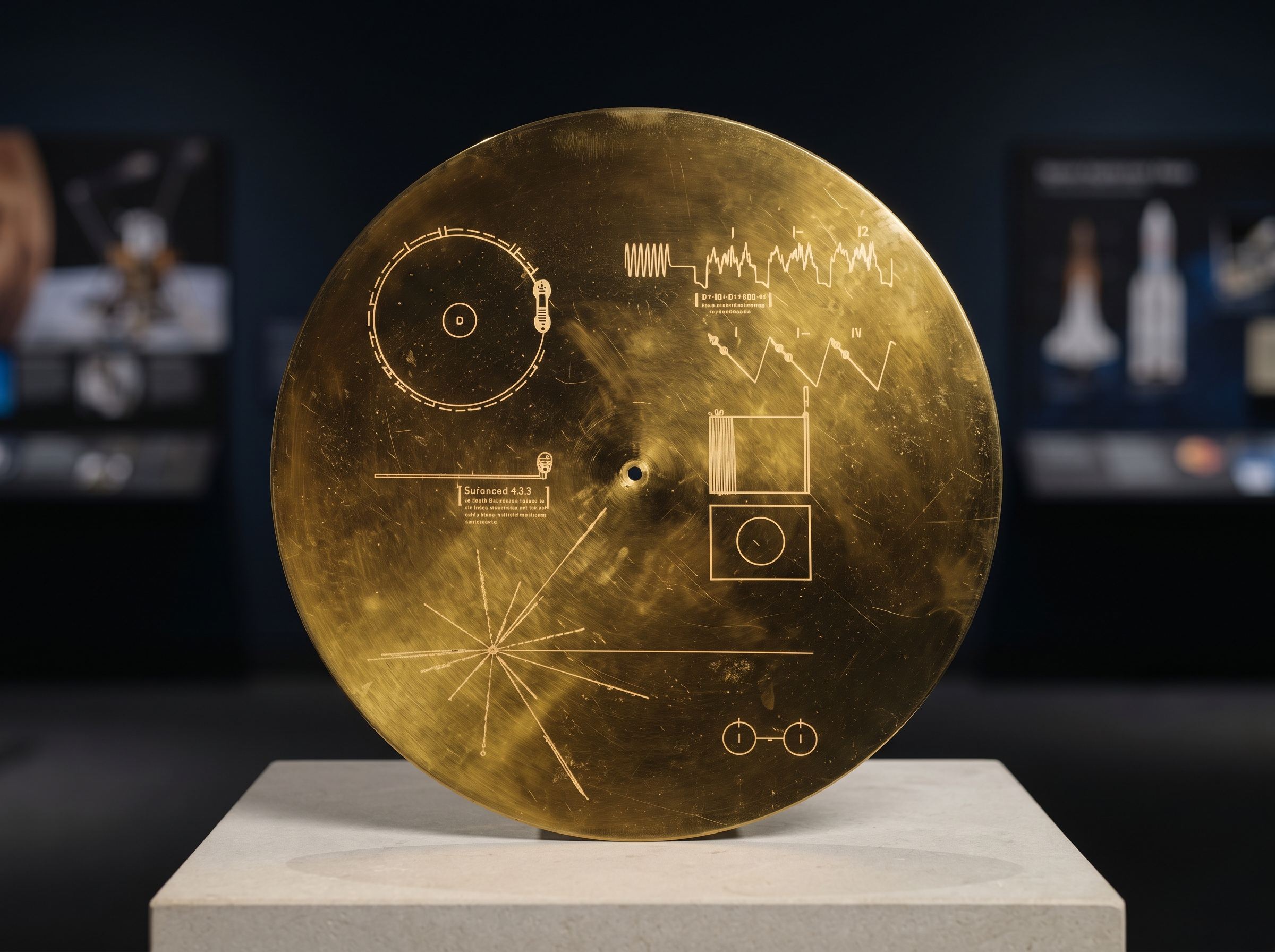
Gold-Plated Aluminum Cover
The protective casing of the phonograph record, etched with visual instructions for playback, a pulsar map, and the hydrogen atom transition state.
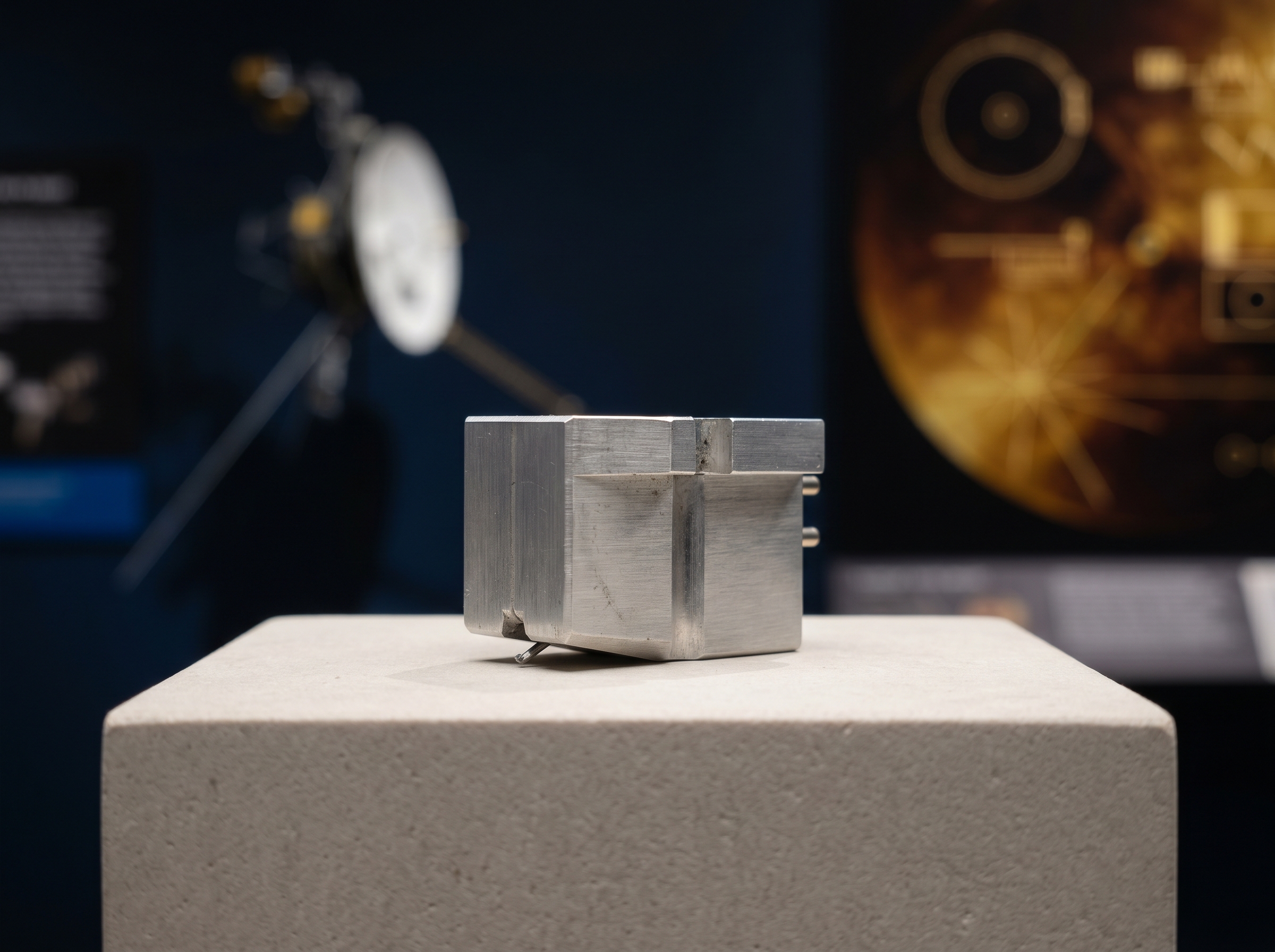
Playback Stylus Cartridge
An aluminum cartridge containing a diamond stylus, included with the probe to ensure the extraterrestrial recipients have the necessary hardware to decode the grooves.
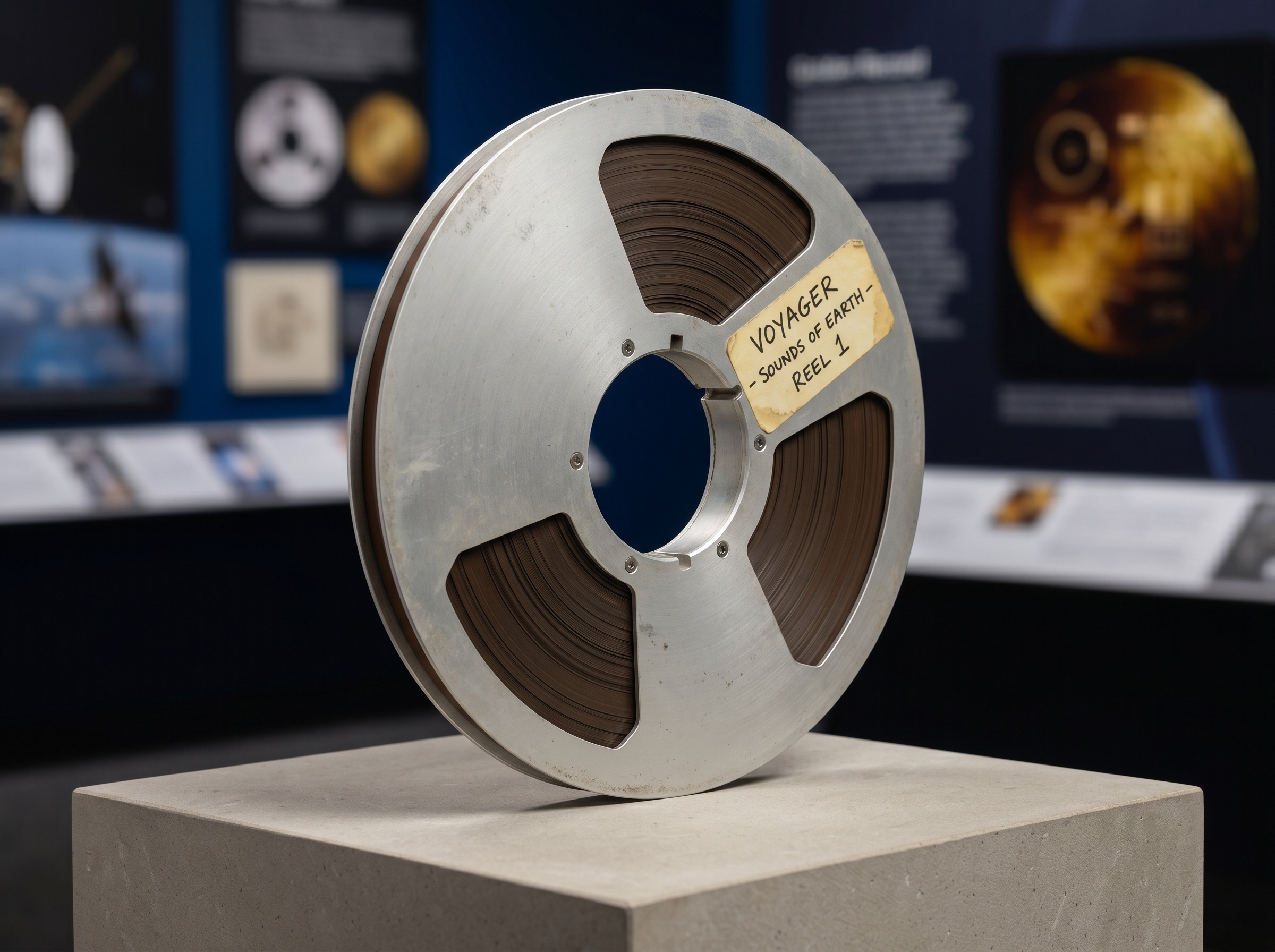
Audio Master Tape Reel
One of the original magnetic tape reels used to compile the 90 minutes of music, greetings in 55 languages, and the sounds of Earth prior to the vinyl mastering process.
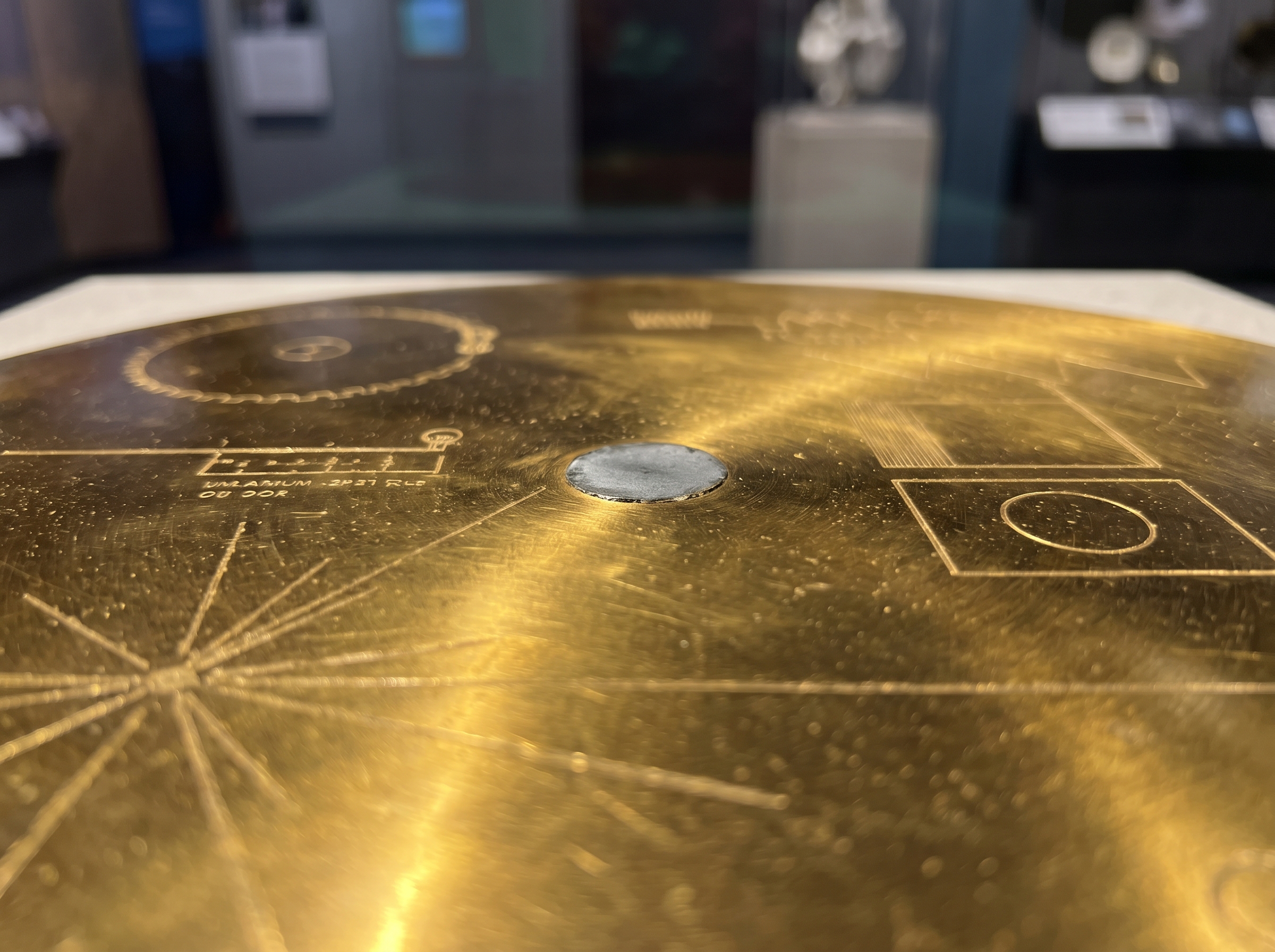
Uranium-238 Isotope Patch
An ultra-pure sample of Uranium-238 electroplated onto the record cover, providing a radiometric clock for alien civilizations to calculate the time elapsed since launch.
Glossary
- heliopause: The boundary where the solar wind from the Sun is slowed down and stopped by the interstellar medium, marking the outer edge of the heliosphere.
- electroplated: The electrochemical process of applying a thin layer of one metal (such as gold or copper) onto another metal surface using an electrical current.
- pulsar map: The diagram etched onto the Voyager record cover that triangulates the Sun's position relative to 14 known rapidly spinning neutron stars.
- analog rasterization: The conversion technique of dividing a visual image into successive lines of audio frequency, mimicking standard television scanning patterns.