Diary of Merer
Curated by Orea • The Great Pyramid of Giza and Pharaoh Khufu
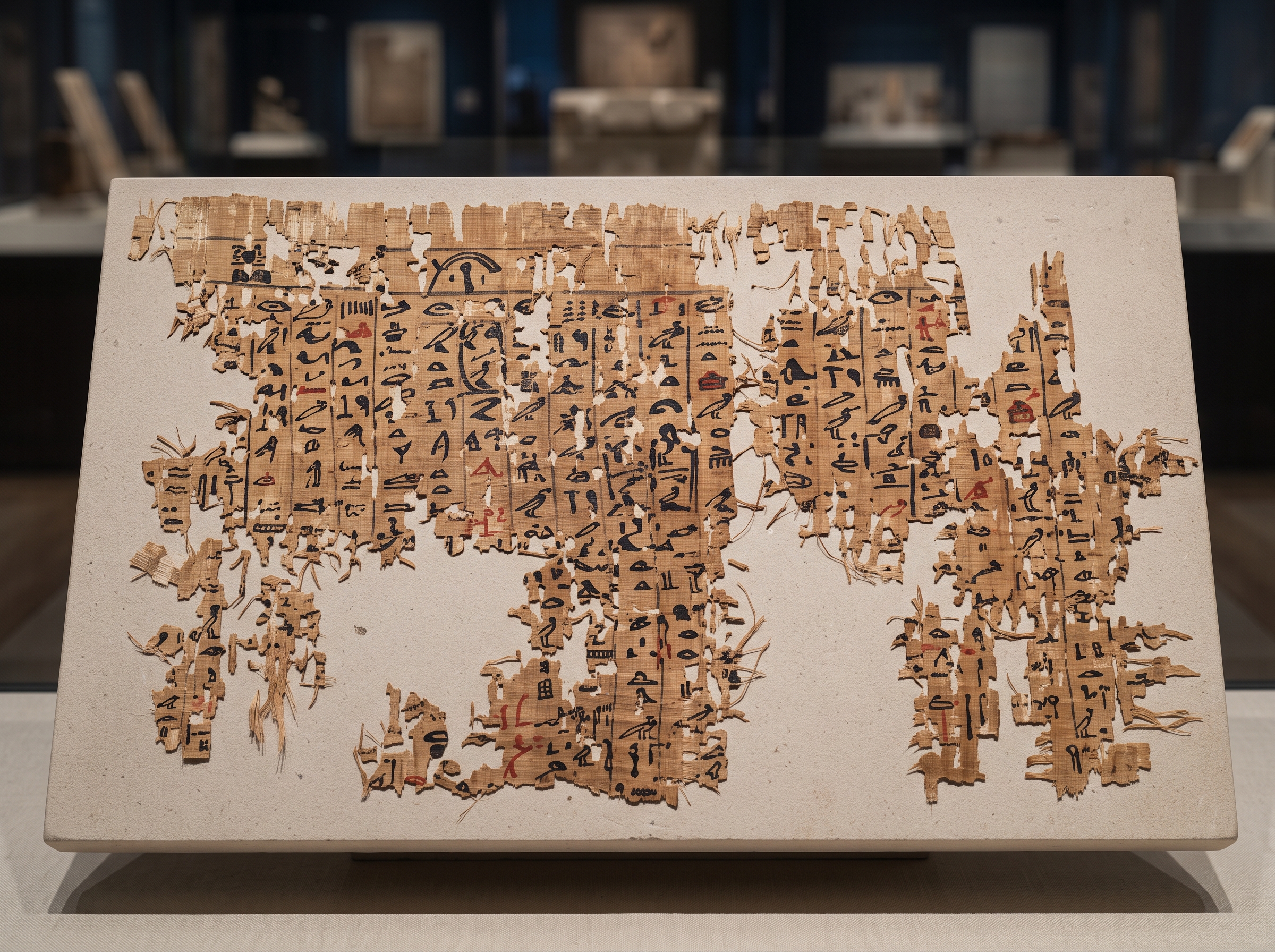
Artifact Details
A fragmented, brittle sheet of ancient papyrus covered in linear hieratic script. The ink is faded black and red. The edges of the papyrus are torn and fibrous.
Primary Source
The Great Pyramid of Giza and Pharaoh Khufu
Heat on the Giza plateau in 2570 B.C. was relentless. Airborne limestone dust and coarse sand coated the throats of tens of thousands of conscripted laborers hauling 2.5-ton blocks up lubricated slipways. Time pressure came from the annual Nile flood. Khufu’s monument required total geographic mobilization. Without iron tools or wheeled carts, Fourth Dynasty officials commanded the movement of 6 million tons of rock. Raw friction demanded more than brute force, absorbing the entire Egyptian economy. Khufu's tomb became an administrative engine, forging a centralized state out of raw geography and human muscle.
Read Study (17 min) →Artifacts
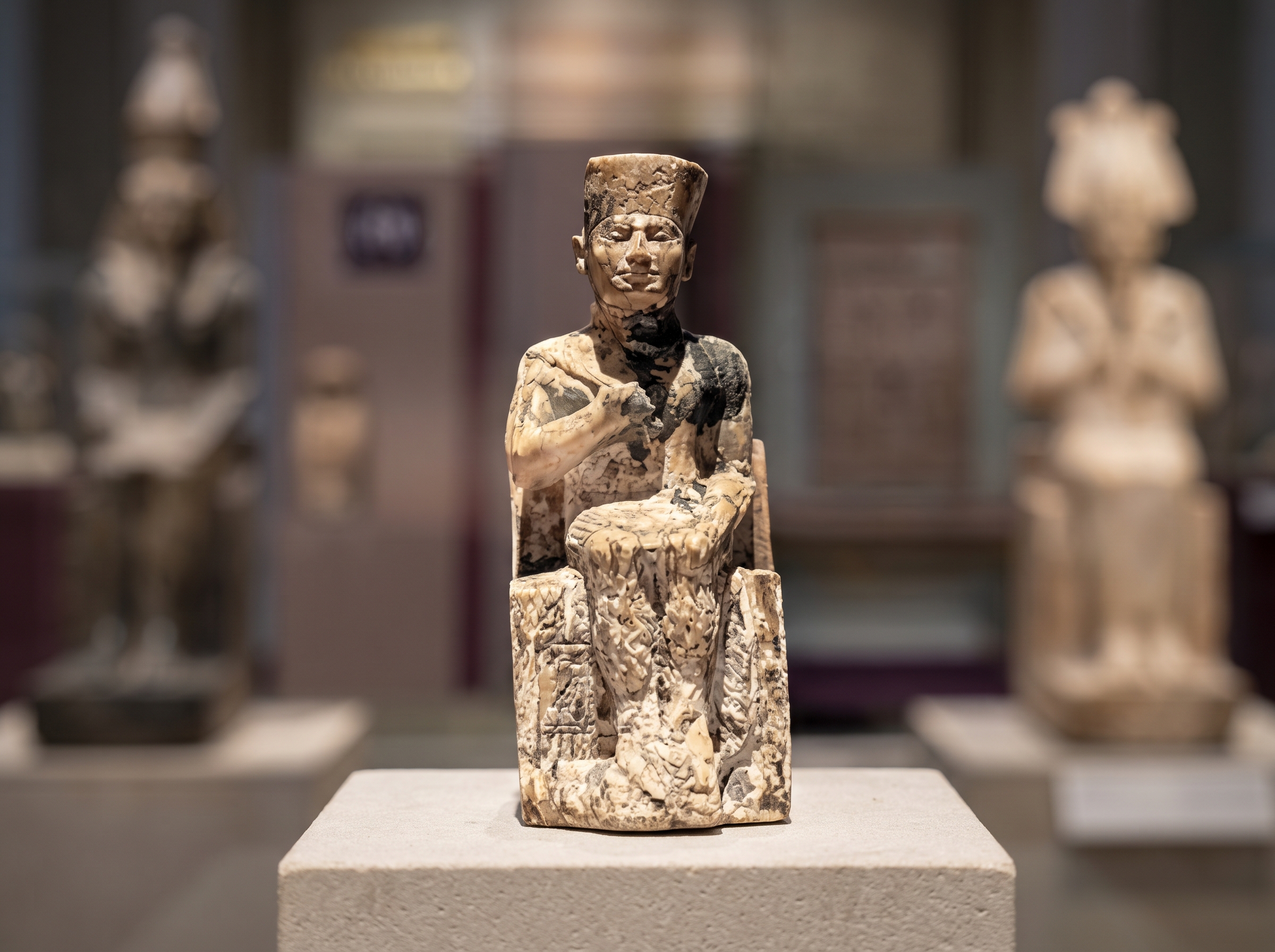
Ivory Statuette of Khufu
The only fully intact three-dimensional portrait of Khufu, standing a mere 7.5 centimeters tall.
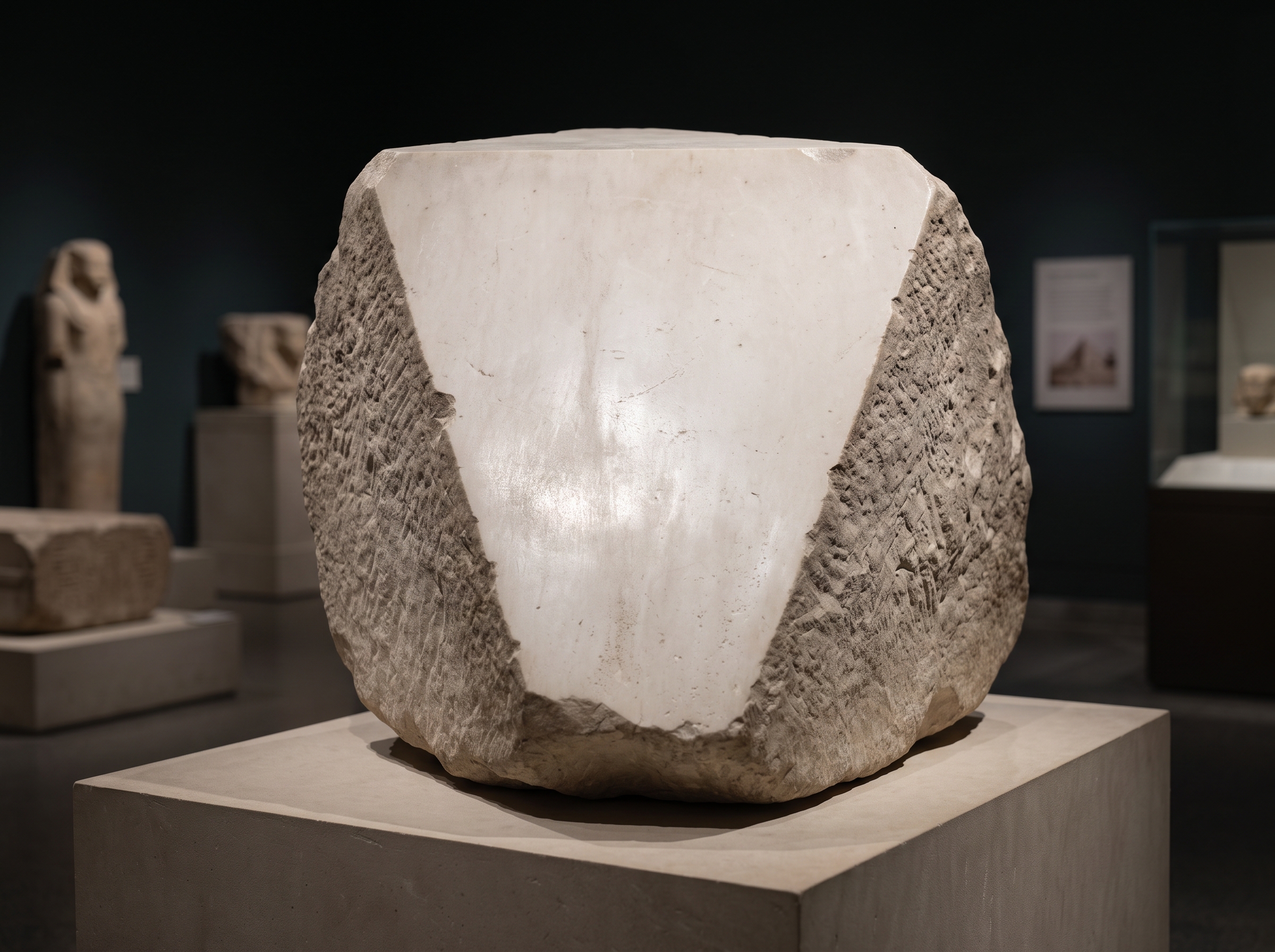
Tura Casing Stone
A surviving block of the highly polished white limestone that once gave the pyramid its blindingly smooth exterior.
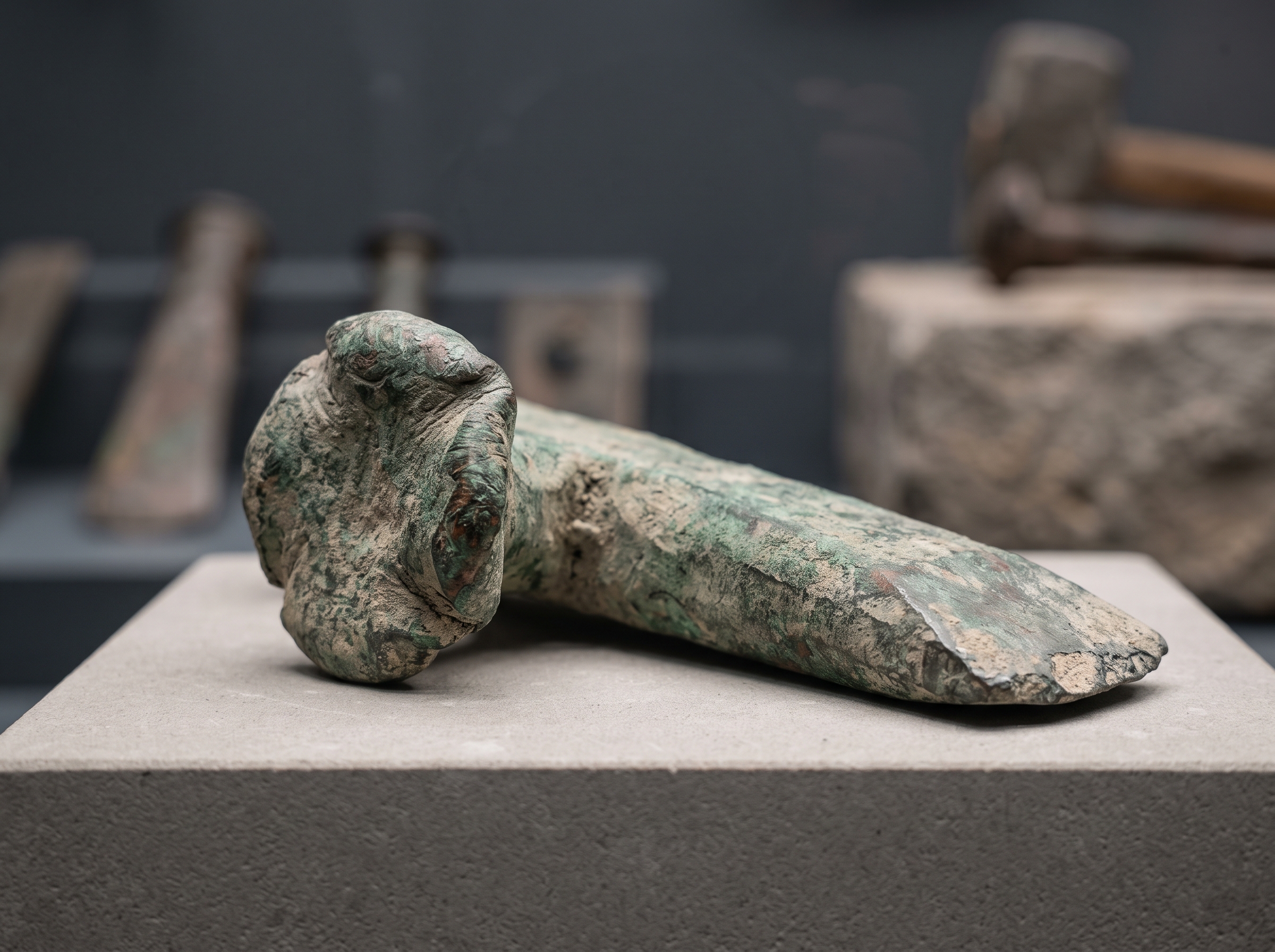
Ancient Copper Chisel
A blunted copper hand tool used to quarry the limestone, requiring constant recasting due to the softness of the metal.
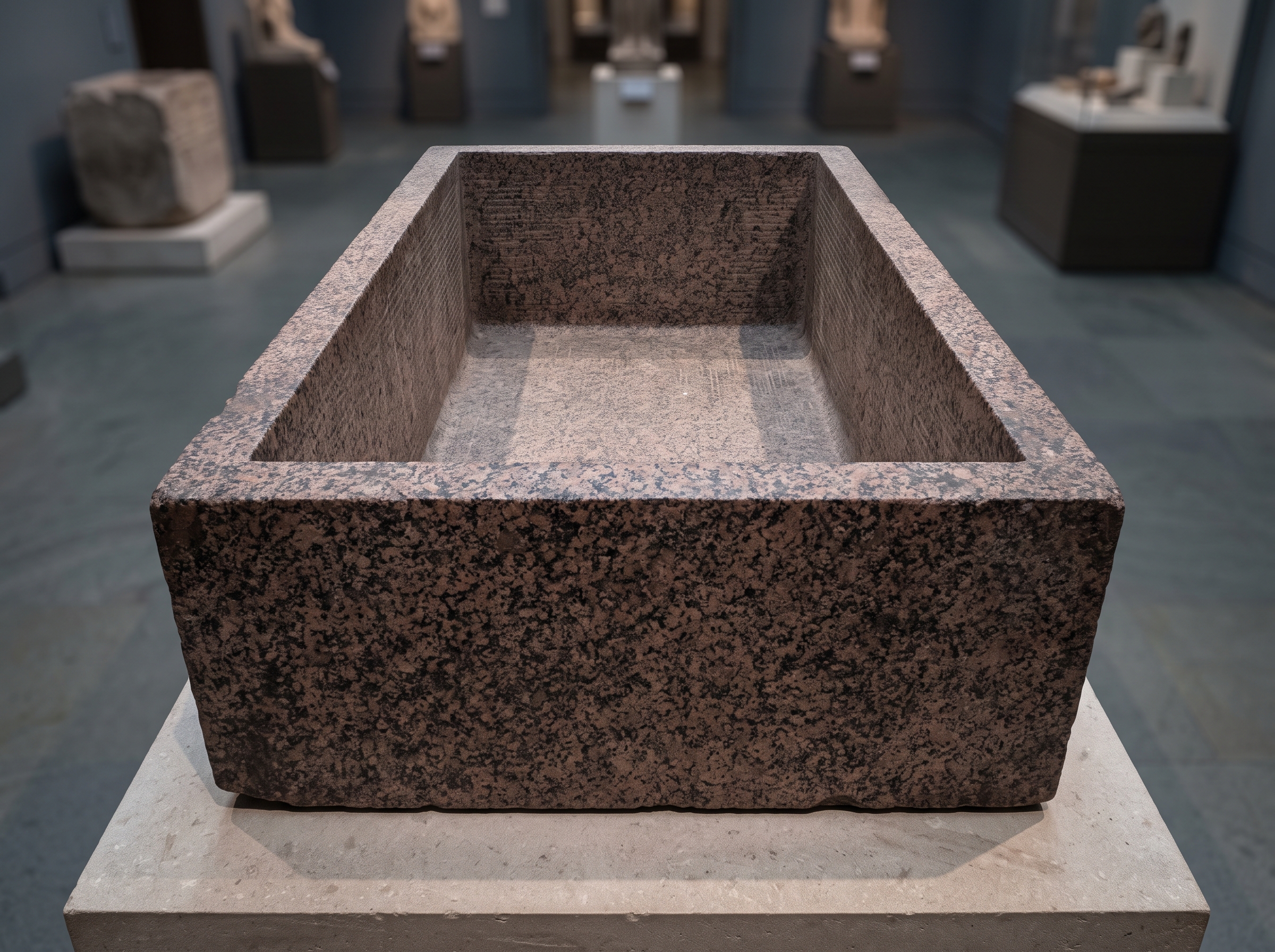
Aswan Granite Sarcophagus
The stark, unadorned red granite box inside the King's Chamber, which is slightly larger than the ascending passageway.
Glossary
- royal cubit: The standard ancient Egyptian unit of linear measurement, roughly 52.4 centimeters, derived from the length of a human forearm.
- corvée: Unpaid, state-mandated conscripted labor levied on the peasantry to complete massive public works projects during the Nile flood season.
- mastaba: A flat-roofed, bench-shaped mudbrick or stone tomb that served as the primary architectural precursor to the stepped and true pyramids.
- tura limestone: The exceptionally fine, bright-white limestone quarried across the Nile and hauled to Giza to serve as the highly reflective outer casing blocks.