Tura Limestone
Curated by Orea • The Great Pyramid of Giza and Pharaoh Khufu
Definition
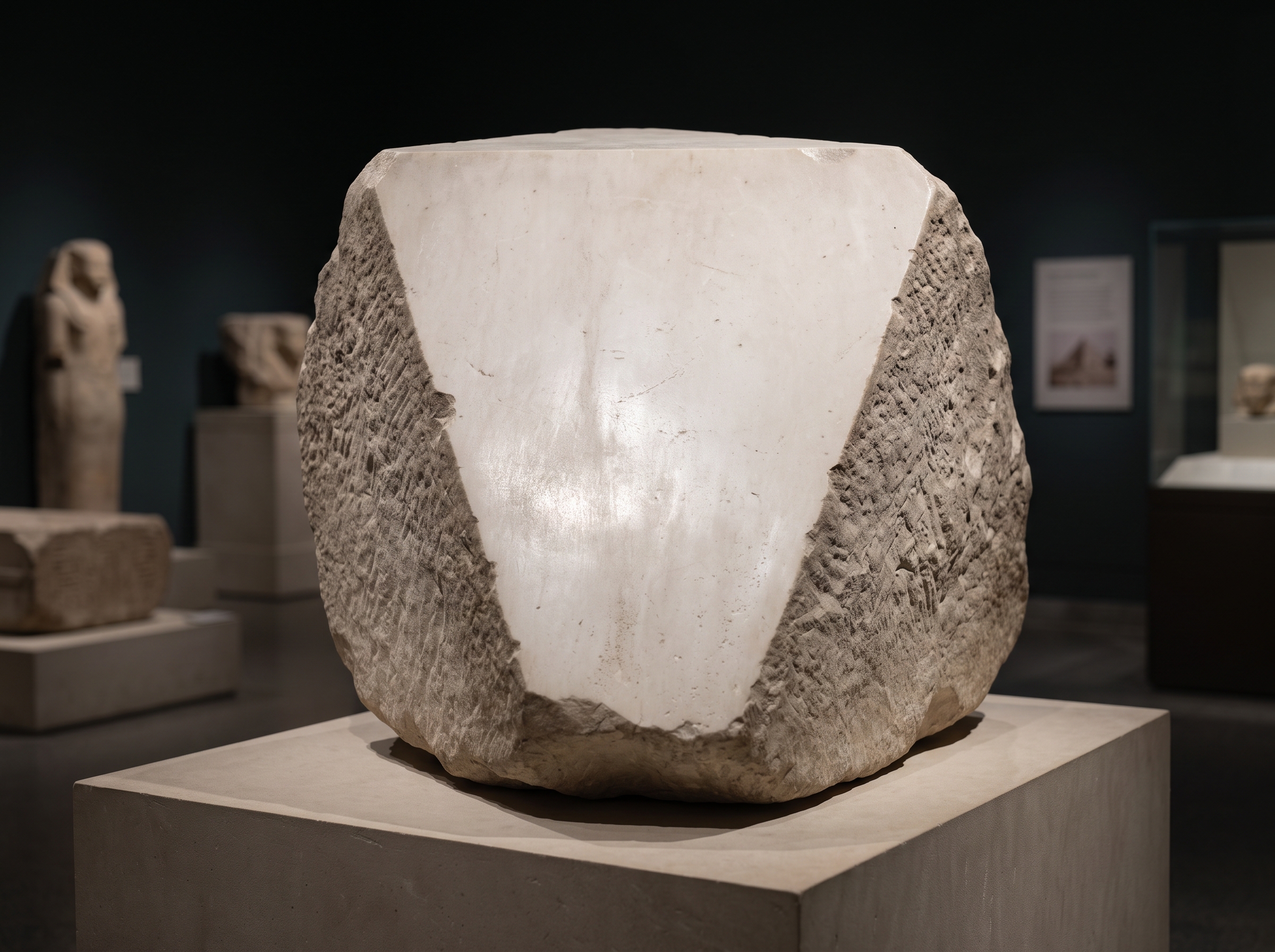
The exceptionally fine, bright-white limestone quarried across the Nile and hauled to Giza to serve as the highly reflective outer casing blocks.
In Context
Perfection of the casing stones eventually invited destruction. A massive earthquake rattled the region in A.D. 1303, loosening the white Tura limestone. Decades later, Bahri Sultan An-Nasir Hasan recognized the dormant monument as an unprotected quarry. Royal engineers systematically stripped the polished outer layer, carting blocks away to build mosques and fortifications in Cairo. Successive medieval Islamic empires dismantled the blinding white surface described by Greek historians.
Primary Source
The Great Pyramid of Giza and Pharaoh Khufu
Khufu's monument demanded total geographic mobilization and the synchronized absorption of the Egyptian economy. Moving 6 million tons of stone created a bureaucratic template that governed Egypt for centuries.
Read Study (17 min) →Artifacts
Glossary
- royal cubit
- The standard ancient Egyptian unit of linear measurement, roughly 52.4 centimeters, derived from the length of a human forearm.
- corvée
- Unpaid, state-mandated conscripted labor levied on the peasantry to complete massive public works projects during the Nile flood season.
- mastaba
- A flat-roofed, bench-shaped mudbrick or stone tomb that served as the primary architectural precursor to the stepped and true pyramids.
- dolerite
- An extremely hard, dense basaltic rock fashioned into heavy spherical hammerstones used to laboriously pound and shape granite blocks.
- relieving chambers
- The five narrow, granite-roofed compartments constructed above the King's Chamber to divert the immense weight of the pyramid overhead.