Limestone Boar Relief
Curated by Anima • Göbekli Tepe and Its Hunter-Gatherer Builders
Artifact Details
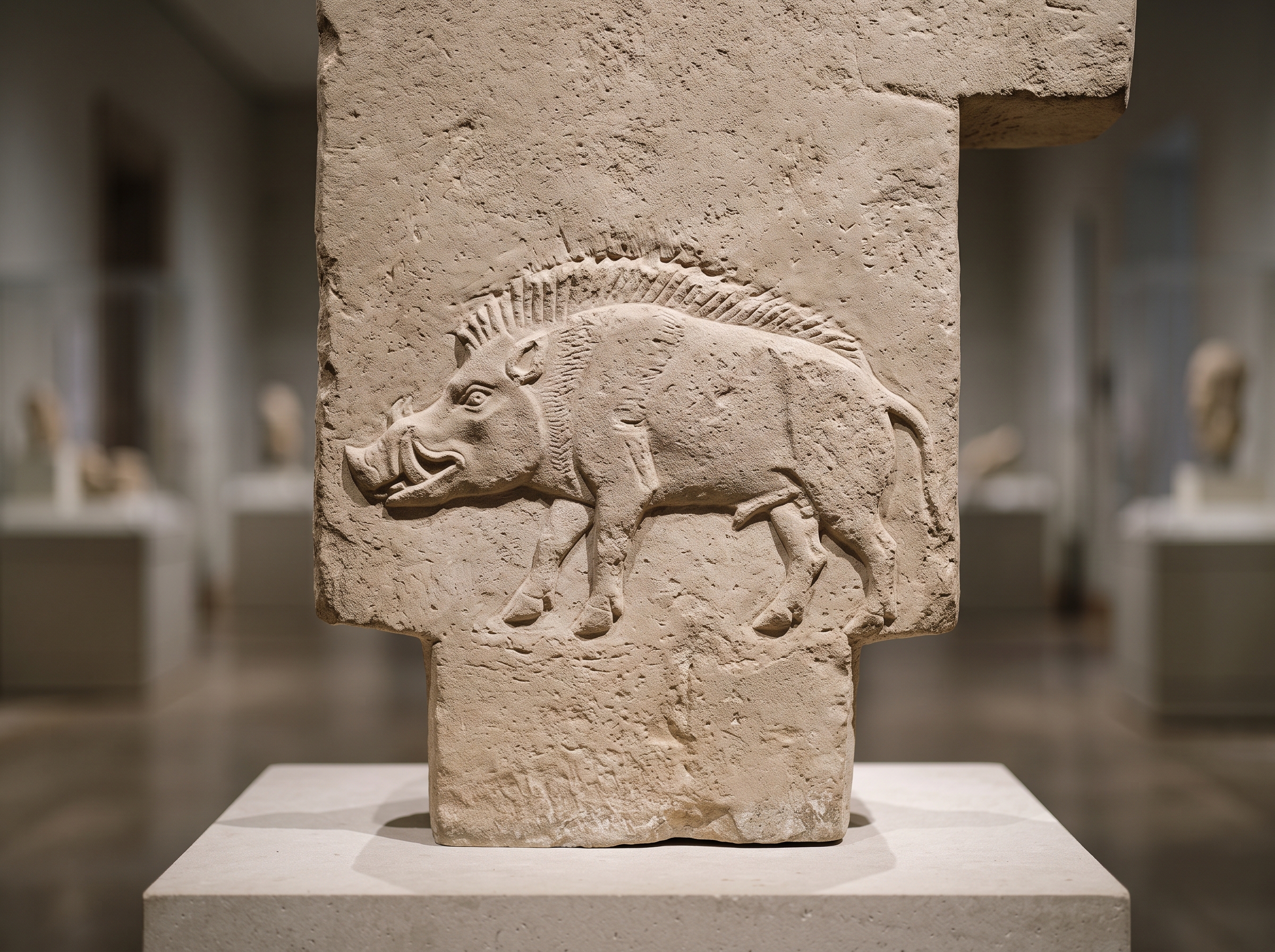
A raised limestone relief carving of a wild boar in profile on a flat monolithic pillar surface. The boar features an aggressive posture with pronounced tusks and a bristling crest. The carving bears rough flint chisel marks and severe edge wear.
Primary Source
Göbekli Tepe and Its Hunter-Gatherer Builders
On a parched limestone ridge above the Harran plain in 9600 B.C., a workforce of hunter-gatherers drove flint and obsidian wedges into solid bedrock. They were cutting a 15-ton, T-shaped monolith out of the earth without metal tools or pack animals. The sheer caloric cost of hauling these stones up the slope threatened starvation. Conventional history insists that agriculture created the leisure time required to build monuments. Göbekli Tepe proves the opposite. The intense supply pressure of feeding the massive, transient labor force required to carve these pillars forced a crisis. To sustain the construction of humanity's first temple, wild einkorn wheat growing on the nearby Karaca Dağ slopes had to be domesticated. The need to worship birthed the necessity to farm.
Read Study (17 min) →Artifacts
Pillar 43
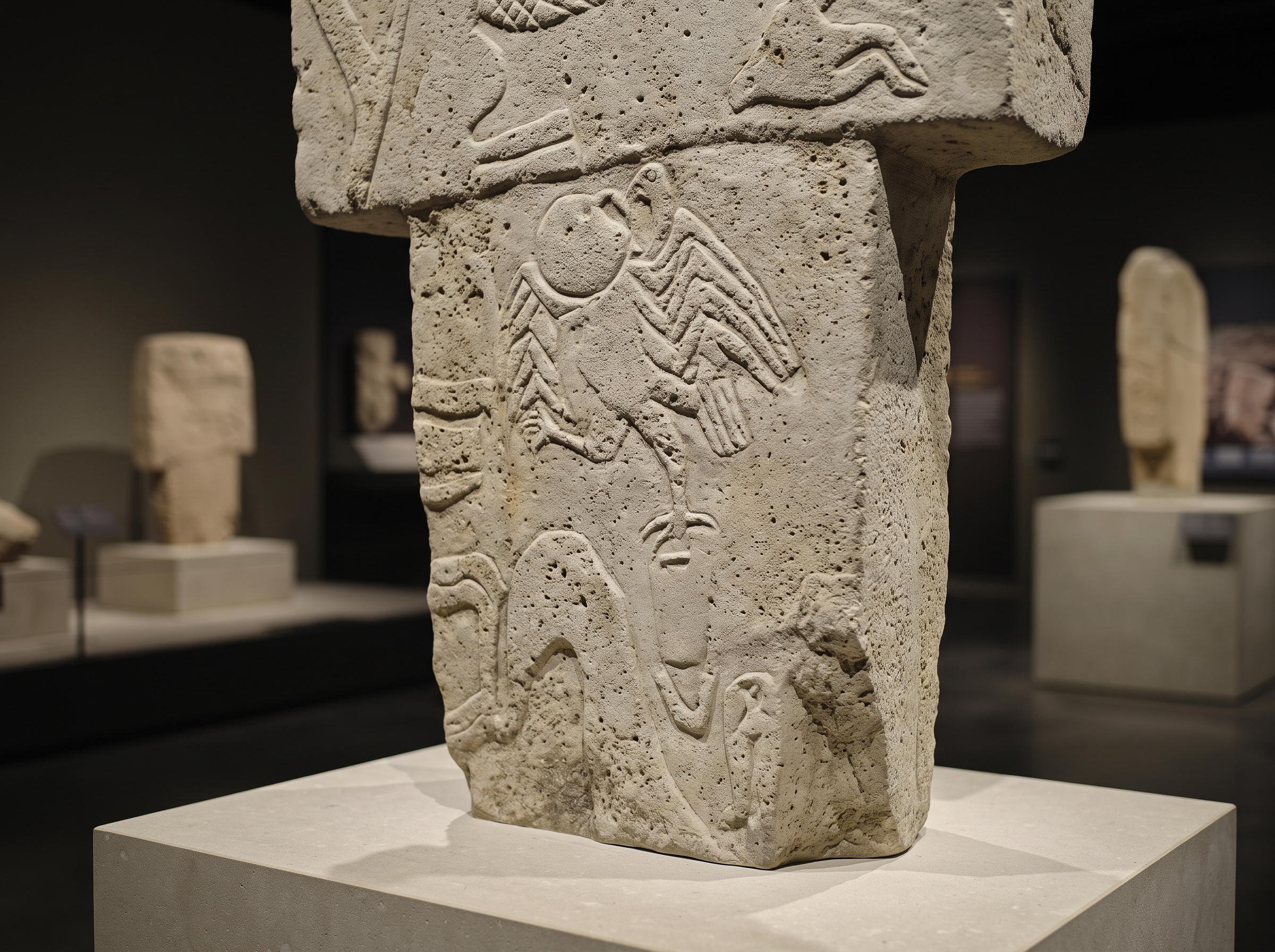
Known as the 'Vulture Stone', this pillar features complex reliefs of a vulture holding an orb above a headless human figure.
Urfa Man
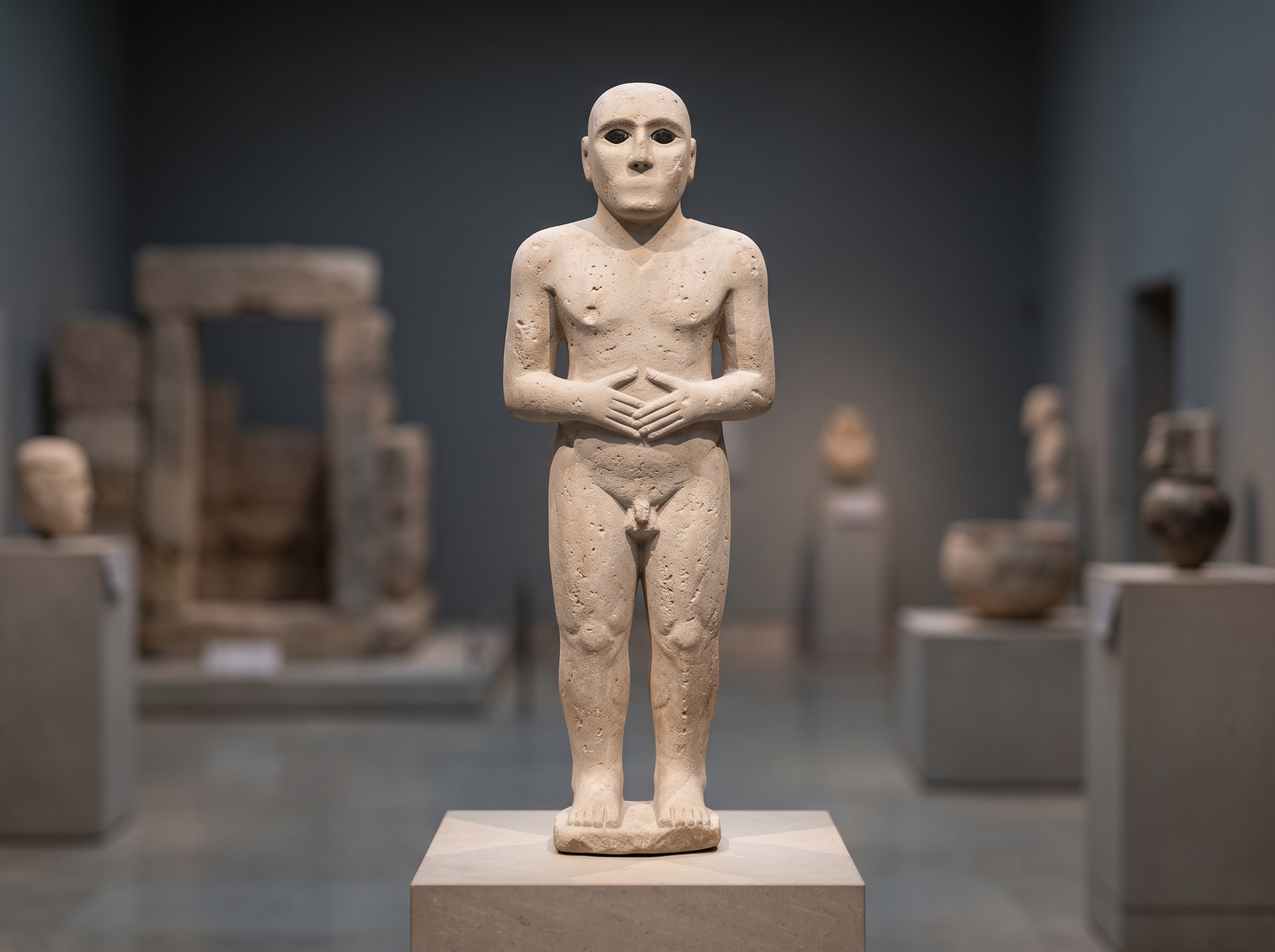
Discovered near Göbekli Tepe, this life-sized sandstone statue is considered the oldest known naturalistic life-sized sculpture of a human.
Fox Relief on Pillar 27
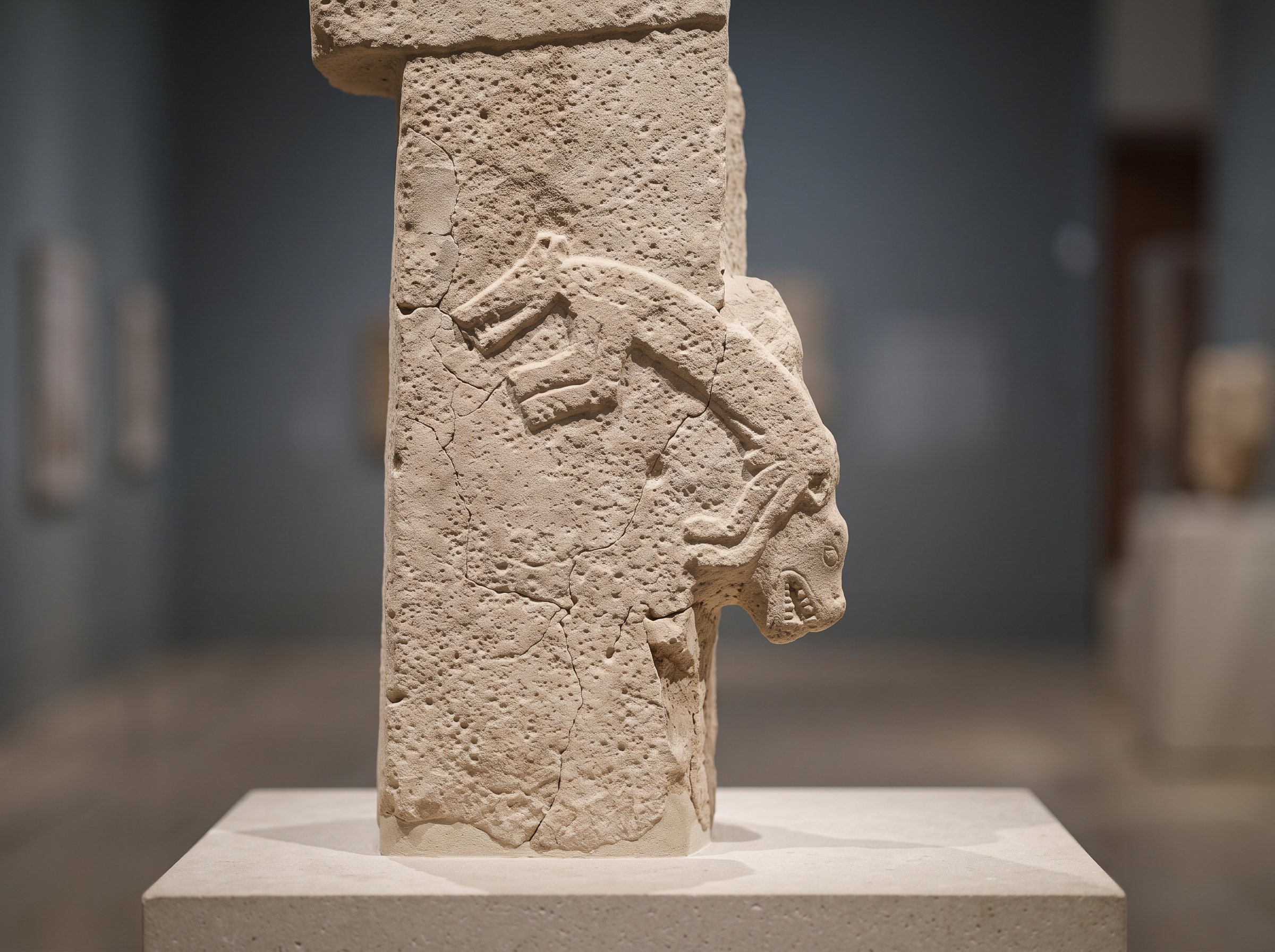
A beautifully preserved high-relief carving of a leaping fox, emphasizing the motion and predatory nature of the local fauna.
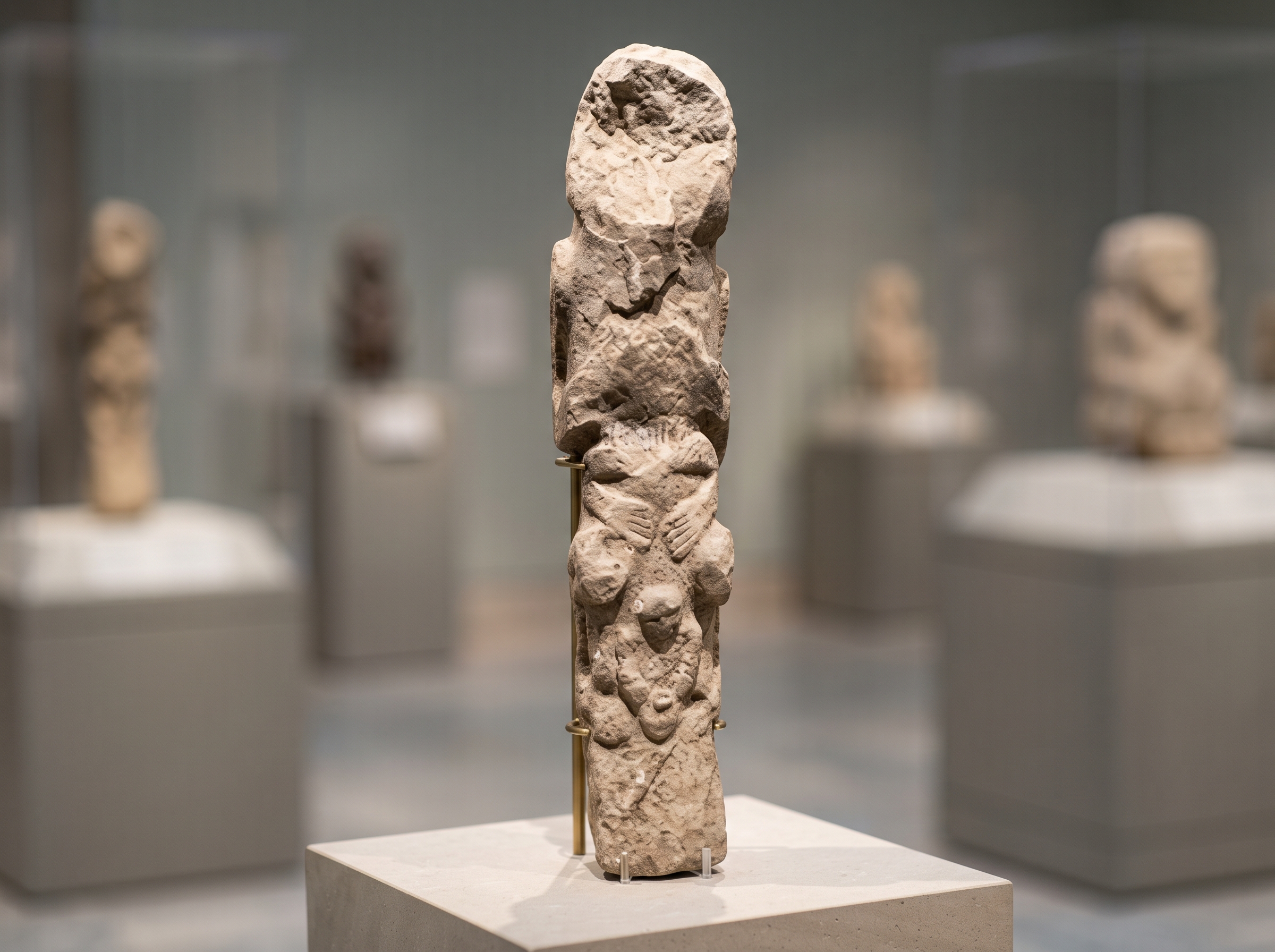
Fragmented Totem Pole
A fragmentary limestone totem featuring stacked animal and human figures, found in the newer layers of the site.
Glossary
- megalithic: Constructed using prehistoric monumental stone blocks, typically assembled without mortar using sophisticated joinery or simple gravity.
- pre-pottery neolithic: The early phase of the Stone Age in Western Asia characterized by permanent settlements and monumental architecture before the invention of ceramic pottery.
- liminality: A psychological or social state of transition and disorientation during rituals, where participants stand between their old identity and a new one.
- einkorn: An ancient, diploid species of wild grass containing low gluten, which was among the first grain species to be domesticated in Anatolia.