Casascius Coin
Curated by Cassian • Bitcoin and the Energy Cost of Proof of Work

Artifact Details
A tarnished brass coin. The surface bears the Bitcoin logo and the Latin phrase 'Vires in Numeris'. A peeled, metallic holographic sticker on the reverse reveals a string of miniature alphanumeric characters.
Primary Source
Bitcoin and the Energy Cost of Proof of Work
On January 3, 2009, an unknown programmer compiled a few thousand lines of C++ code and connected to an isolated network. Embedded in the first block of data was a hexadecimal string translating to a headline from The Times: "Chancellor on brink of second bailout for banks." The text acted as a technical obituary for trusted third parties. For centuries, human commerce required a single ledger maintained by a sovereign state or a commercial bank. That arrangement demanded unconditional trust, and institutions routinely breached that trust through censorship or inflation. Nakamoto's software bypassed this dependency. It replaced human administrators with thermodynamic physics, enforcing a public ledger through the verifiable expenditure of electrical energy.
Read Study (17 min) →Artifacts

Genesis Block Hexadecimal
The raw hexadecimal string of Block 0, embedding the Times headline regarding the 2009 bank bailouts.
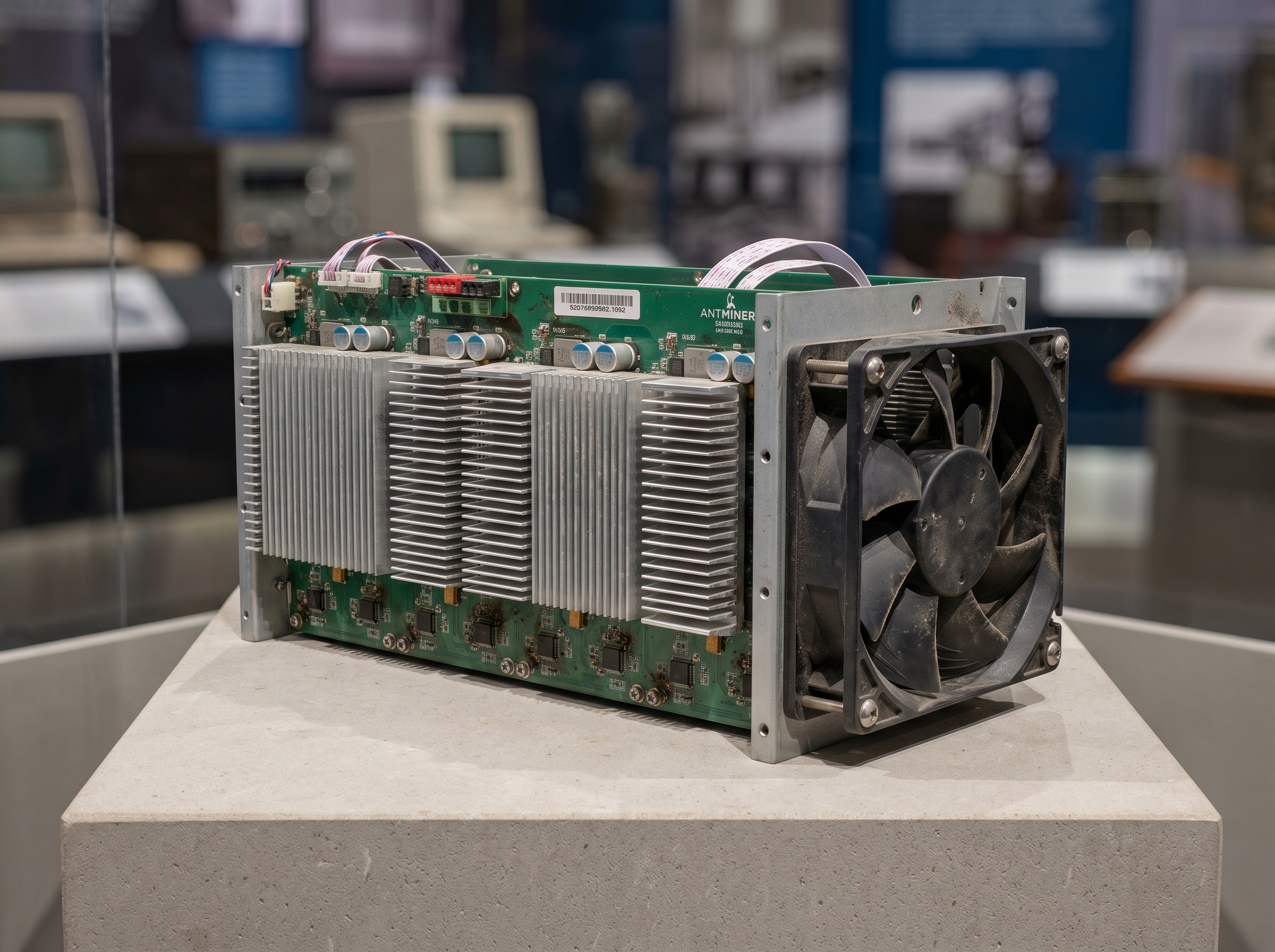
Antminer S1 Blade
An early 2013 Application-Specific Integrated Circuit (ASIC) designed exclusively to hash the SHA-256 algorithm.
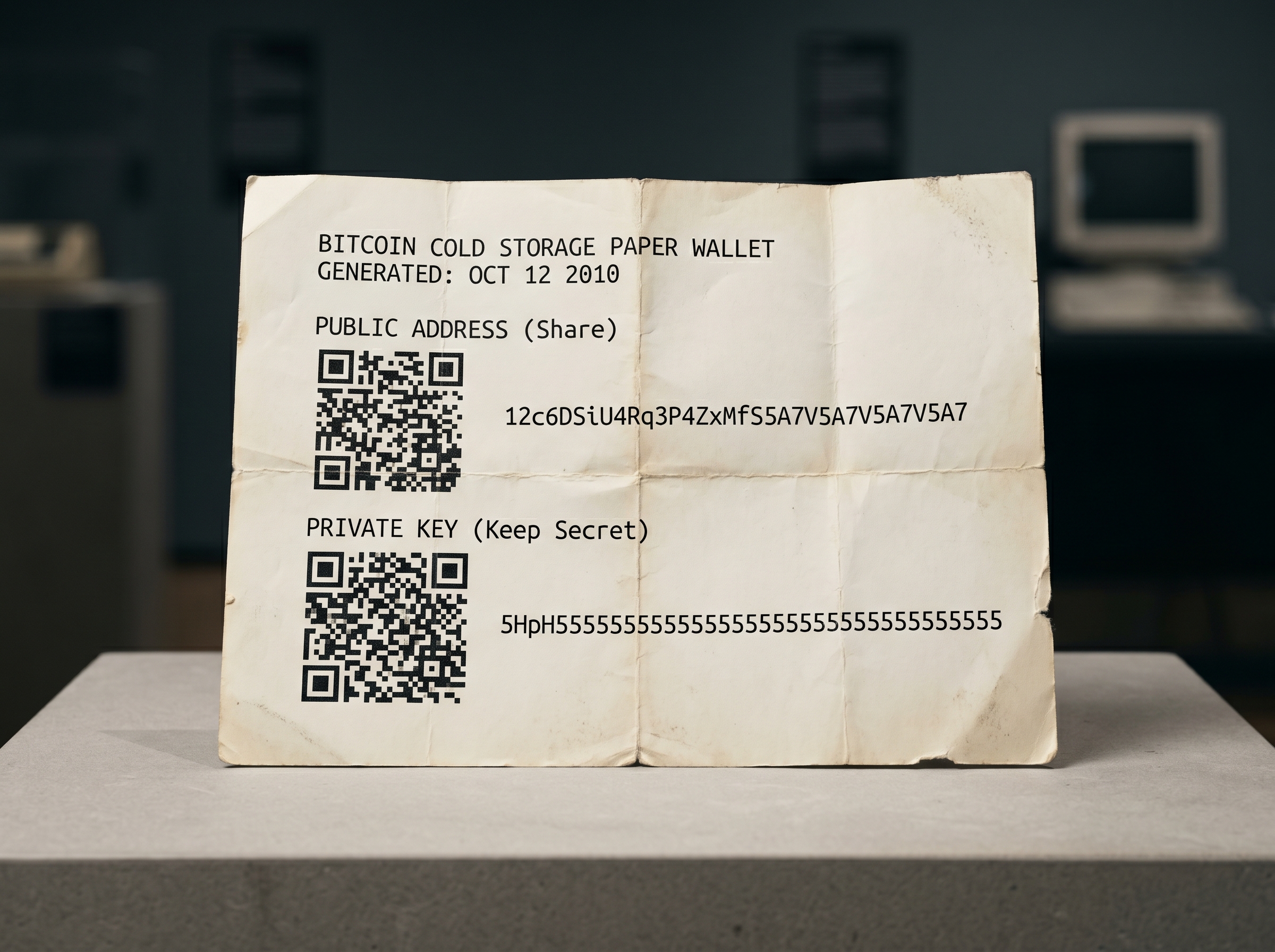
Cold Storage Paper Wallet
A printed sheet of paper from 2010 displaying a public address and its corresponding private key QR code.
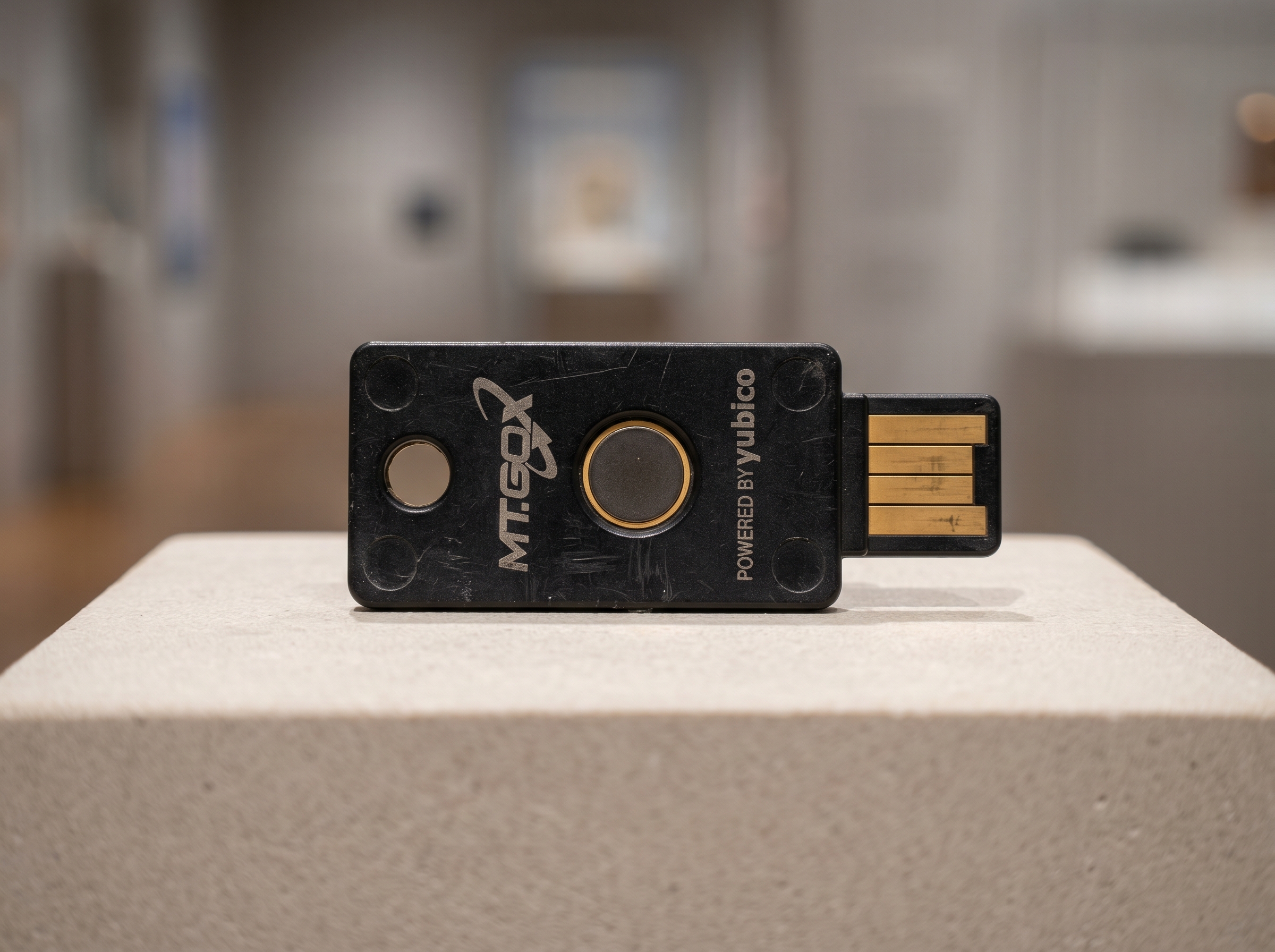
Yubikey Mt. Gox Hardware
A hardware two-factor authentication token issued by the Mt. Gox exchange prior to its 2014 collapse.
Glossary
- double-spending: A vulnerability in digital cash networks where a single transaction file is duplicated and spent multiple times simultaneously, traditionally requiring a central ledger to prevent.
- proof-of-work: A decentralized consensus mechanism that requires nodes to perform computationally expensive cryptographic tasks to validate transactions and secure the network.
- nonce: A temporary arbitrary number ('number used once') iterated by miners to alter the input of a cryptographic hash function until they satisfy the target difficulty.
- difficulty adjustment: An automated algorithm that recalibrates the required computational effort to mine a block every 2,016 blocks, keeping block creation intervals at exactly 10 minutes.