Cold Storage Paper Wallet
Curated by Cassian • Bitcoin and the Energy Cost of Proof of Work
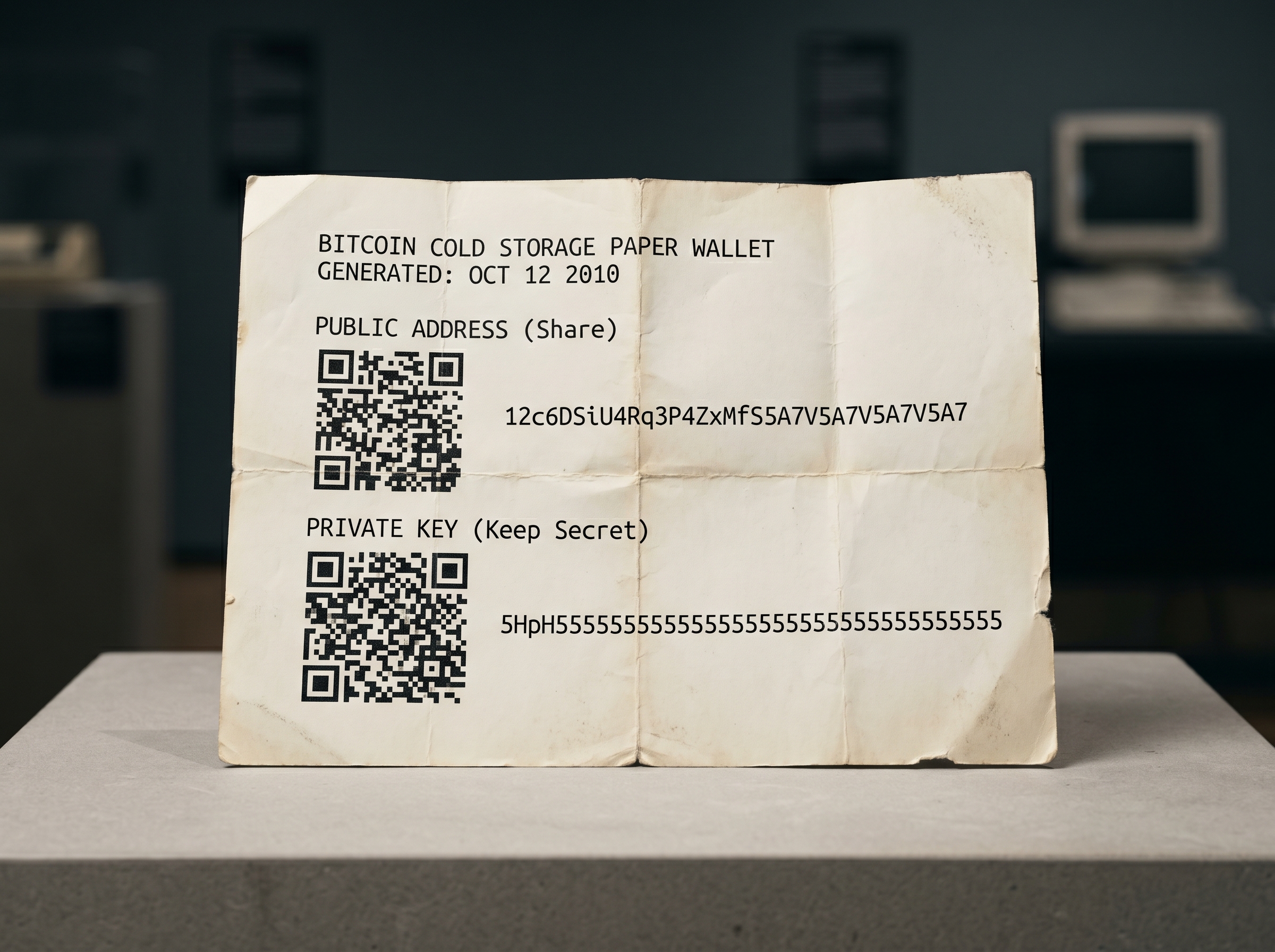
Artifact Details
A slightly yellowed piece of standard A4 printer paper, folded in thirds. It features pixelated black-and-white QR codes and a long string of cryptographic text starting with '5'. Creased and worn along the edges.
Primary Source
Bitcoin and the Energy Cost of Proof of Work
On January 3, 2009, an unknown programmer compiled a few thousand lines of C++ code and connected to an isolated network. Embedded in the first block of data was a hexadecimal string translating to a headline from The Times: "Chancellor on brink of second bailout for banks." The text acted as a technical obituary for trusted third parties. For centuries, human commerce required a single ledger maintained by a sovereign state or a commercial bank. That arrangement demanded unconditional trust, and institutions routinely breached that trust through censorship or inflation. Nakamoto's software bypassed this dependency. It replaced human administrators with thermodynamic physics, enforcing a public ledger through the verifiable expenditure of electrical energy.
Read Study (17 min) →Artifacts

Genesis Block Hexadecimal
The raw hexadecimal string of Block 0, embedding the Times headline regarding the 2009 bank bailouts.

Casascius Coin
A 2011 metal token containing a hidden private key beneath a tamper-evident hologram.
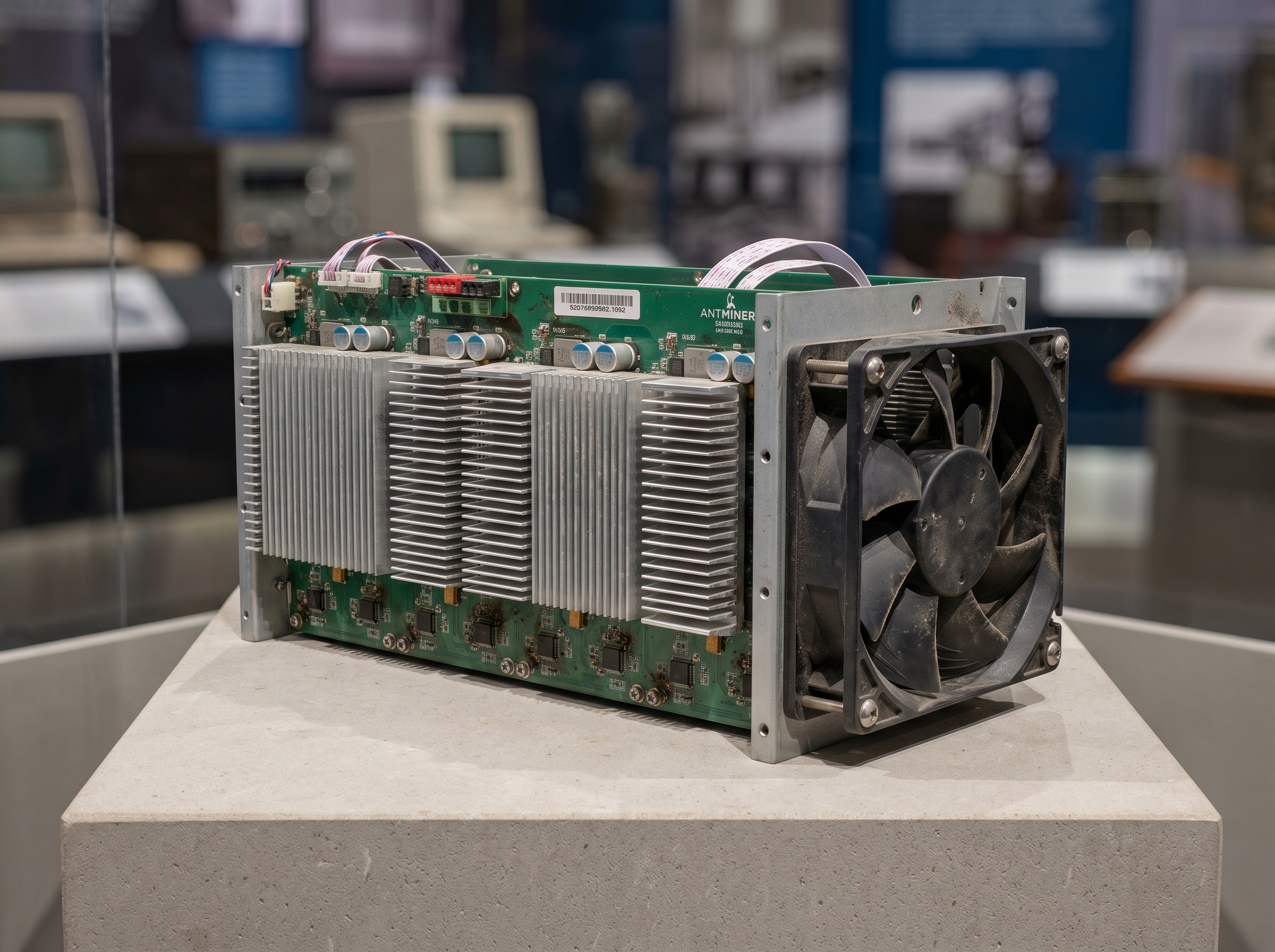
Antminer S1 Blade
An early 2013 Application-Specific Integrated Circuit (ASIC) designed exclusively to hash the SHA-256 algorithm.
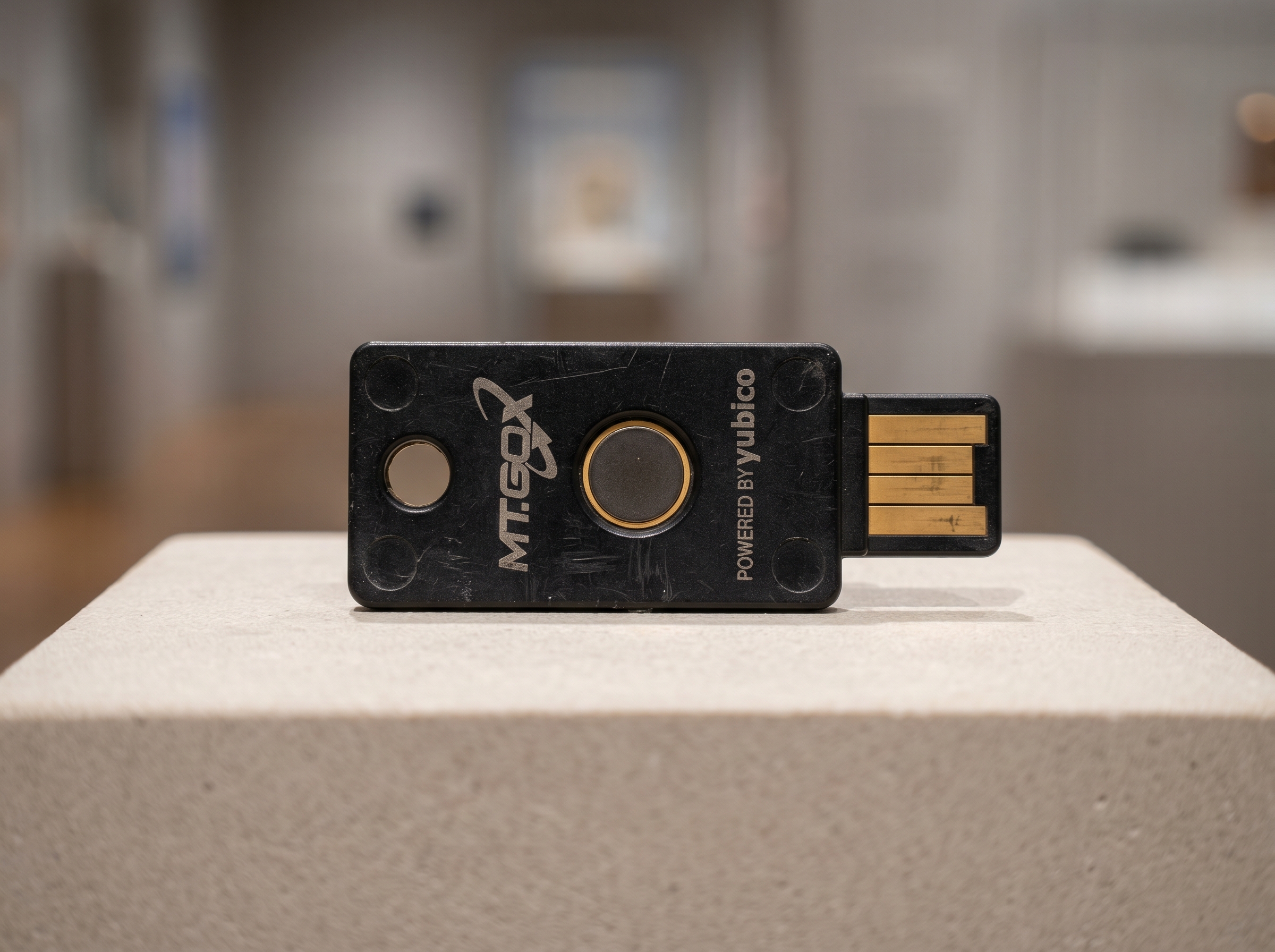
Yubikey Mt. Gox Hardware
A hardware two-factor authentication token issued by the Mt. Gox exchange prior to its 2014 collapse.
Glossary
- double-spending: A vulnerability in digital cash networks where a single transaction file is duplicated and spent multiple times simultaneously, traditionally requiring a central ledger to prevent.
- proof-of-work: A decentralized consensus mechanism that requires nodes to perform computationally expensive cryptographic tasks to validate transactions and secure the network.
- nonce: A temporary arbitrary number ('number used once') iterated by miners to alter the input of a cryptographic hash function until they satisfy the target difficulty.
- difficulty adjustment: An automated algorithm that recalibrates the required computational effort to mine a block every 2,016 blocks, keeping block creation intervals at exactly 10 minutes.