Pin-Pricked Conciergerie Note
Curated by Vera • Varennes, the Guillotine and the French Revolution
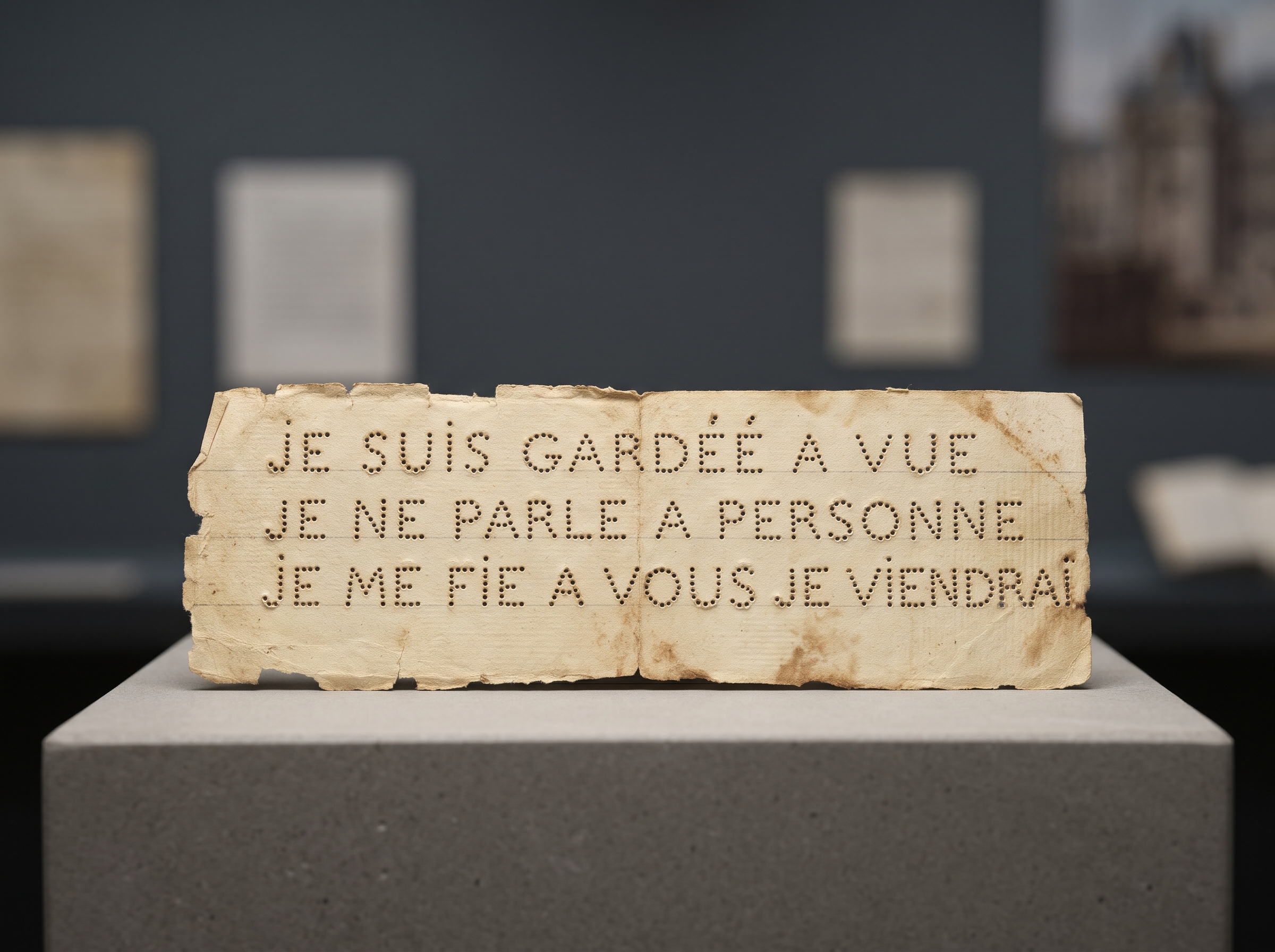
Artifact Details
The authentic August 1793 Billet à piqûres d'épingle preserved at the Archives Nationales in Paris (Musée des Archives Nationales, cote AE/II/1382), consisting of a narrow, irregular horizontal strip of yellowed 18th-century laid rag curl-paper (papillote) measuring 126 millimeters long by 33 millimeters wide; completely devoid of ink, the paper surface is perforated across horizontal lines with hundreds of tiny, hand-punched steel sewing-pin holes forming the capital French inscription JE SUIS GARDEE A VUE JE NE PARLE A PERSONNE JE ME FIE A VOUS JE VIENDRAI, exhibiting frayed torn top and bottom edges, brown age foxing, and raised microscopic paper burrs around the perimeter of each pin puncture.
Primary Source
Varennes, the Guillotine and the French Revolution
Near midnight on June 20, 1791, Swedish officer Count Axel von Fersen guided a custom-built green-and-yellow coach onto the eastern road from Paris toward the border fortress of Montmédy. Inside rode King Louis XVI, dressed in the plain brown coat of a valet named Durand, alongside Queen Marie Antoinette and their two children. Since the fall of the Bastille two years earlier, deputies in the National Assembly had tried to preserve a constitutional monarchy by maintaining the legal fiction that their king accepted parliamentary limits. By leaving a handwritten declaration on his Tuileries desk repudiating every decree signed since October 1789, Louis shattered that compromise himself. Once a monarch turns fugitive, moderate reform gives way to a struggle for survival.
Read Study (18 min) →Artifacts
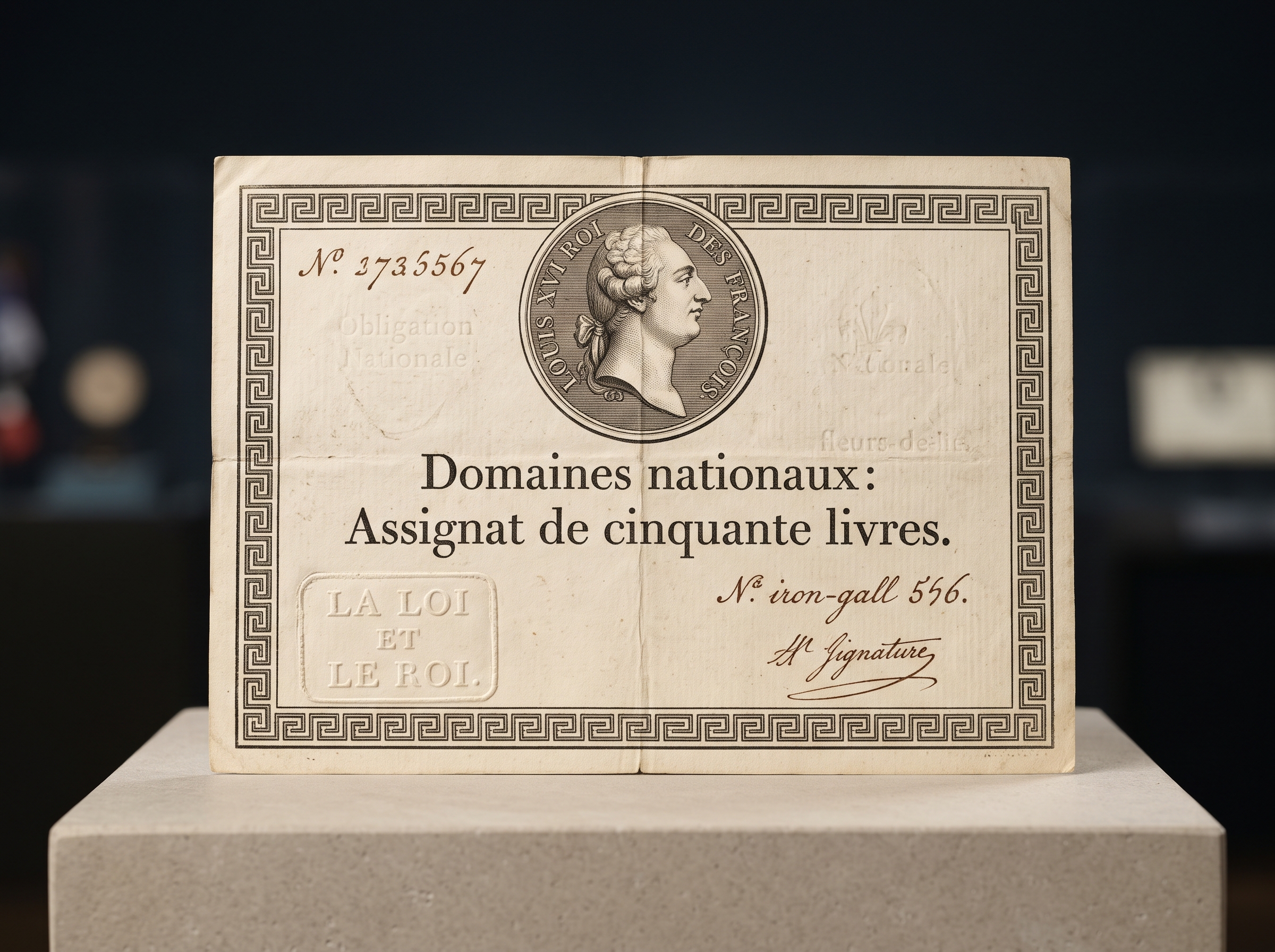
50-Livre Assignat Banknote
A 1790 French revolutionary paper promissory note bearing the engraved profile medallion of Louis XVI, the exact currency series used to identify the disguised king during the Flight to Varennes.
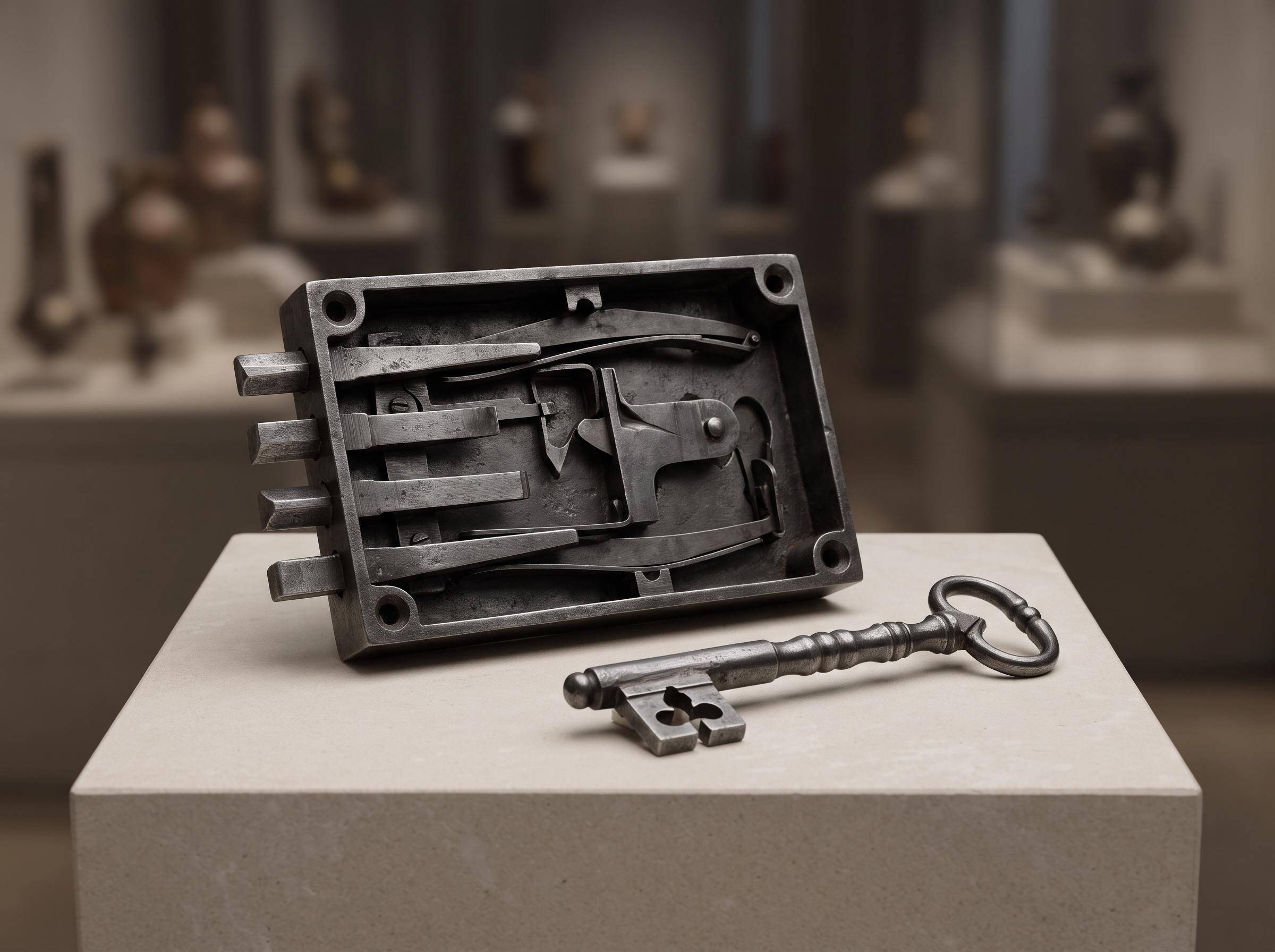
Tuileries Iron Chest Key
Hand-forged wrought-iron warded key and secret wall-safe lock mechanism crafted by royal locksmith François Gamain for Louis XVI's hidden compartment in the Tuileries Palace.
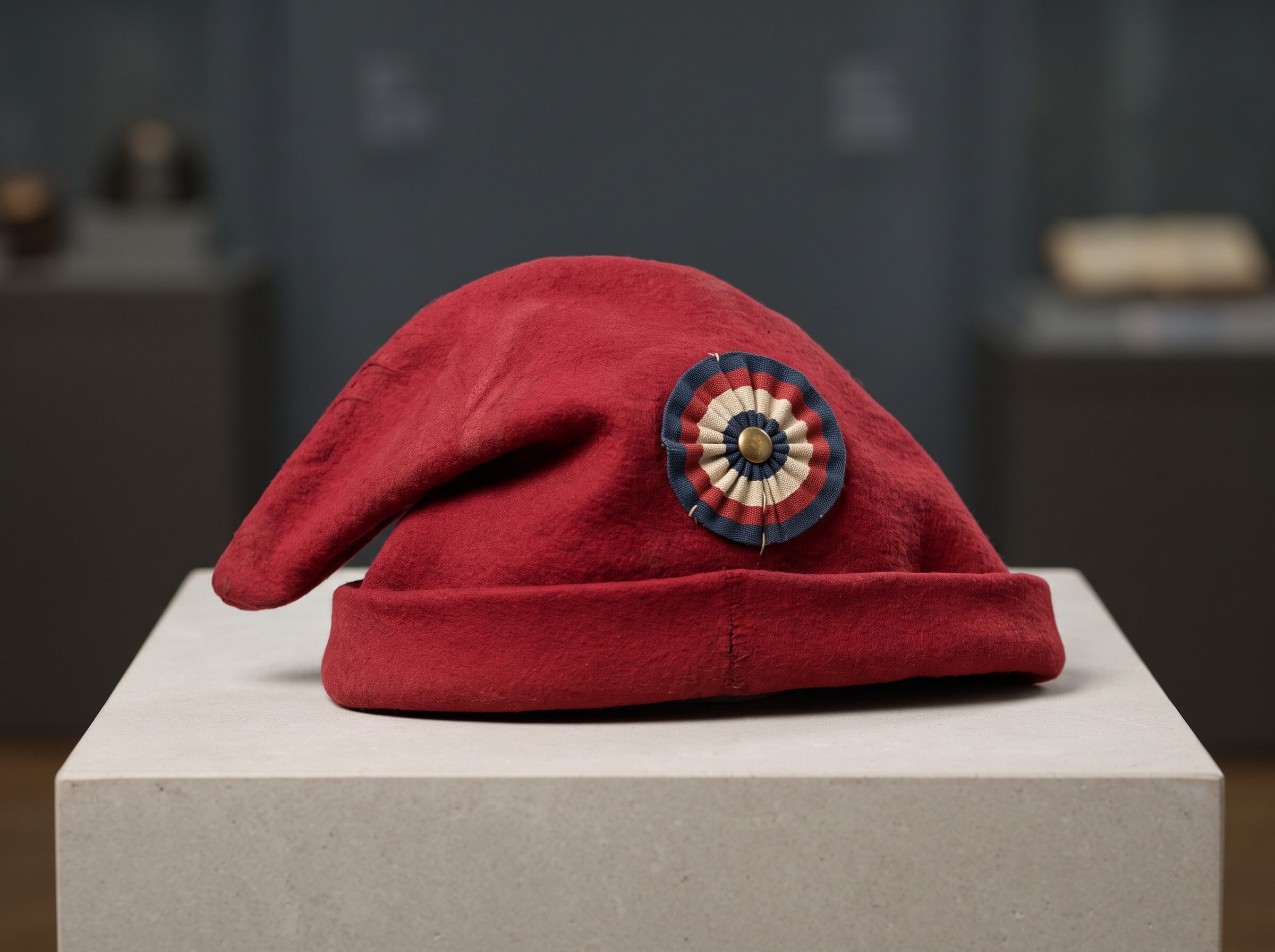
Phrygian Liberty Cap
Madder-red fulled wool bonnet rouge sewn with a hand-pleated blue, white, and red wool-and-linen Tricolor cockade, worn by Parisian sans-culottes and revolutionary magistrates.
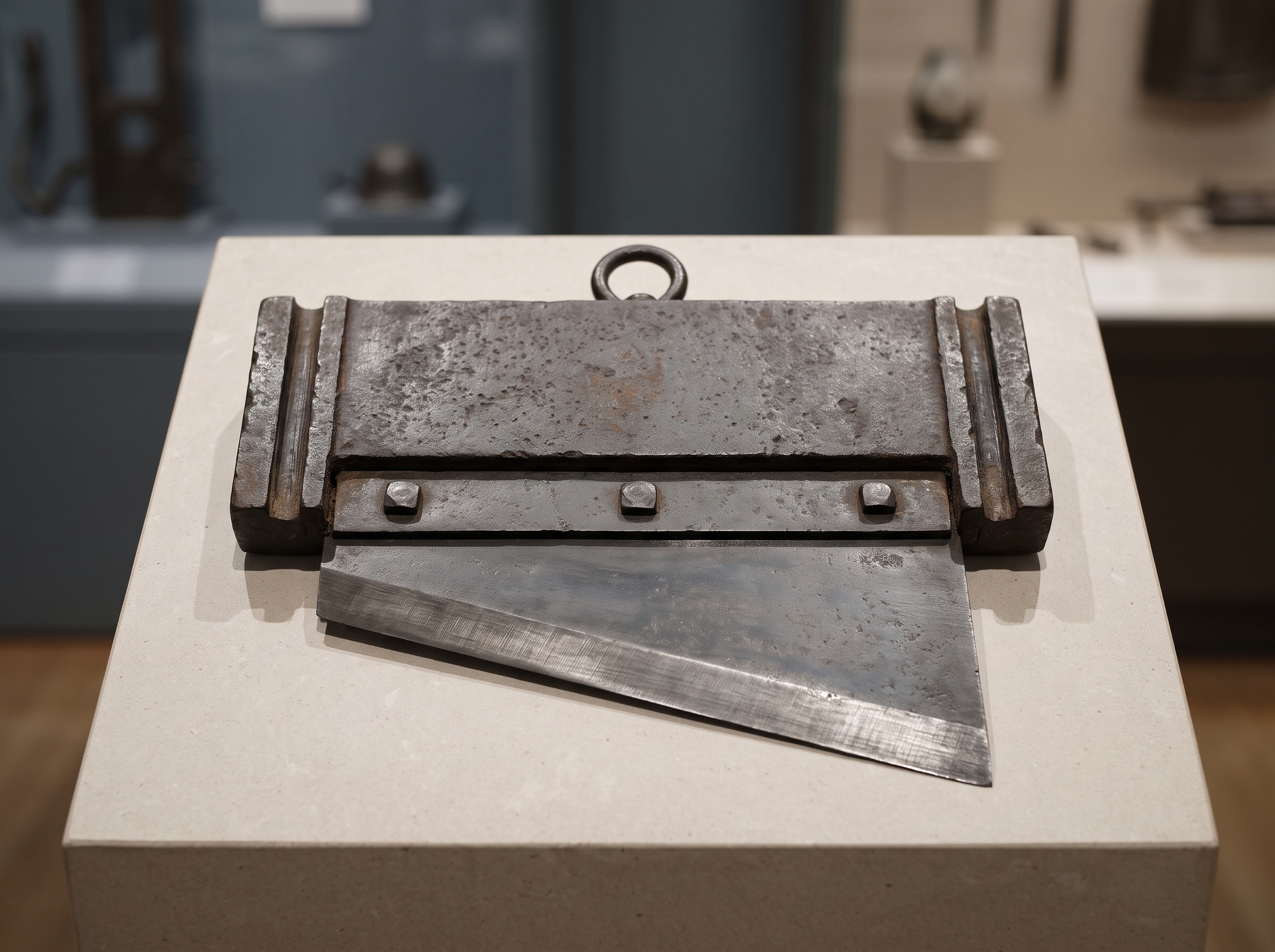
Oblique Steel Guillotine Blade
Weighted 1792-pattern forged steel couperet blade engineered by Tobias Schmidt with a 45-degree diagonal cutting edge bolted to a heavy cast-iron mouton.
Glossary
- berline: A heavy, four-wheeled enclosed travel coach suspended on leather thoroughbraces, used by the royal family during their June 1791 escape toward Montmédy.
- assignat: Paper promissory currency issued by the National Assembly and backed by confiscated Church lands (biens nationaux), bearing the engraved profile of Louis XVI.
- armoire de fer: The hidden iron wall safe built into the woodwork of Louis XVI's Tuileries corridor by locksmith François Gamain, containing incriminating royal correspondence.
- sans-culottes: Militant working-class Parisian artisans and shopkeepers who wore long trousers rather than aristocratic knee-breeches and pressured the Convention through armed street sections.