Maelzel's Brass Ear Trumpet
Curated by Elian • Beethoven’s Ninth Premieres with Its Composer Deaf
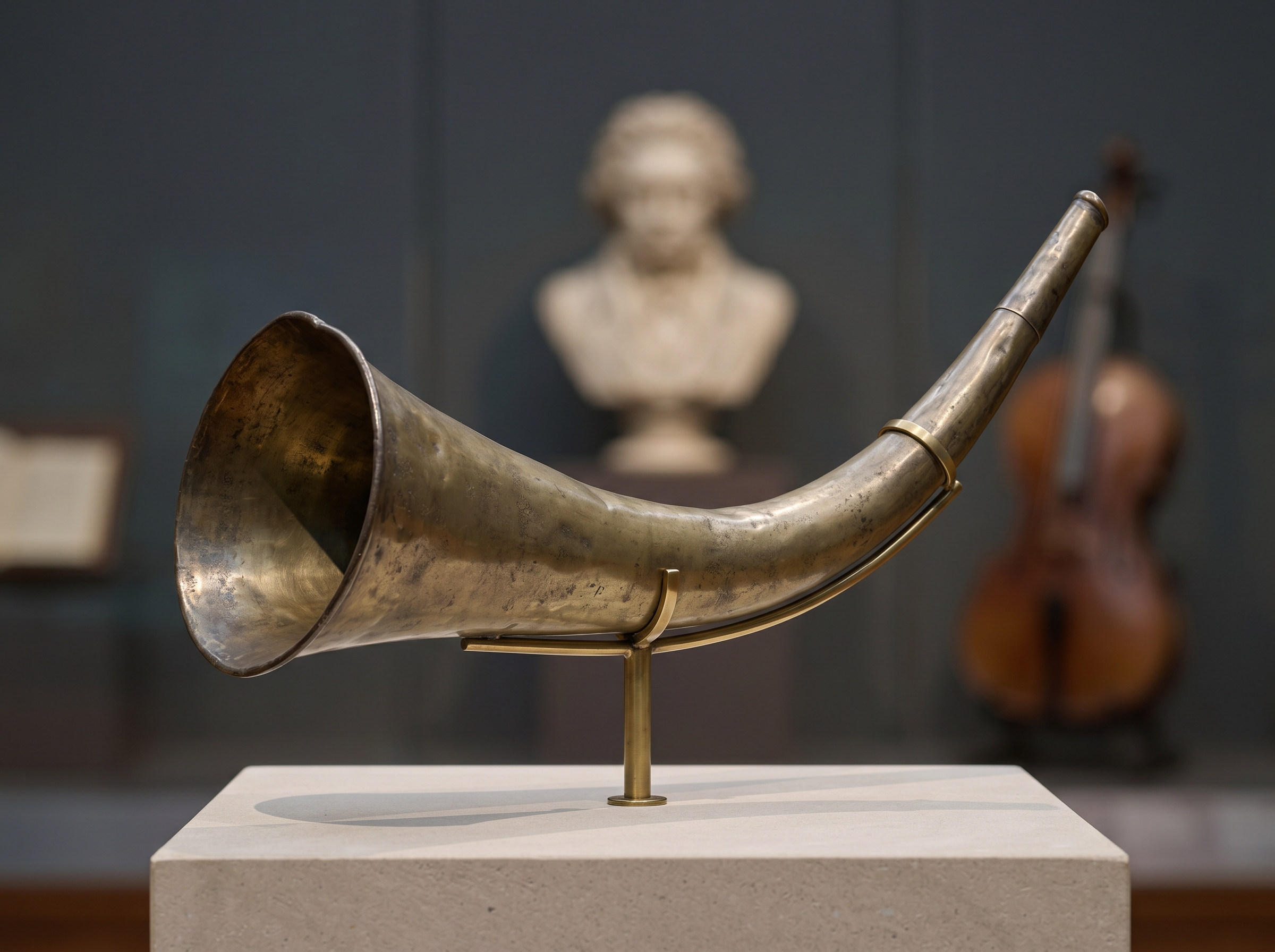
Artifact Details
A tarnished, early 19th-century brass ear trumpet. Curved, slightly dented metallic surface with a wide, flared bell and a narrow earpiece. Placed against a neutral velvet backing.
Primary Source
Beethoven’s Ninth Premieres with Its Composer Deaf
On May 7, 1824, Ludwig van Beethoven stood center stage at the Theater am Kärntnertor, beating time with heavy, erratic motions. Dust hung in the gaslit air above a massive orchestra and choir. Crouching low to the floor, he then stretched to his full height. Musicians ignored him entirely. Michael Umlauf, the official Kapellmeister, had secretly instructed the players to follow his own baton instead. Beethoven was completely deaf. He could not hear a single note of the 70-minute piece he had written. Severed from acoustic feedback, he composed a symphony so complex it existed only inside his own silent skull.
Read Study (17 min) →Artifacts
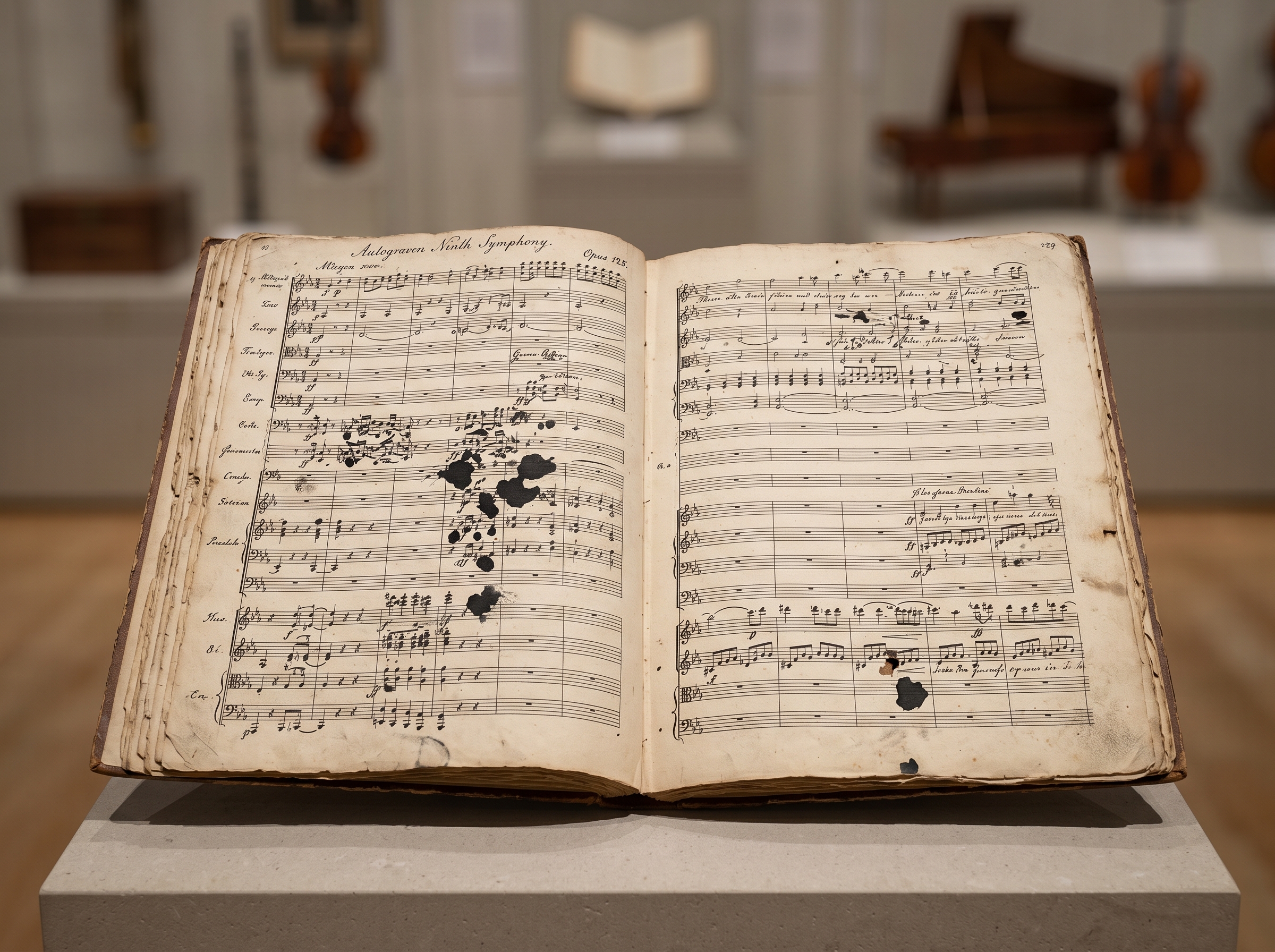
1824 Deaf Premiere of Beethoven's Ninth Symphony
The original working manuscript of the Ninth Symphony, covered in aggressive ink blots, frantic corrections, and holes worn through the paper from Beethoven's forceful pen strokes.
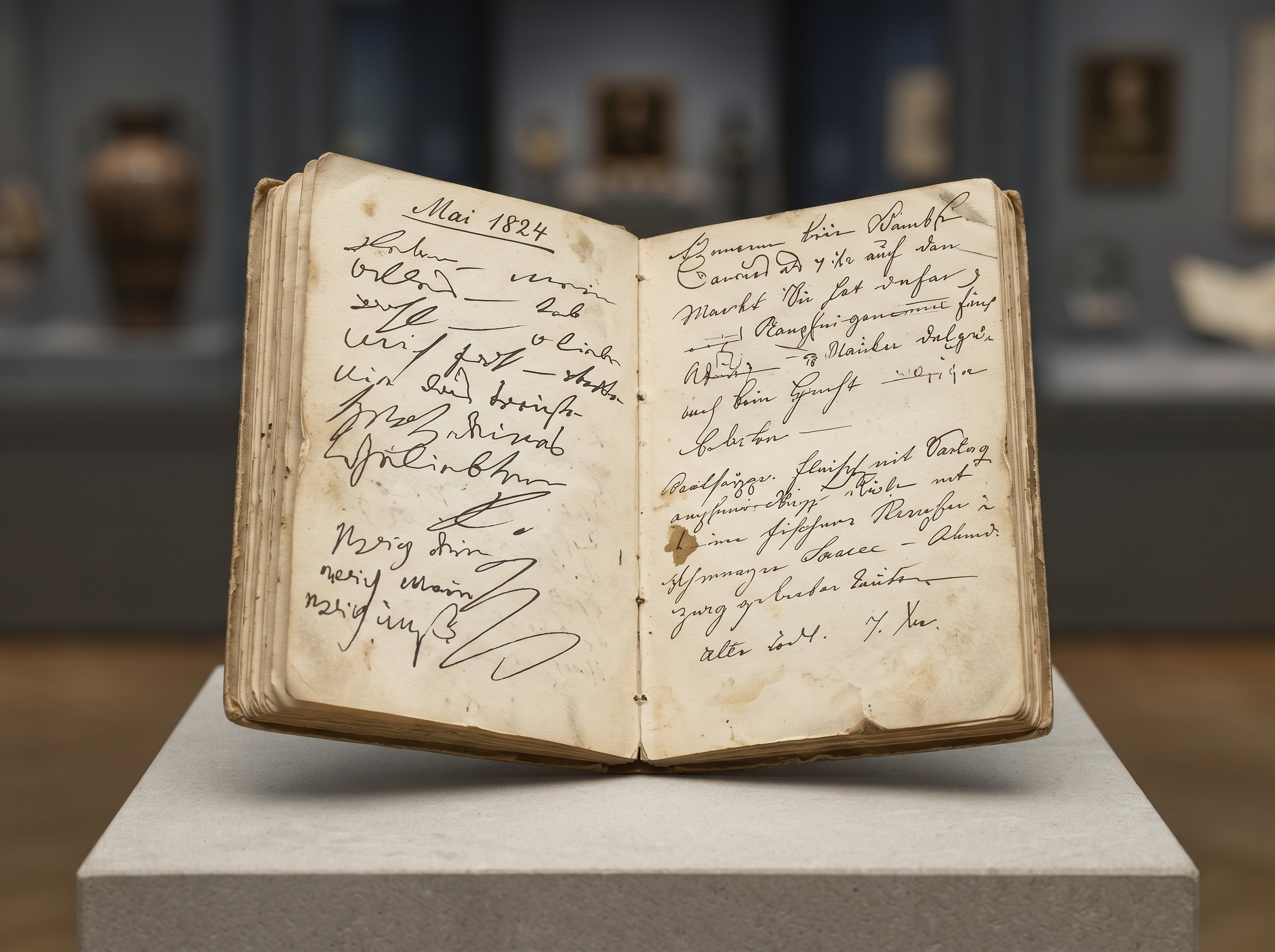
1824 Deaf Premiere of Beethoven's Ninth Symphony
A bound booklet used by Beethoven's associates to communicate with him during the rehearsals for the premiere. It contains frantic written complaints about the difficult vocal parts.
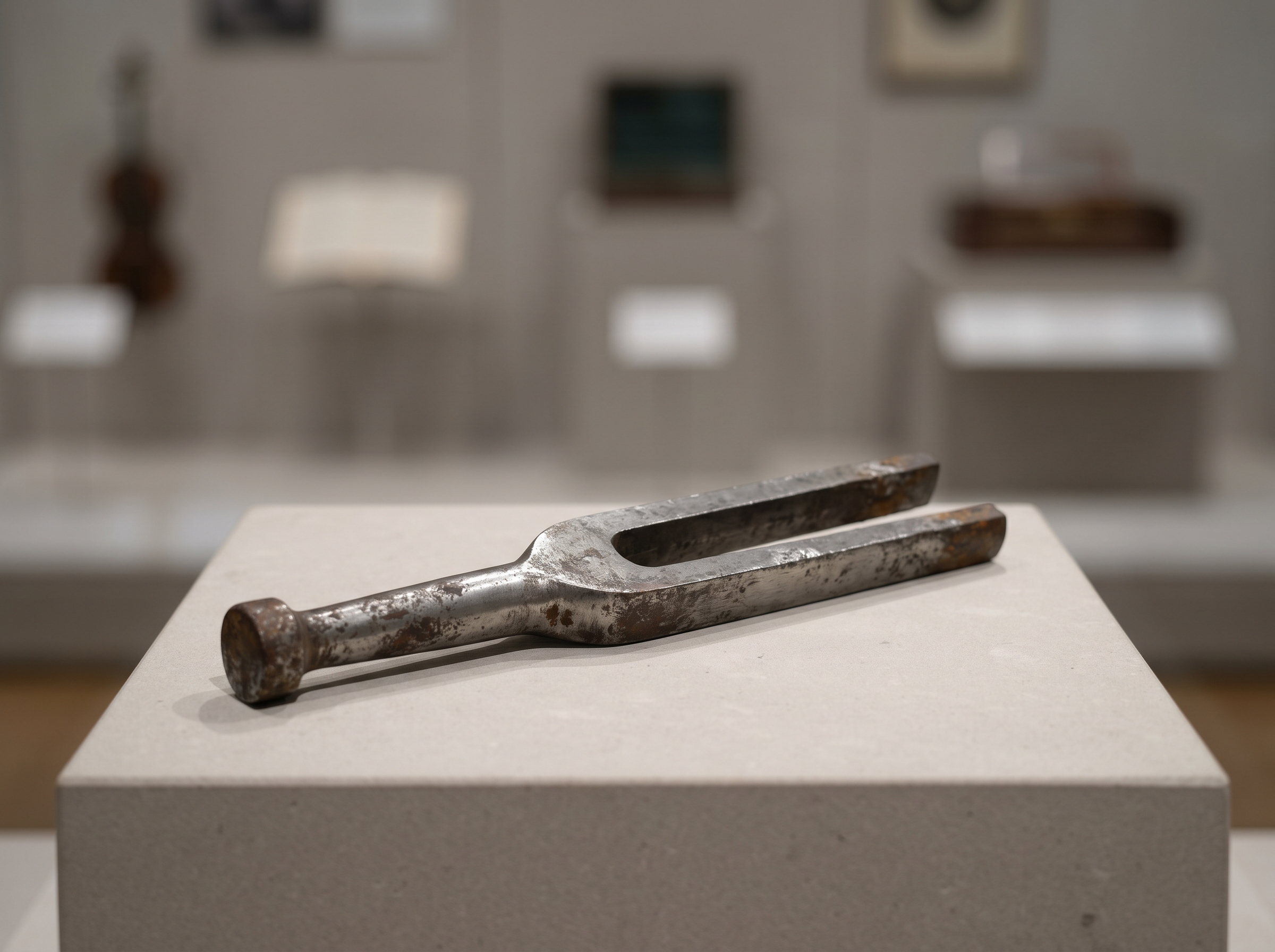
Iron Tuning Fork
A heavy iron tuning fork, worn at the base, which Beethoven would occasionally strike and press against his skull to feel the resonance of the pitch.
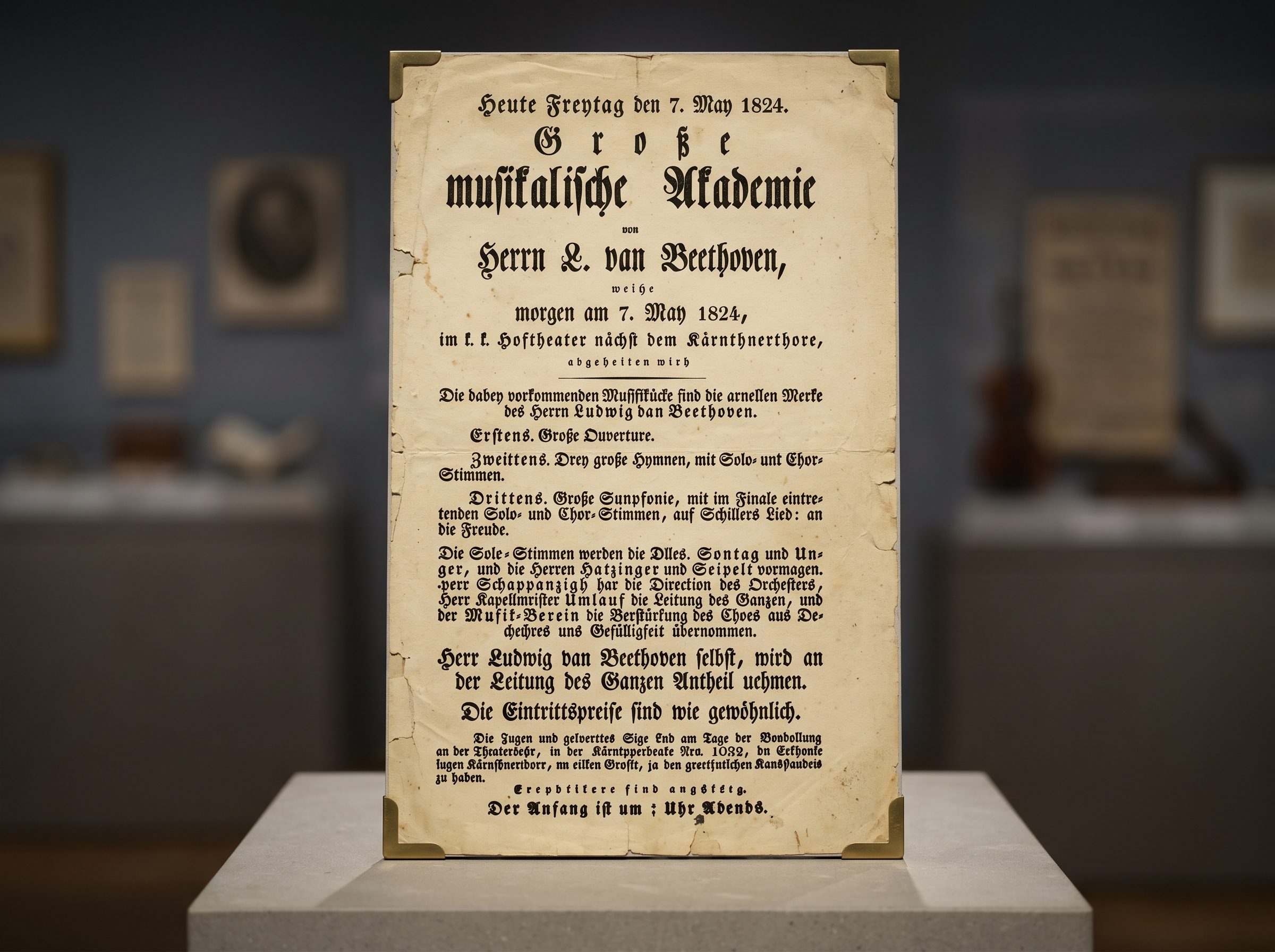
Theater am Kärntnertor Playbill
The printed advertisement for the May 7, 1824 concert, announcing the 'Grand Musical Academy' and the premiere of a 'Grand Symphony with Solo and Chorus Voices.'
Glossary
- symphony: A long and complex musical composition for orchestra, typically in four movements, designed to showcase orchestral color and structural logic.
- heiligenstadt testament: A letter written by Beethoven to his brothers in 1802, reflecting his despair over his escalating deafness and his decision to live for his art.
- conversation books: The blank booklets Beethoven carried in his final decade, allowing visitors to write down their side of a conversation.
- contralto: The lowest female singing voice type. Caroline Unger, the contralto soloist at the premiere, was instrumental in turning Beethoven to the audience.