Symphony
Curated by Elian • Beethoven’s Ninth Premieres with Its Composer Deaf
Definition
A long and complex musical composition for orchestra, typically in four movements, designed to showcase orchestral color and structural logic.
In Context
He operated in a silent void. Deterioration began in 1798 with a constant humming in his ears. By 1824, the auditory nerve had collapsed. He navigated daily life through sight and vibration. Striking heavy iron tuning forks, the composer pressed them against his skull to feel the resonance of a pitch. He built the Ninth Symphony entirely within this isolation.
Primary Source
Beethoven’s Ninth Premieres with Its Composer Deaf
How Ludwig van Beethoven premiered the Ninth Symphony while entirely deaf, relying on a shadow conductor and the intervention of a soloist to witness the applause.
Read Study (17 min) →Artifacts
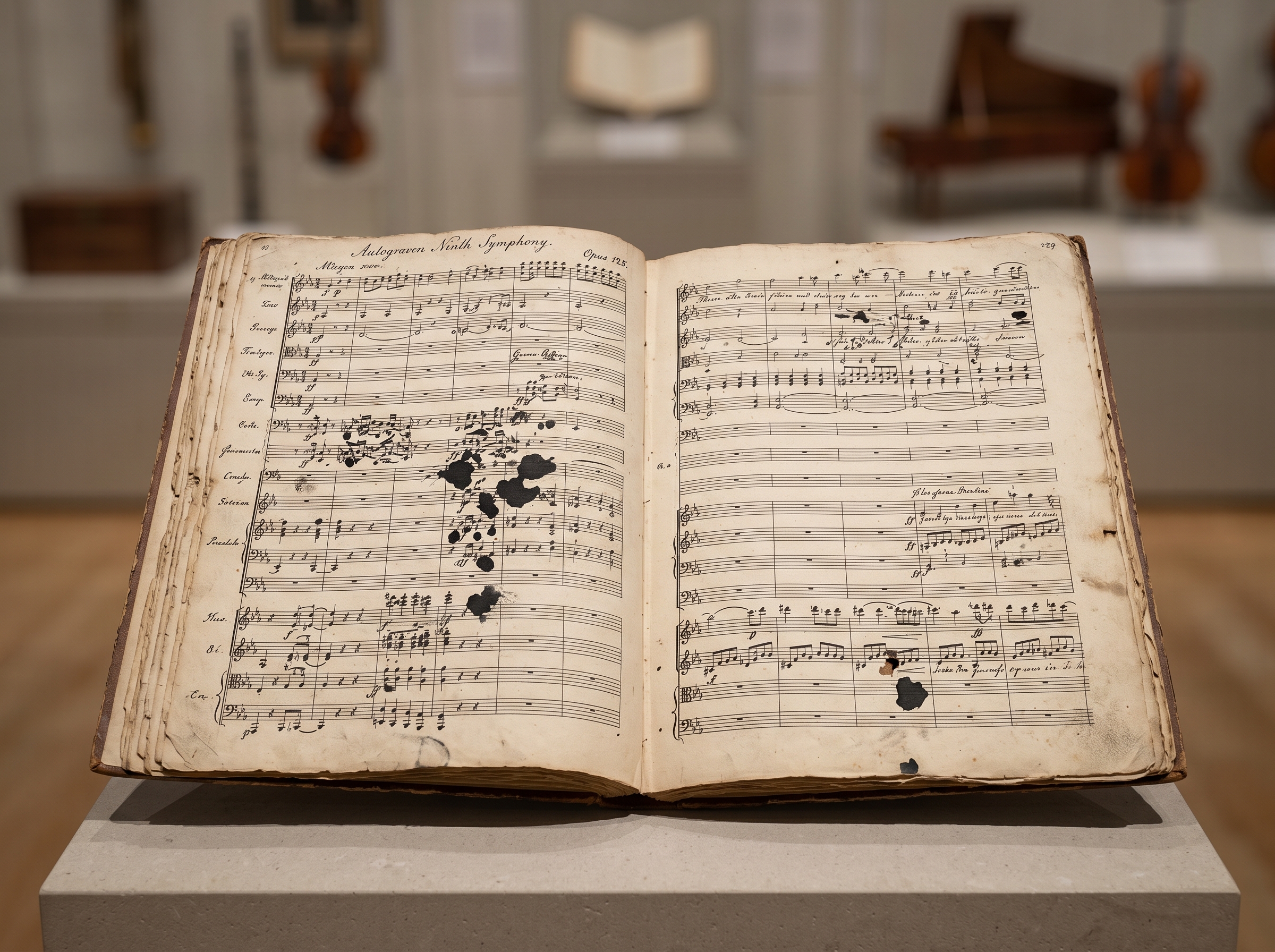
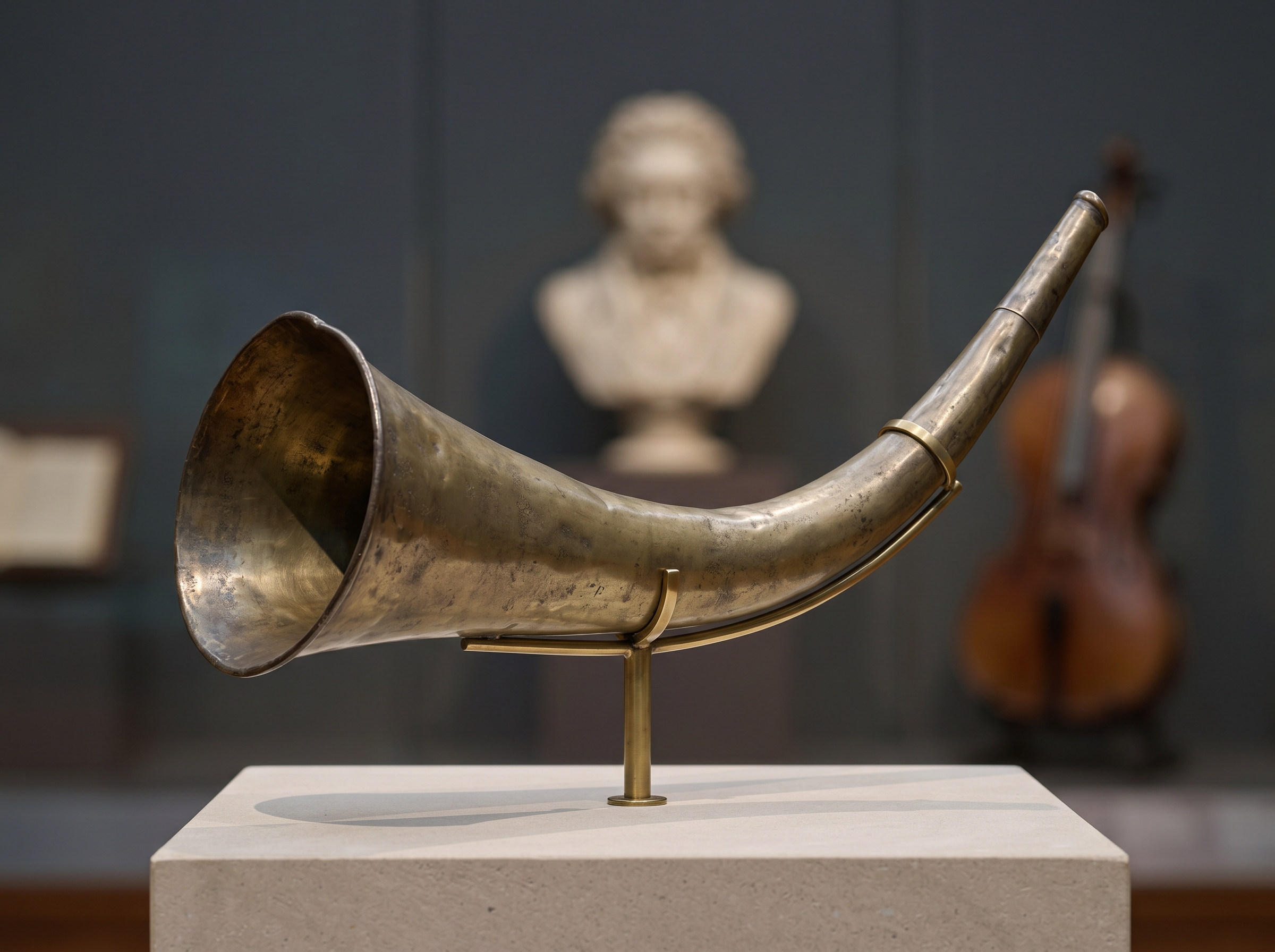
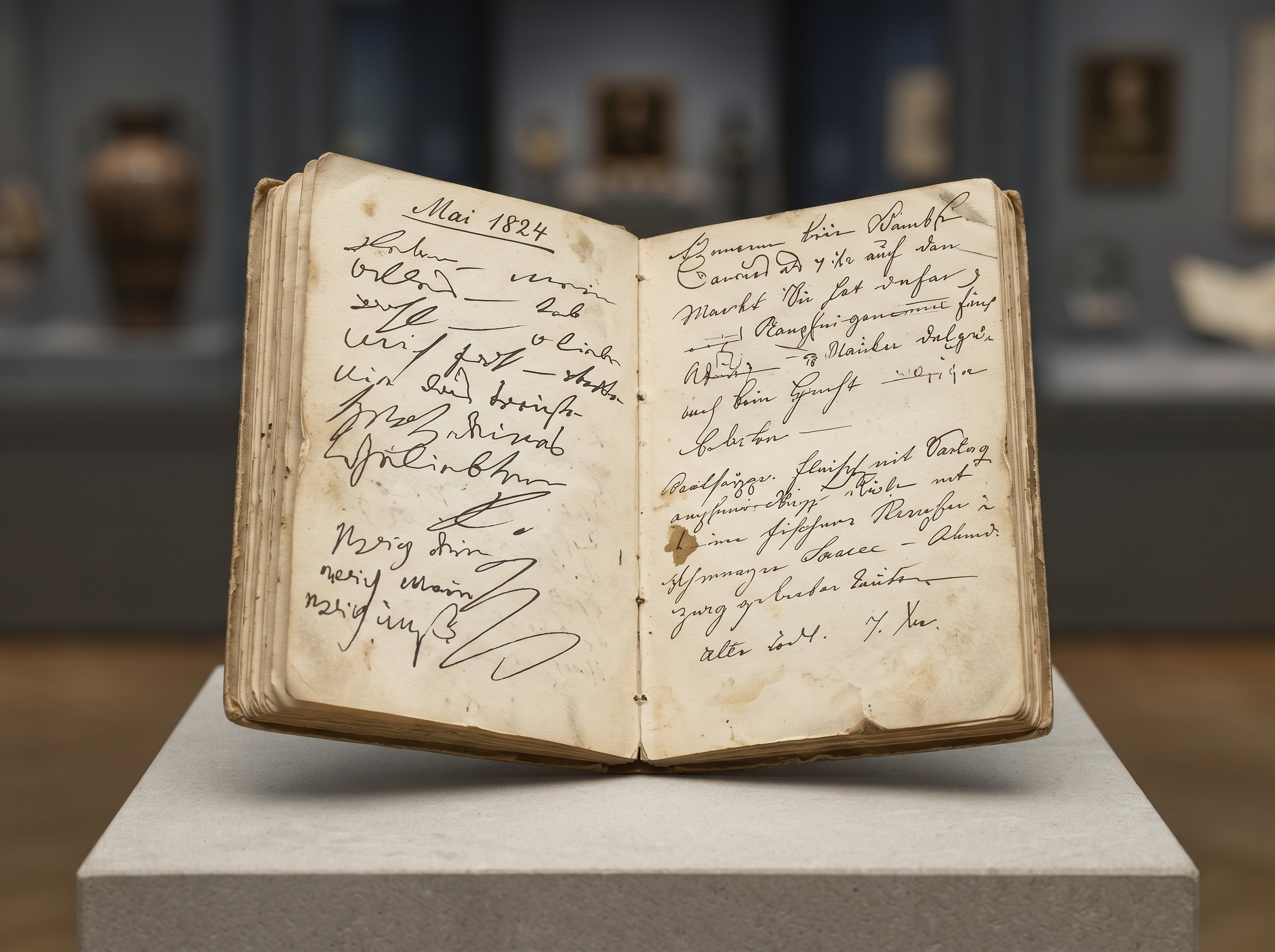
Glossary
- heiligenstadt testament
- A letter written by Beethoven to his brothers in 1802, reflecting his despair over his escalating deafness and his decision to live for his art.
- conversation books
- The blank booklets Beethoven carried in his final decade, allowing visitors to write down their side of a conversation.
- contralto
- The lowest female singing voice type. Caroline Unger, the contralto soloist at the premiere, was instrumental in turning Beethoven to the audience.
- scherzo
- A vigorous, light, or playful movement, typically the second or third in a symphony. In the Ninth, Beethoven placed it second.
- kapellmeister
- The person in charge of music-making in a theater or court. Michael Umlauf served in this role during the premiere.