Heiligenstadt Testament
Curated by Elian • Beethoven’s Ninth Premieres with Its Composer Deaf
Definition
A letter written by Beethoven to his brothers in 1802, reflecting his despair over his escalating deafness and his decision to live for his art.
In Context
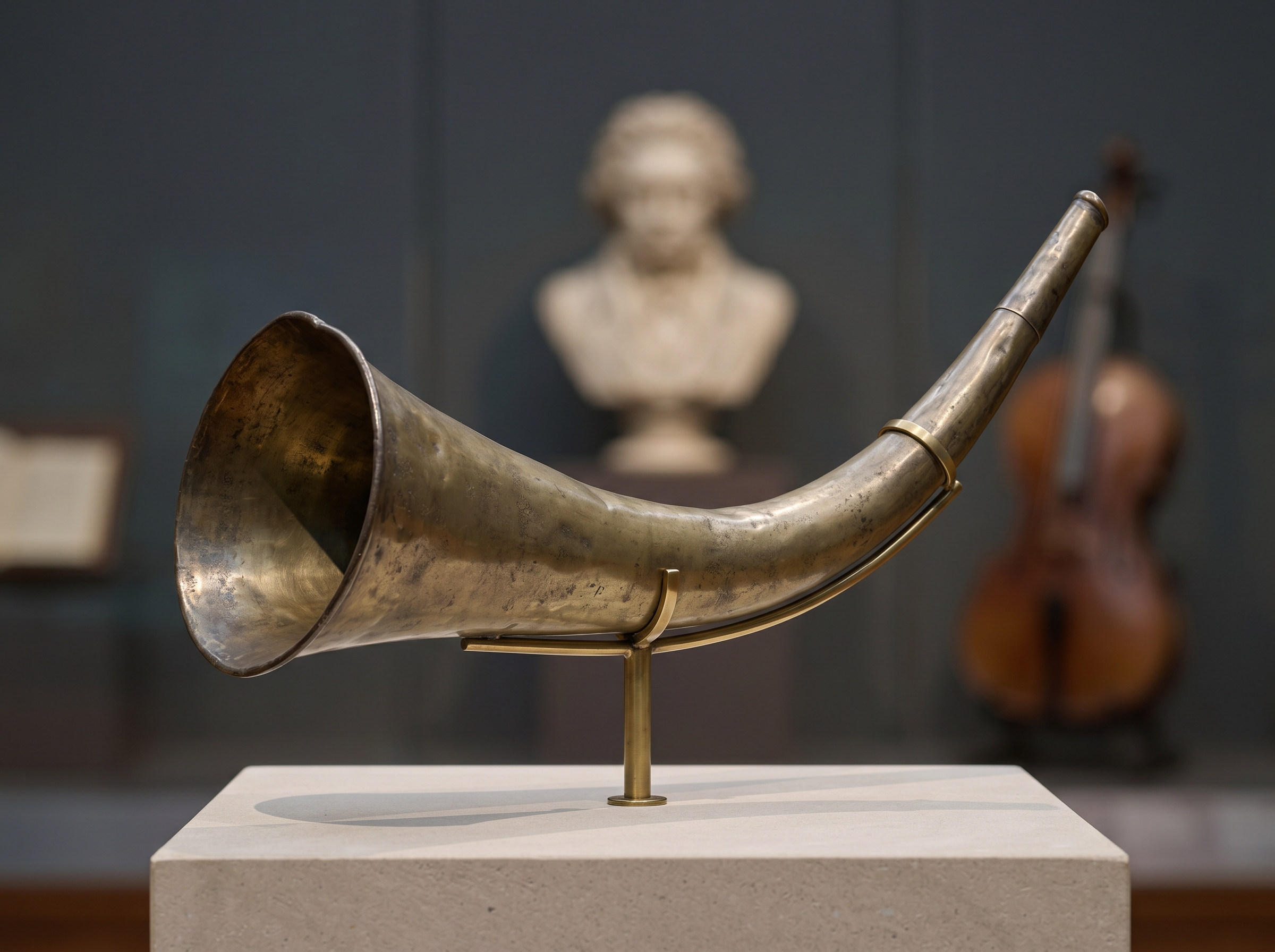
He locked away the document, now known as the Heiligenstadt Testament, keeping it hidden among his private papers until his death. This separation from the acoustic world fundamentally altered his process. Hearing composers rely on a piano to test chords and gauge the weight of sound in a room. A deaf composer writes by theoretical calculation. Visual and structural understanding of harmony replaced acoustic intuition. Recognizing what a C-major chord looked like on paper, the isolated composer understood the precise tension a dominant seventh chord demanded before resolving. Acoustic feedback became unnecessary to the strict parameters of the score.
Primary Source
Beethoven’s Ninth Premieres with Its Composer Deaf
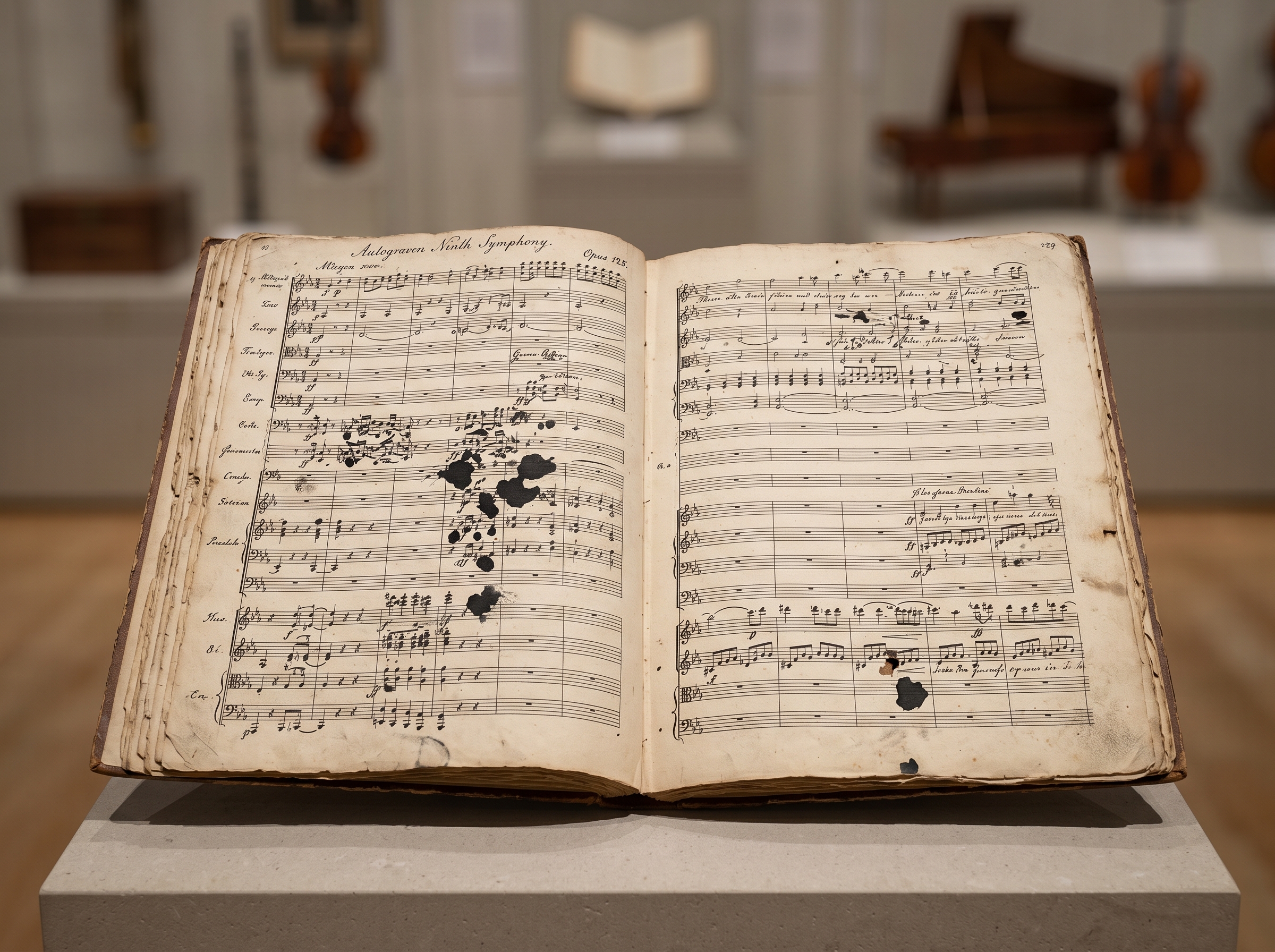
How Ludwig van Beethoven premiered the Ninth Symphony while entirely deaf, relying on a shadow conductor and the intervention of a soloist to witness the applause.
Read Study (17 min) →Artifacts
Glossary
- symphony
- A long and complex musical composition for orchestra, typically in four movements, designed to showcase orchestral color and structural logic.
- conversation books
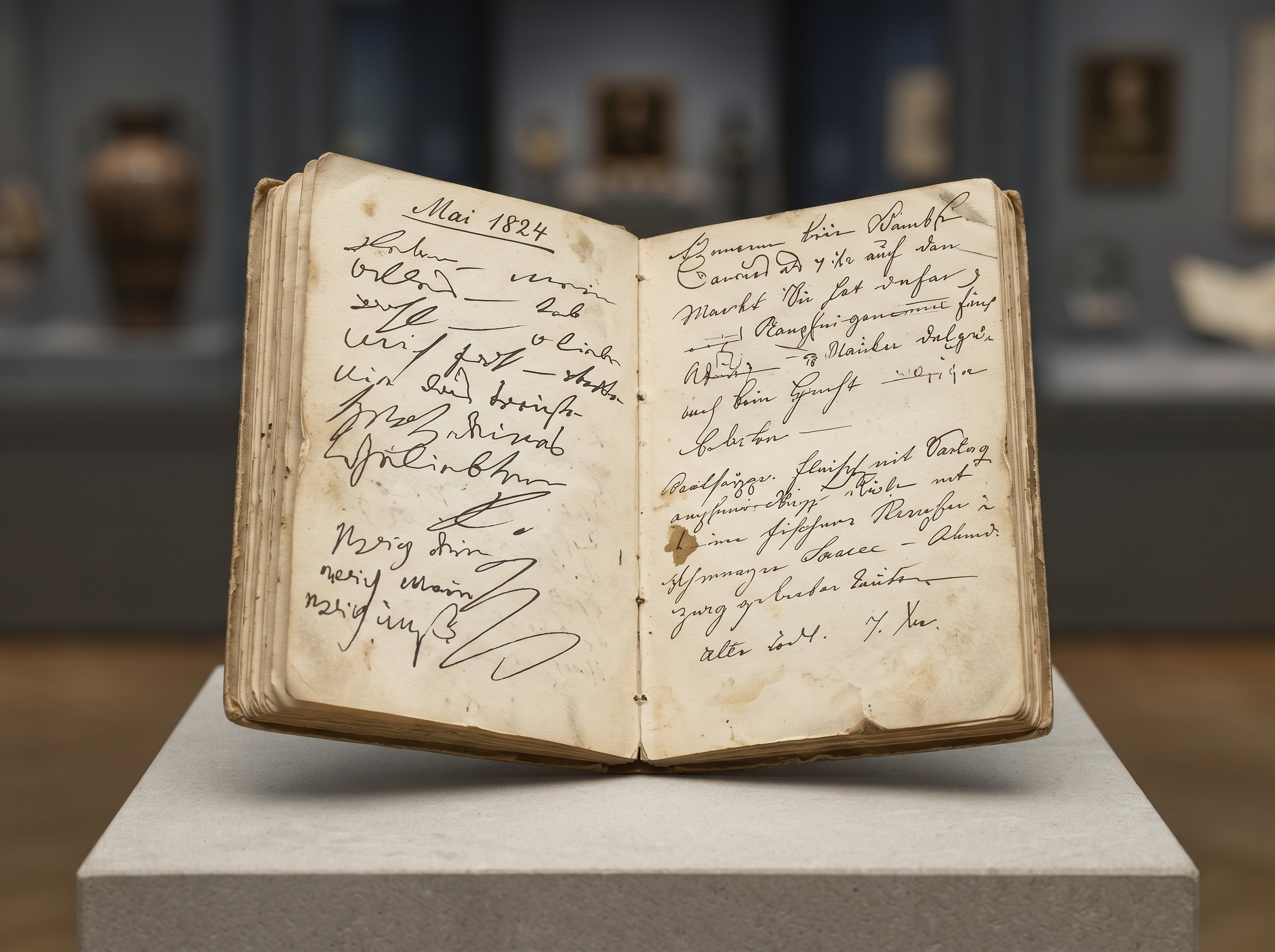
- The blank booklets Beethoven carried in his final decade, allowing visitors to write down their side of a conversation.
- contralto
- The lowest female singing voice type. Caroline Unger, the contralto soloist at the premiere, was instrumental in turning Beethoven to the audience.
- scherzo
- A vigorous, light, or playful movement, typically the second or third in a symphony. In the Ninth, Beethoven placed it second.
- kapellmeister
- The person in charge of music-making in a theater or court. Michael Umlauf served in this role during the premiere.