Portuguese Brass Manilla
Curated by Elian • Benin Bronzes Cast in Brass by the Lost-Wax Method
Artifact Details
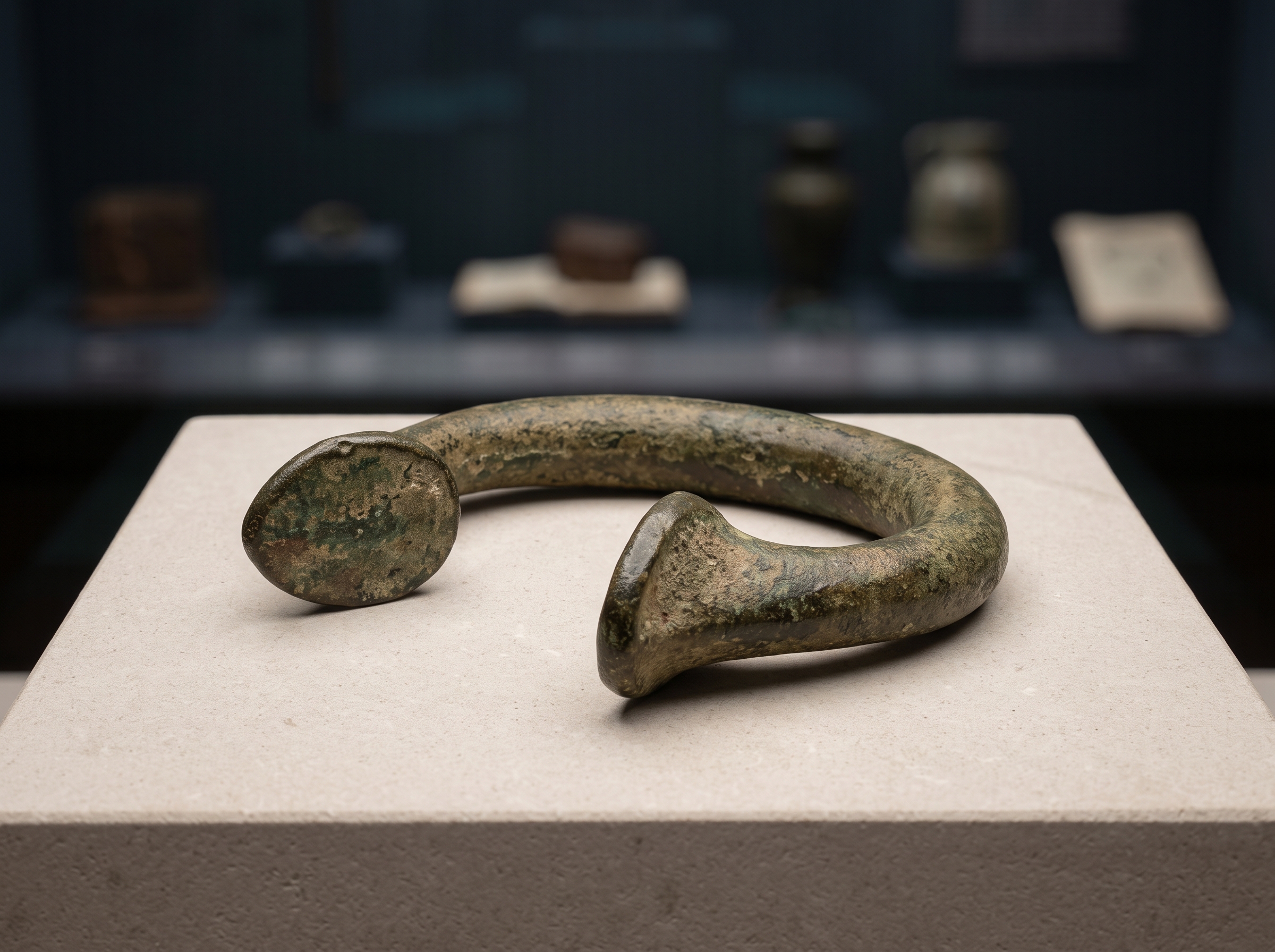
16th-century Portuguese brass manilla. A heavy, horseshoe-shaped or C-shaped unrefined brass trade ring. It features distinctly flared, flattened, spatulate ends. The surface is rough and unpolished from the original sand casting, showing a worn, mottled green-brown verdigris patina.
Primary Source
Benin Bronzes Cast in Brass by the Lost-Wax Method
Inside the humid foundries of the Igun Eronmwon quarter, Edo artisans fed horseshoe-shaped Portuguese manillas into roaring charcoal furnaces. Molten brass glowed against the dark earth, ready to pour into baked clay molds. This raw European trade currency entered the Kingdom of Benin as a simple commodity and emerged as an imperishable ledger of state power. During the 16th century, the Oba wielded an absolute monopoly over this metallurgical process, using the lost-wax technique to cast thousands of dense plaques and commemorative heads. Every victory, ritual, and royal decree was permanently stamped into heavy copper alloy. By controlling the flow of copper, the palace secured its legacy in metal until a British military invasion violently scattered the archive.
Read Study (20 min) →Artifacts
Bronze Commemorative Head
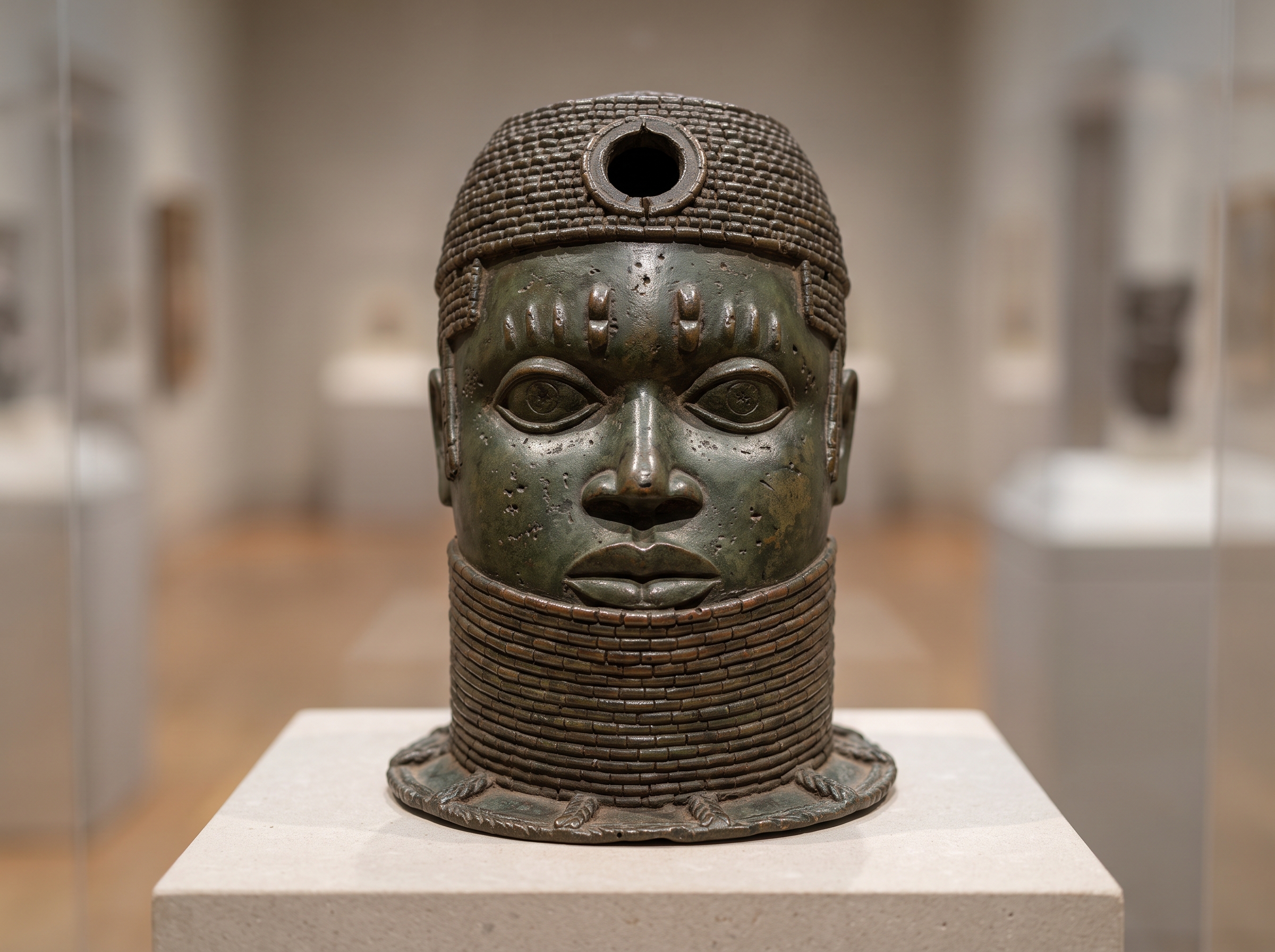
A heavy, thick-walled 16th-century brass casting featuring a beaded coral collar and a circular opening for an ivory tusk.
Brass Relief Plaque
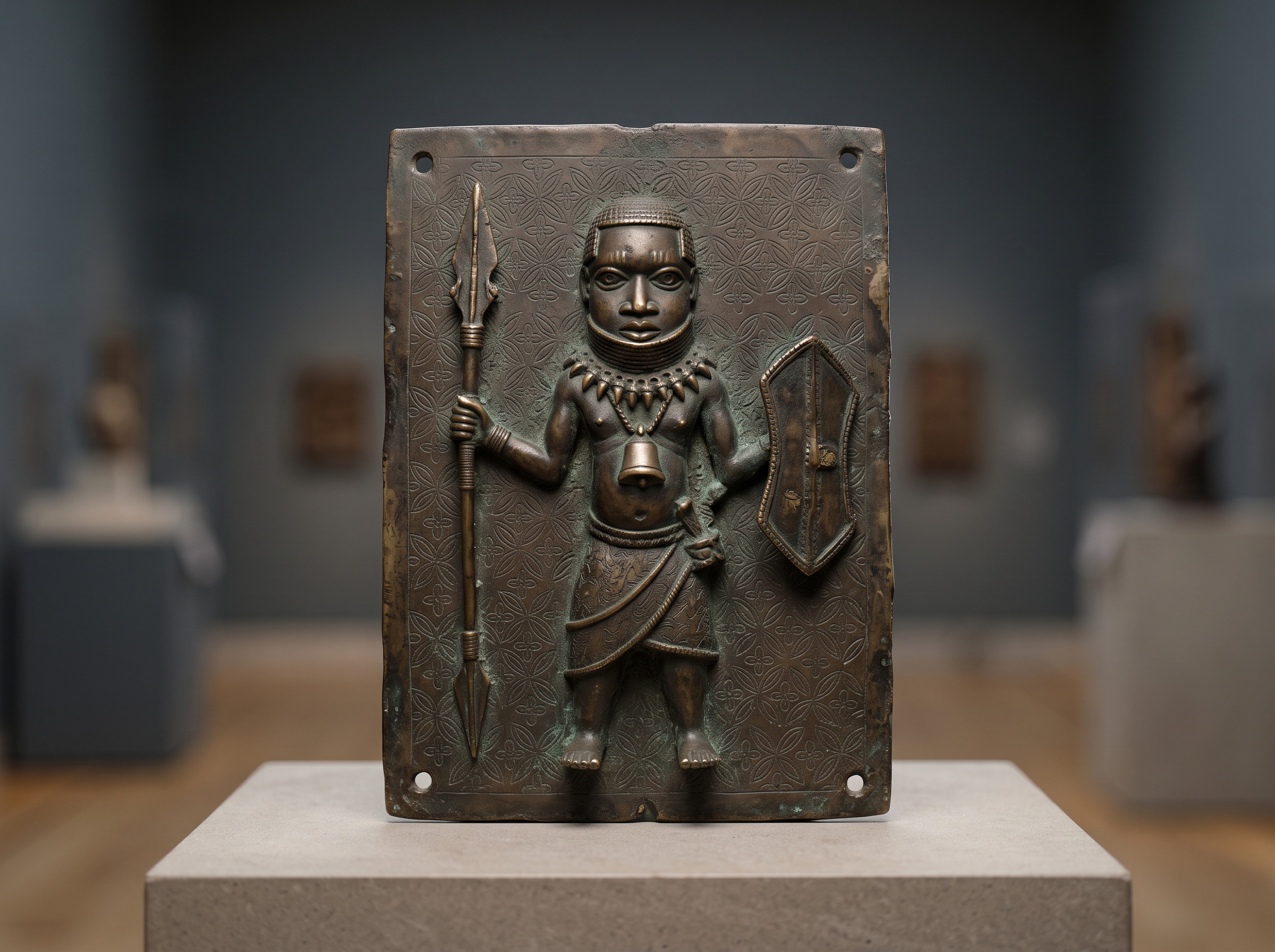
A rectangular brass plaque that once adorned the wooden pillars of the Oba's palace, depicting a high-ranking warrior in high relief.
Copper Alloy Leopard
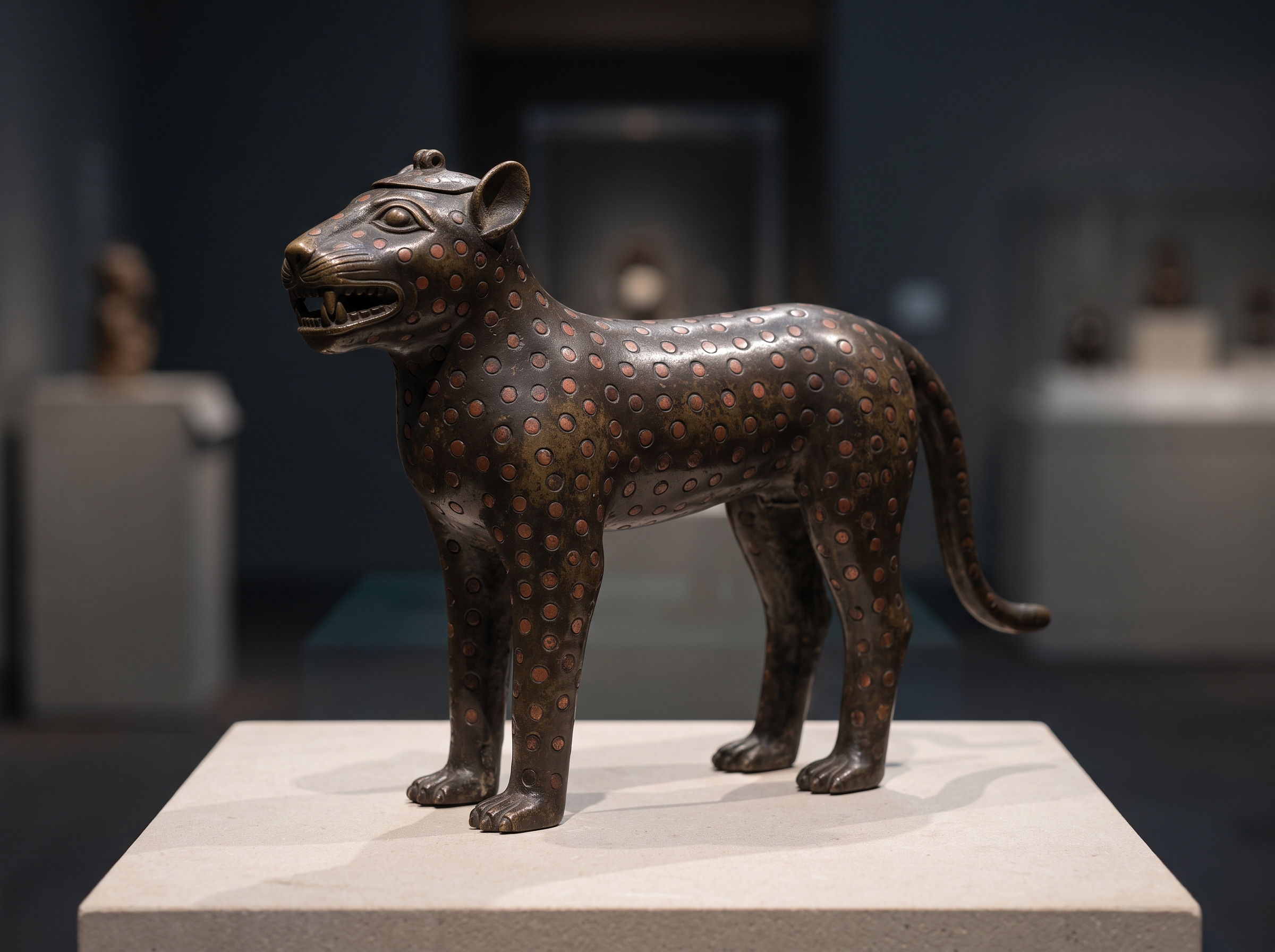
A naturalistic aquamanile in the shape of a leopard, used for ritual hand-washing during royal ceremonies.
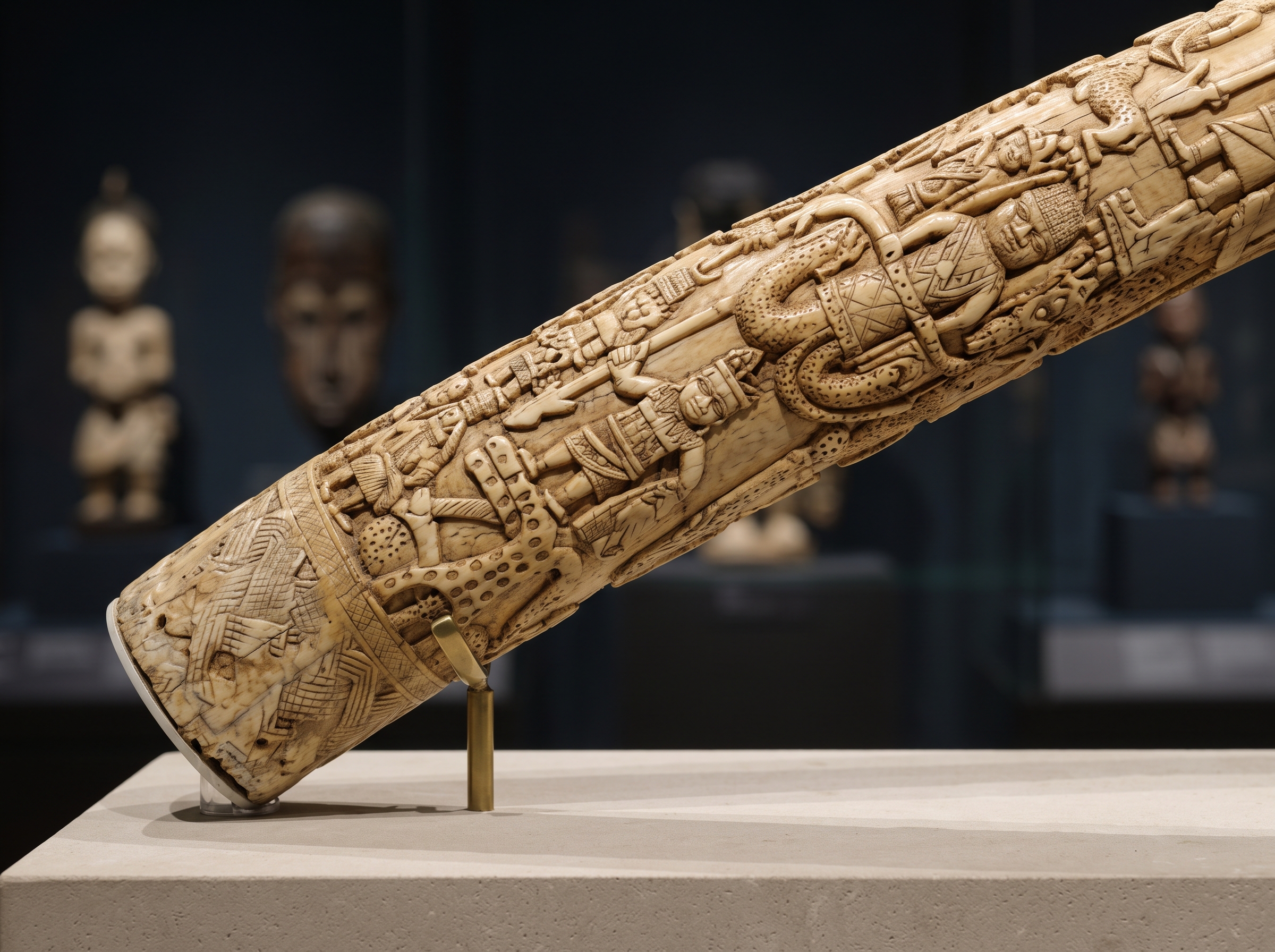
Carved Ivory Tusk
A large elephant tusk intricately carved with motifs of the Oba's divine authority, originally mounted on top of a bronze head.
Glossary
- lost-wax casting: A highly detailed metallurgical process (cire perdue) where a sculpture is modeled in wax, encased in clay, and heated to melt the wax out, leaving a hollow mold into which molten metal is poured.
- oba: The divine king of the Edo people of the Kingdom of Benin, who wielded absolute political and spiritual authority.
- igun eronmwon: The royal guild of brass casters in Benin, who lived and worked in a dedicated quarter and produced art exclusively for the Oba.
- manillas: Horseshoe-shaped brass or copper metal rings imported from Europe, used as a standard trade currency across West Africa and melted down for castings.