Oba
Curated by Elian • Benin Bronzes Cast in Brass by the Lost-Wax Method
Definition
The divine king of the Edo people of the Kingdom of Benin, who wielded absolute political and spiritual authority.
In Context
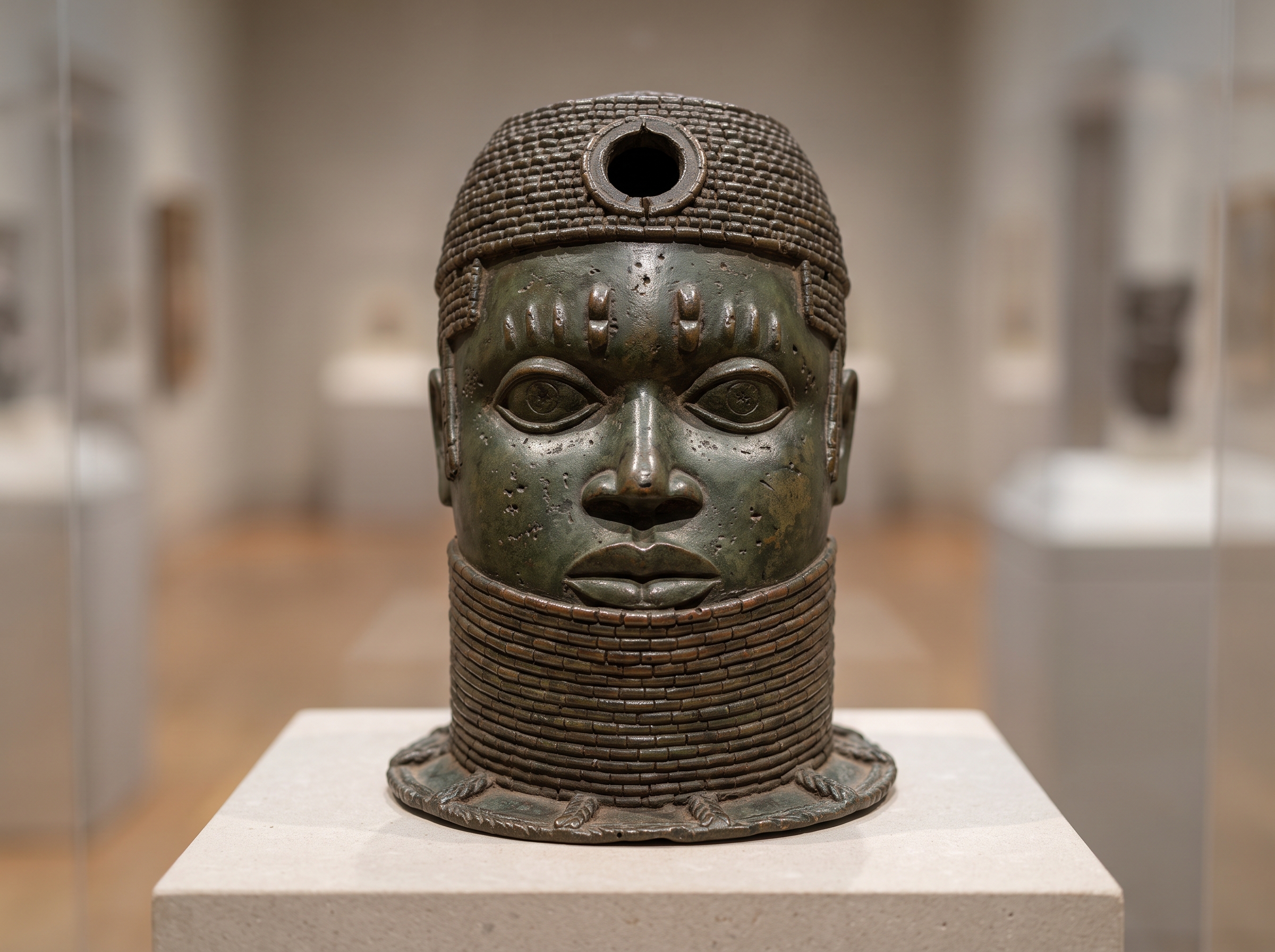
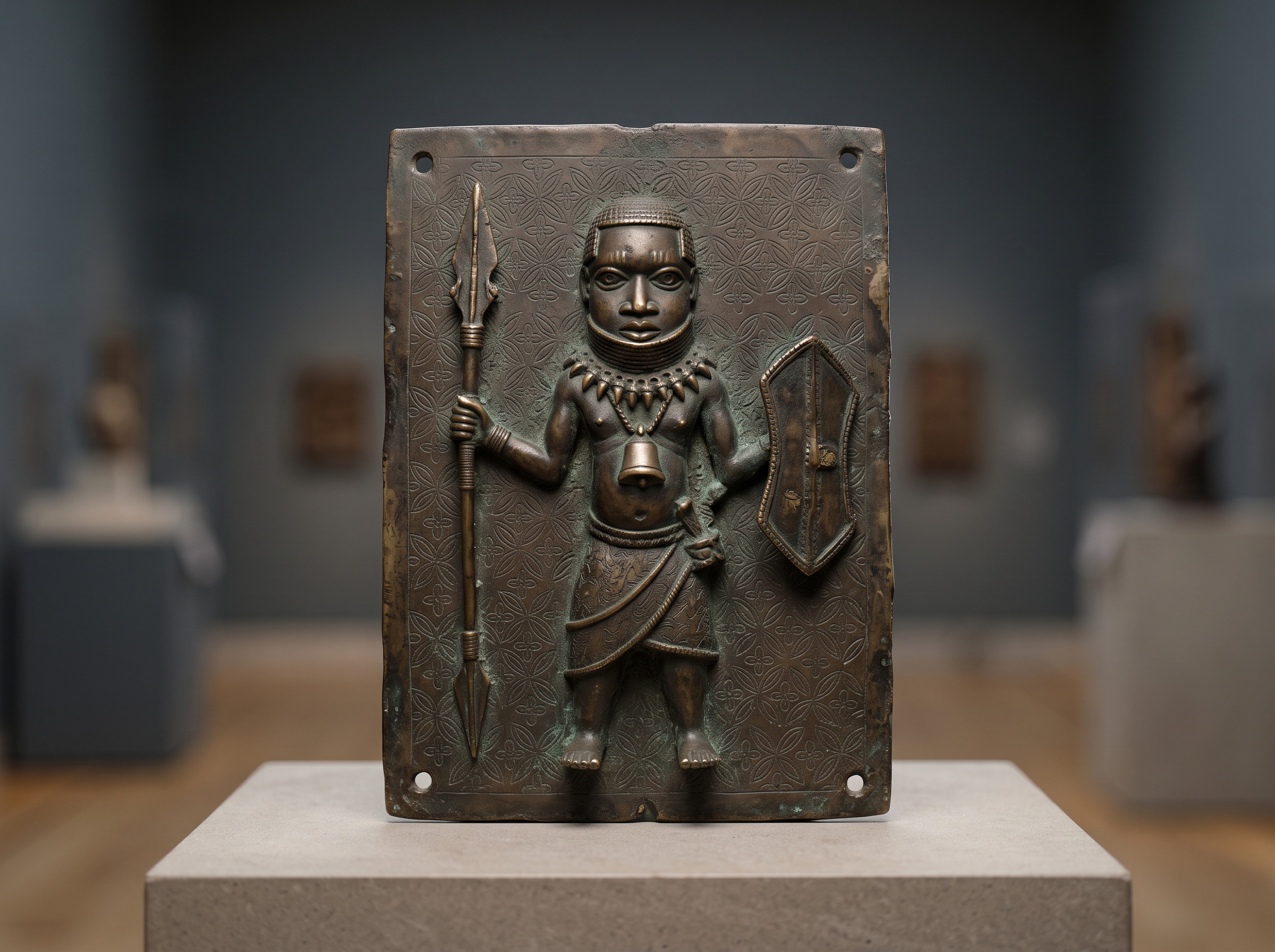
Strict sumptuary laws governed the visual vocabulary of the castings. Only the Oba could be depicted wearing specific coral bead regalia and high collars covering the chin. Guild masters memorized these strict hierarchical codes, ensuring every piece reinforced the fixed social order. A brass plaque showing a warrior in high relief functioned purely as a precise document recording rank and specific tribal affiliation. A misplaced bead or an incorrect weapon shape would render the piece useless as a historical record.
Primary Source
Benin Bronzes Cast in Brass by the Lost-Wax Method
The 16th-century Kingdom of Benin transformed metallurgical mastery into an immutable ledger of state power. Through the lost-wax casting of thousands of brass plaques, the royal guild converted European trade currency into a monumental visual archive, eventually looted during the 1897 British Punitive Expedition.
Read Study (20 min) →Artifacts
Glossary
- lost-wax casting
- A highly detailed metallurgical process (cire perdue) where a sculpture is modeled in wax, encased in clay, and heated to melt the wax out, leaving a hollow mold into which molten metal is poured.
- igun eronmwon
- The royal guild of brass casters in Benin, who lived and worked in a dedicated quarter and produced art exclusively for the Oba.
- manillas
- Horseshoe-shaped brass or copper metal rings imported from Europe, used as a standard trade currency across West Africa and melted down for castings.
- crucibles
- Vessels made of refractory materials like clay, designed to withstand extreme temperatures for melting metals inside a furnace.
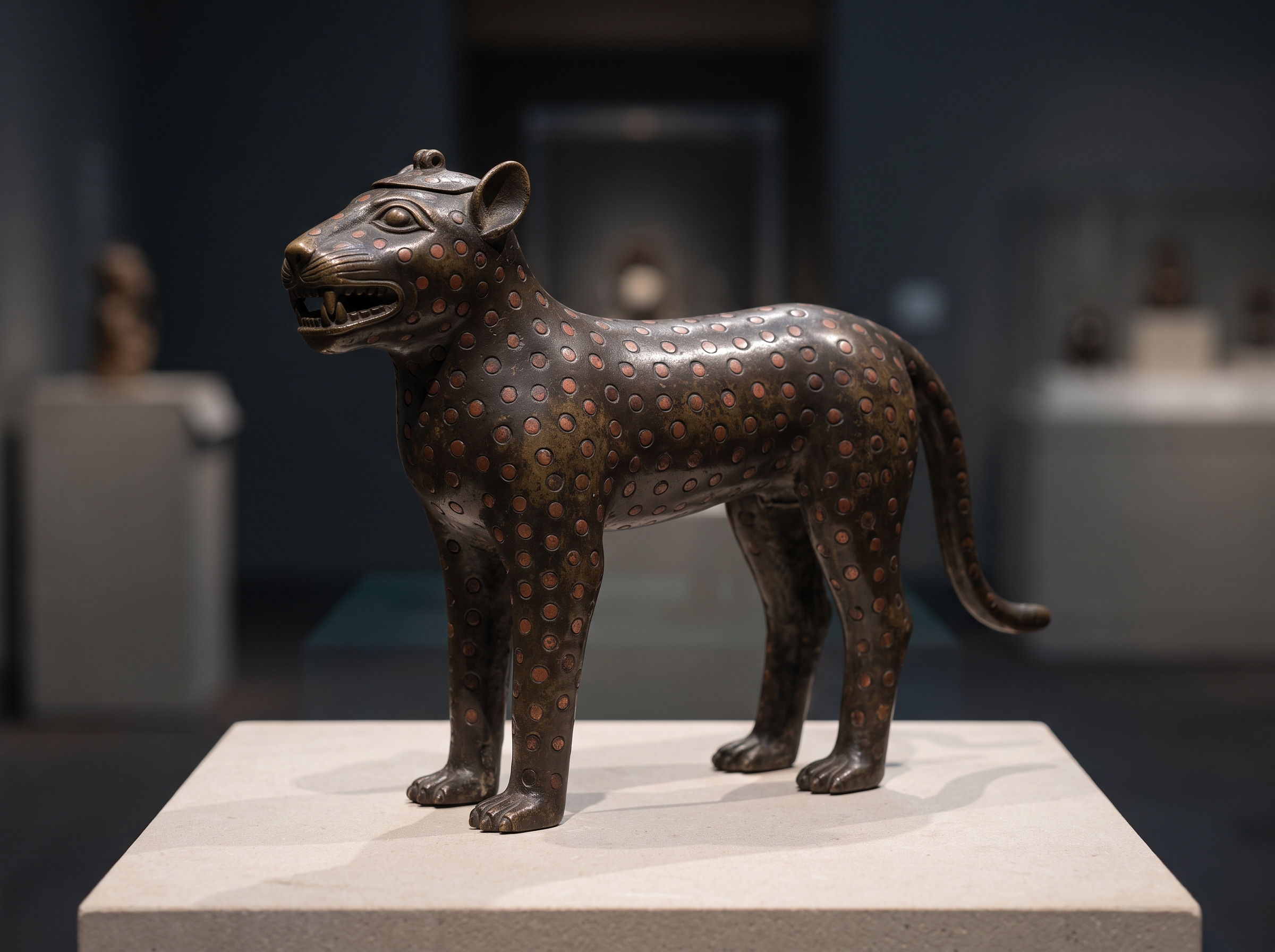
- aquamanile
- A metal vessel, often shaped like an animal (such as a leopard), used to pour water for ceremonial hand-washing in the Benin royal court.