Manillas
Curated by Elian • Benin Bronzes Cast in Brass by the Lost-Wax Method
Definition
Horseshoe-shaped brass or copper metal rings imported from Europe, used as a standard trade currency across West Africa and melted down for castings.
In Context
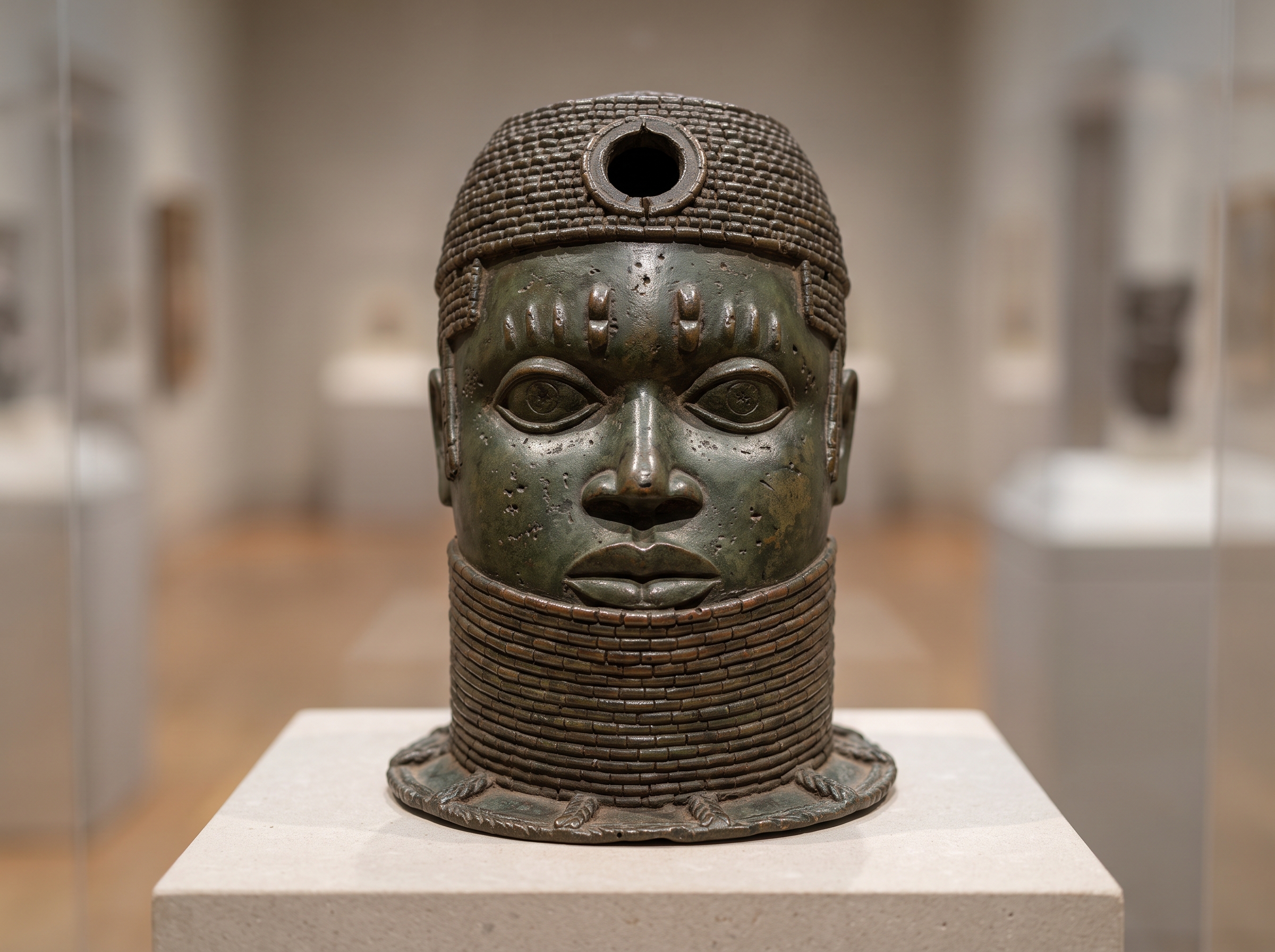
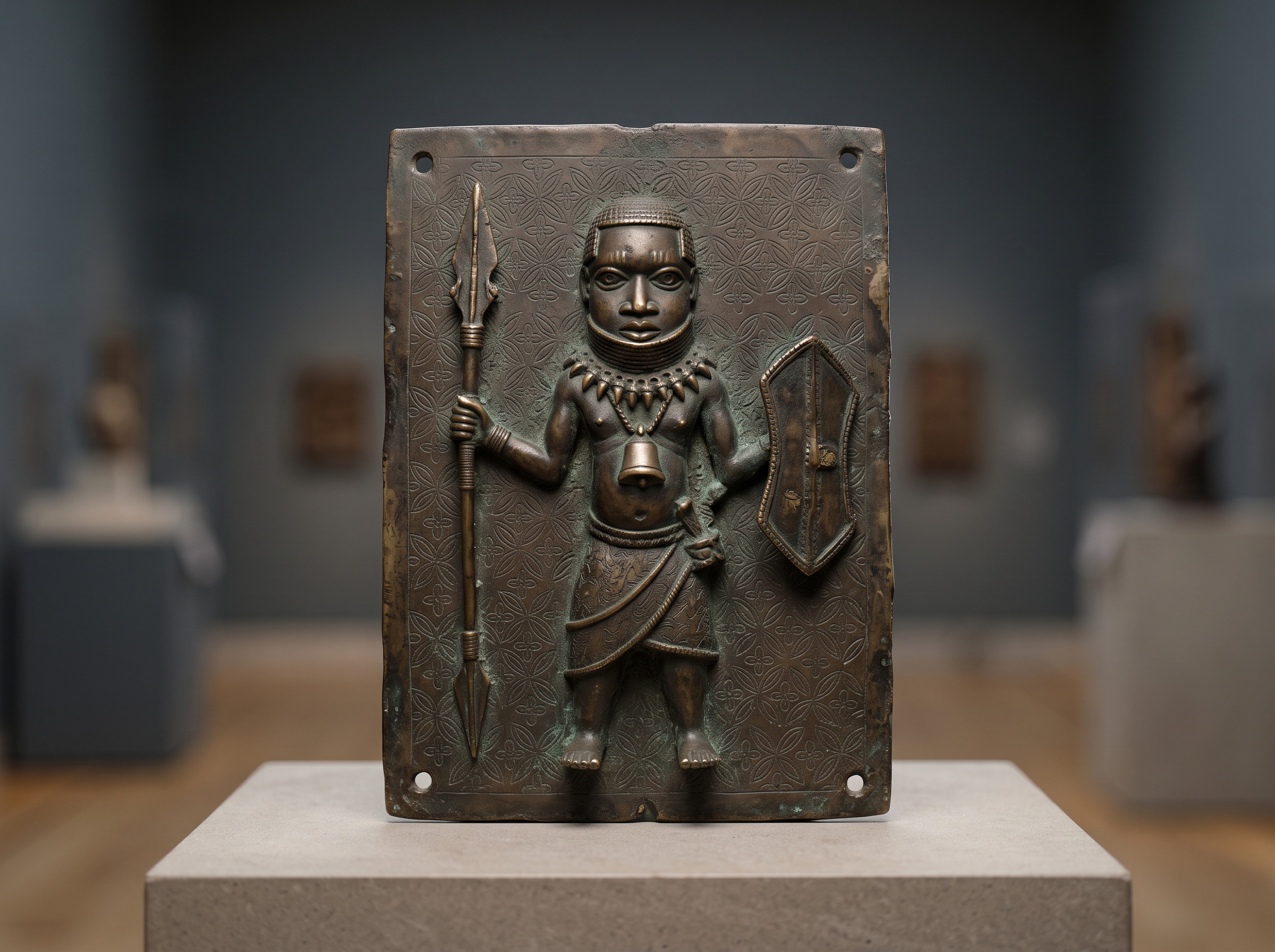
Operations like this occurred deep within the capital of the Edo people. Mid-16th-century rulers held complete command over the production of brass. Foreign merchants anchored their ships off the Bight of Benin, trading metal rings known as manillas in exchange for pepper and enslaved captives. Royal artisans took these heavy European tokens and melted them down in the furnaces. Guild workers transformed a mundane unit of foreign exchange into a monumental visual record.
Primary Source
Benin Bronzes Cast in Brass by the Lost-Wax Method
The 16th-century Kingdom of Benin transformed metallurgical mastery into an immutable ledger of state power. Through the lost-wax casting of thousands of brass plaques, the royal guild converted European trade currency into a monumental visual archive, eventually looted during the 1897 British Punitive Expedition.
Read Study (20 min) →Artifacts
Glossary
- lost-wax casting
- A highly detailed metallurgical process (cire perdue) where a sculpture is modeled in wax, encased in clay, and heated to melt the wax out, leaving a hollow mold into which molten metal is poured.
- oba
- The divine king of the Edo people of the Kingdom of Benin, who wielded absolute political and spiritual authority.
- igun eronmwon
- The royal guild of brass casters in Benin, who lived and worked in a dedicated quarter and produced art exclusively for the Oba.
- crucibles
- Vessels made of refractory materials like clay, designed to withstand extreme temperatures for melting metals inside a furnace.
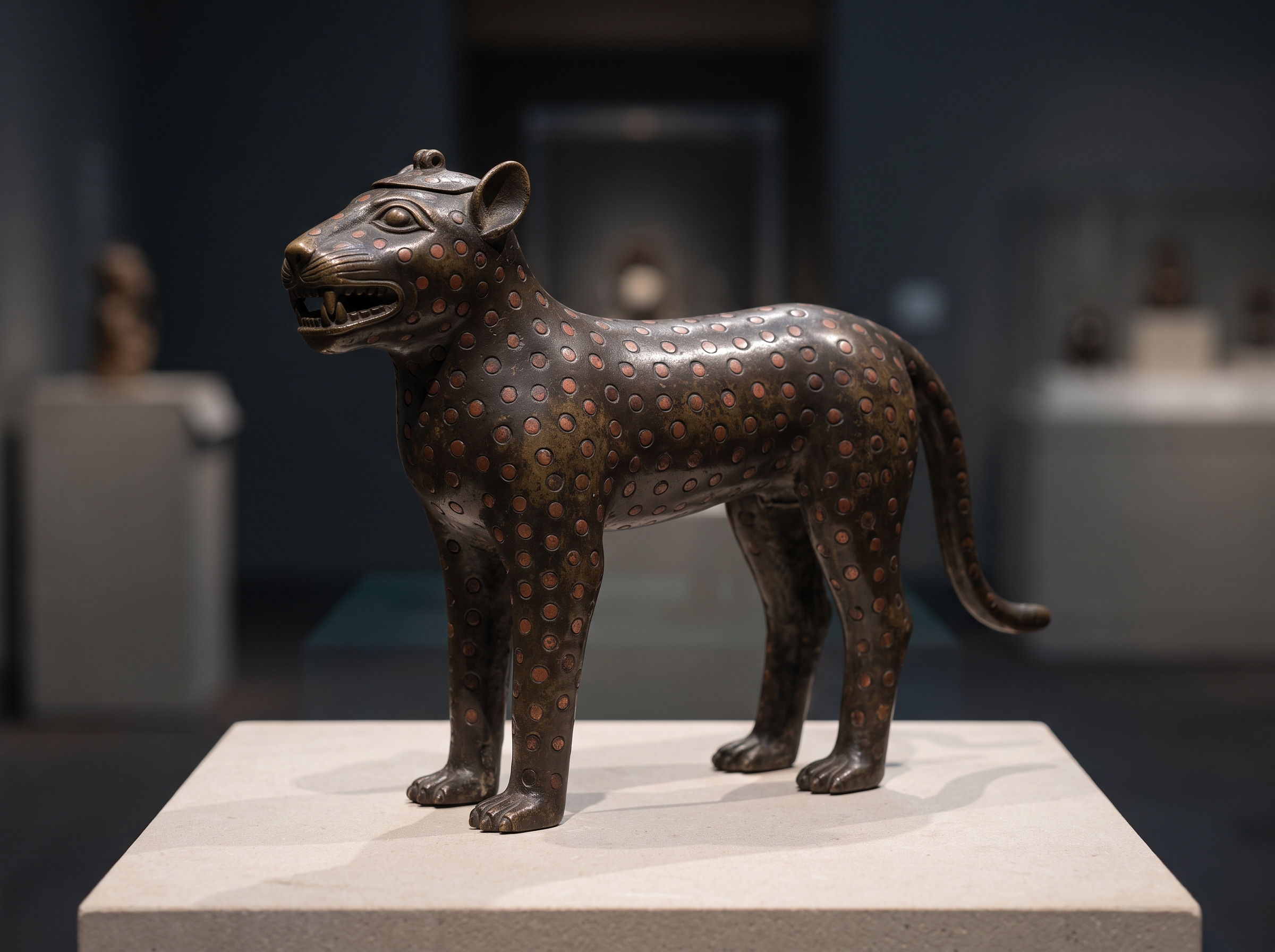
- aquamanile
- A metal vessel, often shaped like an animal (such as a leopard), used to pour water for ceremonial hand-washing in the Benin royal court.