Aquamanile
Curated by Elian • Benin Bronzes Cast in Brass by the Lost-Wax Method
Definition
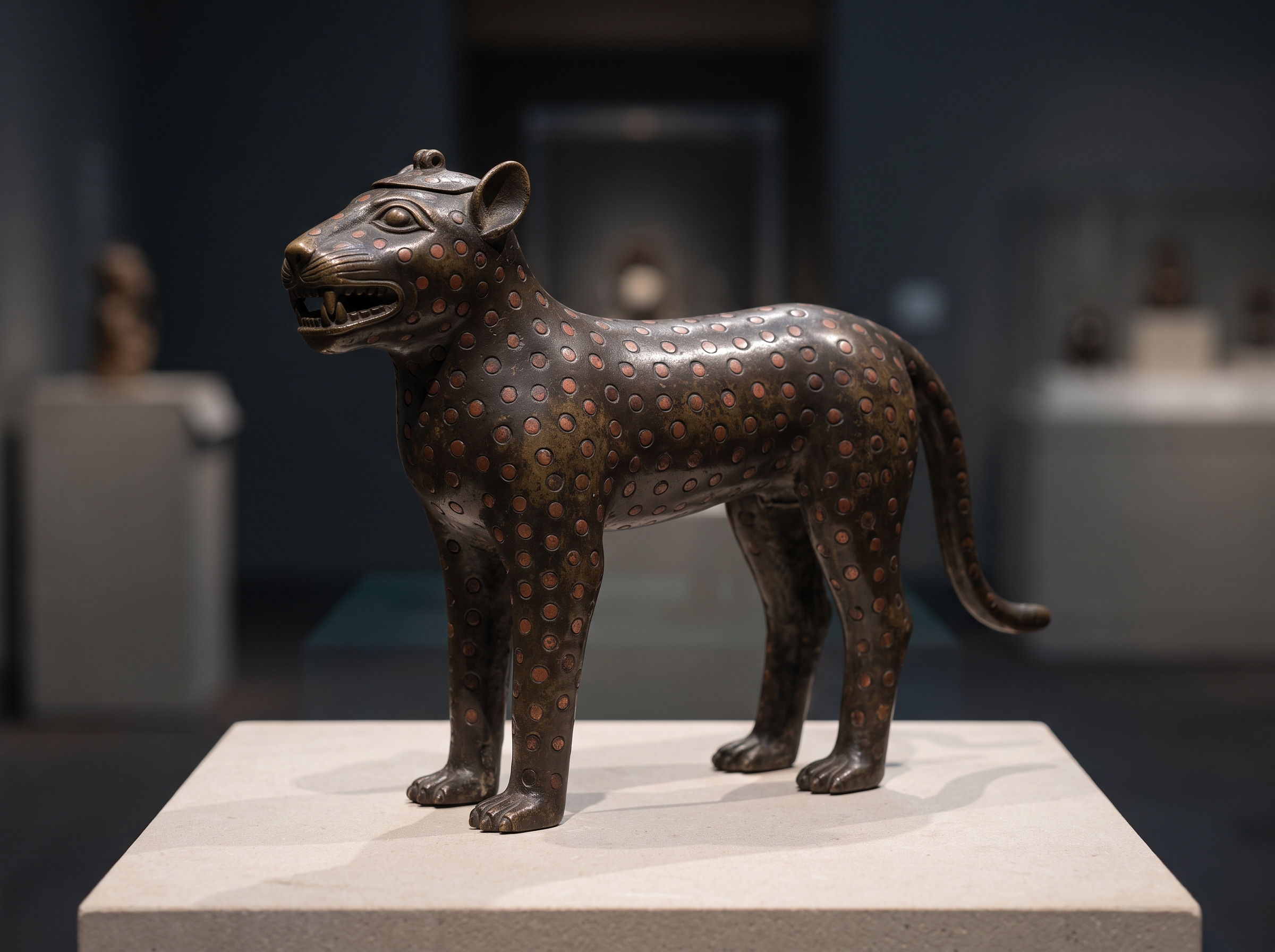
A metal vessel, often shaped like an animal (such as a leopard), used to pour water for ceremonial hand-washing in the Benin royal court.
In Context
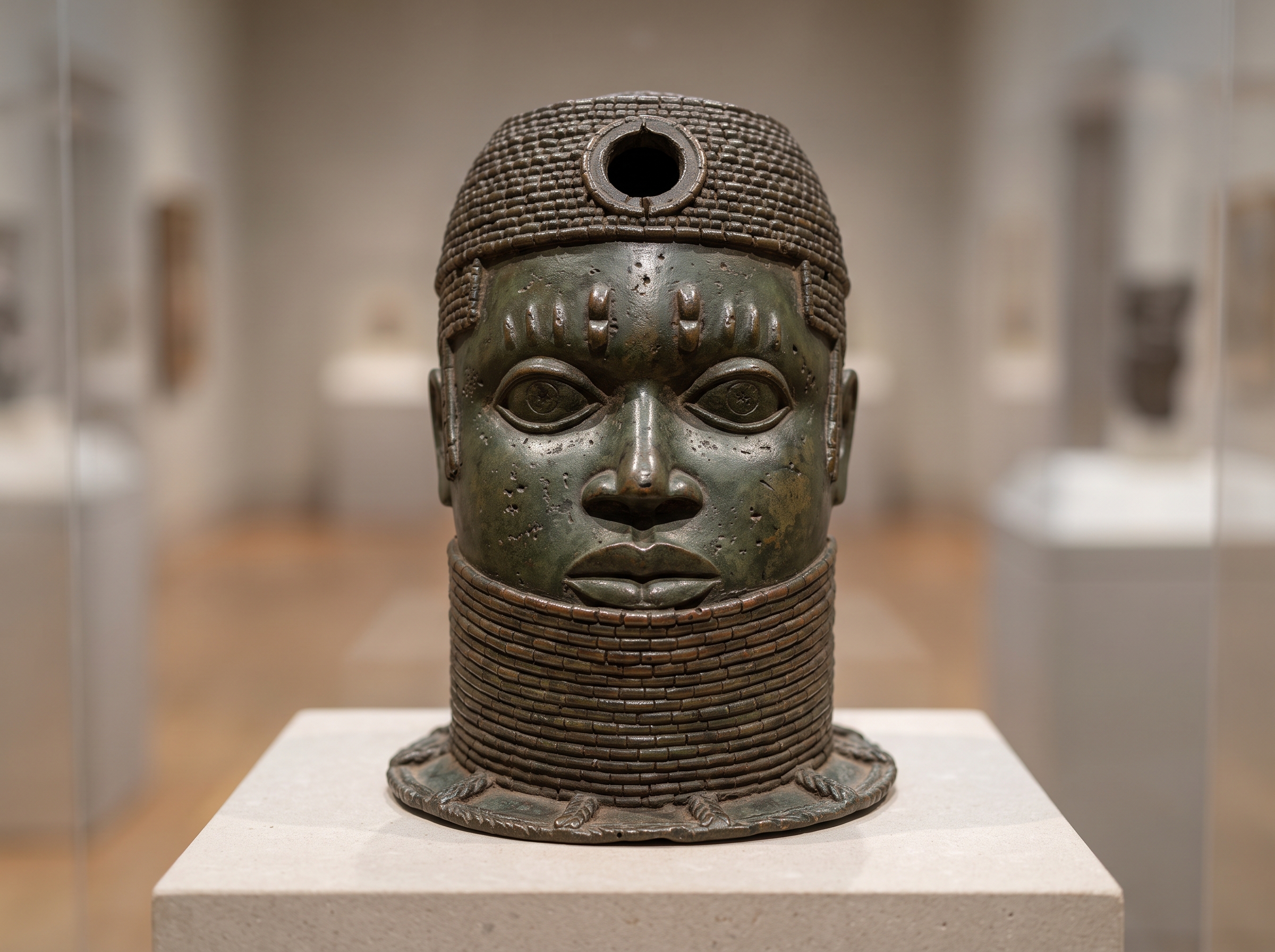
Every plaque and aquamanile was commissioned directly by the palace. State administrators managed the guild as a manufacturing organ. When a new king ascended the throne, custom required the casting of a heavy commemorative bronze head to honor his predecessor. Attendants placed these heavy sculptures on raised earthen ancestral altars, serving as physical vessels for the deceased ruler's spirit. A heavily carved elephant tusk was inserted into a circular hole at the top of the head, combining the two most controlled materials in the kingdom into a single monument.
Primary Source
Benin Bronzes Cast in Brass by the Lost-Wax Method
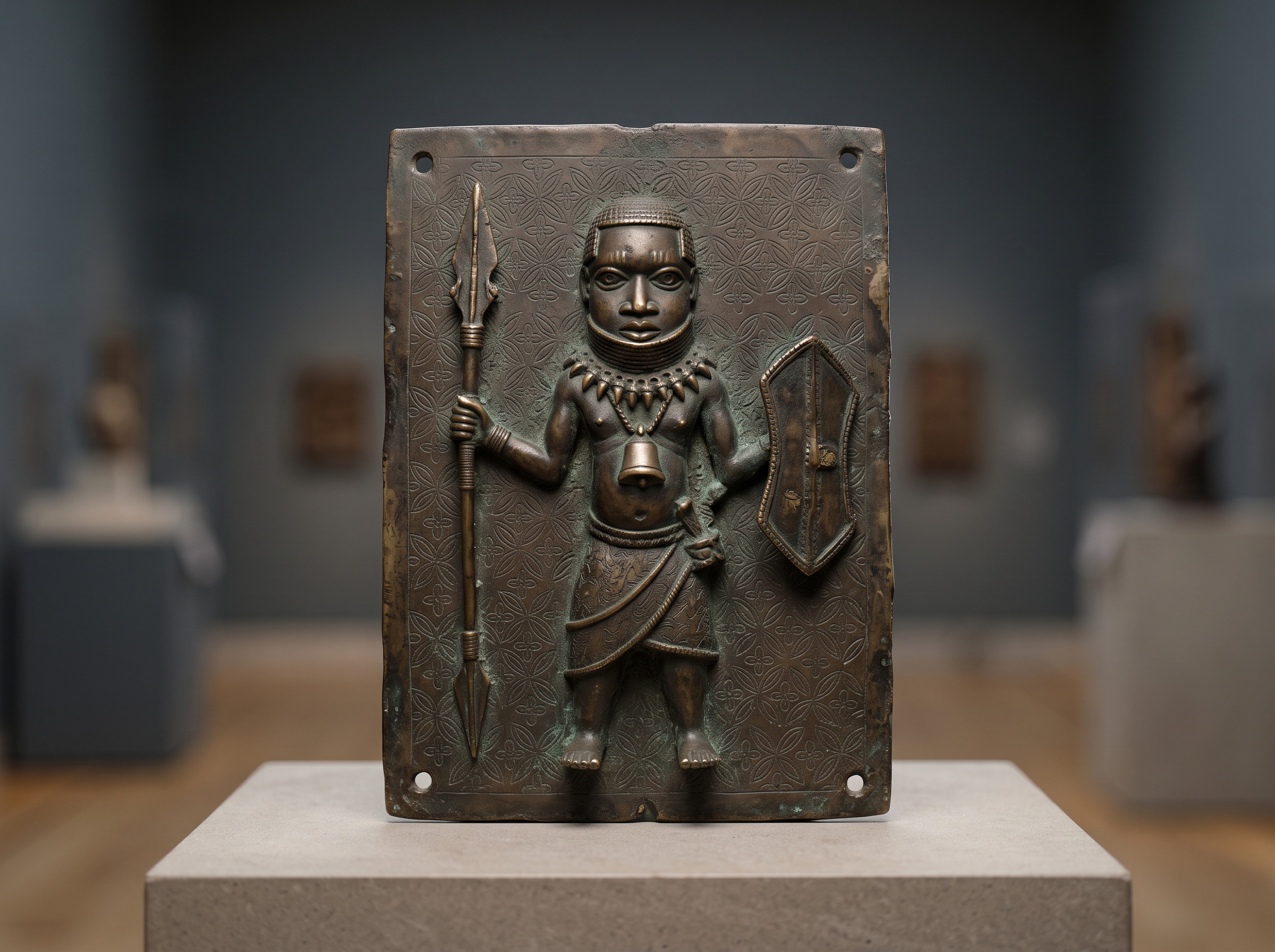
The 16th-century Kingdom of Benin transformed metallurgical mastery into an immutable ledger of state power. Through the lost-wax casting of thousands of brass plaques, the royal guild converted European trade currency into a monumental visual archive, eventually looted during the 1897 British Punitive Expedition.
Read Study (20 min) →Artifacts
Glossary
- lost-wax casting
- A highly detailed metallurgical process (cire perdue) where a sculpture is modeled in wax, encased in clay, and heated to melt the wax out, leaving a hollow mold into which molten metal is poured.
- oba
- The divine king of the Edo people of the Kingdom of Benin, who wielded absolute political and spiritual authority.
- igun eronmwon
- The royal guild of brass casters in Benin, who lived and worked in a dedicated quarter and produced art exclusively for the Oba.
- manillas
- Horseshoe-shaped brass or copper metal rings imported from Europe, used as a standard trade currency across West Africa and melted down for castings.
- crucibles
- Vessels made of refractory materials like clay, designed to withstand extreme temperatures for melting metals inside a furnace.