Sectional Deck Plan
Curated by Valerius • Rivets, Regulations and the Sinking of RMS Titanic
Artifact Details
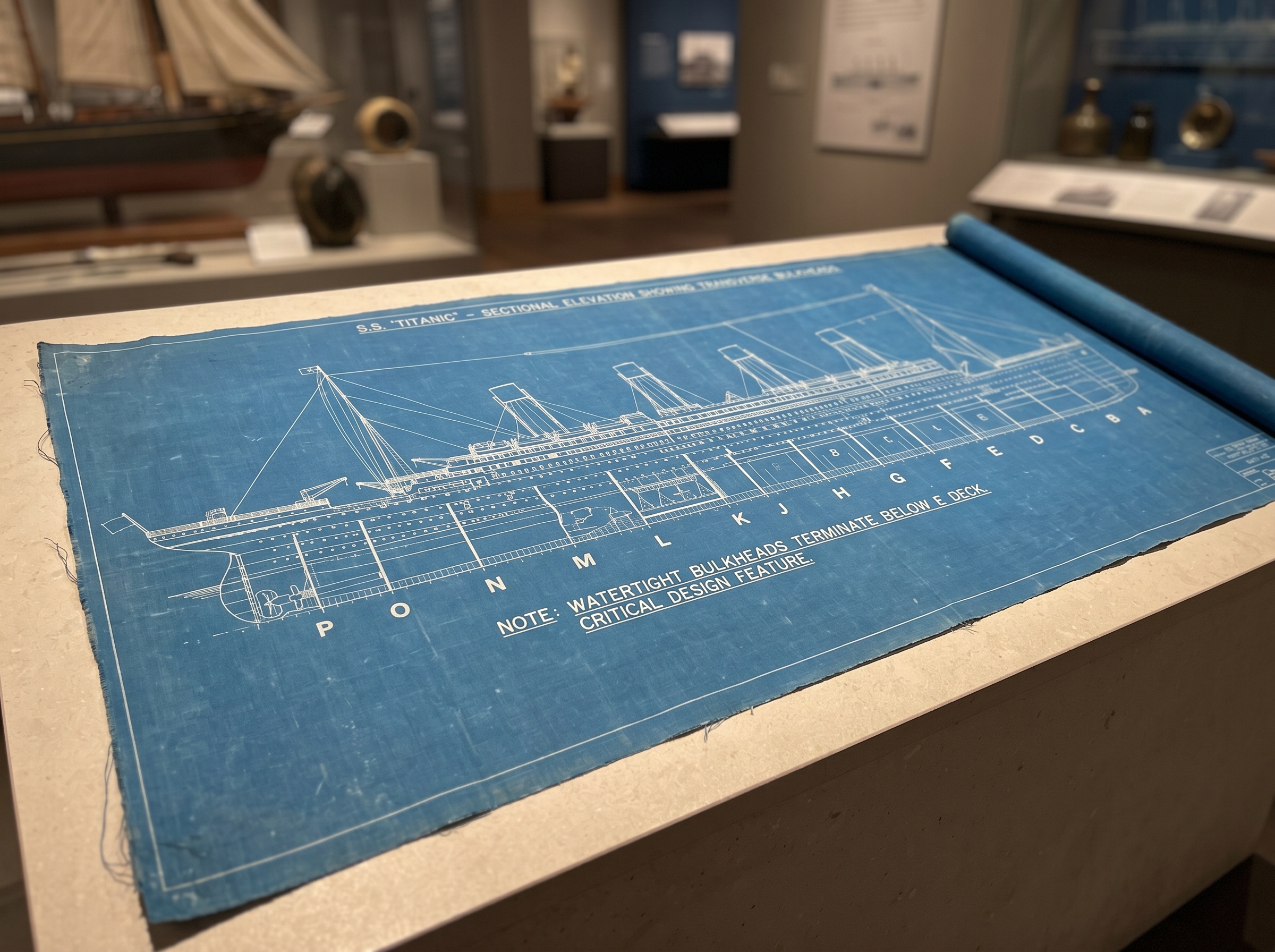
A large, unrolled cyan blueprint on drafting linen. Fine white lines depict the side profile of a massive ship, with thick vertical lines marking the bulkheads stopping mid-hull.
Primary Source
Rivets, Regulations and the Sinking of RMS Titanic
Freezing seawater breached Boiler Room No. 6 under a pressure of 2 tons per square foot. Ash-covered stokers scrambled up iron ladders as the Atlantic submerged the grates, extinguishing the fires in seconds. White Star Line built a 46,000-ton hull using iron rivets laced with brittle slag, while British regulators governed its lifeboat capacity using maritime codes written for ships a quarter of its size. When the steel buckled against the Grand Banks ice, the material limits of Edwardian industrialism were immediately exposed. Nineteenth-century metallurgy and bureaucratic negligence simply failed to withstand the violent reality of the freezing ocean.
Read Study (17 min) →Artifacts

Sheared Hull Rivet
A recovered wrought iron rivet. High slag content made the iron brittle at sub-zero temperatures, causing the heads to snap off under the stress of the collision.
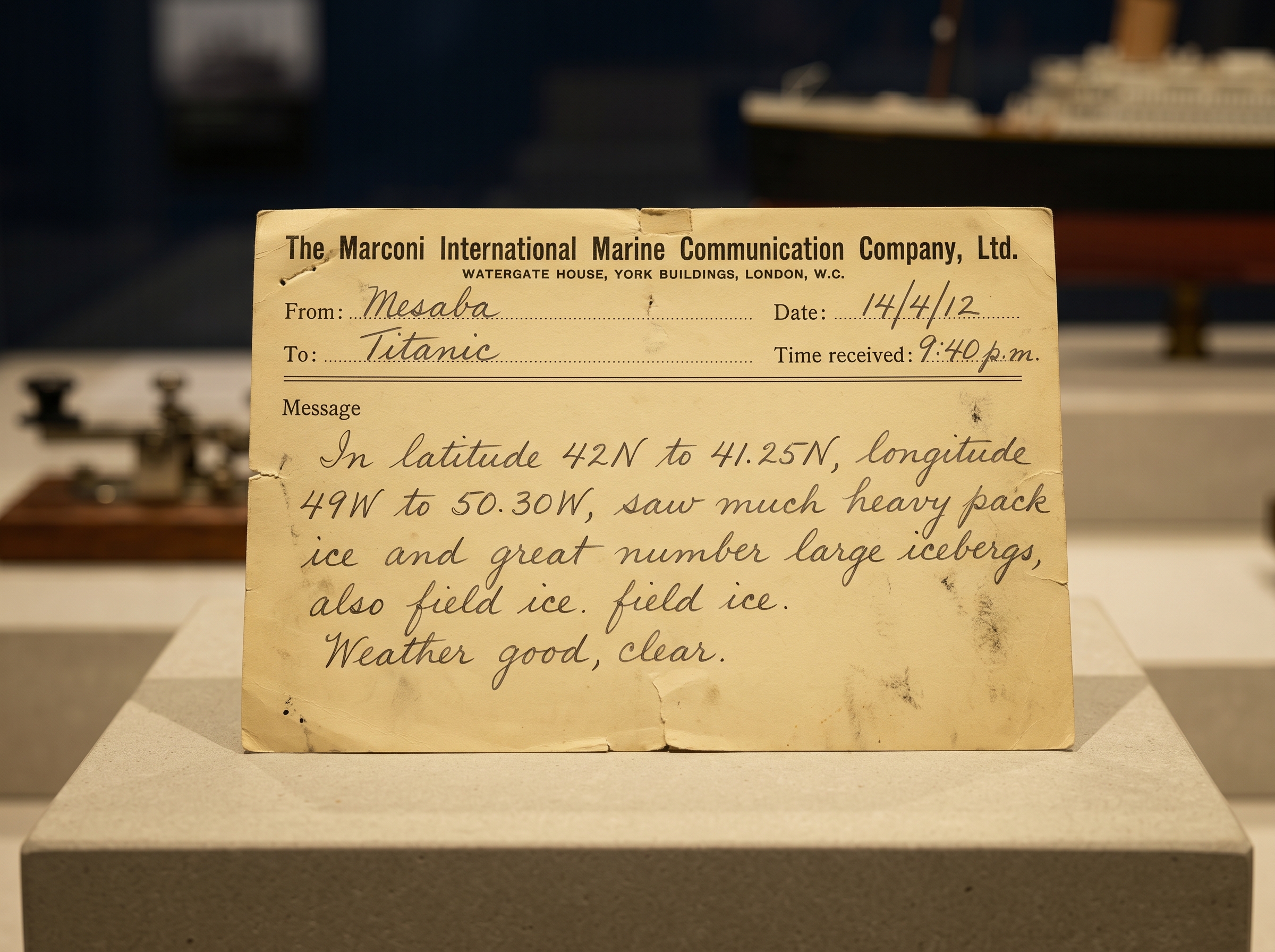
Marconi Ice Warning Slip
A decoded wireless message warning of pack ice. It was never delivered to the bridge because the operators were backlogged with passenger telegrams.

Frozen Pocket Watch
A recovered silver pocket watch. The internal mechanism rusted solid at exactly the moment the owner entered the freezing Atlantic water.
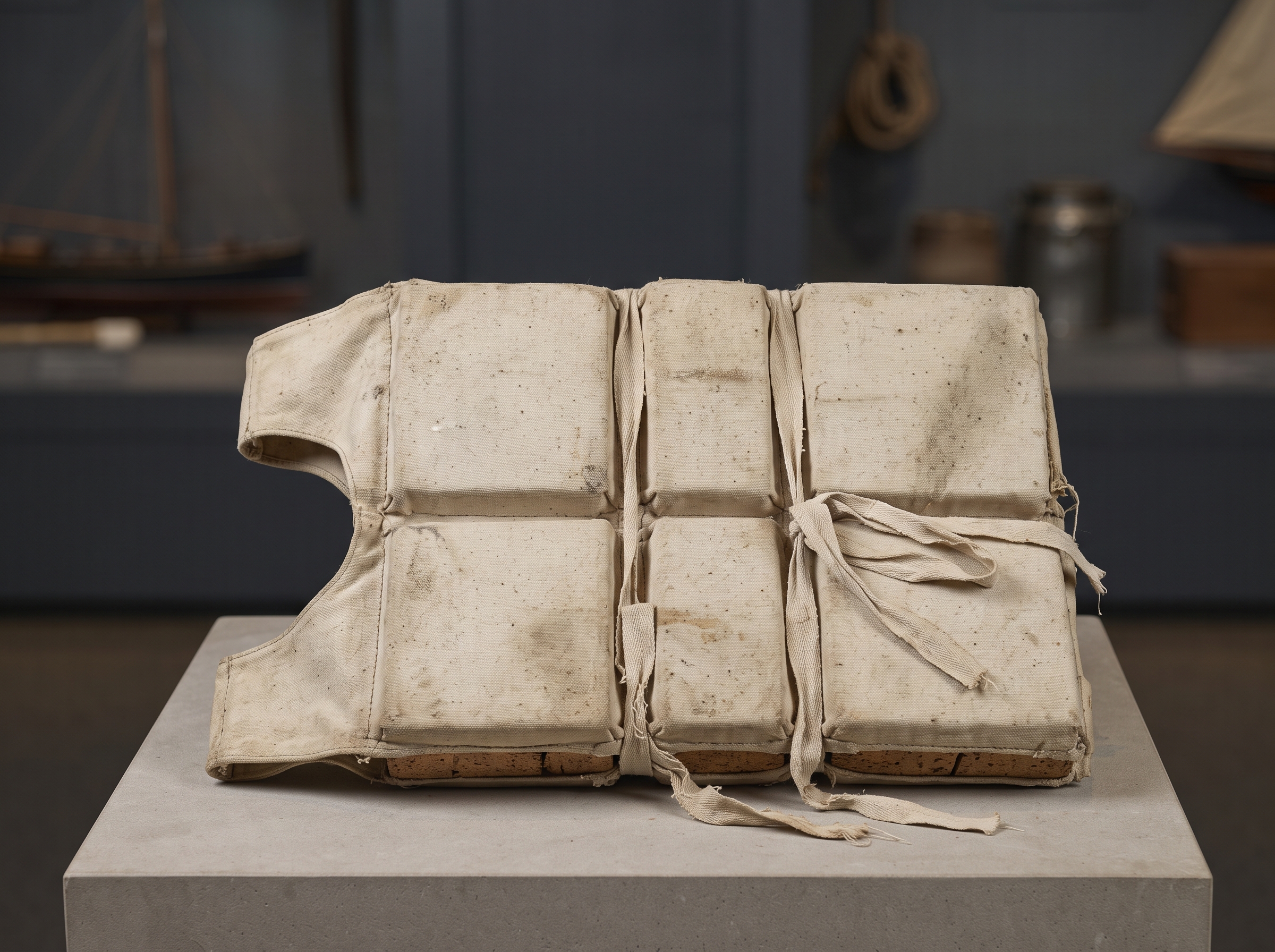
Canvas Lifebelt
A standard-issue cork and canvas lifebelt. While it provided buoyancy, it offered no thermal protection against the -2°C water.
Glossary
- wrought iron rivets: High-slag fasteners used in the manually riveted bow and stern sections of the hull, which became brittle and sheared in sub-zero water.
- transverse bulkheads: The vertical watertight steel partitions inside the Titanic's hull designed to compartmentalize flooding, which fatally stopped short at E Deck.
- e deck: The vertical ceiling limit for many of the Titanic's watertight bulkheads, allowing water to overtop and cascade from one compartment to the next.
- tonnage: A volumetric measure of a ship's carrying capacity used under 1894 regulations to calculate lifeboat capacity rather than actual passenger manifest counts.