Frozen Pocket Watch
Curated by Valerius • Rivets, Regulations and the Sinking of RMS Titanic

Artifact Details
A tarnished silver pocket watch with a cracked glass face. The white enamel dial is stained with brown water marks, and the black iron hands are locked permanently at 2:25.
Primary Source
Rivets, Regulations and the Sinking of RMS Titanic
Freezing seawater breached Boiler Room No. 6 under a pressure of 2 tons per square foot. Ash-covered stokers scrambled up iron ladders as the Atlantic submerged the grates, extinguishing the fires in seconds. White Star Line built a 46,000-ton hull using iron rivets laced with brittle slag, while British regulators governed its lifeboat capacity using maritime codes written for ships a quarter of its size. When the steel buckled against the Grand Banks ice, the material limits of Edwardian industrialism were immediately exposed. Nineteenth-century metallurgy and bureaucratic negligence simply failed to withstand the violent reality of the freezing ocean.
Read Study (17 min) →Artifacts
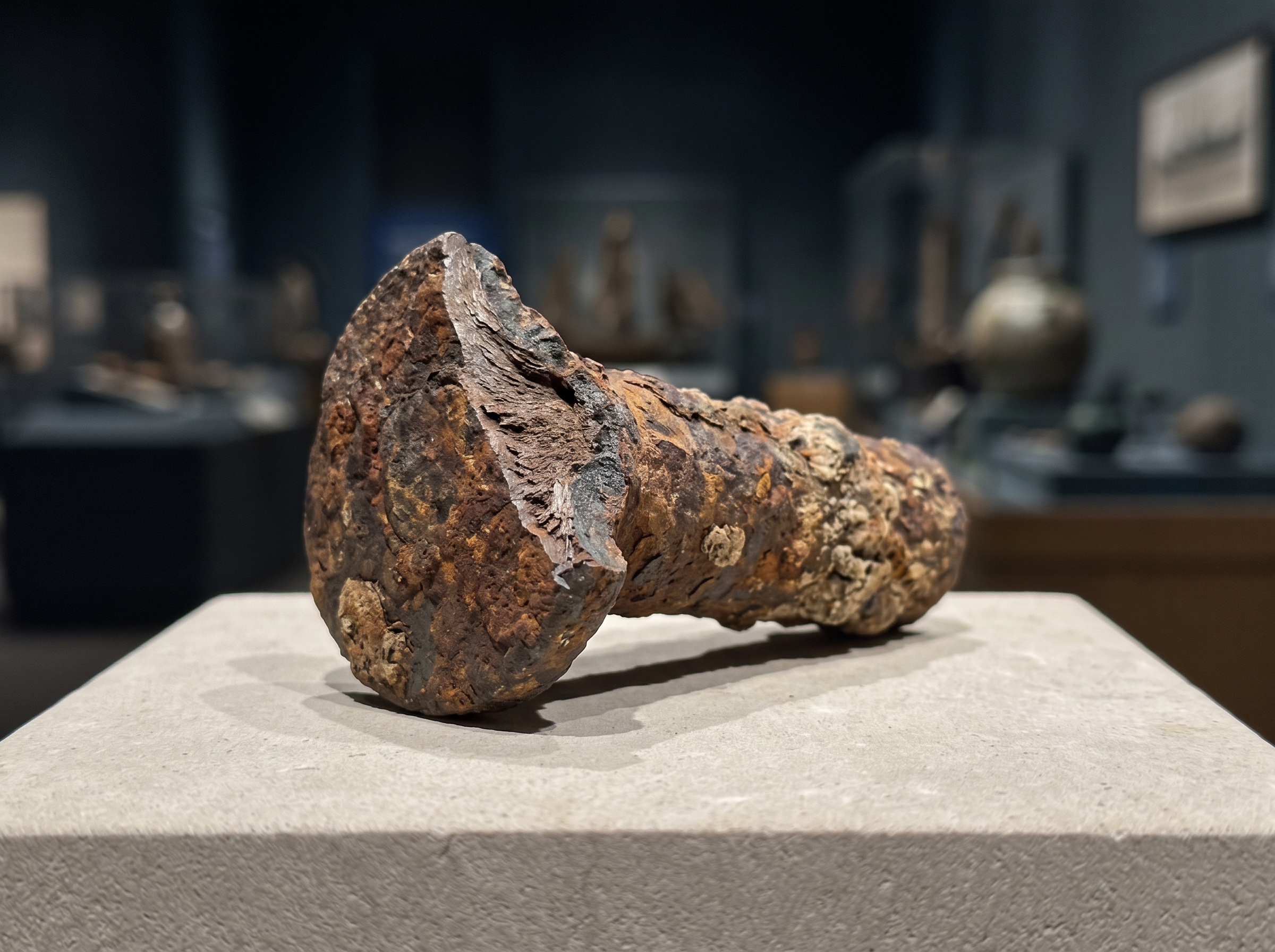
Sheared Hull Rivet
A recovered wrought iron rivet. High slag content made the iron brittle at sub-zero temperatures, causing the heads to snap off under the stress of the collision.
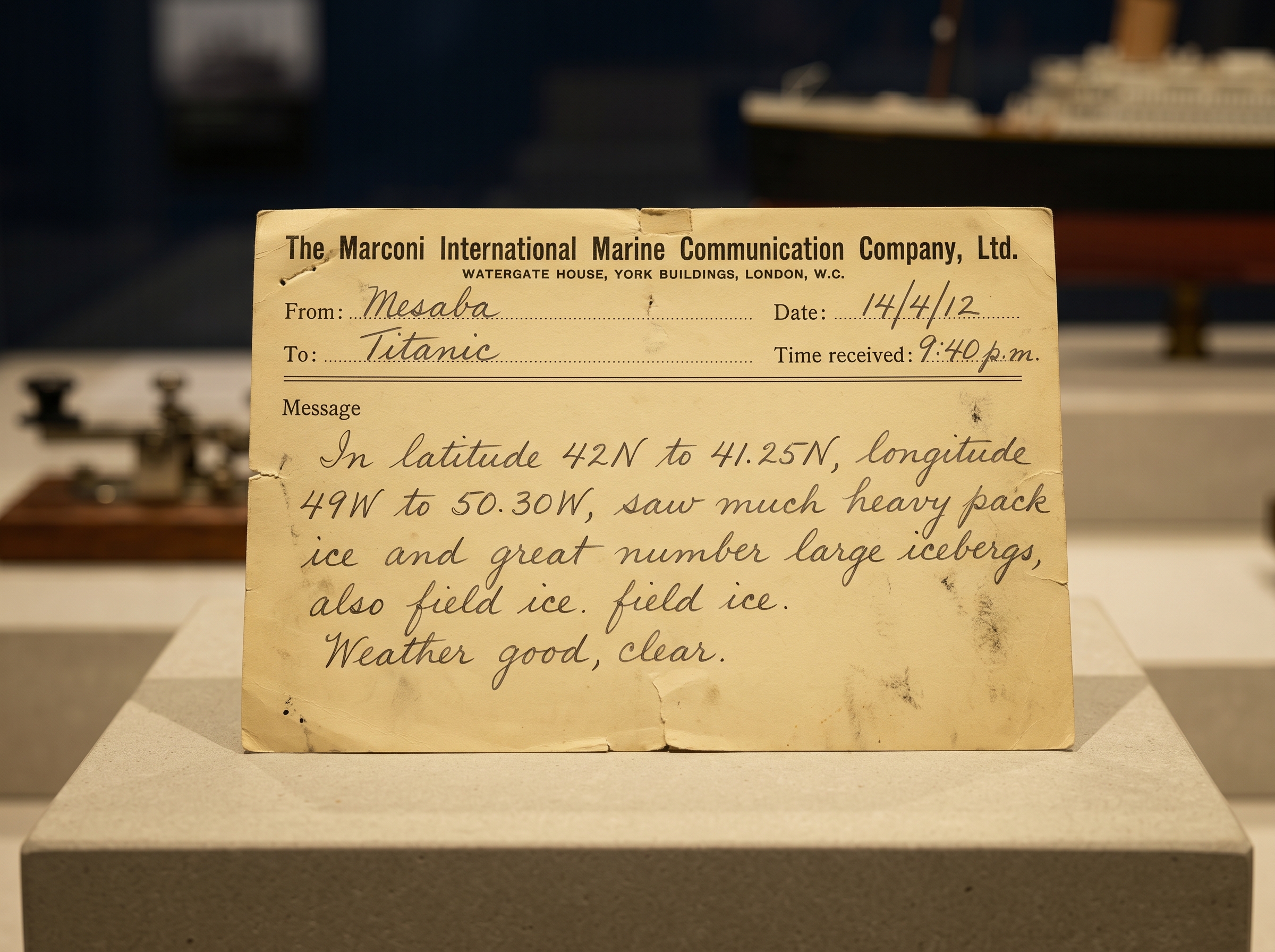
Marconi Ice Warning Slip
A decoded wireless message warning of pack ice. It was never delivered to the bridge because the operators were backlogged with passenger telegrams.
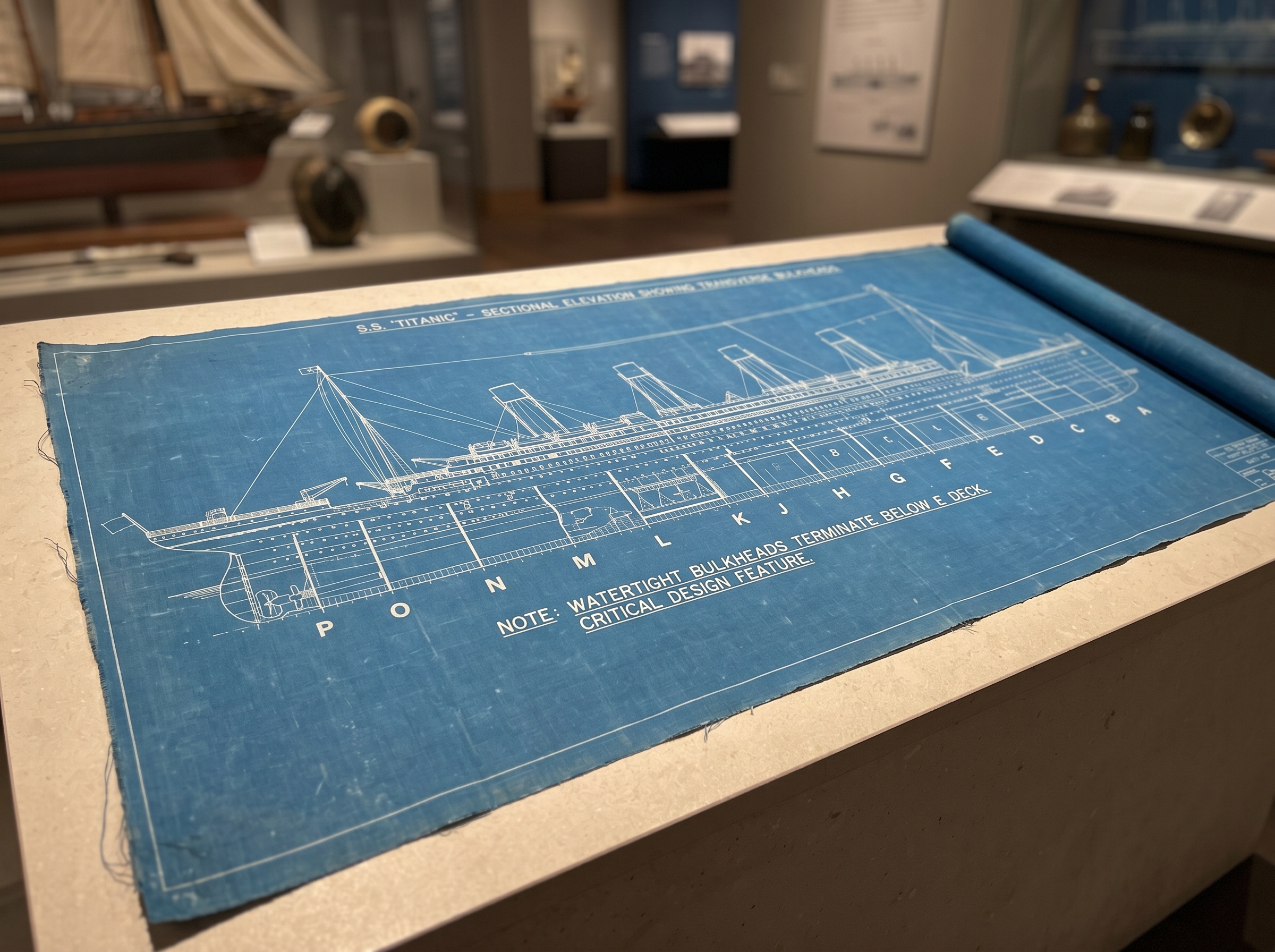
Sectional Deck Plan
An engineering blueprint detailing the transverse bulkheads. It clearly shows the watertight divisions terminating at E Deck, the fatal design flaw.
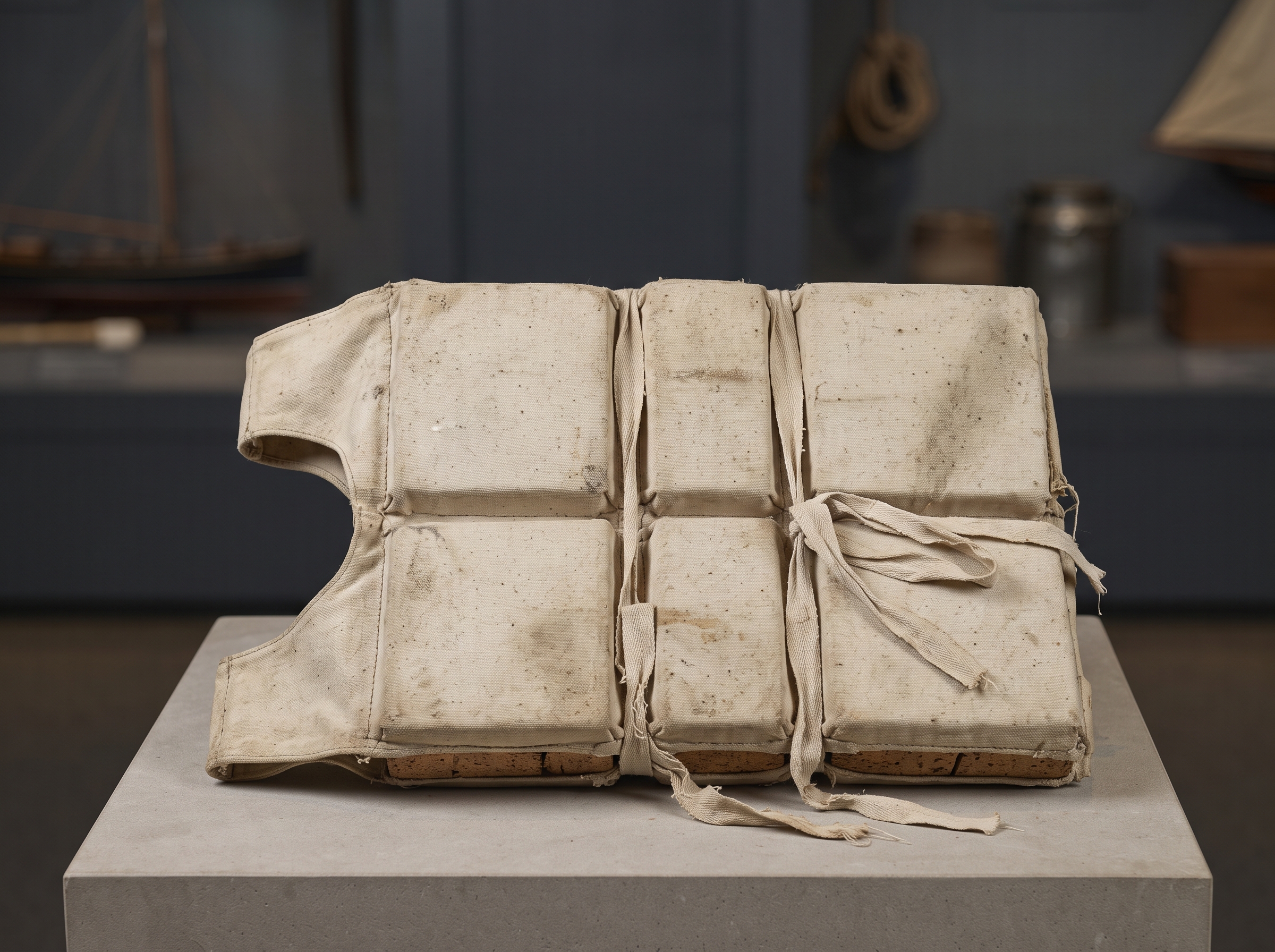
Canvas Lifebelt
A standard-issue cork and canvas lifebelt. While it provided buoyancy, it offered no thermal protection against the -2°C water.
Glossary
- wrought iron rivets: High-slag fasteners used in the manually riveted bow and stern sections of the hull, which became brittle and sheared in sub-zero water.
- transverse bulkheads: The vertical watertight steel partitions inside the Titanic's hull designed to compartmentalize flooding, which fatally stopped short at E Deck.
- e deck: The vertical ceiling limit for many of the Titanic's watertight bulkheads, allowing water to overtop and cascade from one compartment to the next.
- tonnage: A volumetric measure of a ship's carrying capacity used under 1894 regulations to calculate lifeboat capacity rather than actual passenger manifest counts.