The Golden Throne
Curated by Elian • The 1922 Discovery of Tutankhamun’s Tomb
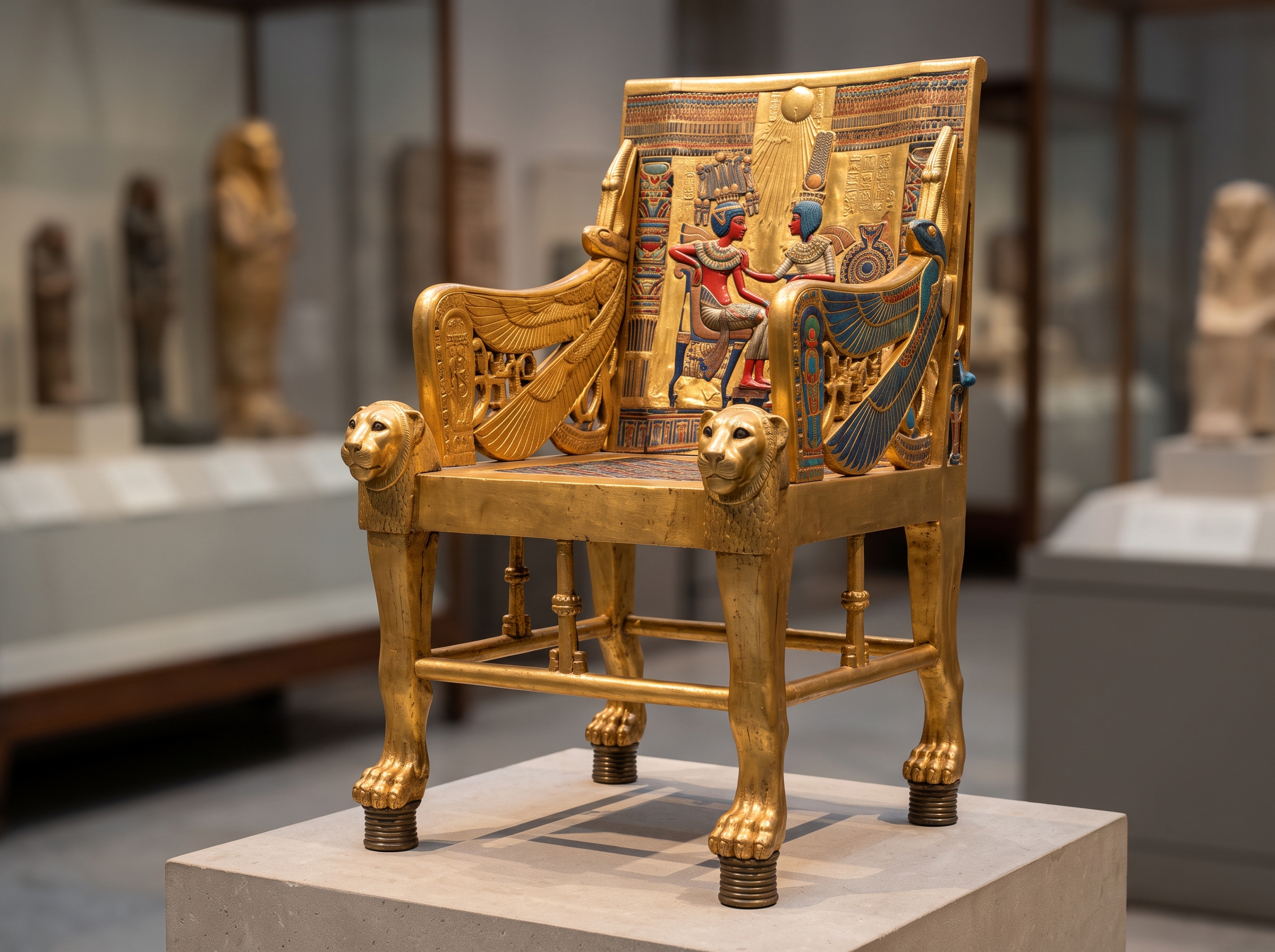
Artifact Details
A heavy wooden armchair sheathed entirely in thick gold foil. The armrests take the form of winged uraeus serpents, and the legs terminate in robust, carved lion paws above ribbed bronze drums. The back panel is a masterwork of cloisonné: sheet gold heavily inlaid with opaque colored glass, faience, and semi-precious stones. The gold foil is slightly rippled and buckled in places where the ancient wood shifted.
Primary Source
The 1922 Discovery of Tutankhamun’s Tomb
In November 1922, a chisel breached the sealed plaster of a doorway cut into the bedrock of the Valley of the Kings. Howard Carter inserted a candle and felt a blast of hot, stagnant air escaping a space measuring barely 109 square meters. Inside, dismantled chariots and gilded couches were piled floor to ceiling in chaotic density. The resulting accumulation was a panicked deposit rather than a grand rock-cut monument to imperial power. Tutankhamun’s sudden death at age 19 dictated a rapid, cramped burial in a tomb likely intended for a non-royal official. A staggering hoard of 5,398 artifacts, culminating in a 110-kilogram solid gold coffin, acted as a desperate, heavy bribe paid to eternity by a regime caught entirely unprepared.
Read Study (19 min) →Artifacts
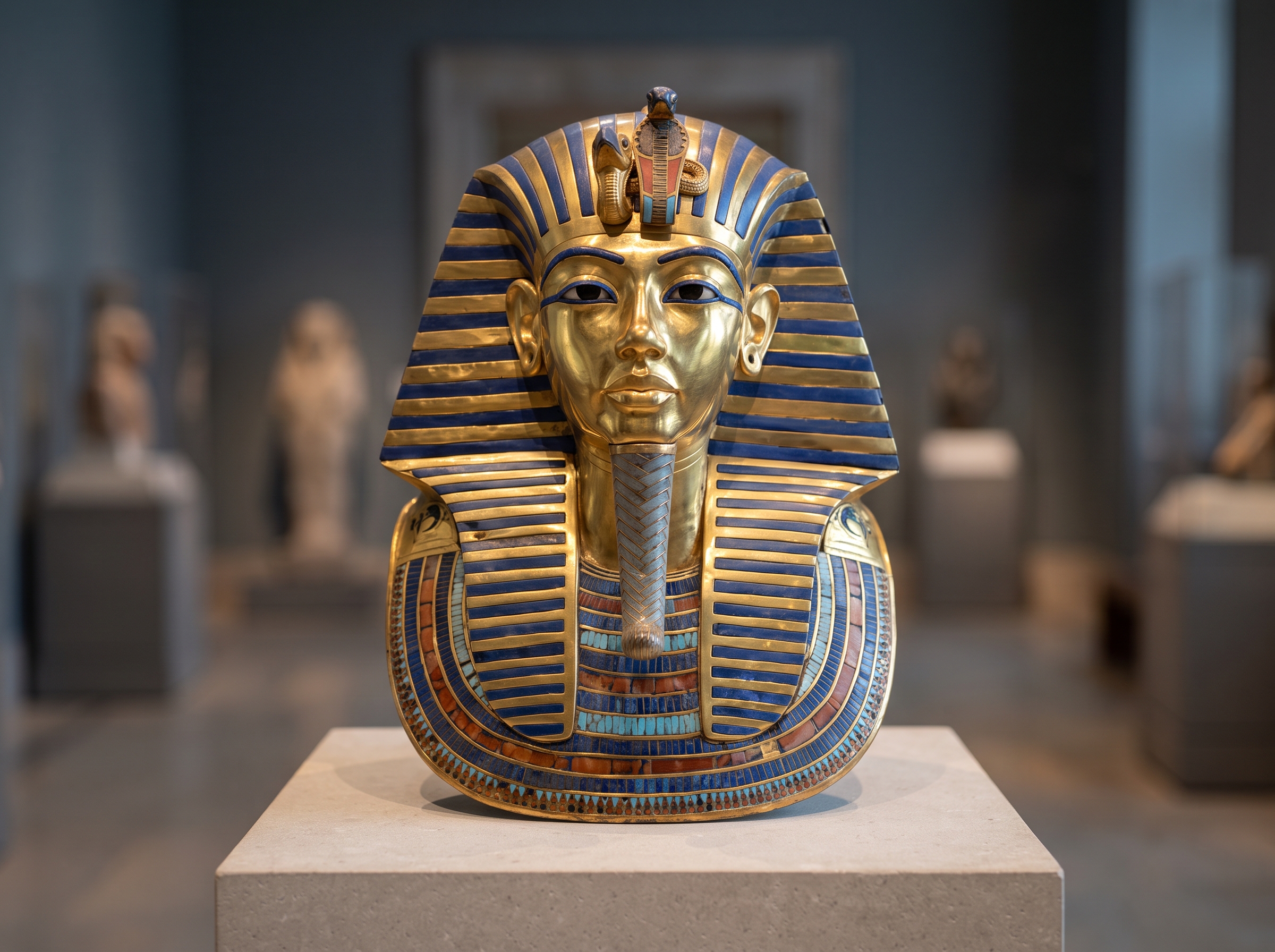
Solid Gold Death Mask
A 10.23 kg masterpiece of solid gold inlaid with lapis lazuli and carnelian, designed to protect the pharaoh's head in the afterlife.
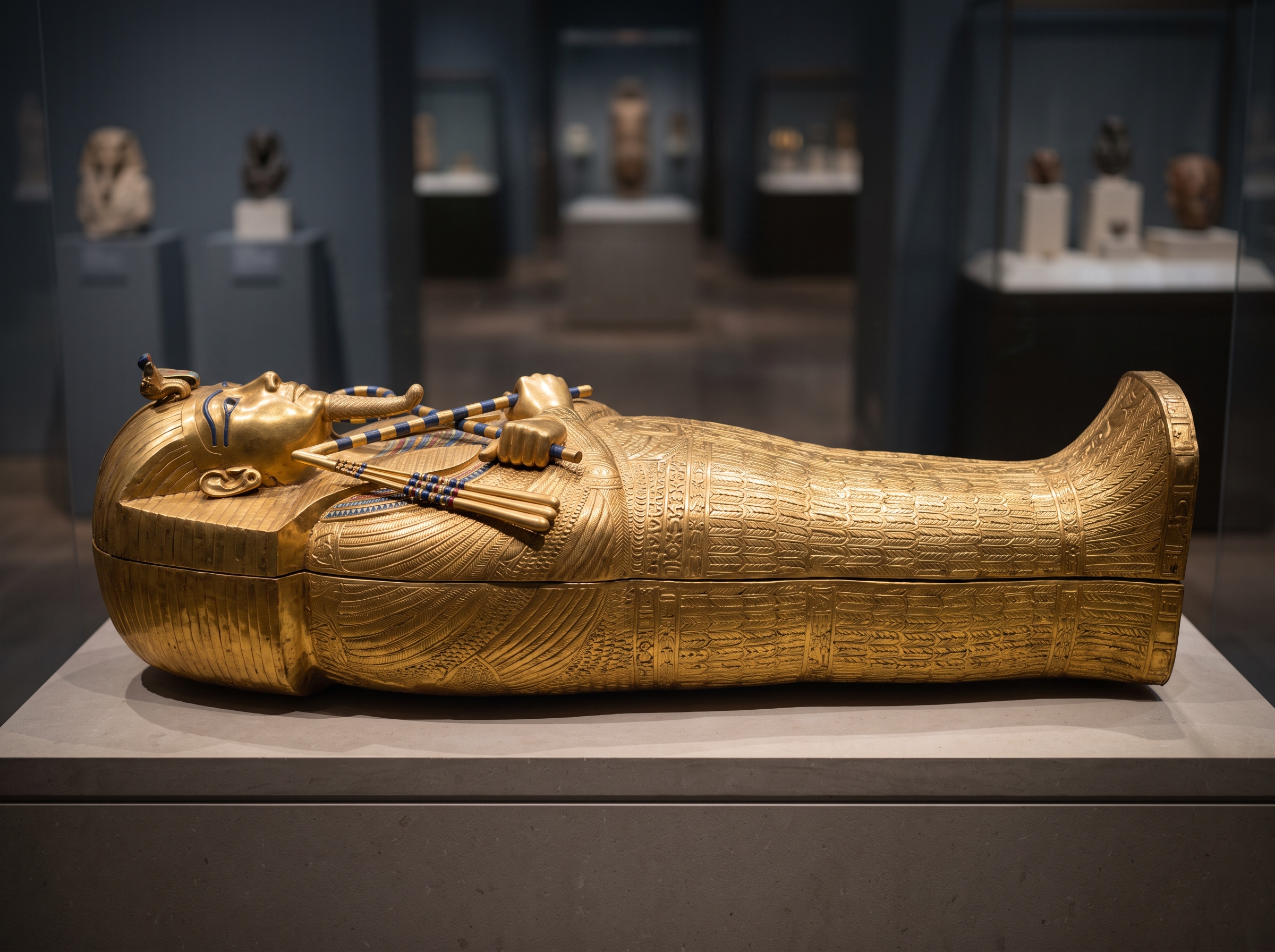
110kg Solid Gold Coffin
The third and innermost coffin, crafted from heavy solid gold, intricately chased with feathered rishi patterns and protective deities.
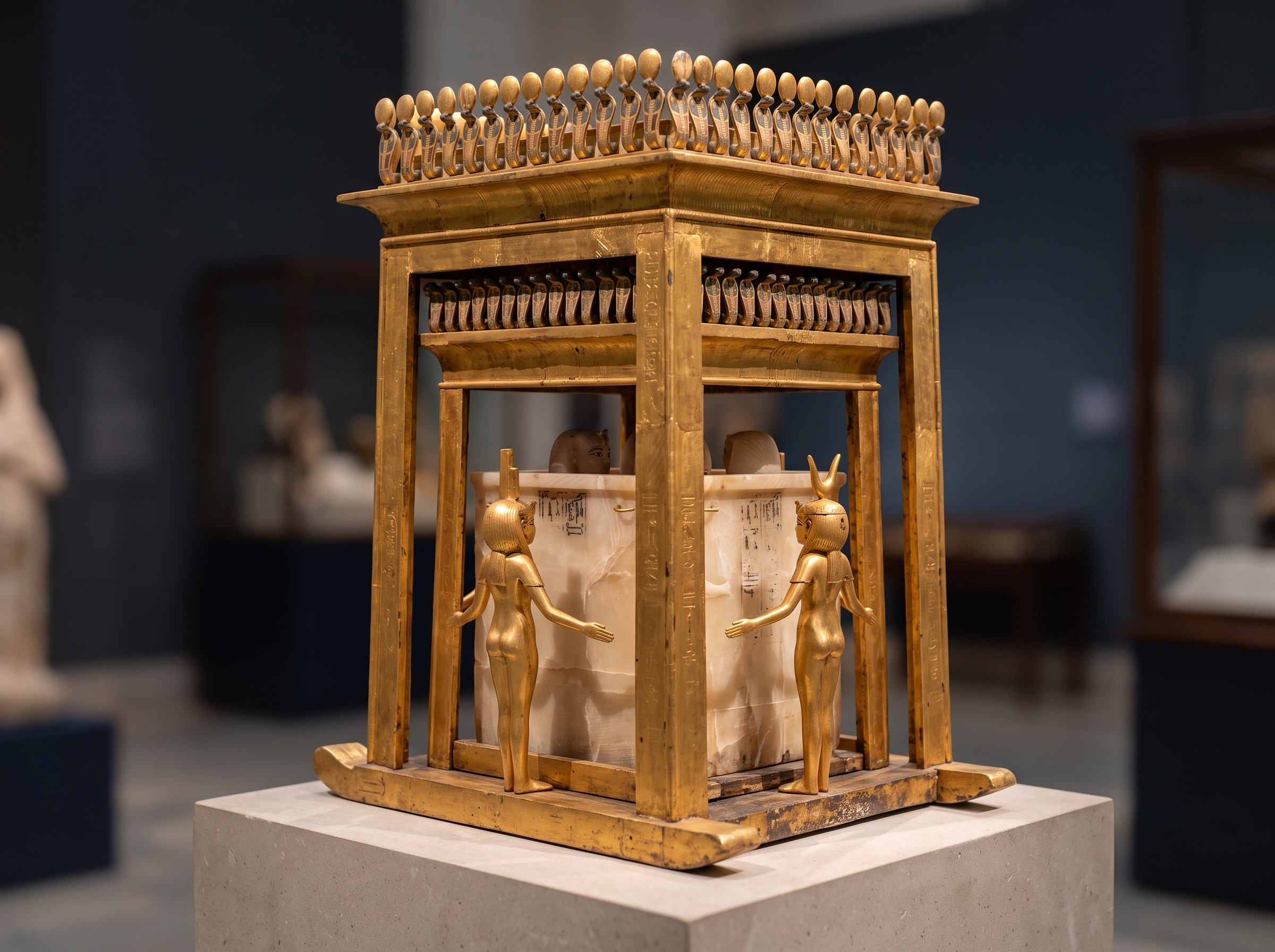
Gilded Canopic Shrine
A gilded wooden shrine guarded by four protective goddesses, enclosing the alabaster chest that held the pharaoh's mummified organs.
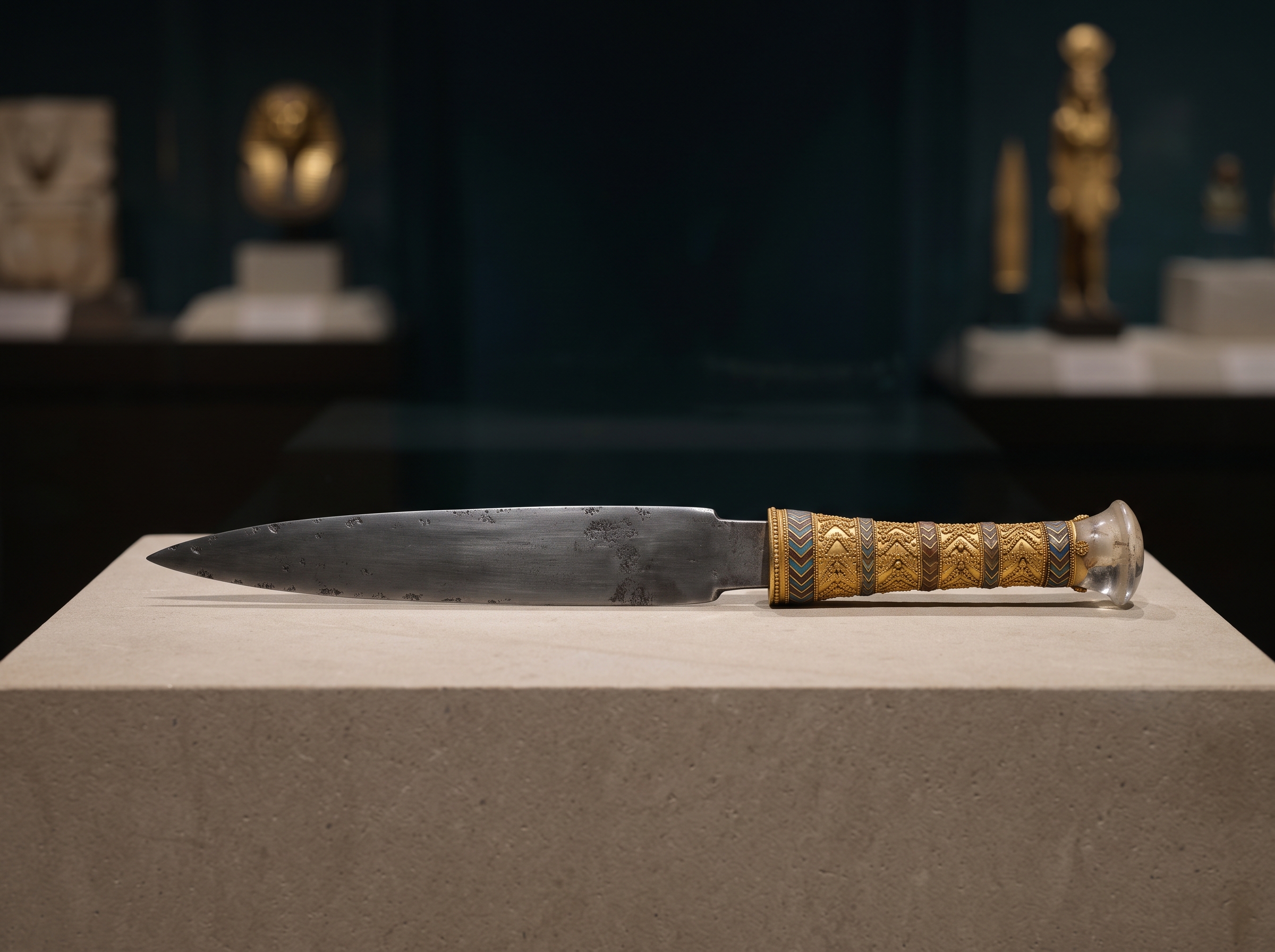
Meteoric Iron Dagger
A ceremonial dagger with a blade forged from a meteorite and a highly decorated gold hilt, a material rarer than gold in Bronze Age Egypt.
Glossary
- kv62: Kings' Valley tomb 62, the official designation of Tutankhamun's bedrock burial site.
- antechamber: The outermost chamber of the tomb, containing chaotic, ceiling-high piles of dismantled chariots and gilded ritual furniture.
- cartouches: The oval enclosures of hieroglyphic text enclosing royal names, which were frequently altered or erased to reuse scavenged grave goods.
- anthropoid coffins: The nested, human-shaped protective cases constructed from wood and solid gold designed to encase the mummified remains.