Kv62
Curated by Elian • The 1922 Discovery of Tutankhamun’s Tomb
Definition
Kings' Valley tomb 62, the official designation of Tutankhamun's bedrock burial site.
In Context
KV62 is an absolute anomaly in the royal necropolis. Measuring only 109.83 square meters in total floor area, it completely lacks the long, plunging corridors and massive pillared halls typical of 18th Dynasty pharaohs like Amenhotep III. Workmen hurriedly enlarged a small, non-royal tomb, perhaps originally intended for his vizier Ay, to accommodate the young king. The excavated footprint consists of merely four small rooms. Rough chisel marks still scar the walls of the Annex, a cramped space dug nearly a meter below the floor level of the main room. Only the burial chamber received a coat of plaster and painted decoration. Even that plaster was plagued by mold, sealing in moisture from the hasty application.
Primary Source
The 1922 Discovery of Tutankhamun’s Tomb
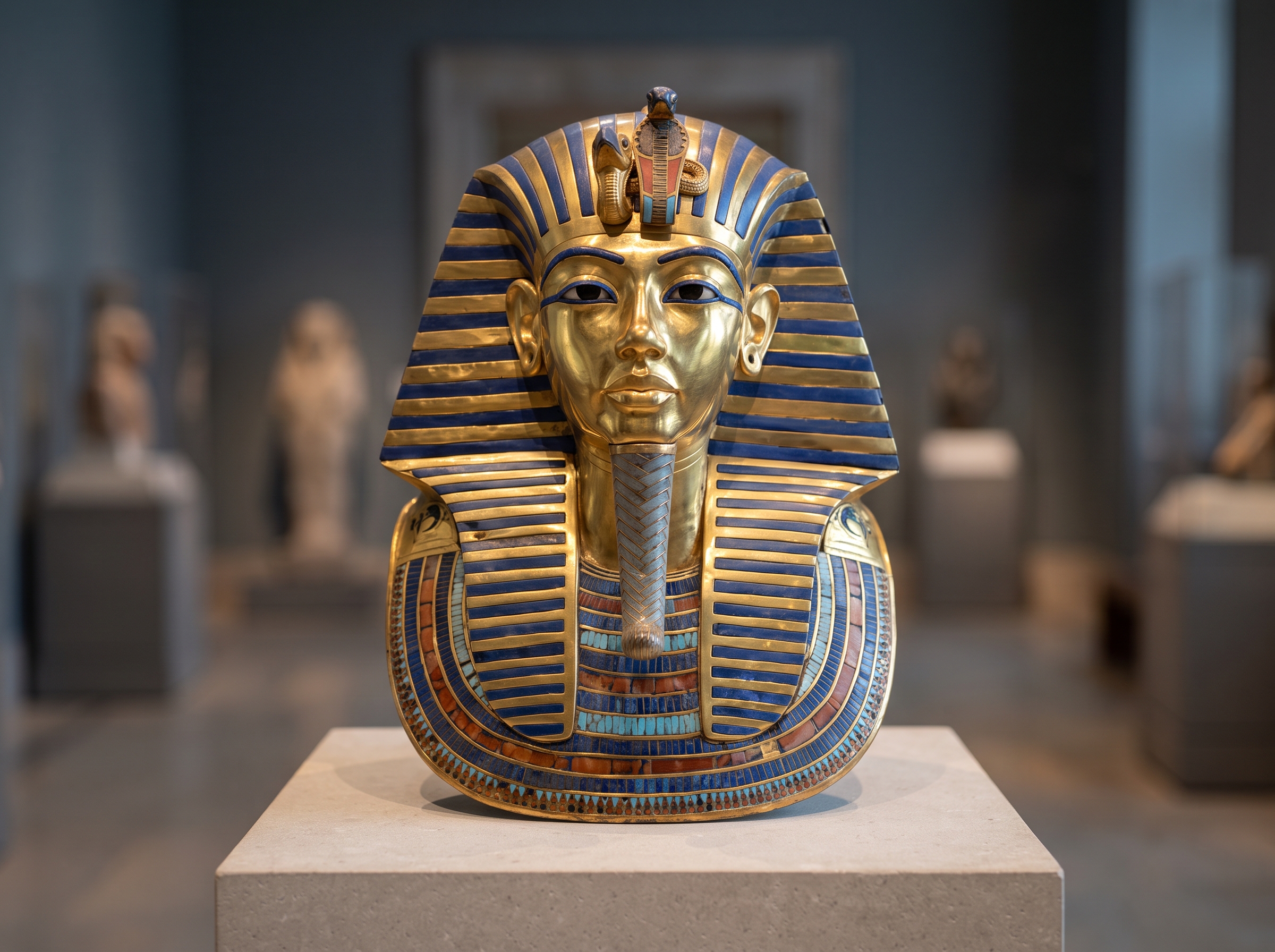
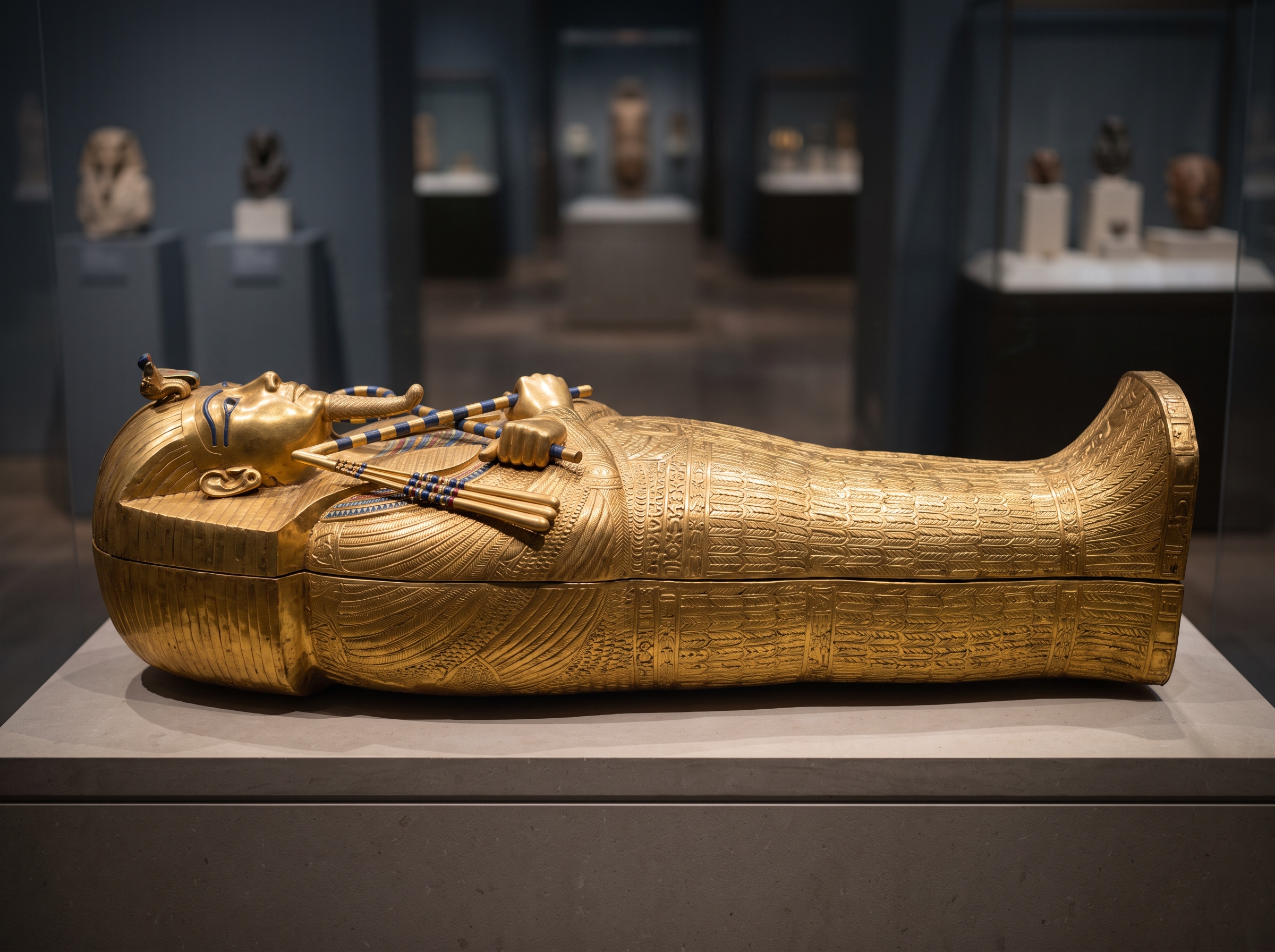
The 1922 breach of a 109-square-meter burial chamber revealed how absolute power attempted to purchase eternity through 110 kilograms of solid gold.
Read Study (19 min) →Artifacts
Glossary
- antechamber
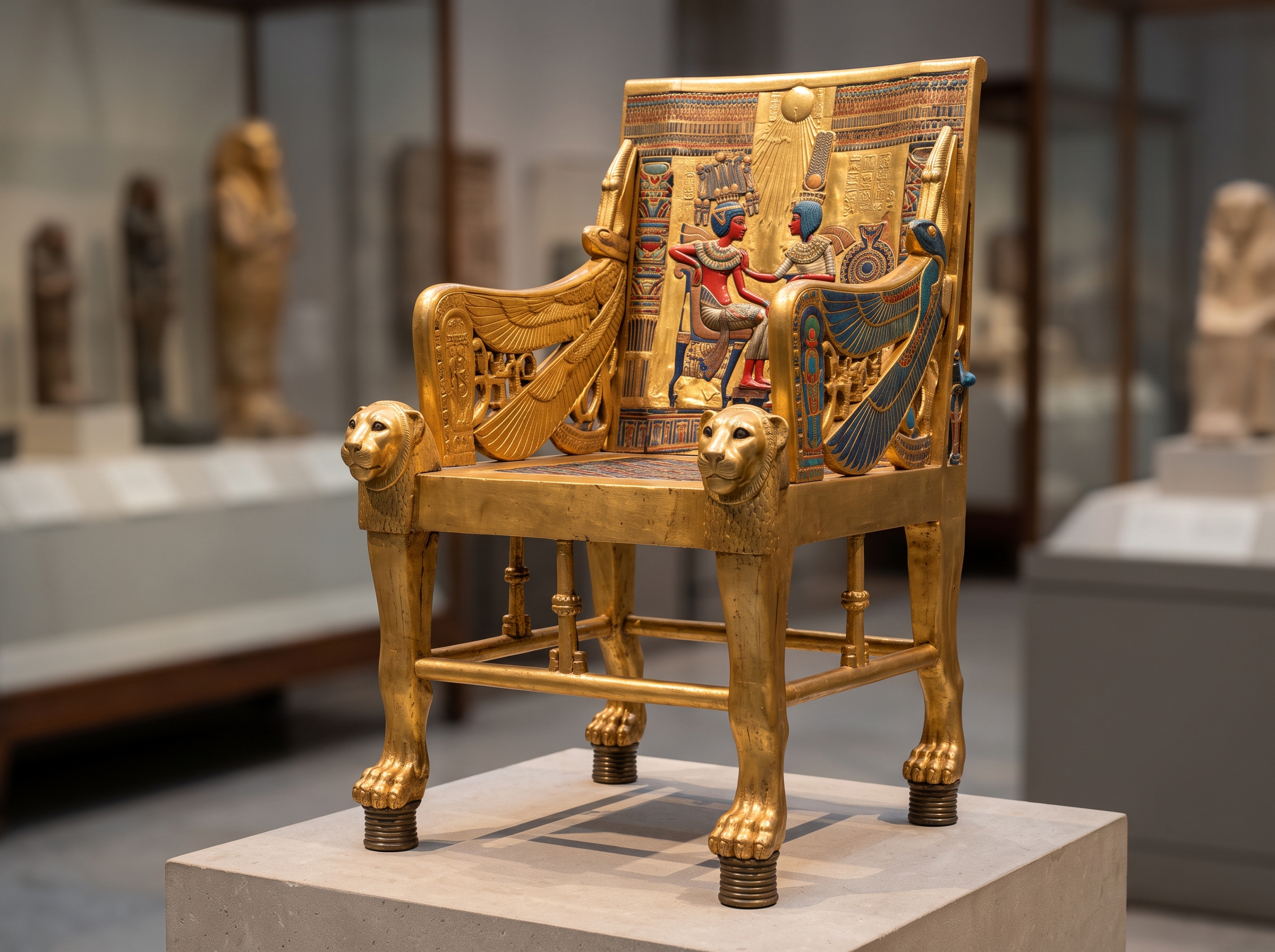
- The outermost chamber of the tomb, containing chaotic, ceiling-high piles of dismantled chariots and gilded ritual furniture.
- cartouches
- The oval enclosures of hieroglyphic text enclosing royal names, which were frequently altered or erased to reuse scavenged grave goods.
- anthropoid coffins
- The nested, human-shaped protective cases constructed from wood and solid gold designed to encase the mummified remains.
- quartzite sarcophagus
- The massive rectangular stone chest carved from hard yellow quartzite that housed the nested royal coffins.
- meteoric iron
- The rare, nickel-rich iron sourced from fallen meteorites, highly prized for elite weaponry and tools before iron smelting was discovered.