Meteoric Iron
Curated by Elian • The 1922 Discovery of Tutankhamun’s Tomb
Definition
The rare, nickel-rich iron sourced from fallen meteorites, highly prized for elite weaponry and tools before iron smelting was discovered.
In Context
Modern X-ray fluorescence spectrometry confirmed the blade consists of meteoric iron, containing precise ratios of nickel and cobalt matching known meteorites found near the Red Sea coast. In 1323 B.C., iron smelting technology was essentially non-existent in Egypt. This rare, extraterrestrial metal literally fell from the sky, requiring highly specialized cold-forging techniques to shape without shattering. Black iron held a value far exceeding gold, which captive workers mined in massive abundance from the eastern deserts and the conquered territories of Nubia.
Primary Source
The 1922 Discovery of Tutankhamun’s Tomb
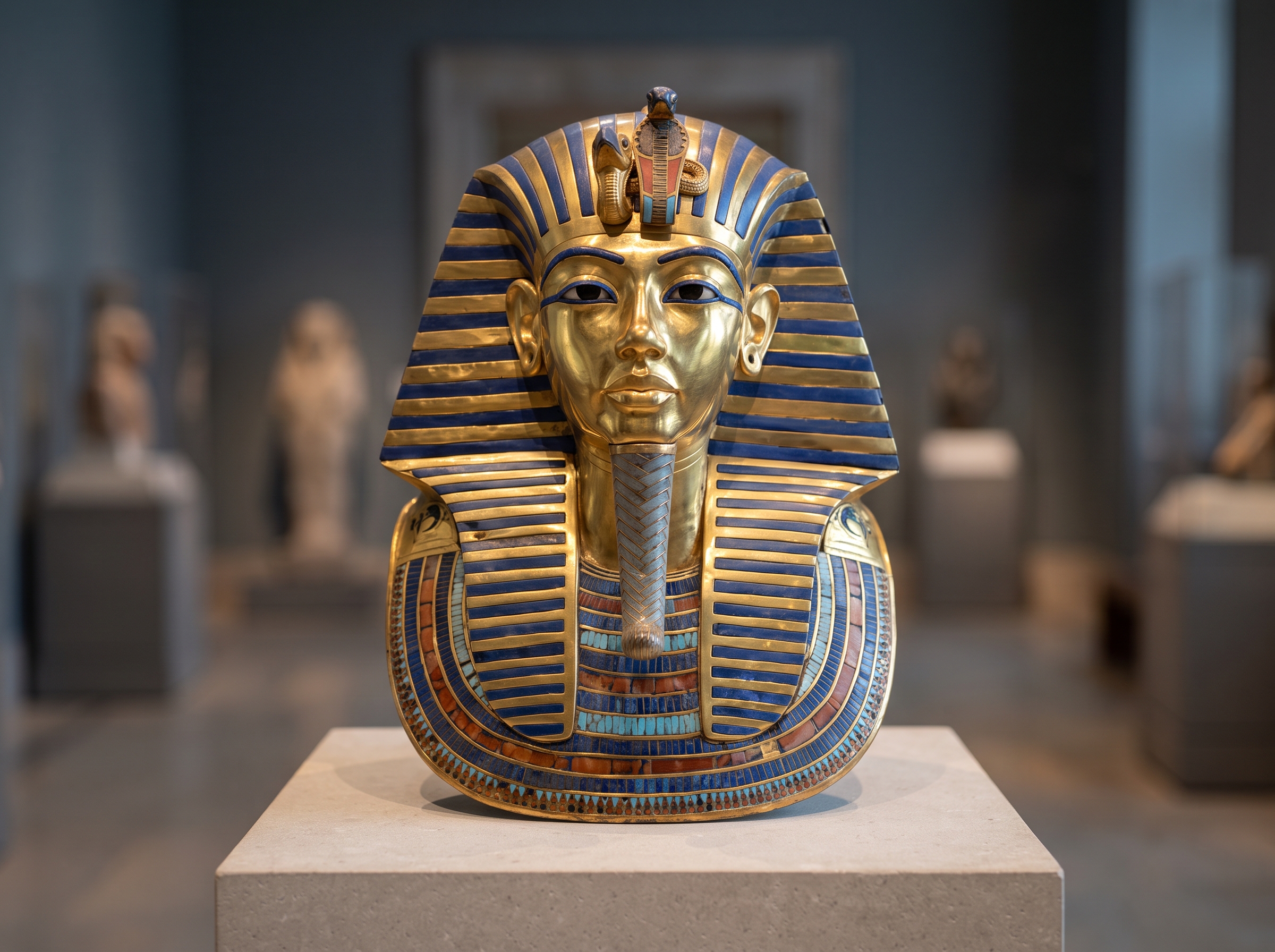
The 1922 breach of a 109-square-meter burial chamber revealed how absolute power attempted to purchase eternity through 110 kilograms of solid gold.
Read Study (19 min) →Artifacts
Glossary
- kv62
- Kings' Valley tomb 62, the official designation of Tutankhamun's bedrock burial site.
- antechamber
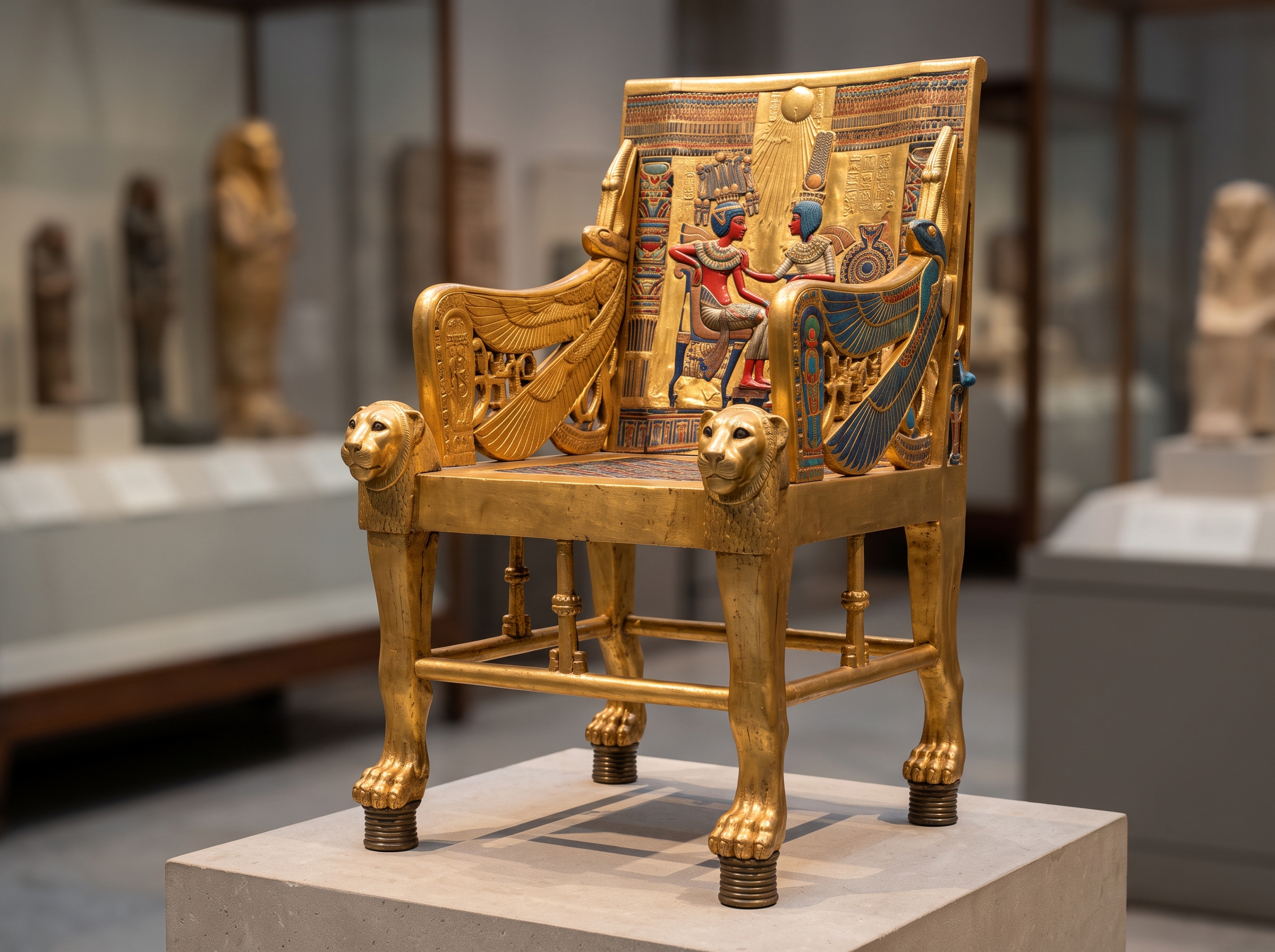
- The outermost chamber of the tomb, containing chaotic, ceiling-high piles of dismantled chariots and gilded ritual furniture.
- cartouches
- The oval enclosures of hieroglyphic text enclosing royal names, which were frequently altered or erased to reuse scavenged grave goods.
- anthropoid coffins
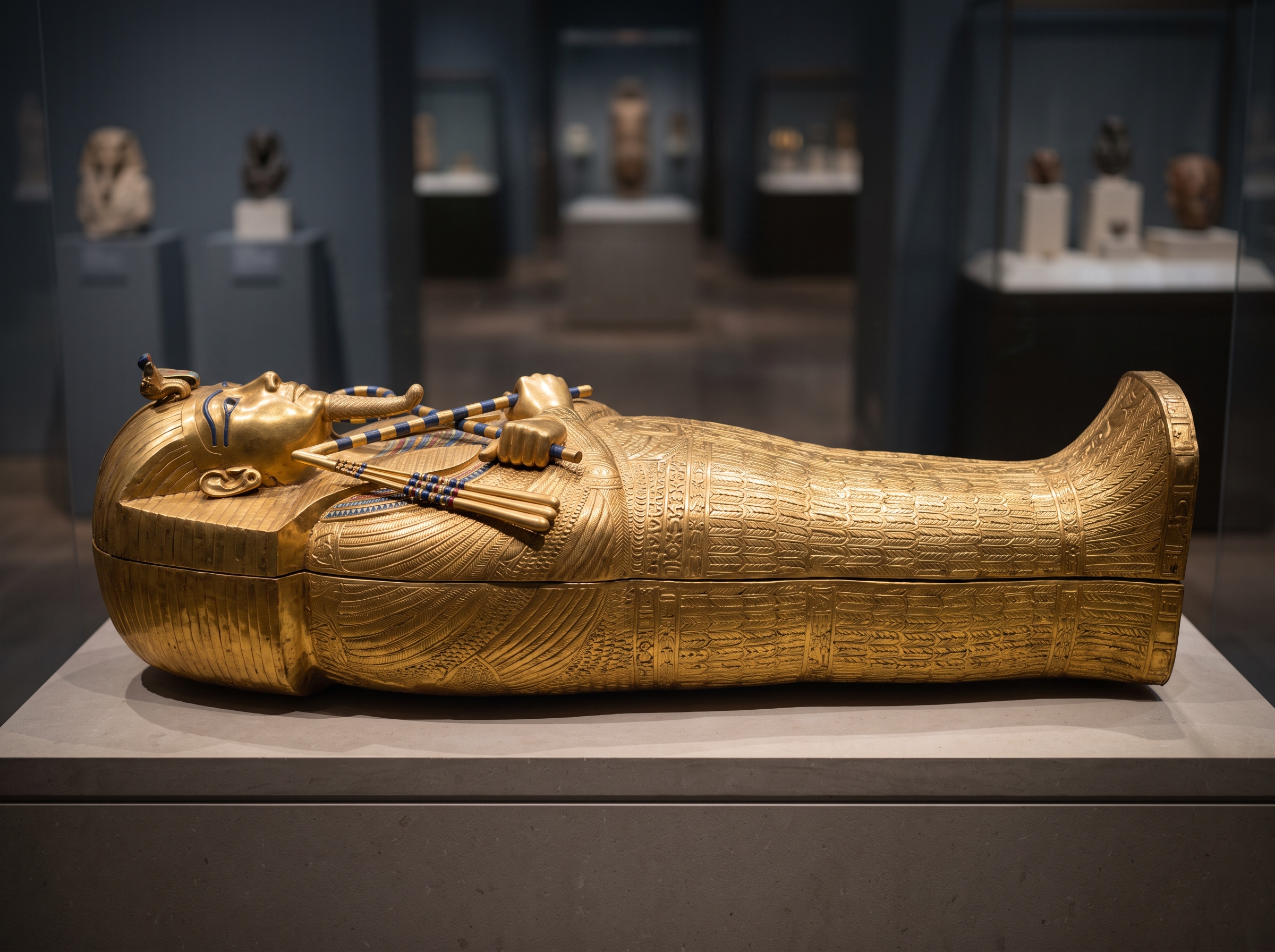
- The nested, human-shaped protective cases constructed from wood and solid gold designed to encase the mummified remains.
- quartzite sarcophagus
- The massive rectangular stone chest carved from hard yellow quartzite that housed the nested royal coffins.