Urpu Storage Jar
Curated by Vox • Inca Khipu and Base-10 Records Tied in Knots
Artifact Details
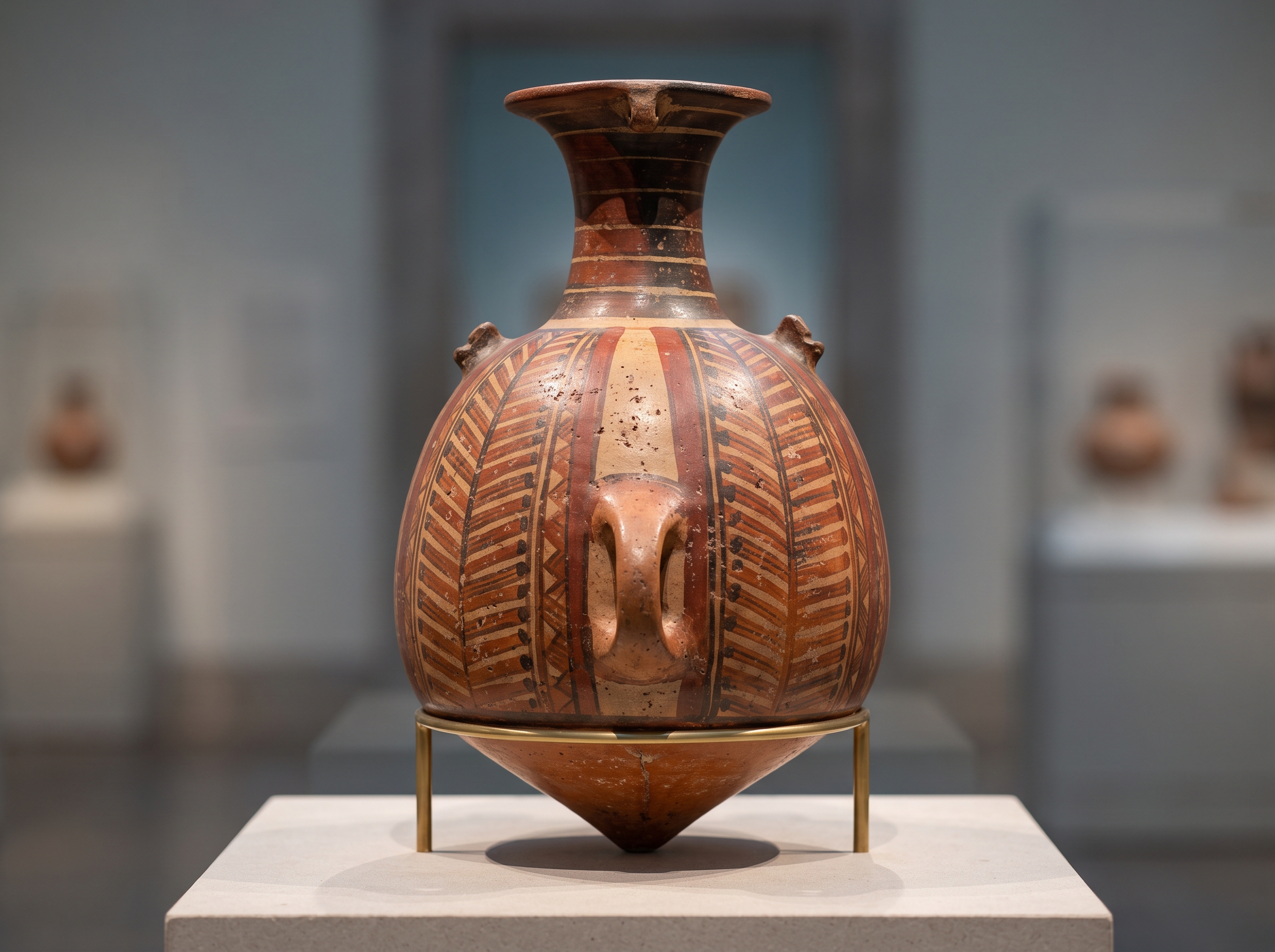
A large Inca ceramic Urpu jar featuring a pointed base, a flared neck, and twin lug handles. The terracotta surface is decorated with geometric slip-painted crosshatched patterns in red, black, and cream. The ceramic exhibits authentic surface pitting and firing variations.
Primary Source
Inca Khipu and Base-10 Records Tied in Knots
In the high-altitude storehouses of Cusco, state accountants manipulated dyed cotton cords with exacting precision. Khipukamayuq read data through their fingers. By running calloused hands over a sequence of tightly spun figure-eight knots, officials instantly audited agricultural yields of provinces 400 miles away. Inca rulers governed Tawantinsuyu, a domain of roughly 10 million citizens stretching across the Andes, without a single written word. Administration relied entirely on the Khipu: a base-10 ledger system encoding tax liabilities and census figures into twisted camelid hair. The knotted strings proved an empire could standardize its population without an alphabet.
Read Study (15 min) →Artifacts
Puruchuco Accounting Khipu
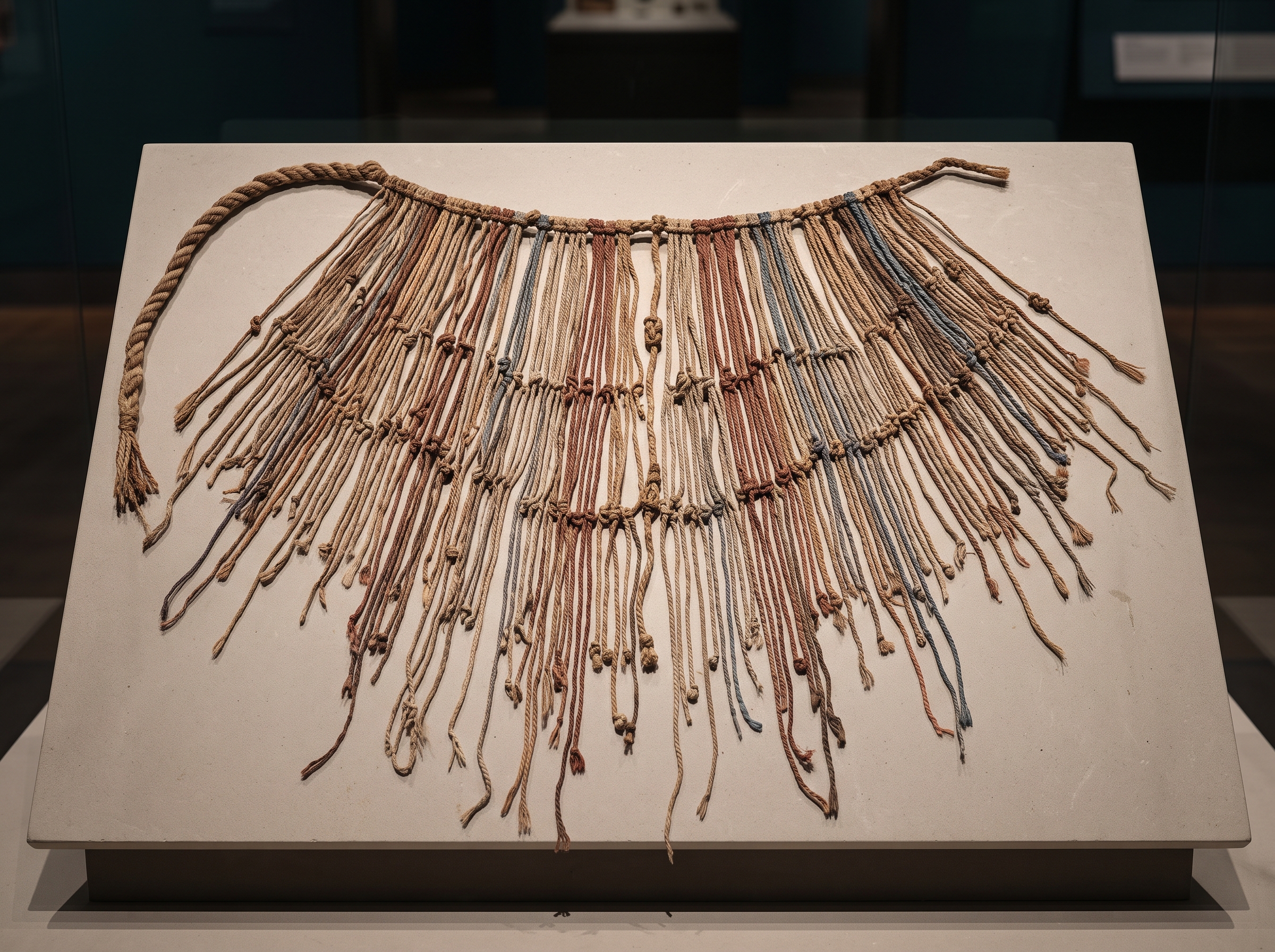
A large, multi-colored Khipu used for regional administration. The heavy main cord supports complex hierarchical layers of tightly spun pendant and subsidiary strings.
Weaver's Spindle
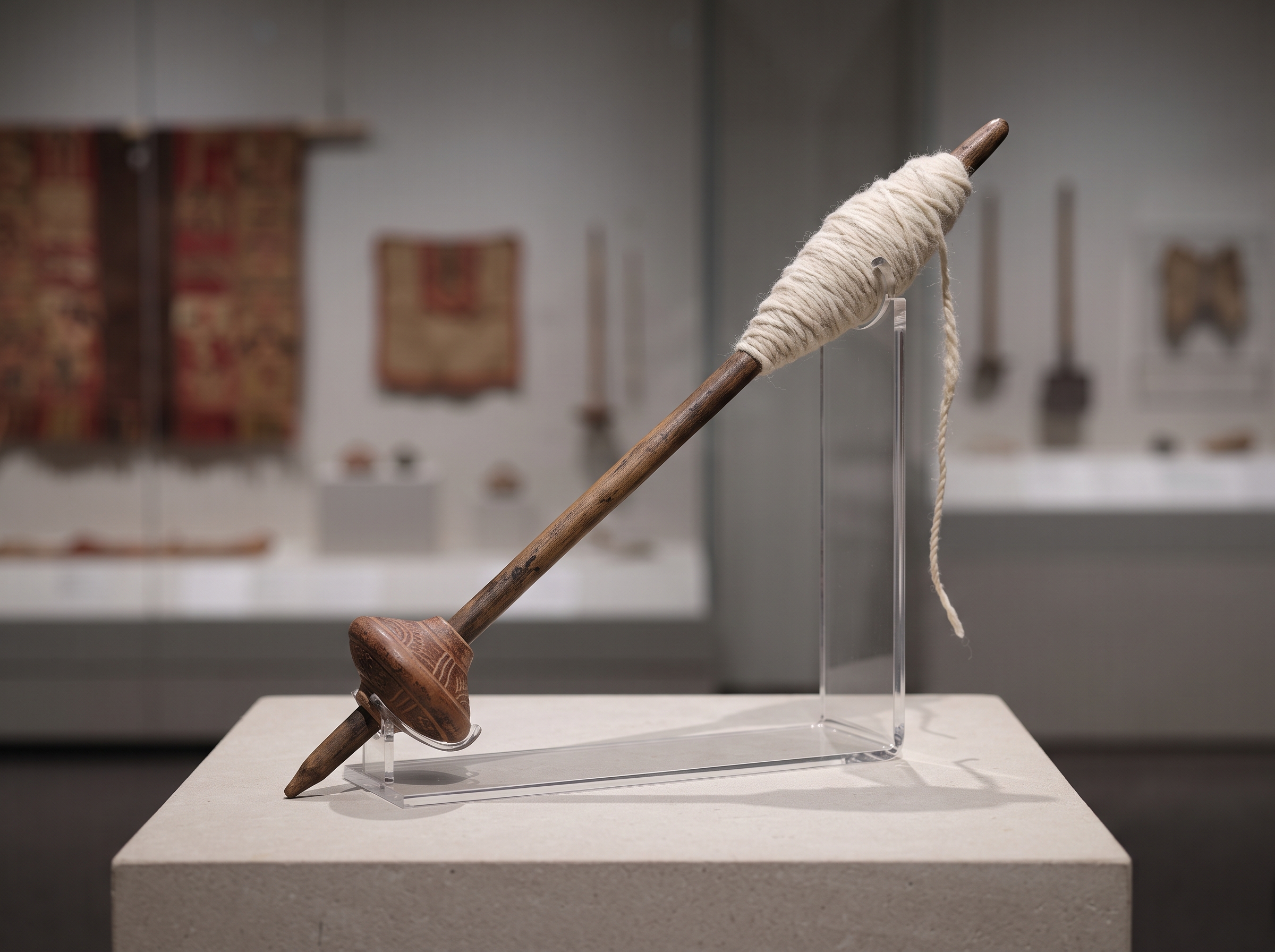
A wooden drop spindle used to twist raw cotton and camelid hair into standardized cords, demonstrating the material foundation of the ledger system.
Inca Yupana
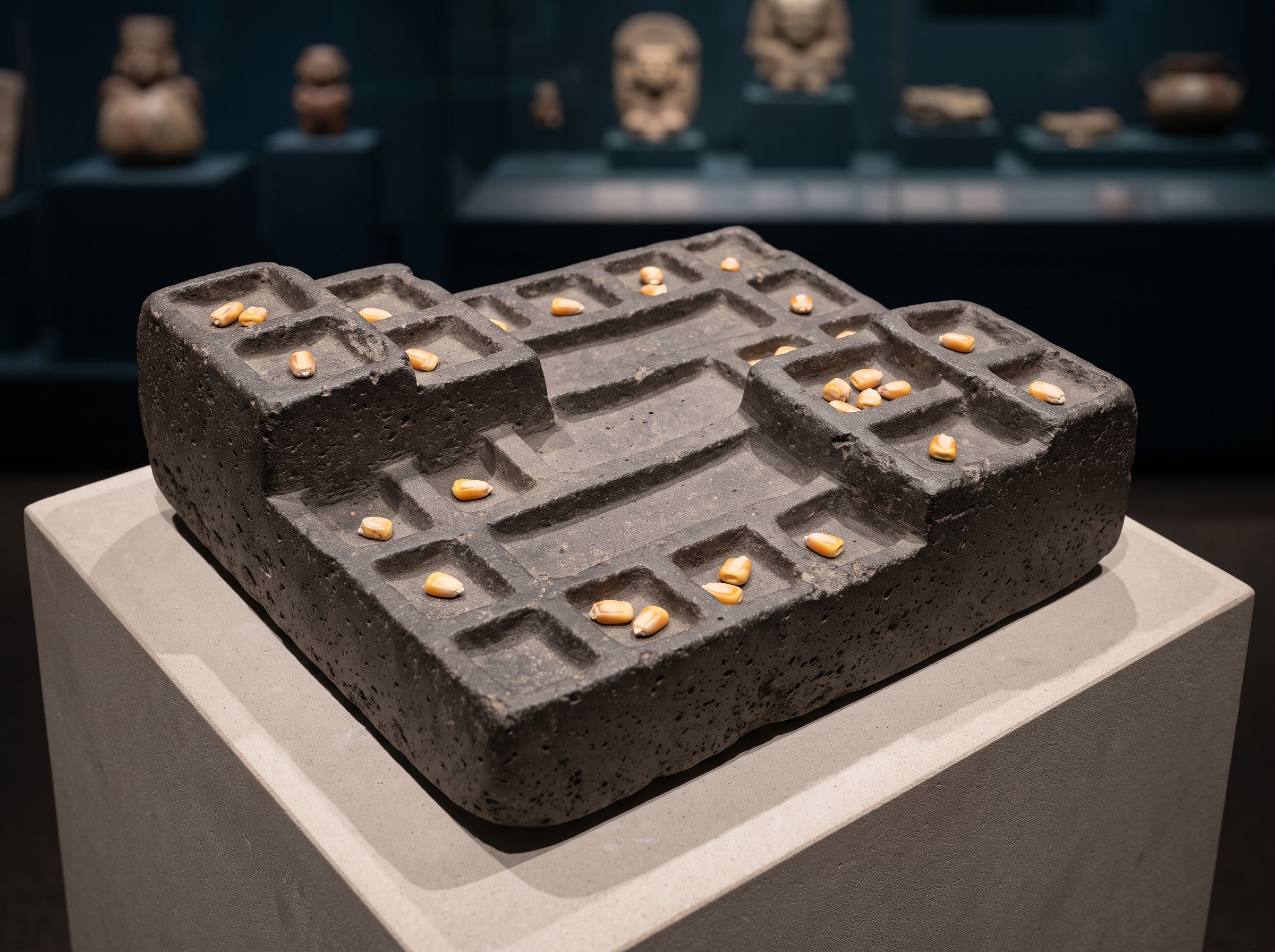
A carved stone grid serving as a tactile base-10 calculator. Administrators moved maize kernels across tiered compartments to compute arithmetic before tying the final sums into cords.
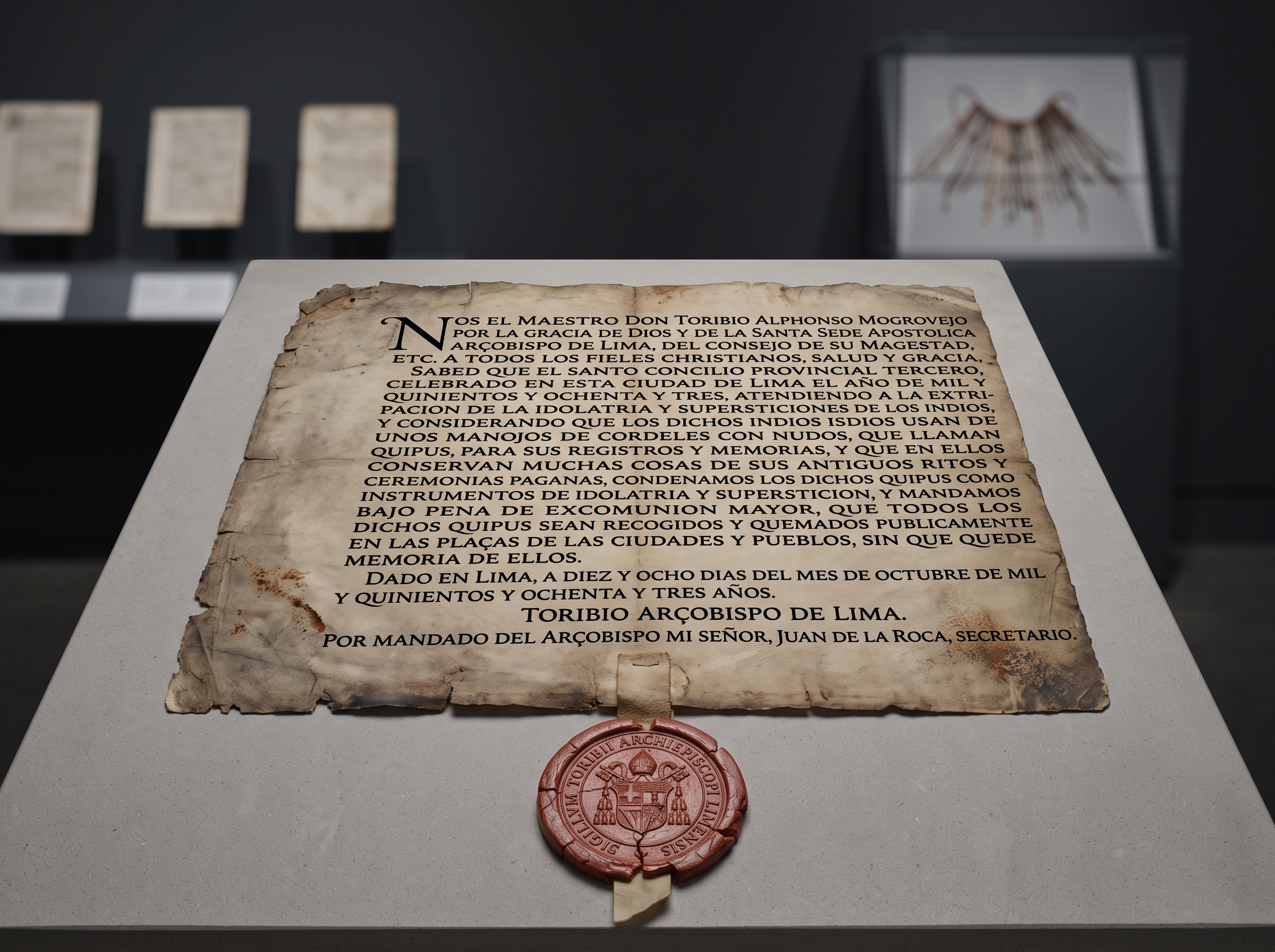
1583 Edict of Lima
The 1583 Spanish ecclesiastical decree ordering the mass incineration of knotted ledgers, condemning them as instruments of pagan idolatry.
Glossary
- khipu: A recording device made of knotted strings used by the Inca and other Andean cultures to store data.
- khipukamayuq: The professional knot-makers and readers responsible for maintaining the empire's ledgers.
- tawantinsuyu: The Quechua name for the Inca Empire, meaning 'The Four Regions Together'.
- figure-eight knot: A specific knot style used on the Khipu, typically representing the number one.