Ahu
Curated by Elian • Rapa Nui Moai Carved from Volcanic Tuff
Definition
The coastal, flat-topped stone platforms that served as sacred shrines and foundations for the standing statues.
In Context
Completed figures moved toward the coastline. Islanders constructed roughly 300 ceremonial platforms, called ahu, positioned mostly parallel to the sea. Moai stood atop these structures facing inland, observing the settlements. These stone altars functioned as focal points for ancestor veneration. Lineage groups invested heavy labor into erecting the stones, establishing a visible claim to the adjacent agricultural land. Ahu Tongariki, the largest structure, stretches over 220 meters and supports 15 statues.
Primary Source
Rapa Nui Moai Carved from Volcanic Tuff
An analysis of the monumental engineering and ecological limits behind the 14-ton monolithic carvings of Rapa Nui. The statues were not the cause of an ecological collapse, but a meticulously planned response to an already impoverished environment.
Read Study (17 min) →Artifacts
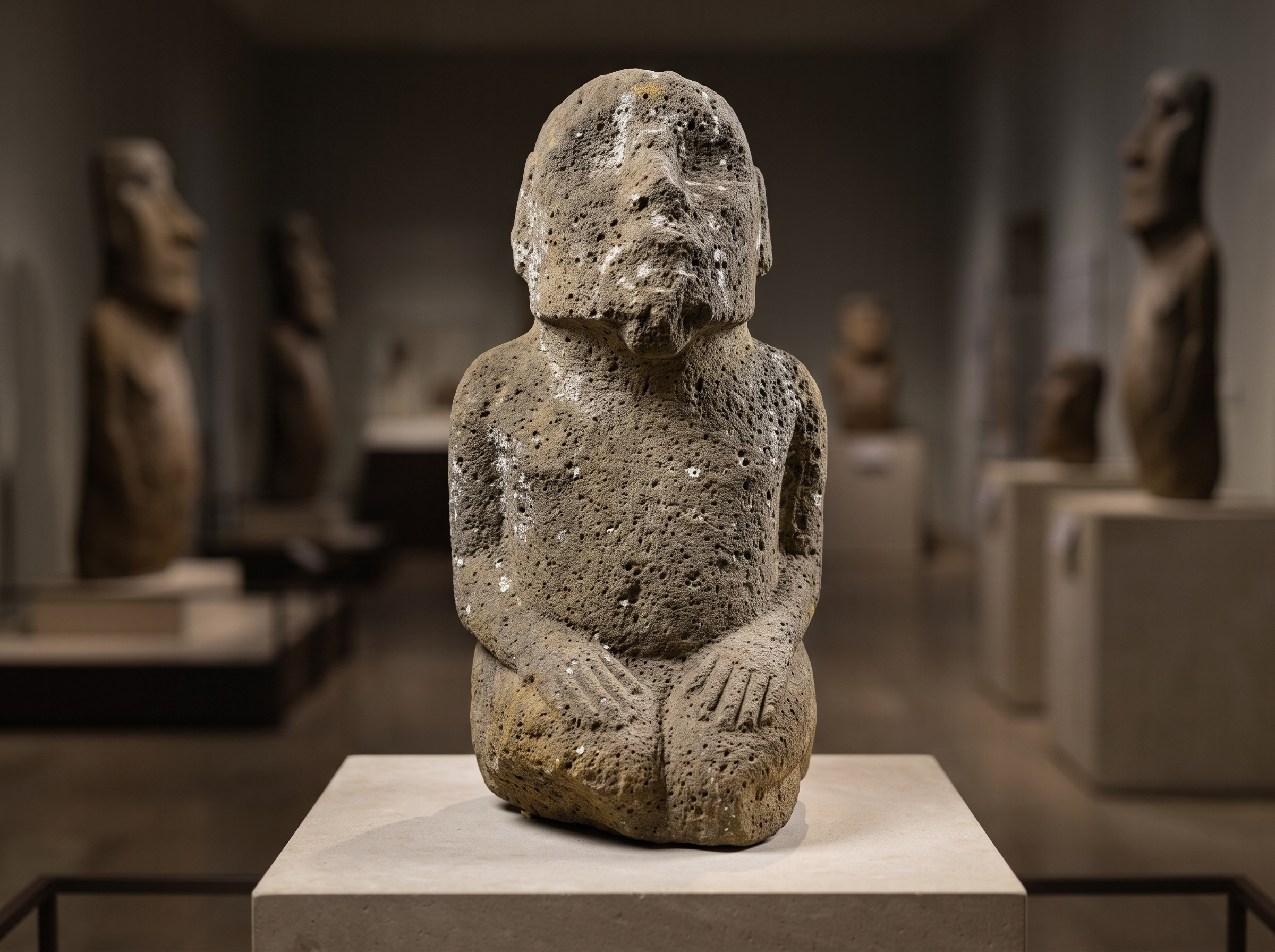
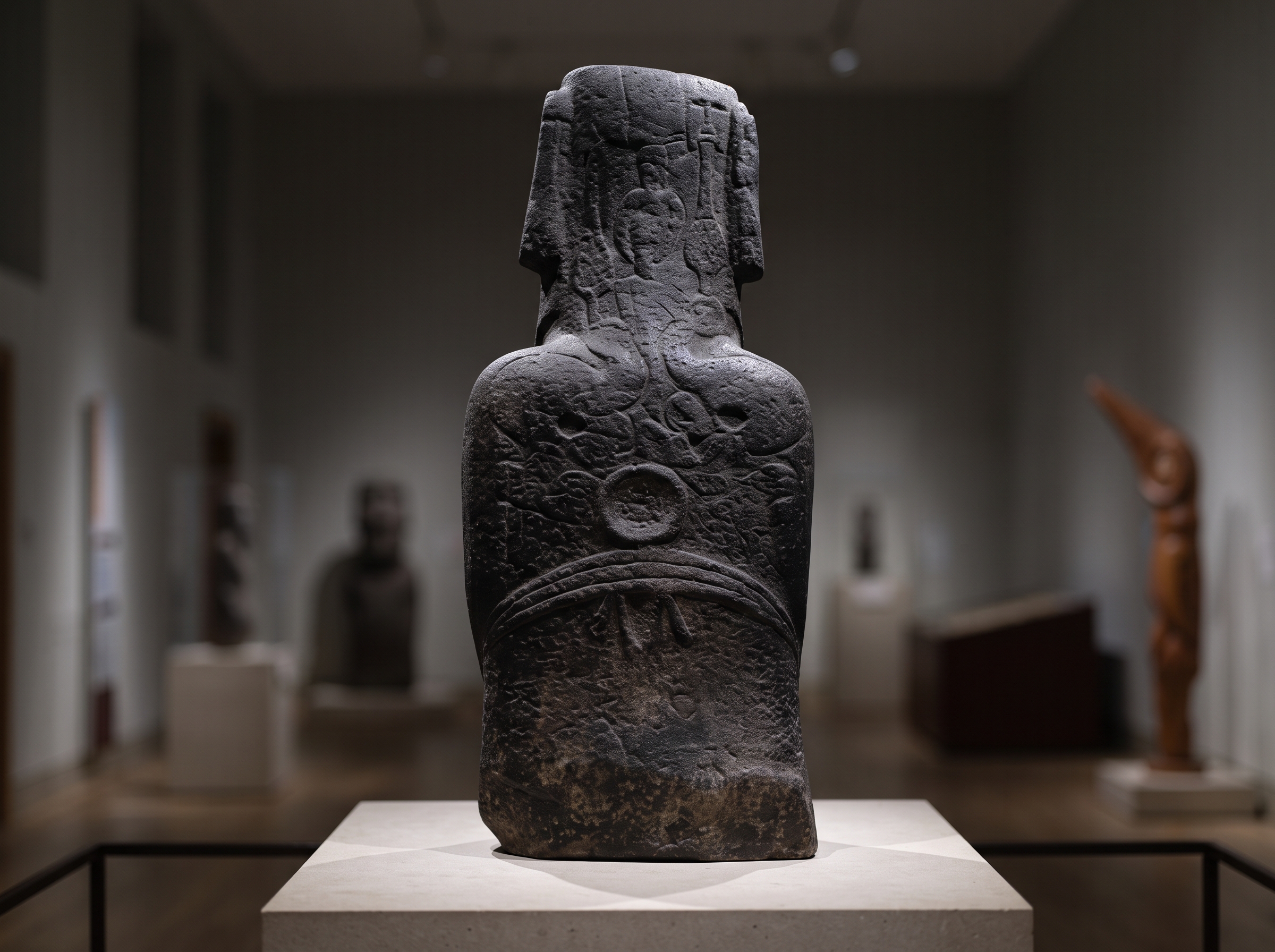
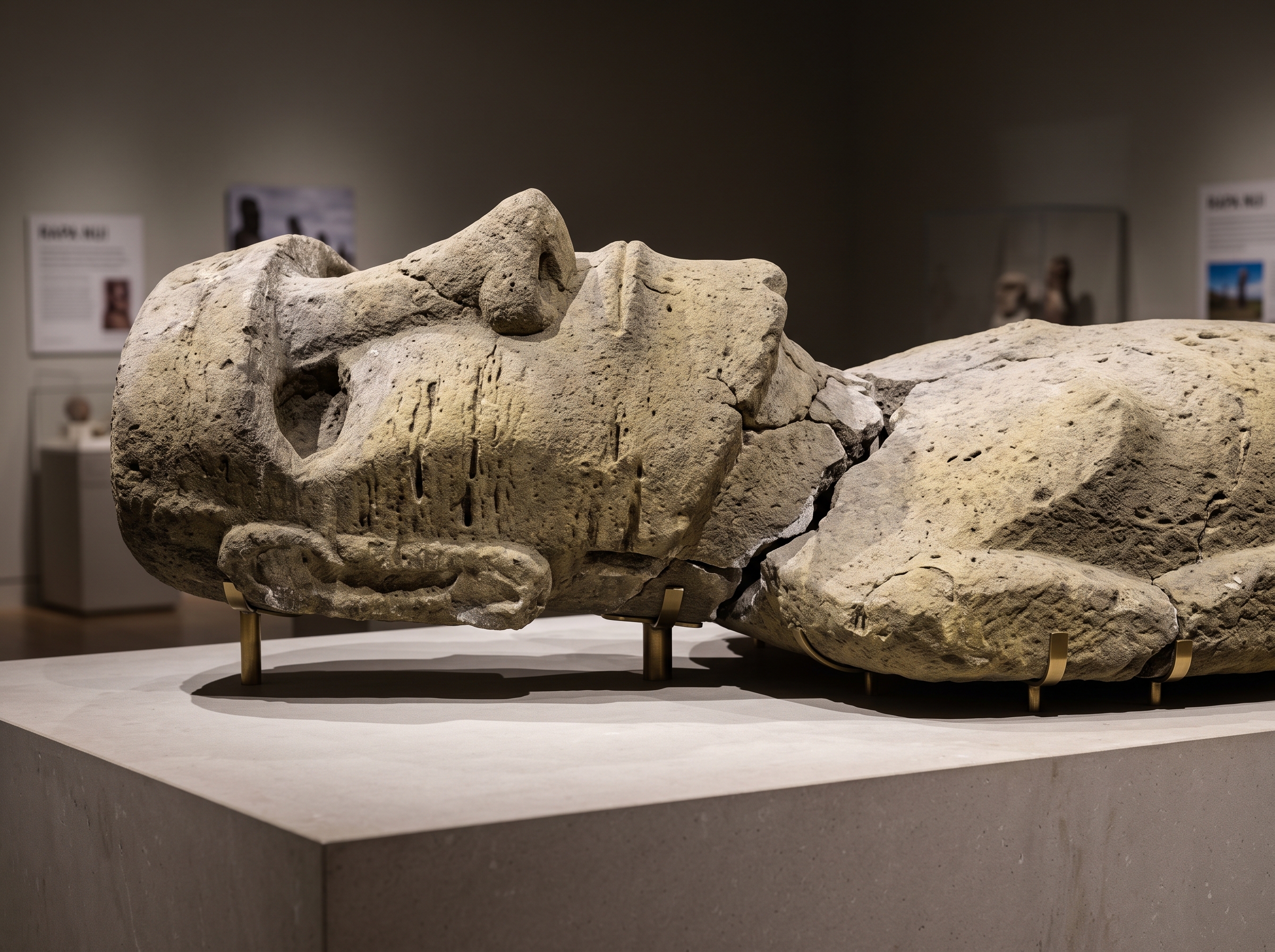
Glossary
- moai
- The monolithic human statues carved by the inhabitants of Rapa Nui, representing high-ranking deified ancestors.
- tuff
- A light, porous rock formed by consolidated volcanic ash, used as the primary carving medium for the island's statues.
- pukao
- The cylinder-shaped hair topknot ornaments carved from red scoria rock that sat on top of some statues' heads.
- toki
- Basalt hand chisels used by Rapa Nui carvers to meticulously shape statues directly out of the volcanic bedrock.
- scoria
- A highly vesicular, dark or reddish volcanic rock that is extremely lightweight, used to carve the pukao topknots.