Pukao
Curated by Elian • Rapa Nui Moai Carved from Volcanic Tuff
Definition
The cylinder-shaped hair topknot ornaments carved from red scoria rock that sat on top of some statues' heads.
In Context
Later iterations of the monuments received an additional component. Workers quarried red scoria from a separate volcanic cone named Puna Pau. This lightweight, porous rock was carved into large cylinders called pukao, which sat atop the heads of the standing moai. Some pukao weigh up to 12 tons. Oral traditions suggest the red stone represented the sacred topknot of a high-ranking ancestor. Lifting a multi-ton cylinder onto a 10-meter statue required stone and dirt ramps, relying on careful balance and human force.
Primary Source
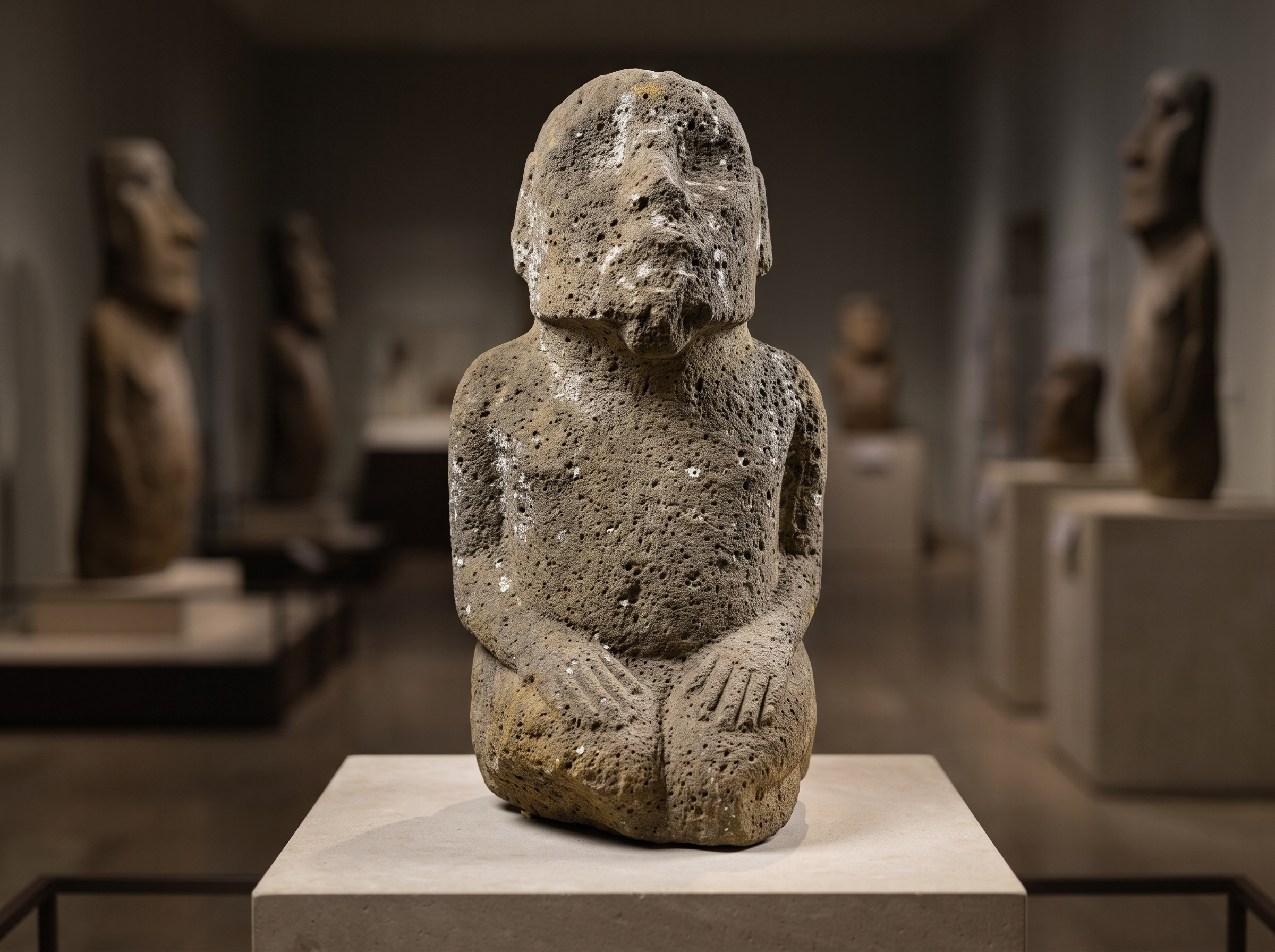
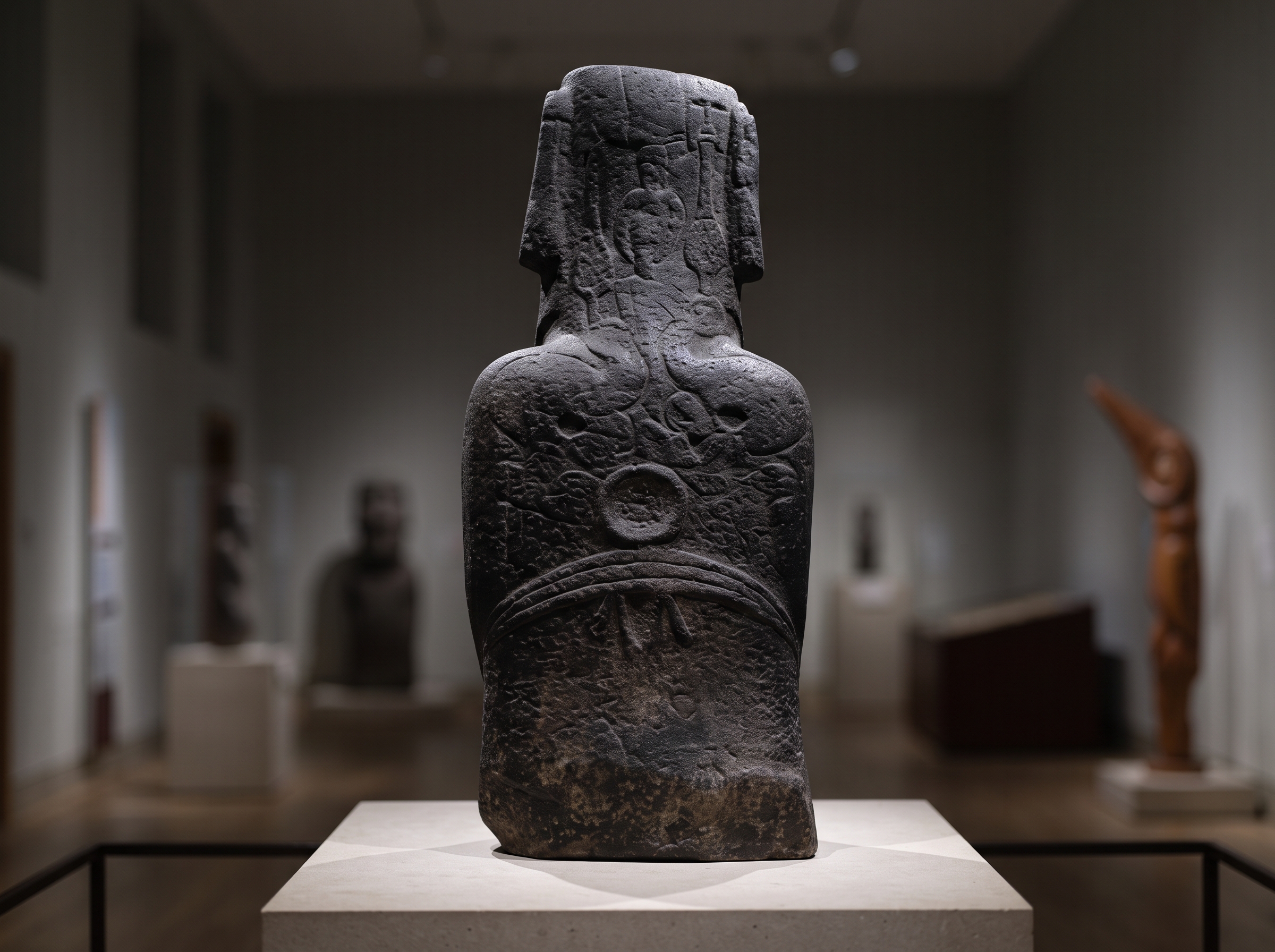
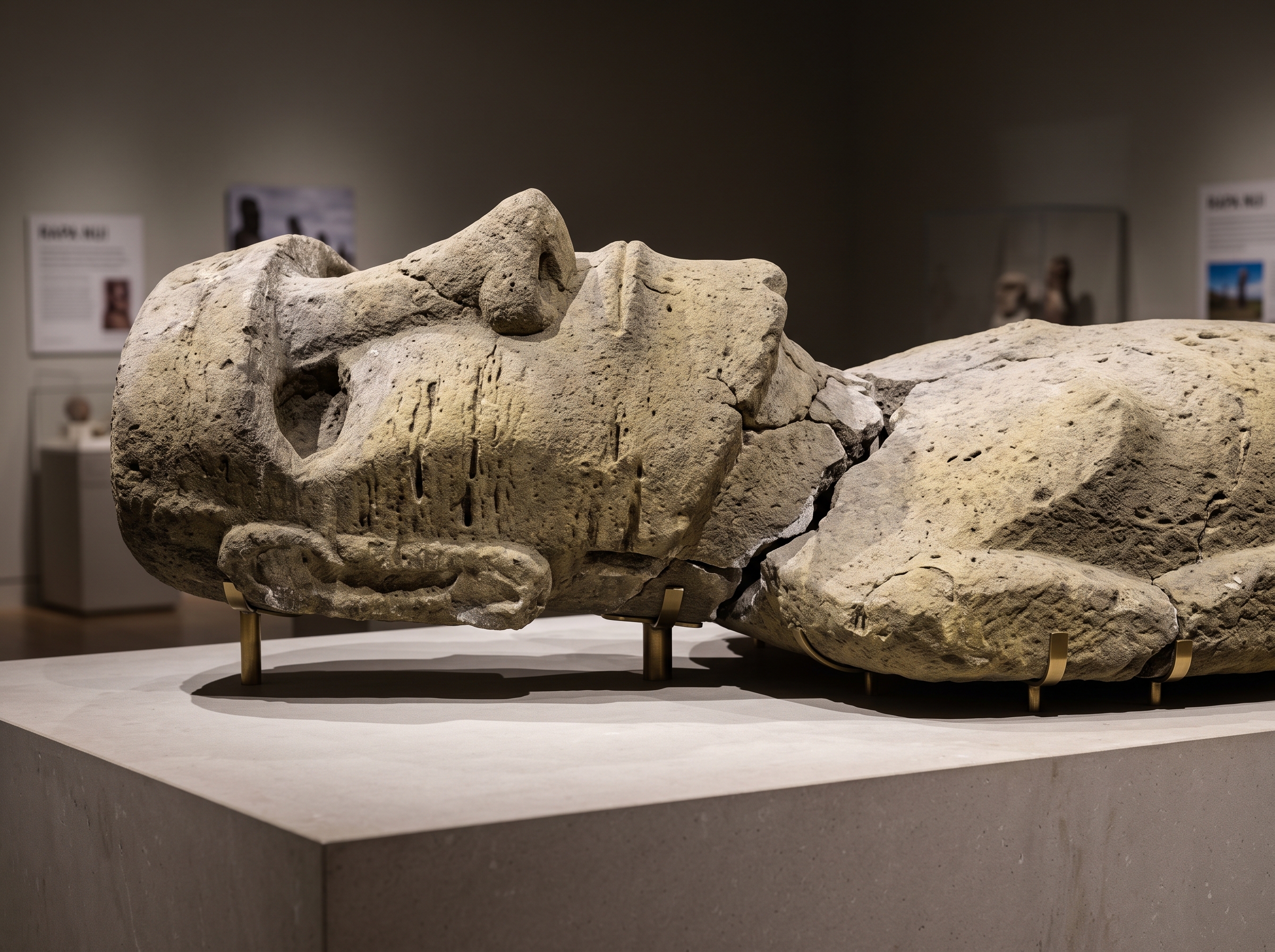
Rapa Nui Moai Carved from Volcanic Tuff
An analysis of the monumental engineering and ecological limits behind the 14-ton monolithic carvings of Rapa Nui. The statues were not the cause of an ecological collapse, but a meticulously planned response to an already impoverished environment.
Read Study (17 min) →Artifacts
Glossary
- moai
- The monolithic human statues carved by the inhabitants of Rapa Nui, representing high-ranking deified ancestors.
- tuff
- A light, porous rock formed by consolidated volcanic ash, used as the primary carving medium for the island's statues.
- ahu
- The coastal, flat-topped stone platforms that served as sacred shrines and foundations for the standing statues.
- toki
- Basalt hand chisels used by Rapa Nui carvers to meticulously shape statues directly out of the volcanic bedrock.
- scoria
- A highly vesicular, dark or reddish volcanic rock that is extremely lightweight, used to carve the pukao topknots.