Moai
Curated by Elian • Rapa Nui Moai Carved from Volcanic Tuff
Definition
The monolithic human statues carved by the inhabitants of Rapa Nui, representing high-ranking deified ancestors.
In Context
Hundreds of statues never left the crater. Roughly 400 figures sit in various stages of completion on the slopes of Rano Raraku. Some monuments are massive. El Gigante, an unfinished moai still attached to the bedrock, measures over 21 meters long and carries an estimated weight of 270 tons. Moving such mass was impossible even with abundant timber. Early observers interpreted the dense concentration of unfinished work as a sudden halt to carving. Soil core samples and quarry debris suggest a gradual winding down of carving as labor shifted entirely to farming.
Primary Source
Rapa Nui Moai Carved from Volcanic Tuff
An analysis of the monumental engineering and ecological limits behind the 14-ton monolithic carvings of Rapa Nui. The statues were not the cause of an ecological collapse, but a meticulously planned response to an already impoverished environment.
Read Study (17 min) →Artifacts
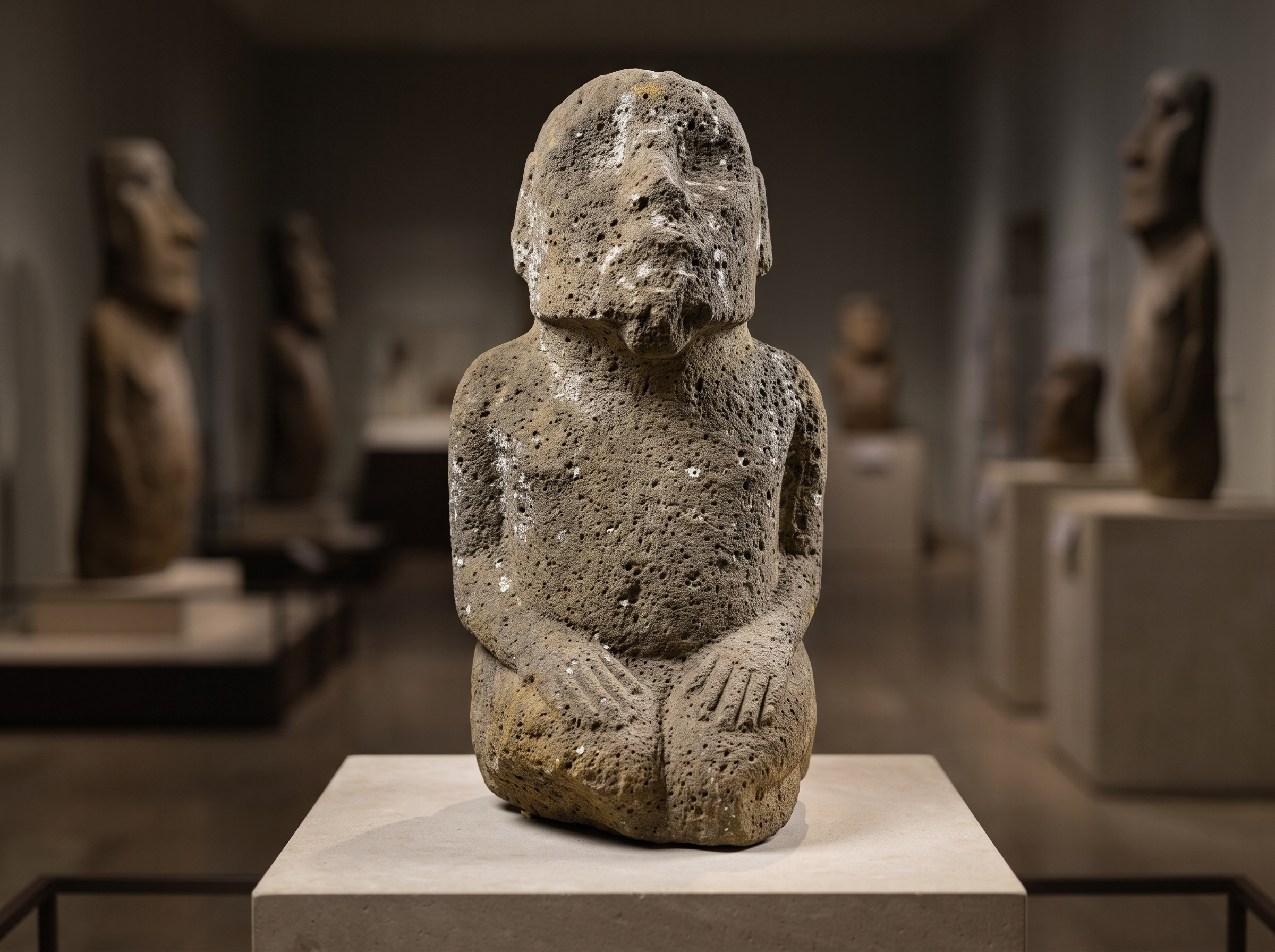
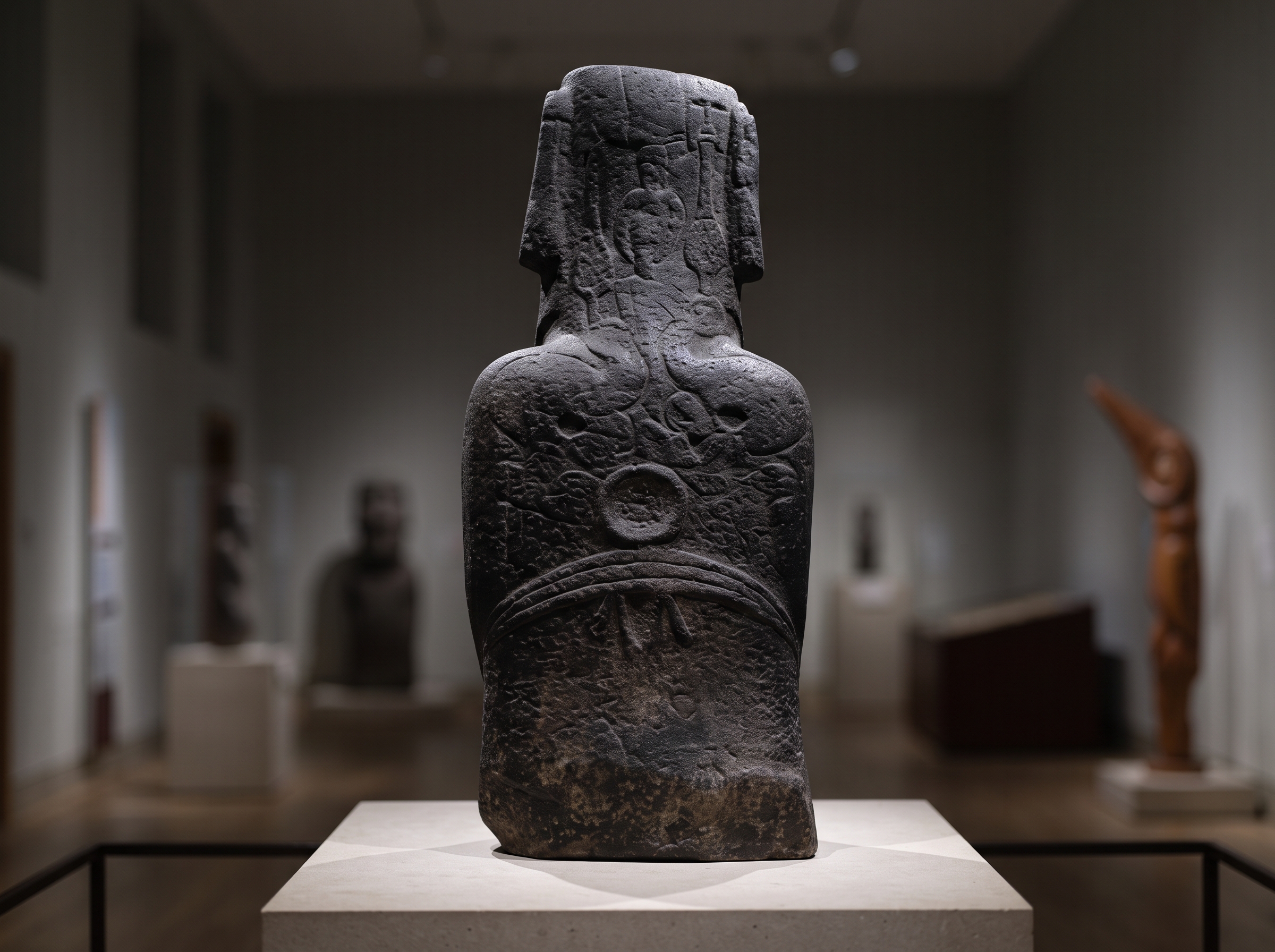
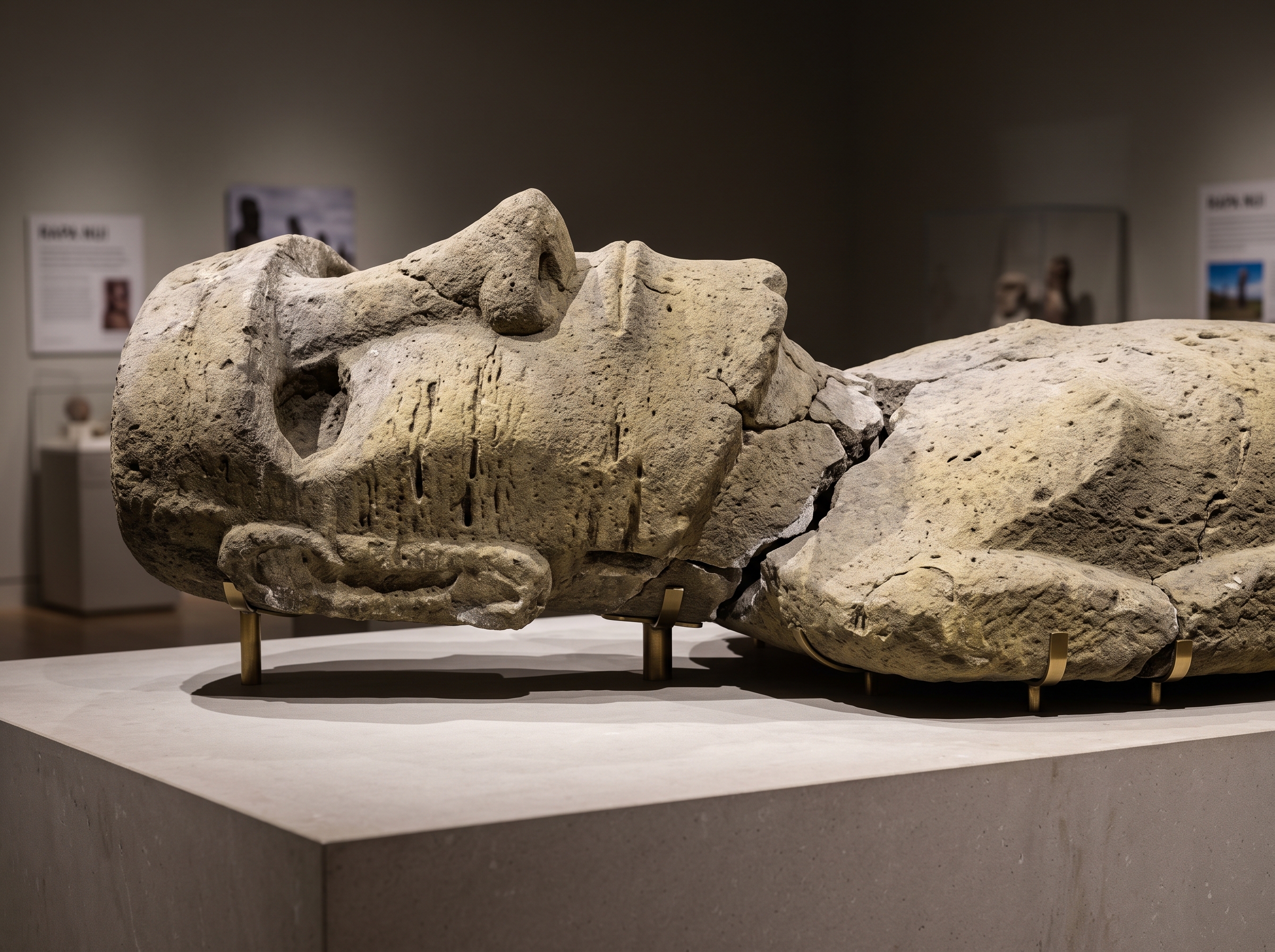
Glossary
- tuff
- A light, porous rock formed by consolidated volcanic ash, used as the primary carving medium for the island's statues.
- ahu
- The coastal, flat-topped stone platforms that served as sacred shrines and foundations for the standing statues.
- pukao
- The cylinder-shaped hair topknot ornaments carved from red scoria rock that sat on top of some statues' heads.
- toki
- Basalt hand chisels used by Rapa Nui carvers to meticulously shape statues directly out of the volcanic bedrock.
- scoria
- A highly vesicular, dark or reddish volcanic rock that is extremely lightweight, used to carve the pukao topknots.